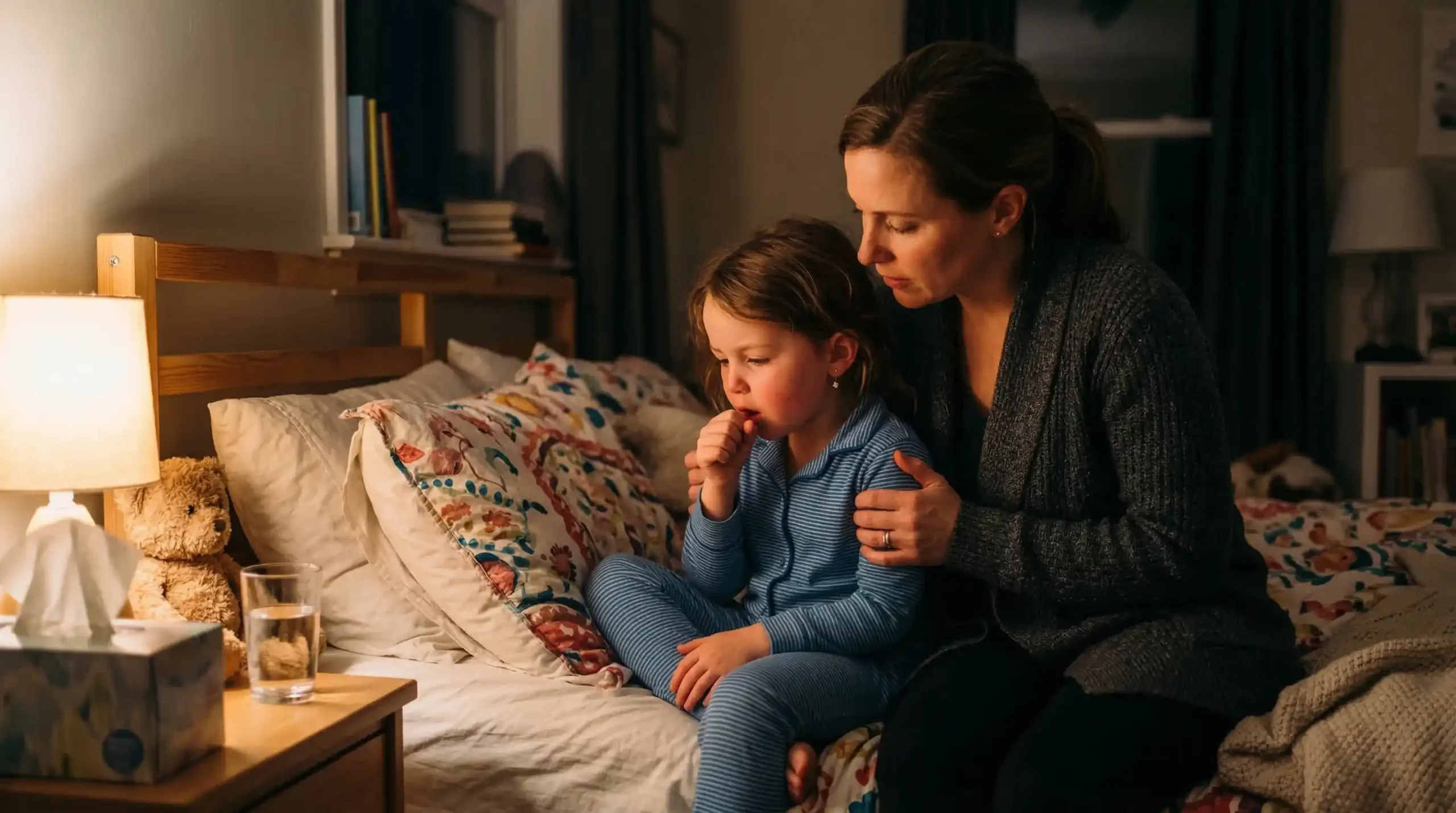
A persistent cough in a child without a fever can be confusing and stressful for parents. When your child keeps coughing without other symptoms, it naturally raises concern about whether it is simply a “leftover” cold or something more serious.
In many cases, these afebrile coughs (coughs occurring without a fever) do not point to an active infection. Instead, it is commonly linked to underlying triggers such as allergies, post-nasal drip, cough-variant asthma, or environmental irritants. If the cough lasts longer than 3–8 weeks or begins to affect sleep and daily activity, a pediatric evaluation is recommended.
In this guide, we will break down the most common causes, highlight warning signs that need medical attention, outline useful diagnostic tests, and share practical home remedies to help manage your child’s cough effectively.
Why Does a Cough Persist Without Fever in Children?
Often, the cause is post-viral airway hyper-responsiveness.
Even after a virus has cleared, the bronchial tubes may remain inflamed and overly sensitive. As a result, the cough reflex is triggered more easily than usual.
You can think of it as an “after-effect” of the infection.
The airway lining is temporarily damaged, which leaves the sensory nerve endings more exposed to minor irritants like cold air, dust, or even simple actions like talking and laughing. This is one of the most common reasons a child continues to cough despite having no other symptoms.
Most Common Causes of Constant Coughing in Children (Without Fever)
When a child coughs with no other symptoms, it is often related to airway sensitivity or ongoing irritation rather than an active infection. The most common causes include:
- Post-Viral Inflammation: After a viral cold, the bronchial tubes may remain hypersensitive. This leaves behind a “post-viral” cough long after the fever and infection are gone.
- Atypical Infections: Certain bacterial infections, such as walking pneumonia (Mycoplasma)1 or the later stages of whooping cough (pertussis)1, can cause a persistent cough with little or no fever.
- Allergies: Dust, pollen, pet dander, or mold can inflame the airways and cause a lingering cough without a fever.2
- Sinus Irritation (Sinusitis): In children, sinus issues do not always present with a fever. Instead, inflamed sinus cavities produce thick mucus that leads to a stubborn, “heavy” daytime cough
- Post-Nasal Drip: Excess mucus from allergies or lingering irritation drips down the back of the throat. This is often why a toddler is coughing only at night, as lying flat allows the mucus to pool and irritate the airway.3
- Cough-Variant Asthma: In some kids, excessive coughing in children is the primary sign of asthma. This often presents as a dry hack that worsens with exercise or during the early morning hours.4
- Acid Reflux (GERD): Stomach acid can travel up the esophagus and irritate the cough receptors in the throat, especially after meals or while lying flat at night.5
- Environmental Irritants: Exposure to secondhand smoke, strong odors, or cold air can keep the bronchial tubes irritated, resulting in a chronic cough in kids.
Understanding the Cough “Sound”: Dry vs. Wet
| Cough Type | Likely Culprits | Common Characteristics |
|---|---|---|
| Dry / Hacking | Asthma, GERD, Irritants | Often worse at night or during exercise; sounds “tight.” |
| Wet / Rattly | Post-Nasal Drip, Sinusitis | Often worse in the morning; sounds like there is “junk” in the throat. |
⚠️ Important: Many parents worry that a “wet” cough means a chest infection. However, a wet-sounding cough in a child without a fever is often due to post-nasal drip, where mucus from the nose simply rests near the vocal cords rather than indicating a lung infection.
When to Worry About a Child’s Cough?
While most afebrile coughs (coughs occurring without a fever) in children are manageable at home, certain red flags require urgent medical evaluation:
- Difficulty Breathing: Seek immediate care if your child is breathing faster than normal, wheezing, or showing “retractions” (skin pulling in around the ribs or neck while breathing).
- Cough Lasting More Than 3–8 Weeks: A cough that persists beyond a month is considered chronic and requires evaluation to rule out conditions like cough-variant asthma or silent reflux.
- Sudden Onset After Choking: If a violent cough starts suddenly while eating or playing with small toys, it could signal foreign body aspiration.
- Significant Sleep Disruption: A cough that prevents your child from falling or staying asleep for several nights can affect recovery.
- Weight Loss or Poor Growth: Unexplained weight loss or poor growth alongside a chronic cough may indicate a deeper systemic issue.
- Changes in Appearance: Watch for unusual paleness, extreme lethargy, or a bluish tint around the lips or fingernails (cyanosis), which indicates a drop in oxygen levels.
Essential Tests for Cough in Children Without Fever
Depending on your child’s medical history and the specific characteristics of their cough, a pediatrician may recommend the following diagnostic tools to identify the underlying cause:
1. Physical Examination & History
The doctor will listen for specific “breath sounds” (like wheezing or stridor) and ask about triggers such as cold air, exercise, or nighttime patterns.
2. Pulmonary Function Tests (Spirometry)
Usually for children over age 5, this test measures how much air they can breathe in and out, and how fast. It is the gold standard for diagnosing cough-variant asthma.
3. Allergy Testing
Skin prick tests or blood tests (IgE) can identify environmental triggers like dust mites, pet dander, or pollen that may be fueling chronic airway inflammation.
4. Imaging (Chest X‑Ray)
While not always necessary, an X-ray can help rule out structural issues, chronic lung conditions, or an inhaled foreign object that may not be visible during a physical exam.
5. Nasal Swab or Endoscopy
If sinusitis or severe post-nasal drip is suspected, a closer look at the nasal passages can confirm chronic inflammation or a “silent” sinus infection.
6. pH Probe or Endoscopy
If GERD (reflux) is suspected, a specialist may look for signs of acid irritation in the esophagus that could be triggering the cough reflex.
📝 A Note on the “Trial of Treatment”:
In many clinical cases, if the child is otherwise healthy, doctors may suggest a short trial of treatment, such as an inhaler or an antihistamine for two weeks. If the cough improves, the response helps confirm the diagnosis, such as cough-variant asthma or allergies, without the need for invasive testing.
Does Child Cough Without Fever Need Antibiotics?
One of the most common questions in clinical practice is whether a lingering cough requires a prescription for antibiotics. In the vast majority of cases, the answer is no.
Antibiotics are designed specifically to kill bacteria. Because a persistent cough without a fever is typically driven by inflammation, hypersensitivity, or environmental triggers—rather than a bacterial infection—antibiotics will not stop the cough and may lead to unnecessary side effects or antibiotic resistance.
When Antibiotics Might Be Considered
While rare in the absence of a fever, a pediatrician might consider antibiotics only if:
- A “silent” sinus infection is confirmed via imaging or exam.
- The cough is linked to a specific bacterial condition like Pertussis (Whooping Cough) or certain types of Walking Pneumonia, which sometimes present with a low or no fever in the later stages.
⚠️ Important Safety Note:
As per the American Academy of Pediatrics (AAP), Oral over-the-counter (OTC) cough and cold medicines can be harmful to young children.
They are not recommended for children under 4 years of age. For children aged 4 to 6 years, these medicines should be used only if advised by a doctor. After 6 years of age, they are generally considered safe when used correctly, but it is important to follow the dosage instructions carefully.
How to stop a Constant Cough in Child: 5 Proven Home Remedies

Managing constant coughing in a child without a fever often starts with simple home care and hydration. Many children benefit from evidence-based remedies that soothe irritation and support recovery. These approaches are generally safe to try while awaiting a doctor’s guidance.
- 🍵 Warm Fluids: Warm water, clear broths, or caffeine-free herbal teas help thin out mucus and ease throat irritation by keeping the mucosal linings moist.
- 🍯 Natural Honey (Children Over 1 Year): Clinical studies suggest honey can be as effective as some OTC suppressants. It coats the throat and calms the cough reflex—perfect for improving nighttime sleep. ⚠️ Safety Note: Never give honey to infants under 12 months due to the risk of botulism.)
- 🌬️ Targeted Moisture (Humidifiers): Using a cool-mist humidifier in your child’s room helps prevent the dry air that often triggers a “tickle” cough, especially during winter months.
- 💧Salt Water (Saline): Saline sprays or gargles help clear nasal passages, reduce post‑nasal drip, and ease throat irritation, making them especially useful for allergy‑related coughs.
- 🛌 Positional Relief: For children over age 2, slightly elevating the head of the bed can prevent post-nasal drip from pooling in the back of the throat, reducing nighttime coughing fits.
- 🚫 Trigger Management: Minimize exposure to environmental irritants like secondhand smoke, strong perfumes, or household chemicals that can aggravate already sensitive bronchial tubes.
Clinical Reminder:
While these home remedies provide symptomatic relief, they are not a substitute for a professional diagnosis. If your child’s cough is accompanied by any of the Red Flags we discussed, or if it persists for more than 3–8 weeks, it is essential to consult a pediatrician.
Identifying the root cause—whether it is airway sensitivity, allergies, or an underlying respiratory issue—is the most effective way to ensure long-term recovery and protect your child’s lung health.
The Takeaway
A persistent cough in a child without fever is usually a sign of airway sensitivity rather than an active infection. Whether it is triggered by allergies, post-nasal drip, or a lingering inflammatory response, the goal is to identify the root cause rather than just suppressing the symptoms.
- Observe the Patterns: Does the cough happen mostly at night (Reflux/Post-nasal drip) or after running (Asthma)?
- Safety First: Always prioritize “Red Flags” like labored breathing or a cough lasting more than 3-8 weeks over home remedies.
- Consult the Experts: Use the diagnostic tools available—from allergy panels to lung function tests—to get a clear answer and a targeted treatment plan.
- Quick Home Remedies: Warm fluids, honey (for children over 1 year), a cool-mist humidifier, and saline nasal sprays can help ease the cough safely at home.
If your child’s cough persists or shows any warning signs, consult a pediatrician promptly to ensure proper diagnosis and safe treatment.
Frequently Asked Questions (FAQ)
Q1. How many days of cough is normal for kids?
A typical post-viral cough in children lasts 10 to 14 days. If it persists for 3 to 8 weeks without improvement, it is clinically categorized as a sub-acute cough. At this stage, a professional evaluation is necessary to rule out conditions like cough-variant asthma or chronic sinusitis.
Q2. How do I know if my child’s cough is serious?
While many persistent coughs are not emergencies, it becomes serious if you notice respiratory distress signals such as labored breathing (skin pulling in around the ribs), a bluish tint to the lips, or if the cough started suddenly while eating (potential choking). A cough that prevents sleep for several nights or is accompanied by unexplained weight loss also requires immediate medical consultation.
Q3. Why does it seem like my child keeps coughing at night?
It is common for parents to notice a toddler coughing only at night even if they seem fine during the day. This is usually due to the cooling of the air, the natural narrowing of the airways during sleep, or the “pooling” effect of post-nasal drip.
Q4. Is honey a safe remedy for a persistent cough in toddlers?
Honey is a highly effective, evidence-based remedy for children over 12 months of age. It acts as a natural demulcent to coat the throat and reduce the cough reflex. However, you must never give honey to an infant under 1 year old due to the risk of infant botulism, regardless of how persistent the cough is.
Q5. What are the best child cough remedies for an afebrile cough?
The most effective remedies include hydration (warm fluids), honey (over age 1), and cool-mist humidifiers. These support recovery by soothing the respiratory lining while you and your pediatrician investigate the root cause, such as environmental triggers or airway hyper-responsiveness.
References
📚 Click to view references
- Unni A, Hidayathulla PK, Kavitha KP, et al. A fulminant pneumonia due to Mycoplasma pneumoniae – Case report and literature review. IDCases. 2022;29:e01552. Available at: https://pmc.ncbi.nlm.nih.gov/articles/PMC9271957/
- Indolfi C, Klain A, Giudice MMD, Tosca MA. Paediatric Allergic Asthma: Risk Factors, Diagnosis, Control, and Treatment. Children (Basel). 2025;12(6):713. Available at: https://pmc.ncbi.nlm.nih.gov/articles/PMC12190679/
- Sylvester DC, Karkos PD, Vaughan C, et al. Chronic cough, reflux, postnasal drip syndrome, and the otolaryngologist. Int J Otolaryngol. 2012;2012:564852. Available at: https://pmc.ncbi.nlm.nih.gov/articles/PMC3332192/
- Goldin J, Cataletto ME. Asthma. StatPearls [Internet]. Updated 2024 May 3. Available at: https://www.ncbi.nlm.nih.gov/books/NBK430901/
- Acid Reflux (GER & GERD) in Children: Symptoms & Causes. Available at: https://www.niddk.nih.gov/health-information/digestive-diseases/acid-reflux-ger-gerd-children/symptoms-causes
