

Finding the right hydration drinks for kids is not always as simple as “juice vs. water.” In fact, different situations require different types of hydration, and therefore, the best choice often depends on what your child is doing or feeling.
Whether your child is running around in the summer heat, recovering from a stomach bug, or simply enjoying a snack, each drink serves a unique purpose. Some are perfect for everyday hydration, while others are designed to replace lost fluids and electrolytes after sweating, vomiting, or diarrhea.
In this guide, we explain exactly when to give water, ORS, coconut water, or juice. Additionally, you will also learn about their benefits, the best time to use each option, and practical tips to keep your little ones hydrated safely and effectively.
Why Choosing the Right Hydration Drinks for Kids Matters
Hydration is more than just satisfying thirst. It’s essential for every function in your child’s body. It plays a vital role in:
- Regulating body temperature
- Supporting cellular recovery during illness
- Improving focus and concentration
- Boosting brain function
- Aiding digestion and nutrient absorption
When hydration is managed well, children not only stay physically healthy but they also perform better in school, play harder, and grow stronger.
Childhood Physiology: Why Kids Dehydrate Faster
It is important to remember that children are not just “small adults.” Their bodies work differently, making them lose water much faster.1 There are three main reasons for this:
- They have a higher surface-area-to-body-mass ratio, which means they lose fluids and electrolytes more rapidly through sweat and respiration.
- Their kidneys are still maturing, so they are less efficient at conserving water.
- They have faster metabolisms and stay active, meaning they use up their water “reserves” quickly.
As a result, children require more than just fluids—they need the right amount of water and electrolytes to meet their body’s needs.
Matching the Right Drink to the Situation
In pediatrics, hydration is not a “one-size-fits-all” solution. Because children lose water and electrolytes so rapidly, the chemical composition of the drink matters as much as the volume. Using the wrong fluid is not just ineffective—it can be counterproductive to your child’s recovery.
Avoiding the “Hydration Mismatch”
These common hydration “mismatches” can actually worsen the situation:
- The Sugar Trap: Offering high-sugar juice or soda during diarrhea can trigger an “osmotic effect.” This biological process pulls even more water into the gut to balance the sugar, which actually makes the diarrhea worse.
- The Electrolyte Gap: Using coconut water or sports drinks when clinical-grade ORS is needed provides too much potassium and not enough sodium, which may delay proper fluid absorption during a serious stomach bug.
- The “Water-Only” Risk: During heavy vomiting or diarrhea, plain water lacks the sodium-glucose transport carriers needed to pull fluids into the bloodstream effectively. In these cases, water can pass straight through the system without being absorbed.
By picking the right drink at the right time, you help your child stay safely hydrated, recover faster from sickness, and keep the energy they need to grow.
How to Choose the Best Hydration Drinks for Kids?
To choose the best hydration drinks for kids, match the fluid to the situation: use plain water for everyday play, an Oral Rehydration Solution (ORS) for illness like vomiting or diarrhea, and coconut water or water for post-sports recovery. Avoid high-sugar juices during stomach bugs as they can worsen dehydration.
Hydration Cheat Sheet: Quick Guide by Scenario
Here’s a quick reference to help you choose the right drink depending on what your child is doing or experiencing:
- Active Play (Under 60 minutes): Water is the winner.
- Stomach Bug (Vomiting or Diarrhea): ORS is mandatory.
- After Sports or Heat Play: Coconut water or plain water.
- Daily Meals: Water is best. Diluted juice only as an occasional treat.
A. Water: The Daily Gold Standard for Healthy Kids

Plain water is the most reliable and healthiest option for daily hydration. It contains no calories, no added sugar, and has a neutral pH that helps protect developing tooth enamel.
The Centers for Disease Control and Prevention (CDC)2 encourages families to make plain water the primary beverage for children. Choosing water instead of sugary drinks supports healthy hydration and long-term well-being.
When Water is the Best Choice
- With meals and snacks: Water supports digestion and does not interfere with nutrient absorption, making it an ideal companion at the table.
- Low to moderate play: If your child is active for less than an hour, plain water is scientifically enough to replace lost fluids.
- Routine hydration: Encourage short “water breaks” every 20 to 30 minutes during active play to maintain energy and prevent thirst before it starts.
How Much Water Does Your Child Need?
Needs vary based on age, activity level, climate, and metabolism, but a helpful guideline is:
- Ages 1 to 3: about 4 cups (1 liter)
- Ages 4 to 8: about 5 cups (1.2 liters)
- Ages 9 to 13: about 7 to 8 cups (1.7 to 1.9 liters)
B. Oral Rehydration Solutions (ORS): When Water Is not Enough
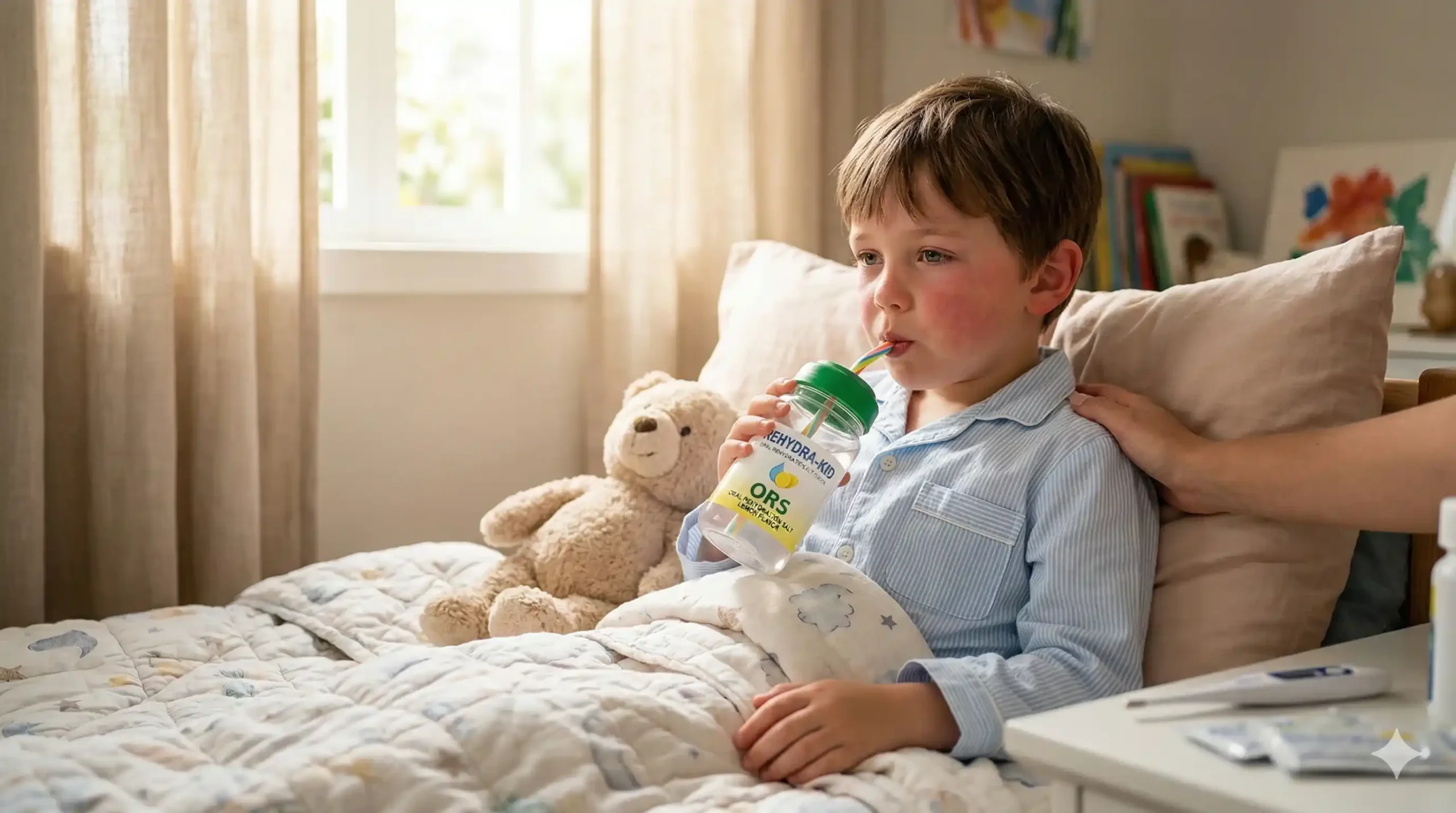
ORS is the medical expert among hydration drinks for kids during illness.
There are specific clinical scenarios where water alone cannot do the job. When a child is ill, they lose not just water but vital electrolytes like sodium, potassium, and chloride. In these situations, ORS is a medical necessity.
The Science of ORS
ORS is scientifically formulated with a precise ratio of salt and sugar.3 This sodium‑glucose balance activates a transport mechanism in the small intestine that pulls water into the bloodstream much faster than plain water can.
When to Prioritize ORS
- Diarrhea and vomiting: Rapid fluid loss during a stomach bug requires electrolyte replacement that water alone cannot provide.
- High fever: Elevated body temperature increases fluid loss through the skin and lungs.
- Signs of mild dehydration: Decreased urination (fewer than four wet diapers or bathroom trips in 24 hours), dry lips, or unusual lethargy are signals to reach for ORS immediately.
How Much ORS Should Your Child Drink?
The goal is to replace lost fluids over 4 hours. Use these guidelines as a starting point:
- Infants (under 1 year): Aim for 50–100 ml for every kg they weigh. (For example, a 5 kg baby needs about 1 to 2 cups of ORS over 4 hours).
- Children (1–10 years): Use the same 50–100 ml per kg rule. Give this in small, frequent sips to ensure they do not vomit it back up.
- Older Kids & Teens: They usually need 2–4 liters over 24 hours if they are moderately dehydrated, on top of their usual water intake.
If they are vomiting: Do not give up! Give 1 to 2 teaspoons (5–10 ml) every 5 minutes. If they can keep that down for an hour, you can slowly increase the amount. Even tiny sips add up and help prevent a trip to the hospital.
C. Coconut Water: A Natural Hydration Drink for Kids

Coconut water is a refreshing, low-sugar, and nutrient-rich alternative to many commercial sports drinks.
It is naturally high in potassium, magnesium, and calcium. This makes it an excellent choice for active children who need more than just water but do not yet require a medical-grade ORS.
When to Choose Coconut Water
- Post‑play recovery: Ideal for older, active children after soccer practice, a long bike ride, or a hot day at the playground.
- A healthy treat: If your child is tired of plain water, coconut water provides a slightly sweet, nutrient‑dense alternative without the insulin spike and sugar crash.
- Mild needs: It is helpful for replenishing electrolytes during a mild cold or a warm afternoon. However, it is not a substitute for ORS during severe illness.
How Much Coconut Water Should Your Child Drink?
For daily hydration or as a healthy treat, follow these general age-based limits:
- Toddlers (1–3 years): Up to 1/2 cup (120 ml) per day.
- School-Age (4–8 years): About 1 cup (240 ml) per day.
- Older Kids & Teens: Up to 1 1/2 to 2 cups (350–500 ml) on active days.
D. Fruit Juice: Handle-With-Care Hydration for Kids

Fruit juice is often marketed as healthy, but from a biological and dental perspective it requires careful management. While it provides vitamin C and antioxidants, its high fructose content and lack of fiber can cause rapid blood sugar spikes and dental erosion.
When to Drink Juice
Juice should not be a daily hydration drink. However, it can be offered occasionally as part of a balanced diet or as a diluted treat with meals. For everyday hydration, plain water is always the best choice.
The Best Way to Offer Juice
To keep your child healthy, follow these simple guidelines:
- Dilution is key: Always mix juice with water. A 1:1 ratio (half water, half juice) or even a 1:2 ratio (two parts water, one part juice) helps reduce the sugar while keeping the flavor.
- Avoid during diarrhea: Never give juice to a child with an upset stomach. The high sugar load can pull more water into the gut and make diarrhea much worse.
How Much Juice Should Your Child Drink?
Following the advice of the American Academy of Pediatrics,4 keep juice intake within these limits:
- Ages 1 to 3: No more than 1/2 cup (120 ml) per day.
- Ages 4 to 6: Between 1/2 cup and 3/4 cup (120–180 ml) per day.
- Ages 7 and older: No more than 1 cup (240 ml) per day.
Comparison of Hydration Drinks for Kids
| Drink Type | Sugar Content | Electrolyte Level | Best Use Case | Molecular Note |
|---|---|---|---|---|
| Plain Water | 0g | Low | Everyday hydration | Neutral pH; best for tooth enamel. |
| Clinical ORS | Low (Balanced) | High (Precise) | Illness / Dehydration | Uses sodium-glucose co-transport. |
| Coconut Water | Natural / Mid | Moderate (K+) | Post-play recovery | High Potassium, low Sodium. |
| Fruit Juice | High | Low | Occasional treat | High fructose; can worsen diarrhea. |
Drinks to Avoid: The Red Flags List
To keep hydration safe and effective, avoid these common beverages:
- Energy drinks: These contain caffeine and stimulants that can disrupt developing heart rhythms.
- Soda and sugary sports drinks: These provide empty calories and acidic citric acid that damage enamel.
- Caffeinated teas: These act as diuretics, potentially increasing fluid loss.
Hydration Myth‑Busting: Fact vs. Fiction
In the world of parenting, common myths often hide the scientific truth. Let’s clear up the confusion:
- Myth: “Clear soda or ginger ale is good for an upset stomach.”
- Fact: High‑sugar carbonated drinks can actually worsen diarrhea. Their osmotic effect pulls water into the gut, increasing fluid loss. A balanced ORS is the safest choice for recovery.
- Myth: “If they aren’t thirsty, they aren’t dehydrated.”
- Fact: Thirst is a late warning sign. Children often ignore early signals because they’re busy playing. Proactive hydration prevents problems before they start.
- Myth: “Sports drinks are necessary for any physical activity.”
- Fact: Most sports drinks are designed for adult athletes in intense workouts lasting over an hour. For typical play, water is biologically superior.
Signs of Insufficient Water Intake
As a researcher, I recommend parents watch for these clear signs of dehydration:
- Dark, strong-smelling urine
- No wet diapers or bathroom trips for more than 6 to 8 hours
- Dry lips, mouth, or “sticky” tongue
- Lack of tears when crying
- Sunken eyes or a sunken soft spot (fontanelle) on a baby’s head
- Unusual lethargy or appearing “floppy”
- Irritability and reduced focus
The Red Flag Checklist: When to Call the Pediatrician
Parents should watch carefully for these clinical signs of severe dehydration:
- Decreased urination: No wet diapers or bathroom trips for more than 6 to 8 hours.
- Lack of tears: Crying without producing any moisture.
- Physical markers: Sunken eyes, a soft spot (fontanelle) on a baby’s head, or extremely dry lips and tongue.
- Behavioral changes: Unusual lethargy, irritability, or appearing floppy and unresponsive.
⚠️ Note: If your child cannot keep any fluids down, even small sips of ORS, seek medical attention immediately to prevent complications.
The Takeaway: Hydration as a Health Strategy
Hydration is not a one-size-fits-all solution. Instead, it is a flexible strategy that changes with activity, illness, and environment
By moving from guesswork to a science-informed approach, parents can ensure their child is properly hydrated and supported during growth, play, and recovery.
Remember These Golden Rules
- Water is the default: For daily life, meals, and play, water should be the main drink.
- ORS is medical support: Use ORS during illness or significant dehydration.
- Context matters: Always match the drink to the situation and activity level.
With careful observation and smart drink choices, parents can build lifelong hydration habits that support health and development.
FAQ for Parents on Kids’ Hydration
Q1. Can I give my baby ORS or water before 6 months?
Exclusively breastfed or formula-fed infants typically do not need extra water. However, if your infant shows signs of illness or dehydration, consult your pediatrician before introducing an ORS.
Q2. What is the best hydration drink for kids?
Plain water is the gold standard. It has no sugar, no calories, and supports digestion, focus, and energy. For most daily activities, water is all your child needs.
Q3. Is milk considered a hydration drink?
Yes. Milk is nutrient-dense and actually has a high “hydration index” because its protein and fat content slow down fluid emptying from the stomach.5 However, it is a nutrient-dense food rather than a primary thirst quencher for active play.
Q4. How can I rehydrate my child quickly?
If your child is sick with diarrhea, vomiting, or fever, ORS is the fastest and safest route. For mild dehydration after play, water or coconut water may be enough.
Q5. What are the early warning signs of dehydration in children?
The two most reliable signs are decreased urination (fewer than four bathroom trips or wet diapers in 24 hours) and dry lips or mouth. Other red flags include lethargy, irritability, or sunken eyes. Additional signs of insufficient water intake: Look for: (1) Dark urine, (2) Dry lips, (3) Headaches, (4) Fatigue, (5) Constipation, (6) Dizziness, and (7) Reduced focus.
Q6. How do I keep my child hydrated when sick?
Offer small, frequent sips of ORS. Avoid juice or soda, which can worsen diarrhea. If they resist fluids, try a spoon or syringe for younger children, or chilled ORS ice cubes for older ones.
Q7. How can I hydrate a toddler who won’t drink?
Make hydration fun: use colorful cups, straws, or water bottles with markers. Offer water‑rich foods like watermelon, cucumber, or oranges. For stubborn toddlers, try flavored water infusions (lemon, berries) without added sugar.
Q8. Toddler dehydration: When should I worry?
Seek medical help immediately if your toddler shows severe signs: no urination for 6–8 hours, crying without tears, sunken fontanelle (soft spot), extreme lethargy, or inability to keep fluids down.
Q9. Can too much water be dangerous?
While rare, “water intoxication” (hyponatremia) can occur if a child drinks excessive amounts of plain water without replacing salt. This is why using an ORS is critical during heavy fluid loss—it maintains the delicate sodium balance in the blood.
Q10. Can my child drink sports drinks?
For the average child playing at the park or during a school day, sports drinks are unnecessary. For kids, the high sugar content and acidity can lead to weight gain and dental erosion. Stick to water unless they are in a competitive, long-duration sporting event.
Q11. What is the best hydration strategy for picky eaters?
If your child refuses to drink plain water, do not force it—eat your water. Many fruits and vegetables have a water content of over 80-90%.
- Top Picks: Watermelon, cucumbers, strawberries, and oranges.
- Pro Tip: Try “Infused Ice Cubes.” Freeze a single blueberry or a mint leaf inside an ice cube. It turns a glass of water into a “treasure hunt” for a picky toddler.
References
📚 Click to view references
- Daley SF, Avva U. Pediatric Dehydration. StatPearls Publishing; 2026.
Available from: https://www.ncbi.nlm.nih.gov/books/NBK436022/
- Centers for Disease Control and Prevention. Rethink Your Drink. Accessed March 10, 2026.
Available at: https://www.cdc.gov/healthy-weight-growth/rethink-your-drink/ - World Health Organization. Oral Rehydration Salts: Production of the New ORS.
Available at: https://www.who.int/publications/i/item/WHO-FCH-CAH-06.1
- Heyman MB, Abrams SA. Fruit Juice in Infants, Children, and Adolescents: Current Recommendations. Pediatrics. 2017;139(6):e20170967. Available at: https://publications.aap.org/pediatrics/article/139/6/e20170967/38754/Fruit-Juice-in-Infants-Children-and-Adolescents
- Berry CW, Wolf ST, Murray B, Kenney WL. Hydration Efficacy of a Milk Permeate-Based Oral Hydration Solution. Nutrients. 2020;12(5):1502. Available at: https://pmc.ncbi.nlm.nih.gov/articles/PMC7284605/
