
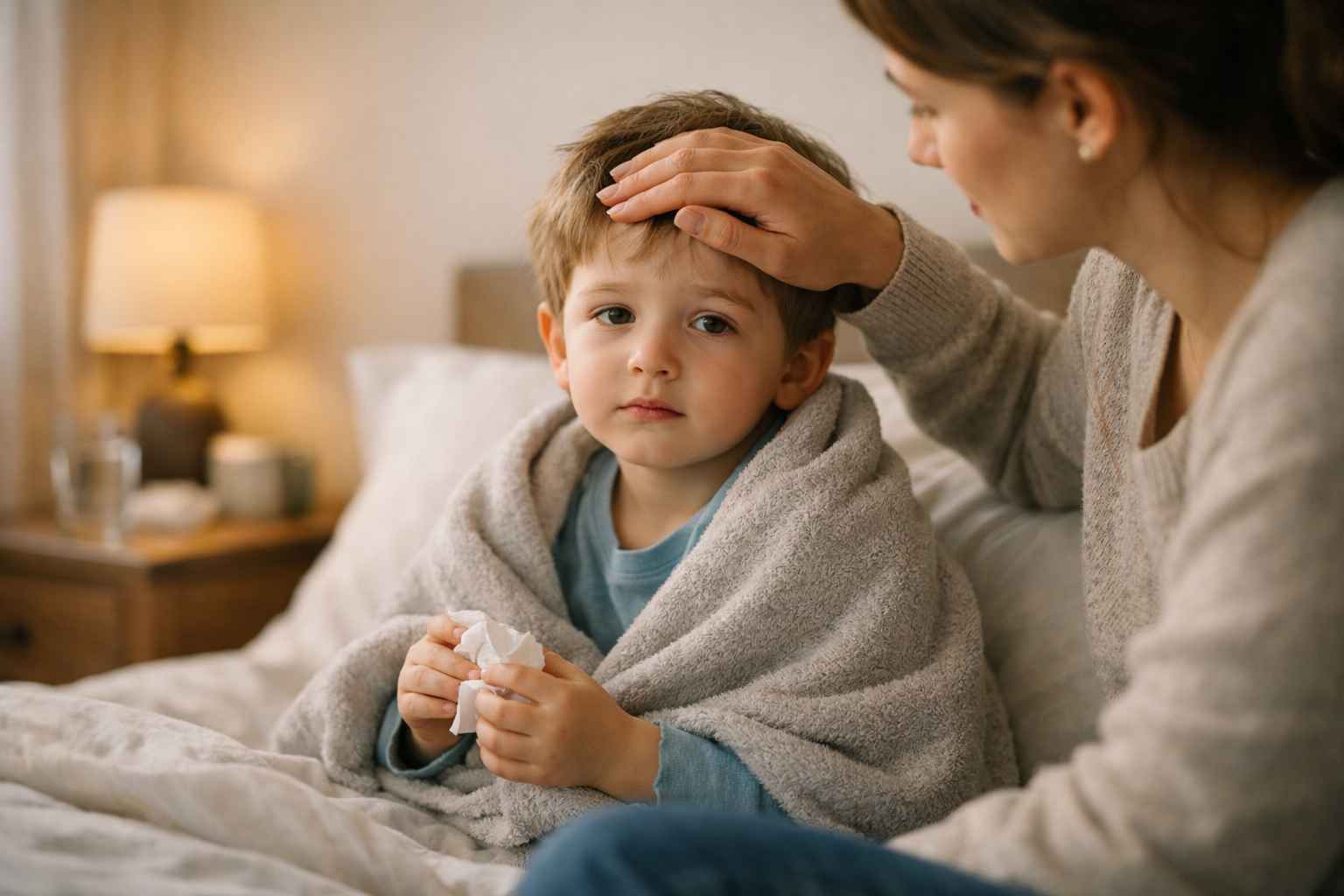
When your child starts sneezing, coughing, or complaining of a sore throat, your first thought likely points to a cold.
In many cases, child cold, flu, or allergy symptoms overlap so significantly in the early stages of infection that identifying the exact cause becomes tricky. However, key clinical differences exist that can help you understand what’s really happening and guide you toward the right care.
Note from the Author: As a molecular researcher with over 15 years in clinical diagnostics, I look at child cold, flu, or allergy symptoms at a cellular level. My goal is to help parents look beyond the surface to find the most direct path to recovery.
Quick Overview: Cold vs Flu vs Allergy
What is the difference between cold, flu, and allergies in children?
Child cold, flu, or allergy symptoms mainly differ in how they start and whether fever is present:
- Colds: Develop gradually over 2–3 days with mild symptoms and a runny or stuffy nose.
- Flu: Appears suddenly and often includes high fever, chills, and body aches.
- Allergies: Start quickly after exposure to triggers like pollen or dust, causing sneezing, itching, watery eyes, and no fever.
Cold vs Flu vs Allergy Symptoms at a Glance
To help you distinguish between these conditions, here’s a quick‑reference table of the most common clinical signs. This is how I categorize these triggers from a diagnostic perspective:
| Symptom | Cold | Flu | Allergies |
|---|---|---|---|
| Symptom Onset | Gradual (2–3 days) | Abrupt / Sudden | Immediate (on contact) |
| Fever | Rare / Low-grade | High (≥100.4°F); 3–4 days | Never |
| Body Aches | Mild | Severe / Exhausting | None |
| Chills | Uncommon | Fairly Common | Never |
| Headache | Rare | Common / Severe | Uncommon (Pressure) |
| Cough Style | Mild (Hacking) | Dry / Deep / Severe | Dry / Wheezy |
| Itchy Eyes | No | No | Yes (Watery) |
| Duration | 7–10 Days | 1–2 Weeks | Weeks / Seasonal |
8 Key Differences to Spot Child Cold, Flu, and Allergy Symptoms at Home

Here is how you can tell them apart at home:
1. Speed of Symptoms
Flu: Sudden
Cold: Gradual
Allergies: Immediate
The speed at which your child becomes unwell is a major clinical clue.
The incubation period for a cold is usually 1–3 days before symptoms appear slowly. In contrast, the flu hits abruptly—often within hours—while allergies trigger a reaction the moment your child hits a high pollen count or pet dander.
2. Fever Intensity: The Body’s Internal Alarm
Flu: High fever (≥100.4°F)
Cold: Low-grade or mild
Allergies: No fever
Fever is the body’s internal alarm against infection.
According to CDC guidelines, the flu usually involves a high fever (≥100.4°F) that lasts for 3 to 4 days. In contrast, a cold may only cause a mild, low-grade fever (usually under 100°F), while allergies will never cause a fever.
If your child has a persistent cough without a fever, it is often a sign that the body is reacting to an environmental trigger rather than a viral infection. Understanding these patterns early can prevent complications and unnecessary treatments.
3. The “Itch” Factor: Histamine vs. Infection
Allergies: Intense itching
Cold & Flu: Soreness, not itching
If your child keeps rubbing their eyes, nose, or even the roof of their mouth, it’s often a sign of an allergic reaction. This happens due to the release of histamine, a chemical the body produces when it reacts to triggers like dust or pollen.
In contrast, cold and flu symptoms in children come from viral infections. These usually cause irritation, soreness, or a blocked nose, but not the intense itching seen in allergies.
4. Mucus Texture and Color
Allergies: Clear and watery
Cold & Flu: Thick, yellow or green
Allergy mucus stays clear and thin indefinitely. During a cold or flu, mucus typically starts clear but becomes thick and yellow or green as white blood cells fight the virus.
5. Body Aches and Exhaustion
Flu: Severe fatigue and aches
Cold: Mild discomfort
Allergies: No body aches
The flu triggers a systemic release of cytokines, leading to deep muscle aches and fatigue. While a cold might make a child “fussy,” they can usually still play. Allergies may cause tiredness, but not true body pain.
6. Chills and Shivers: The Systemic Response
Flu: Common
Cold: Rare
Allergies: Never
Chills are a systemic response to a rising internal temperature and are often the very first sign of the flu. Because a cold is usually localized to the upper respiratory tract, it rarely triggers a full-body chill. Allergies, being non-infectious, do not trigger the shivering reflex.
7. Headaches: Pressure vs. Inflammation
Flu: Severe and common
Cold: Mild sinus pressure
Allergies: Sinus-related pressure
Flu-related headaches are often severe and systemic (affecting the whole head). In contrast, headaches from a cold or high pollen count are usually “sinus headaches” caused by localized inflammation and pressure in the nasal cavities.
8. Chest Discomfort and Coughing Style
Flu: Deep and painful
Cold: Hacking cough
Allergies: Dry or wheezy
The type of cough reveals where the irritation lies. A flu cough is often deep, dry, and painful. A cold cough is a “hacking” response to post-nasal drip, while an allergy cough often includes wheezing due to mild airway constriction.
How to Prevent Cold, Flu and Allergy Symptoms in Children
Preventing a child cold, flu, or allergy symptoms requires two different biological approaches: strengthening the immune response against viruses and reducing the “overreaction” to allergens.
1. Viral Defense: Blocking the Cold and Flu
At a molecular level, viruses enter the body through the eyes, nose, and mouth. To stop them before they replicate:
- The 20-Second Rule: Proper handwashing is your first line of defense. The World Health Organization (WHO) emphasizes that physically breaking the viral envelope with soap and water is the most effective way to stop the spread of respiratory infections.
- Boost Cellular Rest: Sleep is when the immune system produces cytokines, the proteins that fight infection. Ensure your child gets age-appropriate rest to keep their “viral defense” strong.
- Hydration is Key: Keeping the mucus membranes in the nose hydrated helps them act as a physical trap for incoming germs.
2. Allergy Shielding: Reducing the Histamine Trigger
Since allergies are an “overreaction” of the immune system, prevention is about reducing exposure:
- The “Outdoor-to-Indoor” Transition: During pollen season, change clothes and wash the face immediately after coming inside.
- Use Clean Air at Home: High‑quality air filters (HEPA) trap microscopic allergens before they are inhaled.
- Dust Control: Wash bedding in hot water (≥130°F / 54°C) to kill dust mites and remove allergen proteins.
How to Treat Child Cold, Flu and Allergy Symptoms at Home
Once you understand what is causing your child’s symptoms, home care becomes much more effective. The goal is simple: support the body based on what it is actually dealing with.
1. Home Care for a Common Cold
A cold is a localized viral infection. Your goal is to support the immune system and keep airways clear.
- Prioritize Hydration: Offer water, warm broths, or electrolyte solutions to help thin secretions, making it easier to cough or blow out. If you are not sure which fluids are most effective, check out my complete guide on the Best Hydration Drinks for Kids: When to Give Water, ORS, Coconut Water, or Juice.
- Soothe the Airways: Saline drops and a cool-mist humidifier can reduce congestion.
- Patience over Prescriptions: Antibiotics cannot kill cold viruses. Focus on comfort and let the immune system do its job.
2. Home Care for the Flu (Influenza)
The flu affects the whole body and requires more careful management.
- Mandatory Rest: Keep your child in bed or resting quietly. Their body needs all available energy to fight the virus.
- Fever Management: If fever causes severe discomfort, use age‑appropriate OTC fever reducers exactly as directed by your pediatrician.
- Prevent Dehydration: High fevers burn through water reserves quickly. Encourage small, frequent sips of fluids throughout the day.
3. Home Care for Allergies
Allergies are not infections. Instead, they are immune reactions triggered by the environment.
- Wash Away Triggers: After outdoor play, have your child wash hands, face, and hair to remove pollen, mold, or pet dander.
- Filter the Air: Keep windows closed during pollen season. Use a HEPA purifier to capture allergens before they’re inhaled.
- Target the Histamine: OTC options can “turn off” the itchy, watery, and sneezing reaction by blocking the allergic response at a cellular level (always follow pediatric guidance).
When to Call the Pediatrician: Red Flags for Parents
Regardless of the cause, your child’s safety is the priority. The American Academy of Pediatrics (AAP) recommends seeking immediate medical attention if you notice any signs of labored breathing or extreme lethargy.
- Difficulty Breathing: If your child is breathing faster than usual, wheezing, or you see their chest “sucking in” (retractions), seek medical care immediately.
- High or Persistent Fever: A fever that lasts more than 3–4 days, or a fever that goes away and then returns suddenly, can be a sign of a secondary bacterial infection.
- Signs of Dehydration: If your child is not drinking fluids, has a dry mouth, or is urinating less frequently than usual.
- Extreme Lethargy: If your child is unusually drowsy, difficult to wake, or inconsolable.
- Ear Pain or Sinus Pressure: These are often signs that a simple cold has progressed into an ear or sinus infection.
By now, you have a clear and practical framework to identify Child Cold, Flu, or Allergy Symptoms at home with confidence.
The Takeaway
Every sneeze or cough can feel worrying, but understanding the biological signatures of child cold, flu, or allergy symptoms helps parents act with confidence.
- Cold: Develop gradually over 2–3 days. Expect a mild fever, thickening mucus, and localized discomfort (nose/throat).
- Flu: Symptoms strike abruptly, high fever (≥100.4°F), chills, severe body aches, and deep chest exhaustion.
- Allergies: Symptoms appear immediately after exposure. Characterized by clear watery mucus, intense itching, repeated sneezing, and absolutely no fever.
By identifying the cause, you can support faster recovery and avoid unnecessary treatments. Focus on hydration and comfort for colds, ensure adequate rest and fluids for the flu, and prioritize trigger control for allergies. However, always stay alert for red flags — if they appear, seek medical care without delay.
FAQs: Child Cold, Flu, or Allergy Symptoms in Children
Here are answers to the most common questions parents ask about child cold, flu, or allergy symptoms.
Q1. Does my child have allergies or a cold?
To tell the difference, look at the “itch” and “speed” factors. A cold typically builds over several days and often involves a mild fever. Allergies happen almost instantly upon contact with a trigger and are characterized by intense itching (eyes, nose, throat) and clear, watery mucus—but never a fever.
Q2. Can allergies cause a fever in a child?
No. At a clinical level, a fever is the body’s systemic response to fighting an infection, such as a virus or bacteria. Allergies are an overreaction to an environmental trigger (like pollen or dust) and release histamine, but they do not cause a rise in core body temperature. If your child has a fever, they are fighting a germ, not an allergy.
Q3. How do I know if my child’s cough is from a cold or allergies?
A cold-related cough usually starts alongside a scratchy throat, mild fever, and thicker mucus, resolving in 7 to 10 days. An allergy cough is often dry, persistent, and accompanied by clear, watery mucus and itchy eyes. If your child has a continuous cough without a fever, it is highly likely an environmental trigger.
Q4. Does green mucus mean my child needs antibiotics?
Not necessarily. As a molecular researcher, I always remind parents that mucus often turns yellow or green during a normal viral cold. This color change simply means your child’s white blood cells are actively fighting the virus and being expelled. Antibiotics only kill bacteria, so they will not help a viral cold or the flu.
Q5. How long is my child contagious with a cold or the flu?
Children are typically most contagious during the first 2 to 3 days of a cold, and for the first 3 to 4 days of the flu (often right as the fever spikes). Once their fever has been gone for 24 hours without the use of medication, their viral shedding drops significantly. Allergies, of course, are never contagious.
Q6. Can a cold turn into allergies?
No, a virus cannot biologically transform into an allergy. However, a severe cold can leave your child’s nasal passages inflamed and highly sensitive. This temporary hyper-reactivity can sometimes look like an allergy, but it will fade as the cellular lining of the nose heals.
Q7. Why does my child keep sneezing without a fever?
Frequent sneezing without fever is most commonly linked to allergies. Triggers such as dust, pollen, or pet dander can cause repeated sneezing without signs of infection.
References
📚 Click to view references
- Centers for Disease Control and Prevention (CDC). Flu Symptoms and Complications. Available from: CDC Flu Symptoms
- World Health Organization. Hand hygiene. Available from: WHO Hand Hygiene
- American Academy of Pediatrics. Emergency symptoms not to miss. Available from: AAP Emergency Symptoms
- American Academy of Pediatrics. Is it allergies or a cold? How to tell the difference. Available from: HealthyChildren Guide
- National Institutes of Health (NIH). Cold, flu, or allergy? Know the difference for best treatment. Available from: NIH Guide
