

Key Takeaways:
- Baby waking up too early means consistently waking before 6:00 AM, such as waking at 5:00 AM and struggling to fall back asleep.
- The most common causes include sleep regressions, nap transitions, hunger, overtiredness, early morning light exposure, and sleep associations.
- Identifying the underlying cause is the key to choosing the most effective sleep strategy.
- Most babies gradually outgrow early morning waking with consistent, age-appropriate sleep routines.
- Seek medical advice if early waking is accompanied by poor feeding, poor weight gain, breathing difficulties, fever, persistent vomiting, or other concerning symptoms.
You open your eyes. It is 5:03 AM. Your baby is already awake in the crib, smiling or crying, and the day has started whether you were ready or not.
Baby waking up too early is one of the most common sleep concerns during the first year of life. Also known as baby early morning waking, it typically refers to a baby consistently waking before 6:00 AM, especially between 6 and 12 months of age.
Unlike random night wakings, early morning waking often happens at nearly the same time each day, making it seem like a fixed pattern. In most cases, however, it is temporary, and the solution depends on identifying the underlying cause.
What Is Baby Early Morning Waking?
Baby early morning waking is when a baby consistently wakes between 4:00 AM and 6:00 AM and has difficulty falling back asleep. Sleep experts generally define wake-ups before 6:00 AM as early morning waking, while awakenings before 4:00 AM are usually considered night wakings. Many parents first notice the pattern when their baby suddenly starts waking at 5:00 AM every morning, even after previously sleeping later.
Unlike an occasional early wake-up caused by illness, travel, or a disrupted routine, true early morning waking follows a predictable pattern and often occurs at nearly the same time each day.
This happens because a baby’s internal body clock, known as the circadian rhythm, naturally begins preparing the body for wakefulness before sunrise.
When combined with factors such as hunger, sleep regressions, overtiredness, nap transitions, or early morning light exposure, this wake-up signal can occur earlier than expected.
Baby Early Morning Waking by Age
The most common causes of baby early morning waking vary as a baby’s sleep patterns and developmental milestones change. This table summarises the typical reasons babies wake before 6:00 AM at different ages.
| Baby’s Age | Most Common Causes of Early Morning Waking |
|---|---|
| 0–3 months | Hunger, an immature circadian rhythm, frequent feeding needs, and developing sleep cycles. |
| 4 months | The 4-month sleep regression, changing sleep cycles, and increased sensitivity to light and noise. |
| 6 months | Sleep regression, hunger, overtiredness, and an age-appropriate nap schedule that may need adjustment. |
| 8–10 months | The 8-month sleep regression, nap transitions, separation anxiety, and sleep associations. |
| 10–12 months | Changing sleep needs, the transition toward fewer naps, early morning light exposure, and established waking habits. |
Why Is My Baby Waking Up So Early?
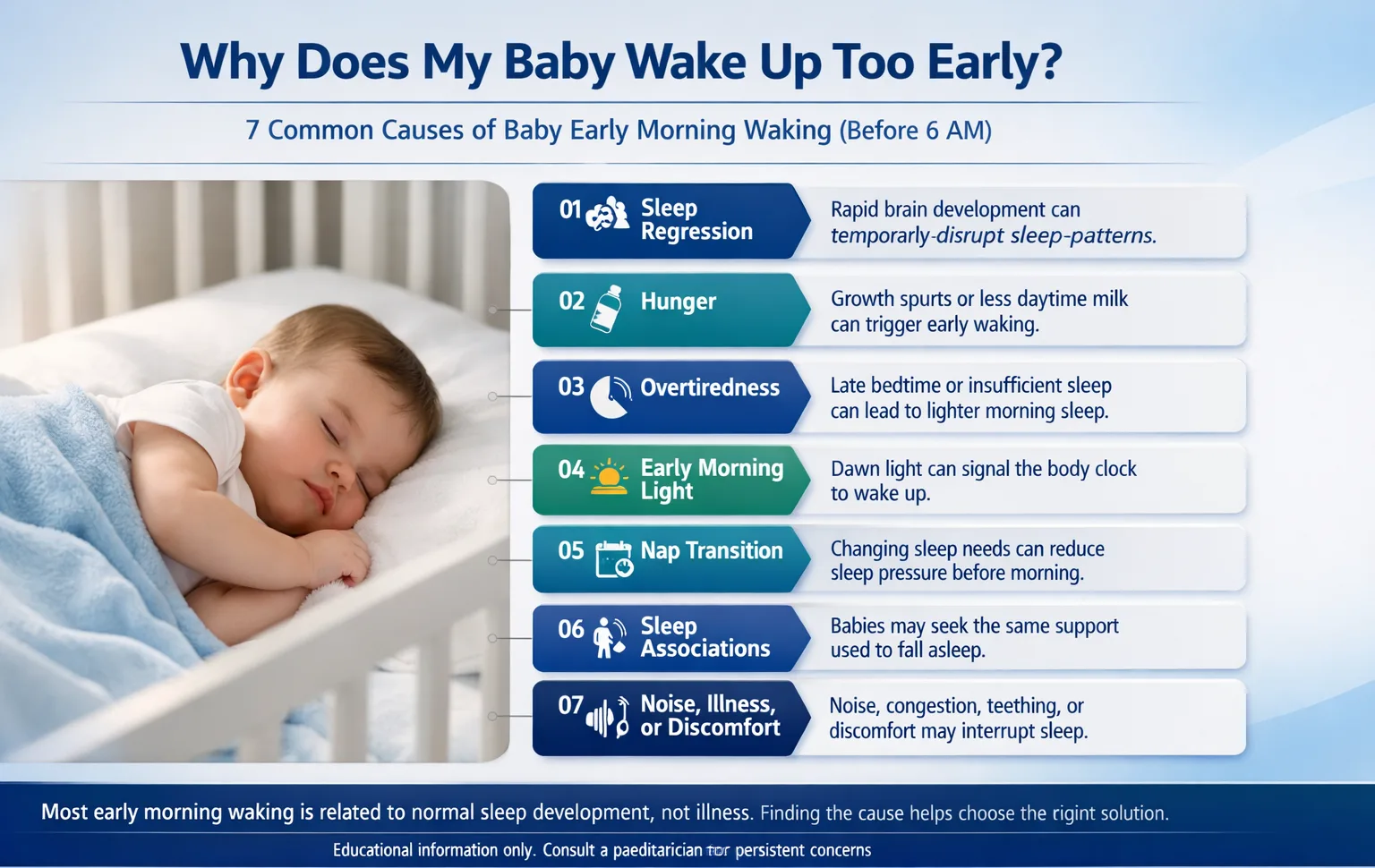
Most cases of baby early morning waking are caused by normal changes in infant sleep, not an underlying medical condition.
During the early morning hours, melatonin naturally declines while cortisol gradually rises, making sleep lighter and easier to interrupt. Research on infant sleep patterns shows that babies spend more time in lighter stages of sleep toward the end of the night, making early morning wake-ups more likely.1
Even small triggers, such as hunger, sleep regression, overtiredness, nap transitions, early morning light, noise, or sleep associations, can cause a baby to wake fully instead of settling back to sleep.
Many babies have more than one contributing factor, so identifying the most likely cause before changing the sleep routine is important.
1. Sleep Regression
Sleep regression is one of the most common causes of baby early morning waking.
During periods of rapid brain development, especially around 4 months, 6 months, and 8 to 10 months, babies may begin waking earlier, taking shorter naps, or waking more often at night. The pattern usually improves within 2 to 6 weeks. Research on infant sleep patterns shows that sleep commonly changes throughout the first year as babies’ sleep cycles mature.2
Learn more in our guide to Baby Sleep Regression: Frequent Night Wakings at 4, 6, 8, and 12 Months
2. Nap Transition or Inappropriate Nap Schedule
As babies grow, their sleep needs change. Too much daytime sleep, missed naps, or being ready to transition to fewer naps can reduce sleep pressure, leading to earlier morning wake-ups.
Read our complete guide to Nap Transitions by Age: Signs Your Child Is Ready to Drop a Nap
3. Hunger
Young babies may wake early because they are hungry, particularly during growth spurts or when daytime milk intake has decreased. If feeding consistently helps your baby return to sleep, hunger may be contributing.
4. Overtiredness
A late bedtime or insufficient daytime sleep can increase cortisol levels, making babies more likely to wake fully during the lighter stages of sleep before sunrise.
5. Early Morning Light Exposure
Sunlight is a powerful signal for the body’s internal clock. Even small amounts of early morning light entering the room can encourage babies to wake earlier than expected.
6. Sleep Associations
Babies who rely on rocking, feeding, or being held to fall asleep may need the same conditions when they naturally wake between sleep cycles in the early morning.
7. Noise and Room Temperature
Household noise, birds, traffic, or a room that becomes too warm or too cold before dawn can interrupt light morning sleep and trigger early waking.
8. Illness or Teething
Colds, ear infections, reflux, teething discomfort, or nasal congestion can temporarily disturb sleep and lead to earlier-than-usual wake-ups. If early waking begins suddenly alongside other symptoms, consider an underlying illness.
Baby Early Morning Waking Troubleshooting Guide
If a baby is waking up too early, the pattern of waking often provides clues to the underlying cause. Use this quick guide to identify the most likely reason before changing the baby’s sleep routine.
| If your baby… | The most likely cause |
|---|---|
| Wakes at 5:00 AM and settles after a full feed | Hunger or a growth spurt |
| Wakes at nearly the same time every morning | Circadian rhythm or an established waking habit |
| Starts waking early around 4 months | 4-month sleep regression |
| Starts waking early around 6 or 8–10 months | Sleep regression or changing sleep needs |
| Wakes shortly after sunrise | Early morning light exposure |
| Starts waking early after a late bedtime | Overtiredness and increased cortisol levels |
| Wakes during a nap transition | Reduced sleep pressure or an age-related schedule change |
| Needs rocking or feeding to return to sleep | Sleep associations |
Remember: More than one factor often contributes to baby early morning waking. Identifying the most likely cause before changing the baby’s routine makes it easier to choose an effective solution and avoid unnecessary adjustments.
How to Stop Baby Early Morning Waking
Fixing baby early morning waking usually requires addressing the underlying cause, since a single isolated change rarely resolves it on its own. In many babies, small changes to the sleep environment, feeding schedule, and daily routine work better than making one major change.
1. Block Out Early Morning Light
Use blackout curtains or a blackout blind to keep the room as dark as possible until the desired wake-up time. Even a small amount of sunrise light can signal the circadian rhythm that it is time to wake, making early morning waking more likely.
2. Adjust Bedtime Based on the Cause
Babies who are overtired often benefit from an earlier bedtime by fifteen to thirty minutes, while babies who are undertired may need a shorter final nap or a slightly later bedtime. Research has consistently linked regular bedtime routines with better sleep outcomes in young children.3
3. Review the Nap Schedule
As babies grow, their sleep needs change. If early waking begins during a nap transition, gradually adjusting nap timing or shortening a late afternoon nap may help restore healthy sleep pressure.
4. Offer a Full Feed Before Bed
Hunger is a common cause of early waking, especially during growth spurts or when daytime milk intake has recently decreased. A full bedtime feed may help some babies sleep longer.
5. Reduce Sleep Associations Gradually
Babies who rely on rocking, feeding, or being held to fall asleep often need the same support when they briefly wake before dawn. Encouraging independent sleep at bedtime can improve early morning sleep over time.
6. Keep the Room Quiet and Comfortable
White noise can mask household or outdoor sounds, while maintaining a comfortable room temperature helps reduce unnecessary awakenings before sunrise.
7. Treat Early Waking Like a Night Waking
If your baby wakes at 5:00 AM but is not ready to start the day, keep the room dark, interactions quiet, and stimulation to a minimum. Avoid turning on bright lights or offering breakfast immediately, as this can reinforce early waking as the new morning routine.
Common Mistakes That Reinforce Early Waking
Many parents try hard to fix early waking but make a few small mistakes without realising it. A handful of these are worth checking before assuming the pattern is unresponsive to change.
1. Putting the Baby to Bed Too Late
A late bedtime does not lead to a later morning. Overtired babies often sleep worse overall and tend to wake even earlier, not later.
2. Feeding Every Time the Baby Wakes at 5 AM
If a baby eats well during the day, an early morning feed can turn into a learned habit over time, making it worth distinguishing hunger from habit before feeding on waking.
3. Letting the First Nap Happen Too Early
Napping shortly after an early wake-up, for example at 6:30 or 7:00 AM, signals to the baby’s body that the night has already ended. This tends to reinforce the early waking pattern instead of resolving it.
4. Not Checking for Light Leaks
Even a small amount of sunlight entering the room can be enough to wake a baby. Keeping the room fully dark until the desired wake-up time removes one of the most common triggers.
5. Changing the Routine Too Often
Babies learn through repetition. Frequently changing the sleep plan makes it harder to establish a consistent wake time. Research has shown that consistent parenting practices around sleep are associated with better infant sleep outcomes.3
When to Worry About Baby Early Morning Waking
Most cases of baby early morning waking are a normal part of infant sleep development and improve with time. However, persistent early waking accompanied by other symptoms may require medical evaluation.
- Babies younger than 6 months. If a baby under 6 months suddenly develops persistent early morning waking together with poor feeding, fever, lethargy, breathing difficulties, or reduced wet nappies, contact a paediatrician promptly, as younger infants require a lower threshold for medical assessment.
- Breathing problems during sleep. Loud snoring, repeated pauses in breathing, gasping, or persistent mouth breathing during sleep are not typical and should be evaluated, as they may indicate an underlying sleep or airway problem.
- Persistent feeding or growth concerns. Early morning waking combined with poor weight gain, feeding difficulties, frequent vomiting, significant reflux, or signs of dehydration should be assessed to rule out an underlying medical condition.
- Illness or persistent discomfort. Ear infections, nasal congestion, eczema flare-ups, teething discomfort, or other illnesses can temporarily disrupt sleep. If early waking begins suddenly and is accompanied by fever, persistent pain, or the baby appears unusually unwell, seek medical advice.
- No improvement despite routine changes. If a baby continues waking before 6:00 AM after 2 to 4 weeks of consistent, age-appropriate sleep routines and environmental adjustments, discuss the pattern with a paediatrician to identify any contributing sleep or medical factors.
Clinical Note: Early morning waking is usually related to normal sleep development, not illness. In most healthy babies, improving sleep habits and allowing time for developmental changes are enough to resolve the pattern.
Conclusion
Baby waking up too early, also known as baby early morning waking, is common during the first year of life and is usually linked to normal sleep development, not a serious medical problem. Sleep regressions, changing nap needs, hunger, overtiredness, and early morning light are among the most frequent causes, and many babies have more than one contributing factor.
Small, consistent adjustments to a baby’s sleep routine are often more effective than making several changes at once. If early morning waking persists despite appropriate sleep habits, or is accompanied by poor feeding, poor weight gain, breathing difficulties, fever, or other concerning symptoms, seek advice from a paediatrician.
Most babies gradually settle into a more predictable morning wake-up time as the underlying cause is addressed.
Frequently Asked Questions (FAQ)
Q1. Why is my baby waking up at 5 AM all of a sudden?
A baby may suddenly start waking at 5:00 AM because of a sleep regression, nap transition, overtiredness, hunger, or increased exposure to early morning light. Temporary illnesses or teething can also disrupt sleep. If the pattern continues for more than two weeks despite a consistent sleep routine, review the baby’s schedule or discuss it with a paediatrician.
Q2. Is 5 AM too early for a baby to wake up?
Yes, in most babies a wake-up between 6:00 AM and 7:00 AM is considered a typical morning wake time. Waking consistently before 6:00 AM is generally classified as baby early morning waking, although normal wake times vary with age and individual sleep needs.
Q3. How do I stop my baby waking up at 5 AM?
The best approach depends on the underlying cause. Optimising the nap schedule, preventing overtiredness, offering full daytime feeds, blocking early morning light with blackout curtains, and maintaining a consistent bedtime routine often improve early morning waking over time.
Q4. Why will my baby not go back to sleep after waking at 5 AM?
During the early morning hours, melatonin naturally falls while cortisol rises, making sleep lighter. Hunger, light, noise, or sleep associations may prevent a baby from settling back to sleep once fully awake.
Q5. Why does my baby wake at 6 AM instead of 7 AM?
A one-hour shift in wake time is often related to changes in sleep needs, bedtime timing, seasonal sunrise, or the circadian rhythm. A baby who is otherwise sleeping well and growing normally may still fall within the normal range at a 6:00 AM wake time.
Q6. Can a sleep regression cause early morning waking?
Yes. Sleep regressions commonly occur around 4 months, 6 months, and 8 to 10 months. During these periods, babies may wake earlier than usual, take shorter naps, or wake more frequently overnight. Most regressions improve within 2-6 weeks.
Q7. Can teething cause early morning waking?
Yes. Teething discomfort can temporarily interrupt sleep, including during the early morning hours. Persistent early waking is often caused by more than one factor, so sleep schedules, feeding patterns, and the sleep environment should also be reviewed.
Q8. Does early morning light make babies wake earlier?
Yes. Exposure to sunrise or even small amounts of light entering the bedroom can signal the body’s internal clock that it is time to wake. Blackout curtains or blackout blinds can help reduce this effect.
Q9. Is early morning waking a sign my baby is hungry?
It can be, especially in younger babies, during growth spurts, or when daytime milk intake has decreased. If feeding consistently helps a baby return to sleep, hunger may be contributing to the early wake-up.
Q10. What should I do if my baby is waking up too early every day?
If your baby is waking up too early every day, review bedtime, naps, feeding, early morning light, and sleep habits. Keep a consistent routine and a dark sleep environment. Seek medical advice if early waking continues despite appropriate routines or is accompanied by poor feeding, poor weight gain, breathing problems, fever, vomiting, unusual lethargy, or other concerning symptoms.
References
📚 Show References
- Mindell JA, Sadeh A, Wiegand B, Settle BA, Goh DYT. Development of infant and toddler sleep patterns: Real-world data from a mobile application. Journal of Sleep Research. 2016;25(5):508–516. From: https://pubmed.ncbi.nlm.nih.gov/27252030/
- Paruthi, S., et al. (2016). Consensus statement of the American Academy of Sleep Medicine on the recommended amount of sleep for healthy children: Methodology and discussion. Journal of Clinical Sleep Medicine, 12(11), 1549–1561. From: https://pubmed.ncbi.nlm.nih.gov/27707447/
- Mindell, J. A., Li, A. M., Sadeh, A., Kwon, R., & Goh, D. Y. (2015). Bedtime routines for young children: A dose-dependent association with sleep outcomes. Sleep, 38(5), 717–722. From: https://pubmed.ncbi.nlm.nih.gov/25325483/
- Sadeh, A., Tikotzky, L., & Scher, A. (2002). Parenting and infant sleep. Sleep Medicine Reviews, 6(3), 239–250. From: https://pubmed.ncbi.nlm.nih.gov/12069784/
- Baby waking up too early: Reasons and tips to handle early risers. (n.d.). Retrieved October 7, 2025, from
https://huckleberrycare.com/blog/10-hidden-reasons-your-child-keeps-waking-too-early
- Is Your Baby Waking Up Too Early? How to Train an Early Riser. (n.d.). Retrieved October 7, 2025, from
https://www.whattoexpect.com/first-year/sleep-training-for-early-waking-baby
