
Written by: MediHealth PRO Editorial Team
Scientifically Reviewed by: Dr. Amit Pande, PhD
Molecular Biologist & Clinical Research Expert
Medically Reviewed by: Dr. Arghyadeep Marik, MD
Independent Medical Reviewer, MediHealth PRO
Key Takeaways:
- Baby sleep problems can contribute to parental burnout by causing ongoing sleep deprivation and prolonged parenting stress.
- Parental burnout is more than ordinary tiredness. It persists despite rest and can make everyday parenting feel more difficult.
- Common signs include constant exhaustion, irritability, emotional overwhelm, and difficulty concentrating.
- Small, practical changes such as sharing nighttime responsibilities, improving your baby’s sleep routine, and accepting support can help reduce stress.
- Seek professional advice if symptoms persist for several weeks or begin affecting your wellbeing or your ability to care for your child.
If your baby has been waking every one to two hours for weeks or months, it is normal to feel completely exhausted. Sustained sleep disruption does not just make you tired. It changes how your brain and body respond to stress.
As sleep deprivation continues, stress hormones such as cortisol remain elevated for longer, making it difficult to stay patient and think clearly.
This is not a sign of weakness. It is a well-recognized biological response to prolonged sleep deprivation.
Parental burnout is a state of physical and emotional exhaustion1,2 caused by ongoing parenting stress, and it is well documented among parents caring for babies with persistent sleep difficulties.
If you are feeling overwhelmed or close to your breaking point, know that this stage is often temporary. With the right support and practical routines, both your sleep and your confidence can improve.
Signs of Parental Burnout
Every parent feels tired after a difficult night. Parental burnout is different. It develops when ongoing stress and disrupted sleep leave you feeling physically, emotionally, and mentally exhausted over time.3 If your baby has frequent night wakings or ongoing sleep problems, watch for these common signs.
Physical signs
- Feeling exhausted most days, even after a chance to rest
- Frequent headaches or muscle tension
- Poor-quality sleep or difficulty falling asleep, even when your baby is sleeping
- Low energy for everyday activities
- Getting sick more often than usual
Emotional signs
- Becoming more irritable or short-tempered
- Feeling emotionally drained or overwhelmed
- Guilt or self-blame about your baby’s sleep
- Losing enjoyment in parenting or daily activities
- Feeling emotionally detached or numb
Cognitive signs
- Poor concentration or difficulty staying focused
- Forgetting appointments, conversations, or routine tasks
- Slower decision-making
- Feeling mentally foggy throughout the day
If several of these symptoms persist for weeks and begin affecting your daily life, this may indicate parental burnout rather than normal tiredness. Recognising these warning signs early can help you seek support before exhaustion becomes more severe.
Normal Tiredness or Parental Burnout? A Quick Comparison
Feeling tired after a few disrupted nights is a normal part of caring for a baby.
Parental burnout is different. It develops when ongoing parenting stress and sleep disruption continue for weeks or months, making it harder to recover even when opportunities to rest become available.4
| Normal Tiredness | Parental Burnout |
|---|---|
| Improves after rest | Persists despite rest |
| Usually lasts a few days | Lasts for weeks or months |
| Mild frustration after difficult days | Feeling emotionally exhausted or overwhelmed most days |
| Still enjoys parenting most of the time | Finds it difficult to enjoy everyday parenting |
| Can cope with daily responsibilities | Feels less able to cope with everyday demands |
| Energy returns after adequate sleep | Exhaustion continues despite opportunities to rest |
If the signs in the right column sound familiar and have persisted for several weeks, it may be more than ordinary tiredness, and the practical strategies in the following sections may help you cope more effectively.
What Causes Parental Burnout From Baby Sleep Problems?
Burnout rarely comes from a single bad night. It builds when sleep loss accumulates over weeks or months, and it is usually driven by more than one factor at the same time.
1. Ongoing sleep deprivation
Multiple wakings a night, and waking too early each morning, leave parents without sufficient uninterrupted sleep.
Over time, this can affect mood, patience, concentration, and the ability to cope with daily stress.5 It is more than simply feeling tired.
Sleep regressions at specific ages, such as the 4-month, 12-month, or 24-month stage, are common triggers for this kind of prolonged disruption.
2. Insufficient support
Caring for a baby without enough help from a partner, family member, or friend makes long nights harder to recover from. Without time to rest, tiredness continues to build day after day.
3. Trying to be the perfect parent
Many parents feel they should always stay calm and manage every sleep problem on their own.
Advice from social media, parenting books, or other people can create unrealistic expectations. When things do not go as planned, many parents blame themselves rather than recognising that baby sleep problems are common.
4. No time for yourself
When most of the day and night is spent feeding, settling, or comforting your baby, there is little time left for yourself.
Missing simple things like drinking a cup of coffee in peace, taking a short walk, or reading for a few minutes can gradually leave you feeling emotionally and physically worn out.
These factors often happen together. Strong support can help some parents cope better. Others struggle because they are carrying most of the responsibility alone. Understanding these causes is a first step towards finding practical ways to reduce stress and recover.
Understanding the Parental Burnout Cycle
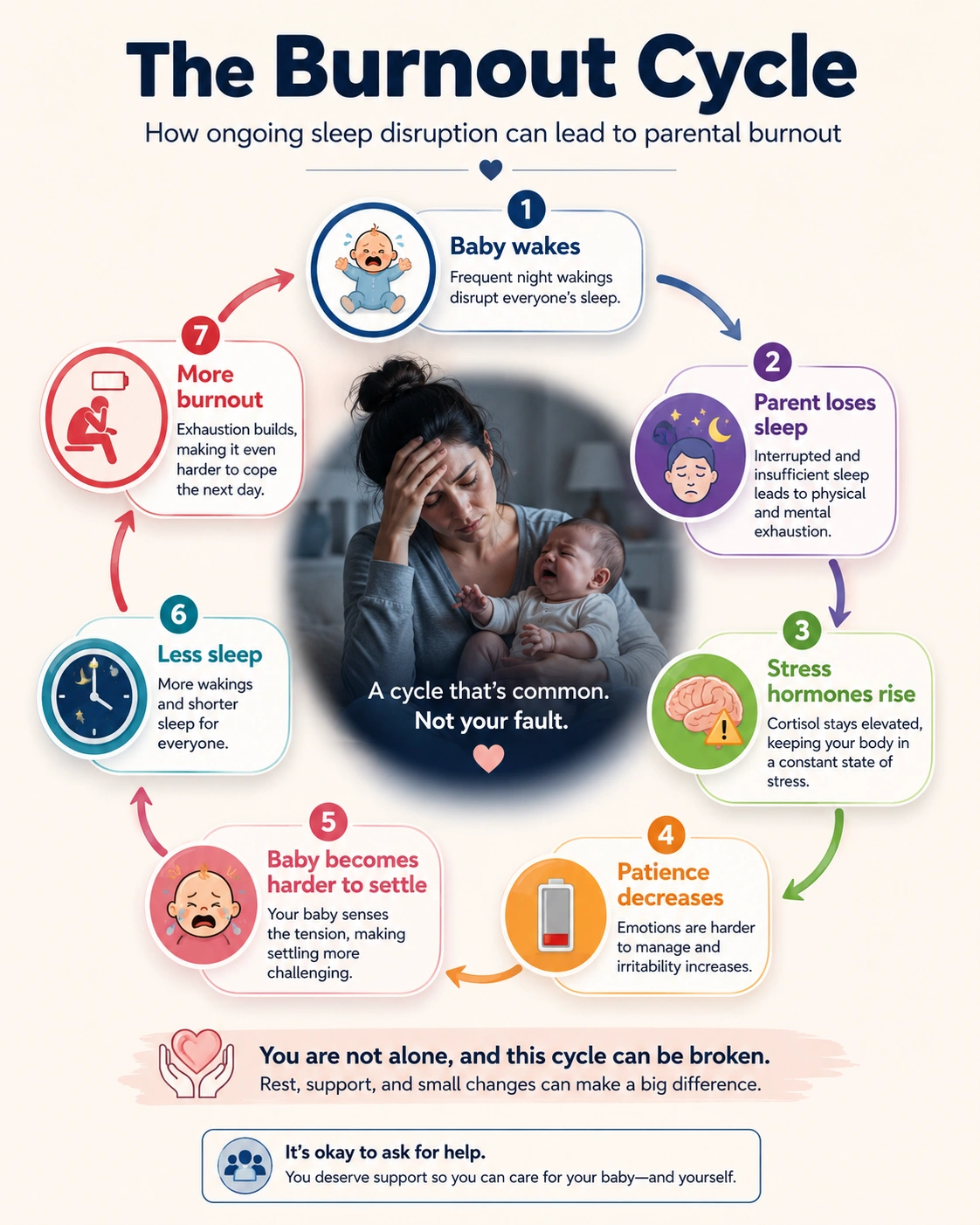
Parental burnout often develops as a cycle rather than a single event. Frequent night wakings disrupt restorative sleep for both the baby and the parent. As sleep deprivation continues, physical and mental exhaustion gradually build, while stress hormones such as cortisol remain elevated.
This can reduce patience, impair concentration, and make it harder to respond calmly during challenging moments.
An exhausted parent may then find it more difficult to settle a distressed baby, leading to further sleep disruption for the whole family.
Over time, this self-perpetuating cycle can contribute to parental burnout. Recognizing the pattern is the first step toward breaking it through healthy sleep habits, shared caregiving, and timely support.
How Sleep Loss Can Progress to Parental Burnout
A few sleepless nights are a normal part of caring for a baby. However, when sleep disruption continues for weeks or months, its effects become more noticeable. While every parent responds differently, prolonged sleep deprivation can gradually affect physical health, emotional state, and daily functioning.
| Duration of Sleep Disruption | Common Effects |
|---|---|
| 1–2 nights | Tiredness, daytime sleepiness, reduced energy |
| 1–2 weeks | Irritability, poor concentration, reduced patience |
| Several weeks | Persistent exhaustion, emotional overwhelm, difficulty coping, early signs of parental burnout |
| Several months | Physical, emotional, and mental exhaustion that may significantly affect family life, work, and daily life overall |
Not every parent will experience the same symptoms or progress through these stages. Strong support, opportunities to rest, and practical coping strategies can reduce the risk of parental burnout.
7 Practical Strategies to Cope With Parental Burnout
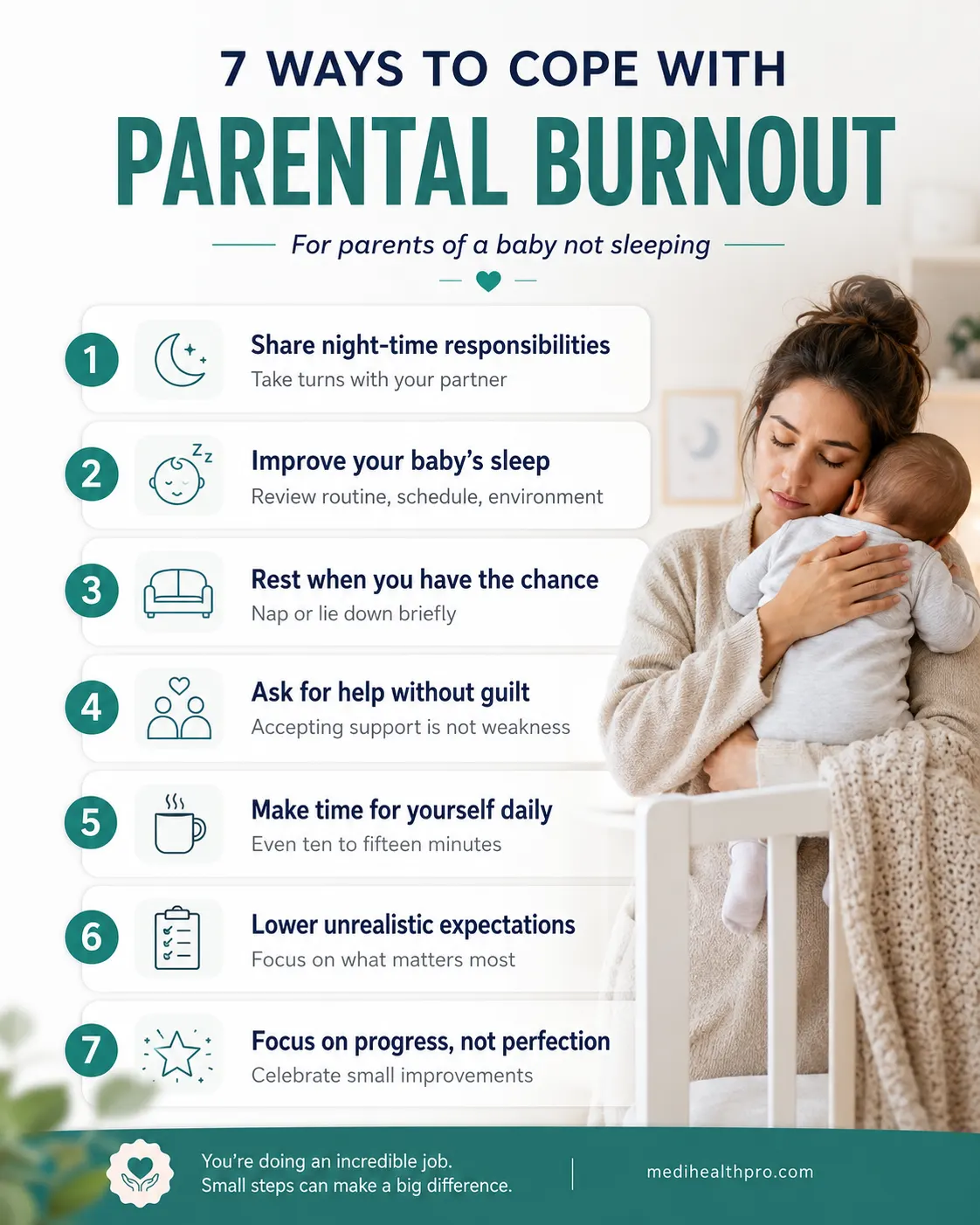
There is no quick fix for parental burnout, especially when your baby is not sleeping well. Small changes can reduce stress and improve your ability to cope day to day.
1. Share night-time responsibilities
If possible, take turns with your partner or another trusted caregiver.
Even one uninterrupted stretch of sleep can make a noticeable difference to your mood, energy, and concentration.
2. Focus on improving your baby’s sleep
Many parents try to cope with exhaustion without addressing the sleep problem itself.
Review your baby’s bedtime routine, nap schedule, feeding pattern, and sleep environment. Small adjustments can gradually reduce night wakings and improve sleep for the whole family.
3. Sleep when you have the opportunity
The advice to sleep when the baby sleeps is not always realistic, but try to rest whenever you can.
A short nap or simply lying down for 20 to 30 minutes can help you recover during difficult periods.
4. Ask for help without feeling guilty
Family members, friends, or trusted neighbours may be able to help with childcare, meals, or household tasks.
Accepting support is not a sign of weakness. It gives you time to rest and recharge.
5. Make time for yourself every day
Even 10 to 15 minutes can help. Go for a short walk, enjoy a quiet cup of tea or coffee, read a few pages of a book, listen to music, or practise simple relaxation exercises. Looking after yourself helps you look after your child.
6. Lower unrealistic expectations
Your home does not have to be perfect, and every parenting decision does not have to be perfect either.
During periods of frequent night wakings or sleep regressions, focus on what matters most and let less important tasks wait.
7. Focus on progress, not perfection
Improving your baby’s sleep often takes time.
Celebrate small improvements, such as a longer stretch of sleep or a calmer bedtime routine, instead of expecting immediate results. Small steps can build confidence and reduce stress over time.
Why Some Parents Experience Burnout While Others Don’t
Not every parent facing frequent night wakings develops parental burnout. It often comes down to the balance between ongoing stress and the resources a parent has to manage it.
Researchers suggest that parental burnout develops when the emotional, physical, and practical demands of parenting outweigh a parent’s available resources.3 This balance differs from family to family. Some parents cope well despite sleep disruption, others become overwhelmed.
Certain factors raise the risk, others offer protection.
| Factors That May Increase the Risk | Factors That May Help Protect Against Burnout |
|---|---|
| Trying to be the perfect parent | Support from a partner or trusted caregiver |
| Limited family or social support | Sharing nighttime caregiving responsibilities |
| Ongoing poor-quality or interrupted sleep | Realistic expectations about baby sleep |
| High levels of anxiety or chronic stress | Emotional support from family and friends |
| Caring for multiple young children | Making time for rest and self-care |
| Financial or work-related pressures | Seeking professional support when needed |
Parental burnout is not a sign of weakness or poor parenting. It develops when the demands of caring for a child outweigh the time, support, and chances a parent has to recover. Strengthening protective factors eases stress and builds resilience during difficult stages of parenting.
How Parental Burnout Can Affect the Whole Family
Parental burnout affects more than the parent experiencing it. Ongoing exhaustion caused by baby sleep problems can increase tension between partners, reduce patience with other children, and make everyday parenting feel more challenging.6
1. Partner Relationships
Chronic sleep deprivation can reduce patience and increase irritability, making small disagreements more likely to turn into arguments.
After long days and repeated night wakings, many couples have little energy left to connect, which can create emotional distance.
2. Other Children
Older children often notice more than parents realize. A tired, stressed parent may have less patience or spend less focused time with them.
Even if a child does not understand why, they can sense the tension at home. This sometimes shows up as clinginess or acting out.
3. Your Baby
Babies need calm, responsive caregiving, but prolonged exhaustion can make this more difficult.
A burned-out parent may find it harder to respond patiently during frequent night wakings or prolonged crying. This does not mean you are a bad parent. It reflects the effects of chronic sleep deprivation.
As your sleep and well-being improve, positive parent–baby interactions usually become easier again.
4. Your Work and Daily Functioning
Not enough sleep also affects focus, memory, and decision-making outside the home. Many parents notice they make more small mistakes or find it harder to keep up with normal tasks at work.
When to Seek Professional Help
Feeling tired after a few difficult nights is a normal part of parenting. If exhaustion continues despite practical coping strategies, it is time to seek professional support.
Speak with your healthcare professional if you:
- Feel physically or emotionally exhausted for several weeks.
- Often feel hopeless, anxious, or unable to cope with everyday parenting.
- Find it difficult to care for yourself or your child.
- Notice that your baby’s sleep problems continue despite age appropriate sleep routines.
- Have concerns about your baby’s feeding, growth, breathing, or overall health.
- Find that ongoing stress is affecting your relationships.
- Feel emotionally disconnected from your baby or no longer enjoy parenting most days.
If your symptoms become severe, continue to worsen, or you have thoughts of harming yourself or your baby, seek urgent medical care immediately. Early support can protect both your health and your child’s.
Conclusion
Parental burnout is a real consequence of ongoing sleep disruption, not a sign that you are failing as a parent. Frequent night wakings and sleep regressions can leave you exhausted, physically and emotionally.
Recognising the signs early and taking practical steps to care for yourself and your baby makes this stage easier to manage. Most baby sleep problems improve with time, consistent routines, and habits that match your baby’s age and development.
Do not hesitate to ask your partner, family, friends, or a healthcare professional for support. Taking time to rest and accept help is not selfish. A rested, supported parent responds with more patience and steadier energy, and that benefits the whole family.
Frequently Asked Questions (FAQ)
Q1. What is parental burnout?
Parental burnout is a state of physical, emotional, and mental exhaustion caused by long-term parenting stress. It often develops when the demands of caring for a child consistently outweigh a parent’s ability to rest and recover, especially during prolonged periods of sleep disruption.
Q2. Can baby sleep problems cause parental burnout?
Yes. Frequent night wakings, sleep regressions, and ongoing sleep deprivation can increase the risk of parental burnout. Over time, interrupted sleep affects mood, patience, concentration, and emotional wellbeing, making everyday parenting more difficult.
Q3. What are the first signs of parental burnout?
Early signs of parental burnout include constant exhaustion, irritability, reduced patience, difficulty concentrating, feeling emotionally drained, and losing enjoyment in parenting. These symptoms often develop slowly rather than appearing suddenly.
Q4. How do I cope when my baby is not sleeping?
Start by reviewing your baby’s sleep routine, sharing night-time responsibilities whenever possible, accepting practical help from family or friends, and making time to rest. Small changes can improve both your wellbeing and your ability to cope with sleep disruption.
Q5. How long does parental burnout last?
Parental burnout can last for weeks or months, depending on the underlying causes and the support available. Recovery often begins when parents get more restorative sleep, reduce stress, and receive practical or professional support.
Q6. Can parental burnout affect my baby’s development?
Parental burnout does not directly affect a baby’s development. However, when it becomes severe and prolonged, parents may find it harder to respond consistently and sensitively to their baby’s needs. Getting support early, improving sleep, and reducing stress can help strengthen parent–child interactions and support healthy development.
Q7. Is parental burnout the same as postpartum depression?
No. Parental burnout and postpartum depression are different conditions, although some symptoms may overlap. Parental burnout is mainly linked to prolonged parenting stress, while postpartum depression is a medical condition that requires clinical assessment and appropriate treatment.
Q8. Can both parents experience parental burnout?
Yes. Mothers, fathers, adoptive parents, and other primary caregivers can all experience parental burnout. The risk increases when sleep deprivation, caregiving demands, and limited support continue for a prolonged period.
Q9. Can improving my baby’s sleep reduce parental burnout?
In many families, yes. Better sleep routines, age-appropriate schedules, and fewer night wakings can help parents get more restorative sleep, reduce stress, and improve overall wellbeing. Progress is often slow and steady rather than immediate.
Q10. When should I seek professional help for parental burnout?
Seek professional advice if exhaustion persists for several weeks, affects your ability to care for yourself or your child, or is accompanied by persistent anxiety, hopelessness, or emotional distress. Early support can improve outcomes for both parent and child.
References
📚 Show References
- De Stasio S, Boldrini F, Ragni B, Gentile S. Predictive factors of toddlers’ sleep and parental stress. Int J Environ Res Public Health. 2020 Apr 6;17(7):2494. Available from: https://pubmed.ncbi.nlm.nih.gov/32268482/
- Sperber JF, et al. Sleep and negative affect across toddlerhood in the context of early parenting. Front Psychol. 2022;13:9382980. Available from: https://pmc.ncbi.nlm.nih.gov/articles/PMC9382980/
- Mikolajczak M, Roskam I. A Theoretical and Clinical Framework for Parental Burnout: The Balance Between Risks and Resources (BR2). Front Psychol. 2018 Jun 12;9:886. Available from: https://pmc.ncbi.nlm.nih.gov/articles/PMC6006266/
- Ren X, Cai Y, Wang J, Chen O. A systematic review of parental burnout and related factors among parents. BMC Public Health. 2024 Feb 5;24(1):376. PubMed. Available from: https://pubmed.ncbi.nlm.nih.gov/38317118/
- Khan MA, Al-Jahdali H. The consequences of sleep deprivation on cognitive performance. Neurosciences (Riyadh). 2023 Apr;28(2):91-99. Available from: https://pmc.ncbi.nlm.nih.gov/articles/PMC10155483/
- Prandstetter K, Murphy H, Foran HM. The Role of Intimate Partner Violence, Couple Dissatisfaction and Parenting Behaviors in Understanding Parental Burnout. J Child Fam Stud. 2023;32(1). PMC. Available from: https://pmc.ncbi.nlm.nih.gov/articles/PMC8760085/
