
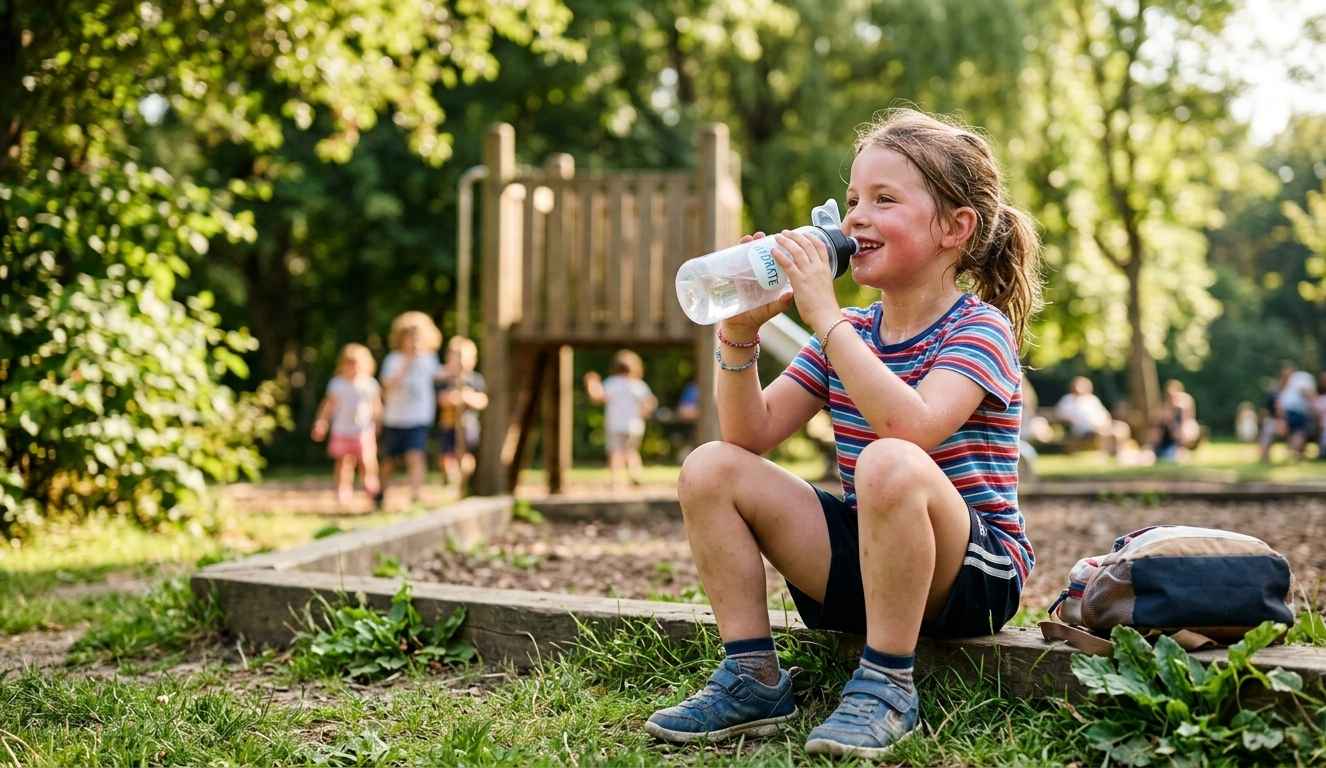
How much water should a 4–13 year old drink daily? It’s one of the most common questions parents ask, especially during busy school days or hot summer months.
Unlike adults, their sense of thirst often comes late, meaning they may not realize they need water until mild dehydration has already begun. Whether it is a 5-year-old in a kindergarten classroom or a 12-year-old on the soccer field, regular hydration is essential for supporting growth, cognitive focus, and emotional regulation.
In this guide, we will break down the recommended daily intake by age and weight, identify the hidden signs of dehydration, and share practical ways to make water the easiest drink at home.
How Much Water Should Kids Drink Daily? Exact Intake for Children Ages 4–13
Doctors commonly use two simple methods to estimate daily hydration needs. Let’s begin with the age‑group estimate.
Method A: The Age-Group Breakdown
Recommended total daily water intake:
- Ages 4, 5, 6, 7, and 8 Years: Approximately 1.7 liters per day (≈ 7 cups).
- 9 to 13 Years (Boys): Approximately 2.4 liters per day (≈ 10 cups).
- 9 to 13 Years (Girls): Approximately 2.1 liters per day (≈ 9 cups).
📌 Important Note:
- “Total daily water intake” does not mean only plain water. It covers everything your child drinks, including water, milk, and other beverages, as well as the natural water found in fruits and vegetables.
- On average, about 75% to 80% of a child’s daily water intake comes from drinks, while the remaining 20% to 25% comes from water-rich foods like watermelon, cucumbers, and yogurt.
Example: For a 7-year-old with a total water intake target of 1.7 liters per day, about 1.2 liters (≈ 5 cups) should come directly from healthy fluids. The remaining amount comes from food moisture.
The Centers for Disease Control and Prevention (CDC) encourages parents to make plain water the main beverage for children. Choosing water instead of sugary drinks is a simple way to support healthy hydration and overall well‑being.
Method B: Weight-Based Medical Calculation (Clinical Use Only)
In hospital settings, pediatricians often calculate maintenance fluids based on body weight.
- Rule of Thumb: Children generally require 40–50 milliliters (mL) of fluid per kilogram of body weight.
- Formula: Daily Fluid Requirement (mL) = Child’s Weight (kg) × 45
Weight-Based Reference Table
| Child’s Weight (kg) | Estimated Age | Daily Fluid Goal (mL) | Approx. Cups (250 mL) |
|---|---|---|---|
| 15 kg | 4 Years | 600 – 750 mL | 2.5 – 3 |
| 20 kg | 5–6 Years | 800 – 1,000 mL | 3 – 4 |
| 25 kg | 7–8 Years | 1,000 – 1,250 mL | 4 – 5 |
| 30 kg | 9–10 Years | 1,200 – 1,500 mL | 5 – 6 |
| 35 kg+ | 11–13 Years | 1,400 – 1,750 mL | 6 – 7 |
⚠️Crucial distinction: This formula estimates minimum fluid needs in medical settings. In everyday life, children usually require more than this baseline. That’s why age‑based intake levels of about 1.7–2.4 liters of total water per day are a more practical reference for parents.
3 Factors That Change the Blueprint
Even the best blueprint needs adjustments. Your child might need more water if:
- High Physical Activity: Add 150–250 mL for every 20 minutes of intense play or sports.
- Climate: Increase intake by 10–15% in high humidity or temperatures above 30°C.
- Health Status: Fever, vomiting, or diarrhea significantly increases the need for fluids to prevent dehydration.
Why Elementary and Middle Schoolers Need More Water Than Adults
Growing kids are not just smaller versions of adults. From age 4 through age 13, their bodies undergo rapid changes that make them lose water faster. Here are the key reasons:
1. High Surface Area-to-Mass Ratio
Younger children (ages 4–8) have a larger body surface area relative to their mass, meaning they lose water through their skin more rapidly.
2. Immature Thirst Mechanisms
An adult’s brain signals thirst relatively quickly. In children, the “thirst trigger” is often delayed. By the time an 8-year-old says “I’m thirsty,” mild dehydration may already be developing, which can impact short-term memory and physical stamina.
3. Lower Sweating Threshold
Children begin sweating later than adults during exercise. While this might seem like they are “keeping water in,” it actually means their bodies heat up faster before cooling mechanisms kick in.
4. Developing Kidneys
Between the ages of 4 and 13, kidneys are still maturing and are less efficient at conserving water. As a result, they excrete more fluid in urine compared to adults, even when the body needs to hold onto it.
5. Increased Sensitivity to Illness and Environment
Fever, vomiting, diarrhea, or extended exposure to sun and heat can deplete a child’s fluids much faster than adults. Even mild illnesses or warm classroom conditions can tip the balance toward dehydration if fluids aren’t replenished promptly.
The Hidden Impact: How Dehydration Affects Ages 4–13 in School and Play
Most parents think of dehydration as “being thirsty,” but for a developing child, the effects are much more systemic.
1. Cognitive Function and Concentration
Research across several studies demonstrates that mild dehydration can impair visual attention and short‑term memory.1,2
In practical terms, this means a child may struggle to focus during lessons or take longer to process information.
For example, If your 10-year-old is struggling to focus on homework, check their water intake.
2. Emotional Regulation and Mood
Hydration plays a direct role in neurotransmitter balance. Studies indicate that when fluid levels drop, children are more prone to irritability, anxiety, and emotional volatility.3
A sudden “meltdown” during playtime may not be just tiredness — dehydration can amplify mood swings.
3. Physical Performance and Play Stamina
Evidence shows that a 1–2% drop in hydration reduces physical performance.2
On the playground or sports field, this means quicker fatigue, slower reaction times, and a higher risk of minor injuries like trips or falls.
Even mild dehydration can diminish a child’s ability to keep up with peers during active play.
4. Immune Function and Recovery
Water supports lymphatic circulation and helps flush out toxins.
Studies highlight that dehydrated children may take longer to recover from common illnesses and feel “run down” more often, as their immune system cannot operate at full strength without adequate fluid intake.4
5. Sleep Quality
Hydration influences melatonin production and body temperature regulation, both of which are essential for restful sleep.5
One study suggests that even mildly dehydrated children may experience restless sleep,6 leading to poor nighttime recovery and daytime fatigue. Over time, this cycle can affect learning, mood, and overall health.
Detecting Hidden Signs of Dehydration in Kids
As a parent, you have to be a detective. Look for these physical clues:
The “Urine Color” Scale
This is one of the easiest and most reliable checks parents can use at home.
- 🟨 Pale Straw/Lemonade Color: Perfect. Your child is well-hydrated.
- 🟧 Apple Juice Color: They need a full glass of water immediately.
- 🟫 Orange/Amber Color: This is a sign of significant dehydration. You should monitor them closely and increase fluids significantly.
Physical Red Flags
- Dry Lips and “Sticky” Mouth: If their lips look chapped even in humid weather, they are likely dehydrated.
- Infrequent Urination: A child aged 4–13 typically urinates about 5–7 times per day when well hydrated. If a 6-year-old or a 9-year-old goes 6 hours without needing to pee, they are likely dehydrated.
- Headaches: Many 6 to 11-year-olds complain of persistent headaches after a long school day, outdoor play, or sports practice.
- Dizziness: If your child says the room feels like it’s spinning or they look unsteady when standing up, dehydration may be interfering with blood pressure regulation.
- Rapid Heartbeat at Rest: If your child is sitting quietly but their heartbeat feels unusually fast, almost like they have just finished running, dehydration may be the cause.
- Sunken Eyes or Dark Circles: While often attributed to lack of sleep, “sunken” eyes are a classic sign of fluid loss.
- Delayed Skin Tenting: Gently pinch the skin on the back of your child’s hand. In a well-hydrated child, it snaps back immediately. If the skin stays “tented” for a few seconds, this is a late warning sign of dehydration.
Factors That Increase Needs for 4–13 Year Olds
The “Baseline” numbers we discussed earlier are for an average day. Several factors require you to “plus-up” your child’s intake.
1. The “Heat Index”
When the temperature rises above 25°C (77°F), or if the humidity is high, you should add 1–2 extra cups of water to their daily goal.
2. High-Intensity Sports
During soccer, basketball, or even intense tag, children should follow the “Sip-Sip-Gulp” rule:
- Before Play: 1 cup (250 mL) 30 minutes before starting.
- During Play: 3–4 ounces every 20 minutes.
- After Play: A full glass to replenish what was lost.
3. Illness
Fever, vomiting, and diarrhea are the leading causes of acute dehydration in children. During illness, don’t focus on “liters per day”—focus on “tablespoons per hour.” Small, frequent doses are easier for a sick stomach to handle.
6 Ways to Help Your Child Drink More Water Daily

Knowing how much water your child needs is only half the battle. The challenge is turning those numbers into daily habits.
Here are six simple ways to make hydration part of your child’s daily routine:
1. Build Water Into the Daily Routine
Children respond well to predictable habits. Offer water at natural transition points: after waking up, before school, after play and before bedtime.
2. Give Them Their Own Water Bottle
A personal, leak‑proof bottle with measurement markings helps kids track progress and motivates them to drink.
3. Make Water More Appealing Without Adding Sugar
If your child finds plain water boring, try simple upgrades: add lemon, orange, or cucumber slices, serve it slightly chilled, and use fun cups or straws.
Avoid sugary drinks, since sweet beverages add extra calories and do not hydrate as effectively as plain water.
4. Encourage Small, Frequent Sips
Large amounts at once can feel overwhelming. Instead, encourage a few sips every 30 to 60 minutes, especially during sports or hot weather. Small, steady intake supports better absorption and comfort.
5. Lead by Example
Children copy adult behavior. If they see you drinking water regularly, they are more likely to do the same. Keep water visible at home so it becomes the easy choice.
6. Offer Water‑Rich Foods Throughout the Day
Hydration does not come only from drinks. Fruits and vegetables like watermelon, cucumbers, oranges, strawberries, and yogurt are naturally high in water.
Serving them with meals or snacks boosts hydration while adding vitamins and minerals for overall health.
Key Takeaways: Children’s Daily Water Needs
- Daily Needs: Children ages 4–13 generally require 1.7–2.4 liters of fluids per day, with about 80% coming from plain water.
- Weight-Based Rule: Pediatricians recommend 40–50 mL per kilogram of body weight. For example, a 20 kg child needs about 800–1,000 mL (3–4 cups) daily.
- Adjust for Activity & Climate: Add extra water during sports, hot weather, or illness. Even mild dehydration can affect focus, mood, and stamina.
- Detect Early Signs: Use the urine color check (pale yellow = good, darker = needs water) and watch for red flags like dry lips, headaches, dizziness, or infrequent urination.
- Make Hydration Routine: Build water into daily transitions (wake-up, meals, play, bedtime), give kids their own bottle, and encourage small, frequent sips.
- Lead by Example: Children copy adults. When you drink water regularly, they are more likely to do the same.
Frequently Asked Questions About Children’s Water Intake
Parents often search for specific guidance, such as how much water a 5-year-old, 7-year-old, 9-year-old, or 12-year-old should drink each day. The answers below explain common hydration questions for school-age children.
Q1. How much water should a 7 year old drink per day?
Most 7-year-old children need about 1.6 to 1.8 liters of total water daily, depending on activity level, weather, and overall health. About 80% should come from drinks, mainly plain water and milk, and around 20% from foods that naturally contain water.
Q2. Can a child drink too much water?
Yes. While rare, excessive water intake can lead to a condition called water intoxication or hyponatremia, where sodium levels in the blood become dangerously low. This may cause headaches, nausea, confusion, or in severe cases, seizures. Encourage steady hydration, but avoid pushing large amounts of water at once.
Q3. How does dehydration affect kids?
Dehydration in kids can cause tiredness, irritability, headaches, and trouble concentrating. You may also notice dry lips, dizziness, or darker urine. In more severe cases, dehydration can lead to rapid heartbeat, sunken eyes, or very little urine, which requires medical attention.
Q4. Do milk and juice count toward hydration?
Yes. Milk and diluted juice contribute to total fluid intake. However, plain water should be the main source. Limit sugary drinks, as they can increase thirst and reduce effective hydration.
Q5. Is sparkling water okay for kids?
Occasionally, yes. Plain sparkling water without added sugars or caffeine is safe. However, carbonation can cause bloating or discomfort, so it shouldn’t replace regular still water..
Q6. How do I know if my child is drinking enough?
Check for pale yellow urine, consistent energy, and alertness. Dark yellow urine, fatigue, dry lips, or infrequent urination may indicate dehydration.
Q7. Does illness or hot weather change water needs?
Yes. Fever, diarrhea, vomiting, or hot weather increase fluid loss. Children may need extra water and electrolyte-rich fluids to stay balanced. Always monitor closely during illness or heat waves.
Q8. Do active 10–12 year olds need sports drinks?
Generally, no. For most school-age activities, plain water is sufficient. Sports drinks are usually only necessary for intense, continuous exercise lasting longer than 60 minutes, where electrolyte replacement becomes a factor.
References
📚 Click to view references
- Zhang N, Du SM, Zhang JF, Ma GS. Effects of Dehydration and Rehydration on Cognitive Performance and Mood among Male College Students in Cangzhou, China: A Self-Controlled Trial. Int J Environ Res Public Health. 2019. View Study
- Zborowski M, Skotnicka M. The Role of Hydration in Children and Adolescents. Nutrients. 2025. View Study
- Liska D, Mah E, Brisbois T, Barrios PL, Baker LB, Spriet LL. Narrative Review of Hydration and Selected Health Outcomes in the General Population. Nutrients. 2019 Jan 1;11(1):70. View Study
- Guppy MP, Mickan SM, Del Mar CB, et al. Advising patients to increase fluid intake for treating acute respiratory infections. Cochrane Database Syst Rev. 2011. View Study
- Fein T, Garay J, Voss MA. Effects of Fluid Intake on Sleep Duration and Quality Among Healthy Adults. Nat Sci Sleep. 2025. View Study
- Rosinger AY, Chang AM, Buxton OM, Li J, Wu S, Gao X. Short sleep duration is associated with inadequate hydration: cross-cultural evidence from US and Chinese adults. Sleep. 2019 Feb 1;42(2). View Study
- Centers for Disease Control and Prevention. Rethink Your Drink: Choose Water Instead of Sugary Drinks. Visit Page
- Institute of Medicine. Dietary Reference Intakes for Water, Potassium, Sodium, Chloride, and Sulfate. National Academies Press; 2005. View Page