Written by: MediHealth PRO Editorial Team
Scientifically Reviewed by: Dr. Amit Pande, PhD
Molecular Biologist & Clinical Research Expert
Medically Reviewed by: Dr. Arghyadeep Marik, MD
Independent Medical Reviewer, MediHealth PRO
Key Takeaways:
- Most babies begin responding to their name between 9 and 12 months and do so consistently by 18 to 24 months.
- Occasional missed responses are common, especially when a child is deeply focused, tired, or distracted.
- By 18 months, consistently not responding to their name is considered a developmental red flag and should be evaluated.
- Speak with your pediatrician if your child rarely responds to their name or has other concerns, such as delayed speech, limited eye contact, or reduced use of gestures.
- Doctors assess your child’s overall communication, social interaction, and development—not name response alone.
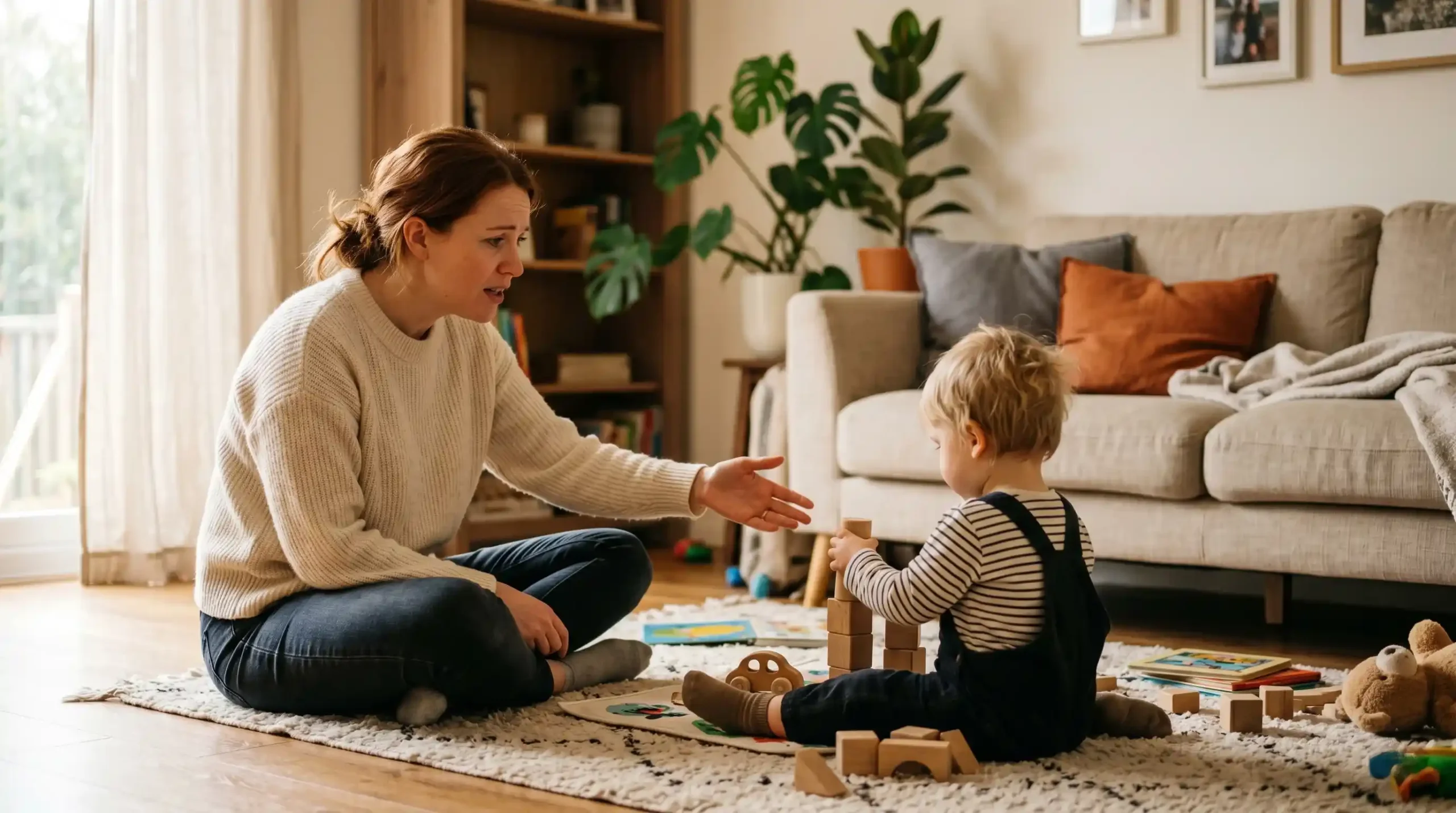
Finding your baby not responding to name at 12 months can worry many parents. You might be standing just behind them, calling their name for the third time.
No turning.
No eye contact.
No response.
At first, it may seem like simple distraction or a normal stage of toddler development. But when it keeps happening, it may signal early autism signs, hearing loss in toddlers, or delays in speech and language milestones.
Using CDC developmental milestones and AAP screening recommendations, this guide explains what is typical at different ages, what may signal a developmental concern, and when to seek further evaluation.
When Should a Baby Respond to Name? (Milestones by Age)
According to the Centers for Disease Control and Prevention (CDC),1 babies should begin responding to their name by 9 to 12 months and do so consistently by 18 to 24 months.
The CDC and the American Academy of Pediatrics (AAP)2 milestones provide a clear baseline to help you spot potential delays. These benchmarks focus on what 75% or more of children can do by a specific age.
If your baby is not responding to their name at 12, 18, or 24 months, it is important to look at the full picture of their communication, social engagement, and development rather than this behavior alone.
Name Response Milestones by Age
| Age | Expected Milestone (The 75th Percentile) | Social Context |
|---|---|---|
| 9 Months | Initial Reaction | Your baby should react when you call (e.g., pausing play or looking toward you). |
| 12 Months | Consistent Response | Your child should reliably and consistently respond to their name in quiet settings. |
| 18 Months | Social Connection | Your toddler should respond immediately and often pair the response with eye contact or a gesture. |
| 24 Months | Generalization | Your child should respond across all environments (even from another room) and understand the social intent. |
Why Is My Baby Not Responding to Their Name (12-24 Months)? Common Causes
If you notice your baby not responding to their name consistently, it is rarely due to a single cause.
Pediatricians consider several possible causes, including the following:
1. Hearing Issues
Conditions like Otitis Media with Effusion (middle ear fluid), often called “glue ear,” are common in toddlers.1
This condition does not always cause complete hearing loss, but it can reduce sound clarity.
Parents may notice:
- Inconsistent responses.
- Delayed speech.
- Turning up TV volume.
- Better response to loud sounds than voices.
Some toddlers hear enough to react occasionally, which can make the problem easy to miss.
If there is any concern about hearing, a proper hearing test is worth considering.
2. Attention and HyperFocus
Toddlers can become so absorbed in toys or activities that they temporarily tune out everything around them, including their own name.
You may notice that they:
- Become fully immersed in play or sensory activities.
- Do not respond when deeply focused on an activity.
- Respond more readily after a gentle touch or a change in your tone of voice.
If this pattern occurs alongside hyperactivity, impulsivity, or persistent attention difficulties, it may be helpful to read our guide on ADHD hyperfocus in children.
3. Speech or Language Delay
Some children hear normally but process language more slowly.
In these cases, they may not fully connect their name with attention or communication yet.
You might also notice:
- Fewer words than expected.
- Limited babbling.
- Difficulty following simple instructions.
- Reduced use of gestures like pointing or waving.
4. Sensory Processing Differences
Some children process sound and attention differently. They may become highly focused on movement, textures, lights, or certain activities and take longer to shift attention when someone speaks to them.
Sensory differences like these are also commonly seen alongside ADHD. For a closer look at how the two overlap, see our guide on ADHD sensory issues in children.
5. Developmental Delays
Some children who are delayed in other areas of development may also be slower to respond consistently when their name is called. Parents may notice delays in speech, play, learning, or social interaction at the same time.
In these situations, doctors usually look at the child’s overall development rather than one behavior alone.
6. Growing Up With More Than One Language
Children raised in multilingual homes may respond differently depending on which language is being spoken or who is talking to them. This is common and usually not a concern by itself.
If a child also has delayed speech, limited gestures, or reduced social interaction, it is still a good idea to discuss those concerns with a pediatrician.
7. Autism Spectrum Disorder (ASD)
Reduced response to a child’s name can sometimes be an early sign of Autism Spectrum Disorder (ASD), particularly when it occurs alongside differences in social communication and interaction. Several clinical studies have found that children later diagnosed with autism are more likely to show a reduced response to their name during infancy and toddlerhood.3, 4
A child with autism may:
- Rarely look up when called.
- Show limited eye contact.
- Prefer playing alone.
- Use fewer gestures, such as pointing or waving.
- Seem less interested in social communication.
Not responding to a name alone does not mean a child has autism. Pediatricians consider a child’s overall communication, social engagement, play, and developmental milestones before deciding whether further evaluation is needed.
If you are also concerned about persistent inattention, hyperactivity, or impulsivity, read our complete guide to ADHD in Children (Ages 2–12): Early Signs, Brain Development & Treatment.
Can a Baby Ignore Their Name and Still Be Developing Normally?
Yes. Not every missed response is a cause for concern. Babies and toddlers are naturally curious and can become deeply focused on toys, books, or new surroundings. They may also ignore their name when they are tired, hungry, overwhelmed, or distracted.
What matters is consistency. Most children begin responding to their name between 9 and 12 months and do so reliably by 18 to 24 months. If your child usually responds in familiar settings, makes good eye contact, uses gestures such as pointing or waving, and is meeting other developmental milestones, occasional missed responses are generally considered part of typical development.
However, if your child rarely responds to their name across different settings or the lack of response occurs alongside delayed speech, limited social engagement, or loss of previously acquired skills, a pediatric evaluation is recommended.
My Baby Responds to Other Sounds but Not Their Name: What Does It Mean?
Some babies ignore their name but quickly react to a snack bag opening, a favorite song, or a familiar toy. This can worry parents, but it does not automatically mean there is a hearing problem or autism.
Responding to a name is more complex than simply hearing a sound. It requires recognizing the name, understanding that it refers to them, and shifting attention toward the person calling. In contrast, exciting or familiar sounds often trigger an immediate automatic response.
An occasional slow or missed response is common in toddlers, especially when they are deeply focused on play. What matters is the overall pattern. If your child also has limited eye contact, uses few gestures, has delayed speech, or rarely shares attention with others, a developmental evaluation is recommended.
If your child is older than 12 to 15 months and consistently does not respond to their name, discuss your concerns with your pediatrician. A hearing assessment is often the first step, followed by developmental screening if needed.
When to Worry: Age-Specific Red Flags (12, 18 & 24 Months)
The CDC “Act Early” milestones help identify when a child may not be meeting expected developmental patterns. Now let’s look at this age-wise.
Baby Not Responding to Name at 12 Months
At 12 months, babies should turn toward their name reliably. When they do not, it may point to differences in hearing, attention, or early social engagement.
Possible Red flags:
- Inconsistent or rare response to name, even in quiet and familiar settings.
- Responds to environmental sounds (like doors or toys) but shows limited response to human voice.
- Limited use of early social gestures such as waving, pointing, or reaching to be picked up.
Toddler Ignoring Name at 18 Months
By 18 months, not responding to their name is a clinical red flag. It often points to a delay in joint attention — a key neurodevelopmental milestone required for social and language development.
Possible Red flags:
- Responding to the name without making eye contact.
- Absent Joint Attention: Not looking at an object when you point to it.
- Object-Focus: A preference for repetitive visual patterns (spinning wheels) over human interaction.
If your child shows a reduced interest in people or limited joint attention, consult our list of early autism signs and key milestones for 18-month-olds to determine if further clinical evaluation is needed.
Child Not Responding to Name at 24 Months
By 24 months, not responding to their name often means the child is not yet using it as a two-way communication cue.
Possible Red flags:
- Requires repeated calling or physical prompting to get attention.
- Does not respond to simple name-based instructions (e.g., “come here”).
- Loss of previously acquired skills such as speech, gestures, or response to name.
If you are also concerned about delays in speech, explore our guide on when science says to act for 2-year-olds who are not talking yet.
How Doctors Evaluate a Baby Who Is Not Responding to Their Name
Pediatricians assess your child’s overall development to identify the underlying cause.
During the evaluation, your doctor may:
- Review your child’s developmental milestones and medical history.
- Check for hearing problems and recommend hearing tests if needed.
- Assess eye contact, gestures, joint attention, and communication skills.
- Perform or recommend developmental screening, such as the M-CHAT-R for toddlers when appropriate.
- Refer your child for speech therapy, early intervention, or specialist assessment if developmental concerns are identified.
What to Do If Your Baby Is Not Responding to Their Name
If your child consistently does not respond to their name, do not panic. The next steps are to observe patterns, rule out hearing problems, and discuss any ongoing concerns with your pediatrician.
Step 1: Observe Patterns Carefully
Take a few days to notice when and how your child responds.
- Do they respond better in quiet environments?
- Do they react to certain voices more than others?
- Is the response improving, staying the same, or decreasing?
Step 2: Check Hearing Early
A hearing assessment is one of the simplest and most important steps.
Tests such as OAE (Otoacoustic Emissions) or BERA (Brainstem Evoked Response Audiometry) can help identify even mild issues.
Step 3: Developmental Screening
When concerns continue, a pediatrician may recommend a developmental screening.
One commonly used tool is the M-CHAT-R,5 especially for children between 16 and 30 months. It helps identify risk for autism and guides further evaluation if needed.
Screening does not provide a diagnosis, but it helps determine whether further assessment is necessary.
Step 4: Early Intervention if Needed
Early intervention can be highly effective when delays are identified.
Support may include:
- Speech and language therapy
- Occupational therapy
- Parent-guided interaction strategies
Research consistently shows that early intervention improves long-term outcomes, especially in communication and social skills.4, 5
The CDC suggests seeking help early when delays are noticed. Early support is important because young children’s brains learn and adapt very quickly. You can find early intervention support through the CDC’s official Early Intervention page.
How to Help a Baby Not Responding to Name at Home
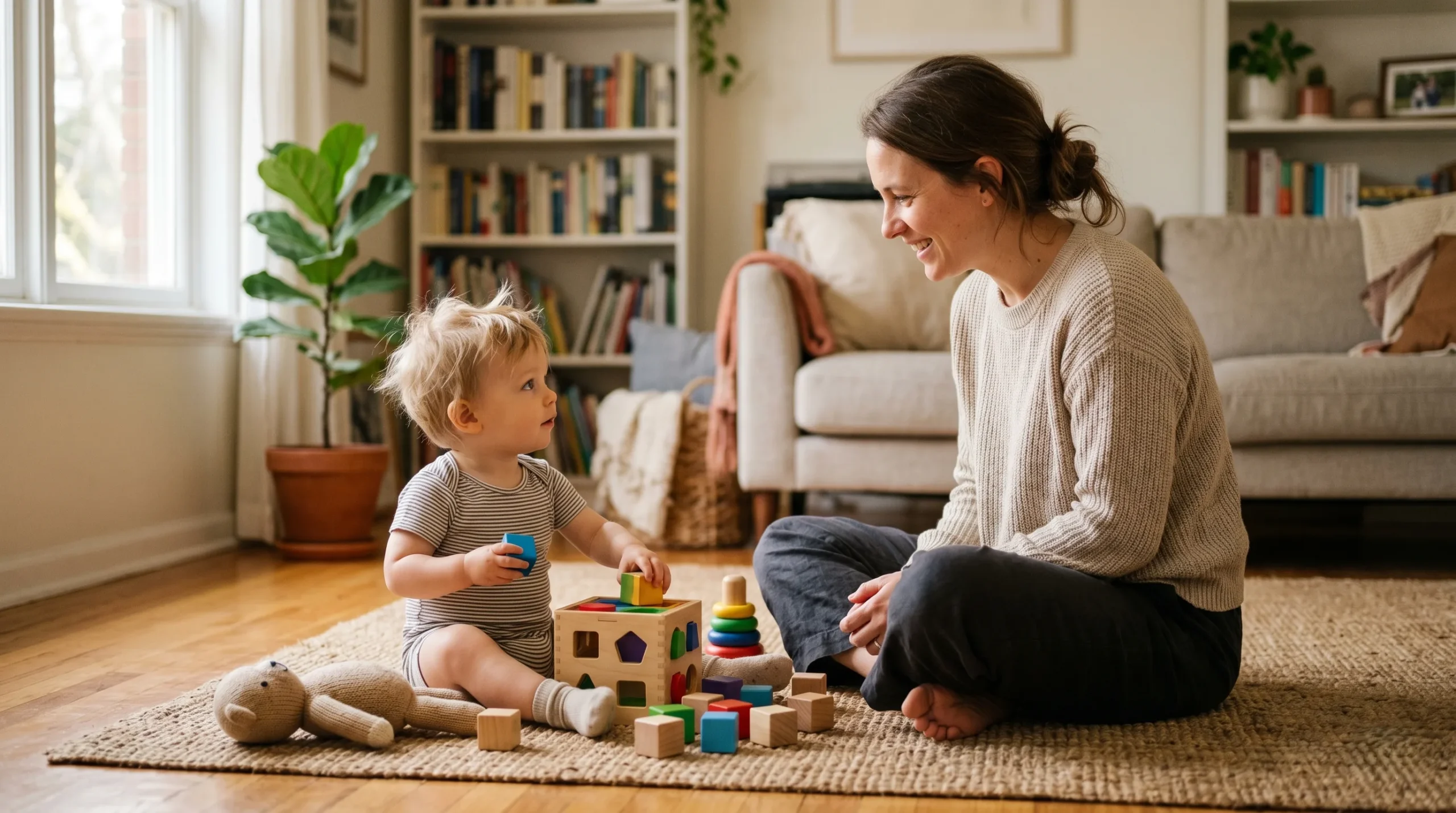
If your baby does not respond to their name, these simple, evidence-based strategies can be added to daily routines to support attention and communication development.
1. Face-to-Face Interaction
Get down on their level. Physical proximity is key. Instead of calling from across the room, move close, ensure you are in their line of vision, and then say their name.
- Example: If your child is playing with blocks on the floor, sit cross-legged right in front of them so your faces are at the same height before speaking.
2. Give Your Child Time to Respond
After calling their name, give them a “processing pause” of 5 to 10 seconds. If they look up, immediately reward them with a high-value interaction—a smile, a tickle, or a favorite toy.
- Example: Call their name once and slowly count to eight in your head. Resist the urge to repeat the name immediately; give their brain time to register the sound.
3. Eliminate Background Noise
Background noise from a TV or loud music makes it harder for a child to pick out a human voice. Practice in a quiet environment first.
- Example: Turn off the tablet and white noise machine before starting a focused 5-minute practice session.
4. Pair Touch With Your Voice
If your child is deeply engaged, gently touch their shoulder or arm as you say their name. This helps them transition their attention from the object to the person.
- Example: Pair the sound of their name with a light touch on the arm. This physical “anchor” helps the brain shift focus from a high-interest activity (like a toy car) back to you.
5. Use High-Value Rewards
Make the response worth it. The “reward” should be something the child finds genuinely exciting or comforting.
- Example: If they love bubbles, call their name and immediately blow a stream of bubbles the moment they look at you.
6. Practice Across Settings
Children can sometimes “compartmentalize” learning. Ensure they know their name applies in the park just as much as in the living room.
- Example: Practice in the high chair during breakfast, then again later while they are strapped into their car seat.
7. Make It a Game
Games help children connect their name with something enjoyable.
- Example: Play “Hide and Seek” or “Peek-a-boo” where you say, “Where is [Name]?” and wait for them to look toward you before popping out with a “Boo!”
8. Pair with Gestures
Using a visual cue alongside the verbal one helps reinforce the meaning of the call.
- Example: Call their name while holding your hands out for a hug or waving. This gives them a visual “anchor” to look at.
9. Keep Tone Consistent
Avoid using their name only for corrections (e.g., “No, Sarah!”). If their name is mostly associated with trouble, they may learn to tune it out.
- Example: Use an upbeat, “sing-song” melody for their name to make it stand out from regular conversation.
10. Build Joint Attention
Encourage them to look at what you are looking at. This builds the foundational social habit of checking in with others.
- Example: Call their name, wait for eye contact, then point at a bird outside and say, “Look! A birdie!” This rewards their name response with an interesting shared observation.
What to Avoid in Name Response
When teaching your baby or toddler to respond to their name, certain habits can unintentionally make progress slower. Avoiding these pitfalls helps ensure name response becomes a positive, consistent skill.
- Repeating the Name Too Many Times
- Using Multiple Nicknames Prematurely
- Calling From Too Far Away
- Competing With Screens or Loud Background Noise
- Using the Name Only for Commands or Scolding
- Not Giving Enough Response Time
- Ignoring Hearing or Developmental Concerns
When Should You Seek Medical Advice?
Occasionally ignoring their name is common in young children, especially when they are distracted or deeply engaged in play. However, you should speak with your pediatrician if your child:
- Rarely or never responds to their name after 12 months.
- Stops responding after previously doing so (developmental regression).
- Has limited eye contact or uses few gestures, such as pointing or waving.
- Has delayed speech or language development.
- Does not follow simple instructions by 18 to 24 months.
- Misses other developmental milestones or shows loss of previously acquired skills.
Early evaluation is always better than waiting. A hearing assessment and developmental screening can help identify the underlying cause and determine whether any additional support is needed.
The Bottom Line
If your child is not responding to their name, the cause may be something as simple as temporary middle ear fluid or may relate to attention, communication, or other developmental differences. Whatever the cause, early screening can help identify it sooner.
Responding to a name is just one part of a child’s overall development. When it occurs alongside limited eye contact, reduced gestures, delayed speech, or other developmental concerns, the overall pattern is more meaningful than any single behavior alone.
If concerns persist or your child is not meeting other developmental milestones, do not wait for the next routine visit. Speak with your pediatrician about a hearing assessment or developmental screening to determine whether any further evaluation or support is needed.
Frequently Asked Questions (FAQ)
Q1: Is it normal for a 12-month-old not to respond to their name?
Most babies begin recognizing their name between 6 and 9 months. By 12 months, they should respond more consistently. However, occasional missed responses can happen, especially if your baby is distracted or tired. If your child rarely responds or needs repeated, loud calls, it is a good idea to discuss this with a pediatrician.
Q2: When should I worry if my toddler ignores their name?
You may need to pay closer attention if your toddler:
- Rarely responds to their name by 12 to 15 months
- Does not make eye contact when called
- Shows limited social interaction or communication
In such cases, early evaluation can help identify hearing or developmental concerns.
Q3: Why Does My Baby Only Sometimes Respond to Their Name?
Some babies respond to their name only in certain situations. For example, they may react during play but ignore you when focused on a toy or screen. This is often related to attention, distraction, or normal toddler development. However, if your child consistently ignores their name across different settings or has other developmental concerns, discuss it with your pediatrician.
Q4: Does not responding to name always mean autism?
No. Many children who do not consistently respond to their name do not have autism. Temporary hearing problems, distraction, language delays, or normal developmental variation can also affect name response. However, if it occurs alongside limited eye contact, delayed speech, or reduced social interaction, speak with your pediatrician.
Q5: How can I test my baby’s name response at home?
Call your baby’s name in a calm voice when they are not looking at you, then wait a few seconds to see if they turn or make eye contact. Repeat this in different settings and at different times of the day. If your child consistently does not respond or has other developmental concerns, consult your pediatrician.
