
Written by:
MediHealth PRO Editorial Team
Scientifically Reviewed by:
Dr. Amit Pande, PhD
Molecular Biologist & Clinical Research Expert | Independent Scientific Reviewer, MediHealth PRO
Medically Reviewed by:
Dr. Arghyadeep Marik, MD
Specialist in Immunohematology & Blood Transfusion Medicine | Independent Medical Reviewer, MediHealth PRO
Key Takeaways:
- Not all attention and hyperactivity symptoms are caused by ADHD. Thyroid disorders can closely mimic them.
- Hypothyroidism often resembles inattentive ADHD, with fatigue, brain fog, and slowed thinking.
- Hyperthyroidism can look like hyperactive ADHD, causing restlessness, irritability, and racing thoughts.
- Physical signs such as weight changes, growth issues, and temperature sensitivity strongly suggest thyroid imbalance.
- Some children may have both ADHD and a thyroid disorder, requiring separate clinical evaluation and treatment.
- A full thyroid panel (TSH, Free T3, Free T4, TPO antibodies) helps avoid misdiagnosis.
- Early identification and treatment of thyroid imbalance can significantly improve focus, behavior, and overall development.
When a child struggles with focus, hyperactivity, or restlessness, ADHD is often the first diagnosis parents hear. In many cases, that diagnosis is correct. But not always, and sometimes not completely.
In some children, the underlying cause may be related to thyroid function rather than neurodevelopment.
Poor focus, irritability, impulsivity, and restlessness all appear in both ADHD and thyroid disorders like hypothyroidism and hyperthyroidism. Without basic medical screening, these conditions are easy to confuse.
Thyroid symptoms mistaken for ADHD are more common than many parents and clinicians realize.
This is particularly true when physical signs such as changes in growth, weight, or temperature sensitivity are overlooked during the initial evaluation.
When these appear alongside behavioral concerns, a metabolic cause should be ruled out before any diagnosis is finalized.
This article explains how thyroid disorders can mimic ADHD in children and when a medical evaluation is needed.
Why ADHD and Thyroid Issues Look Alike: The “Mimic Effect”
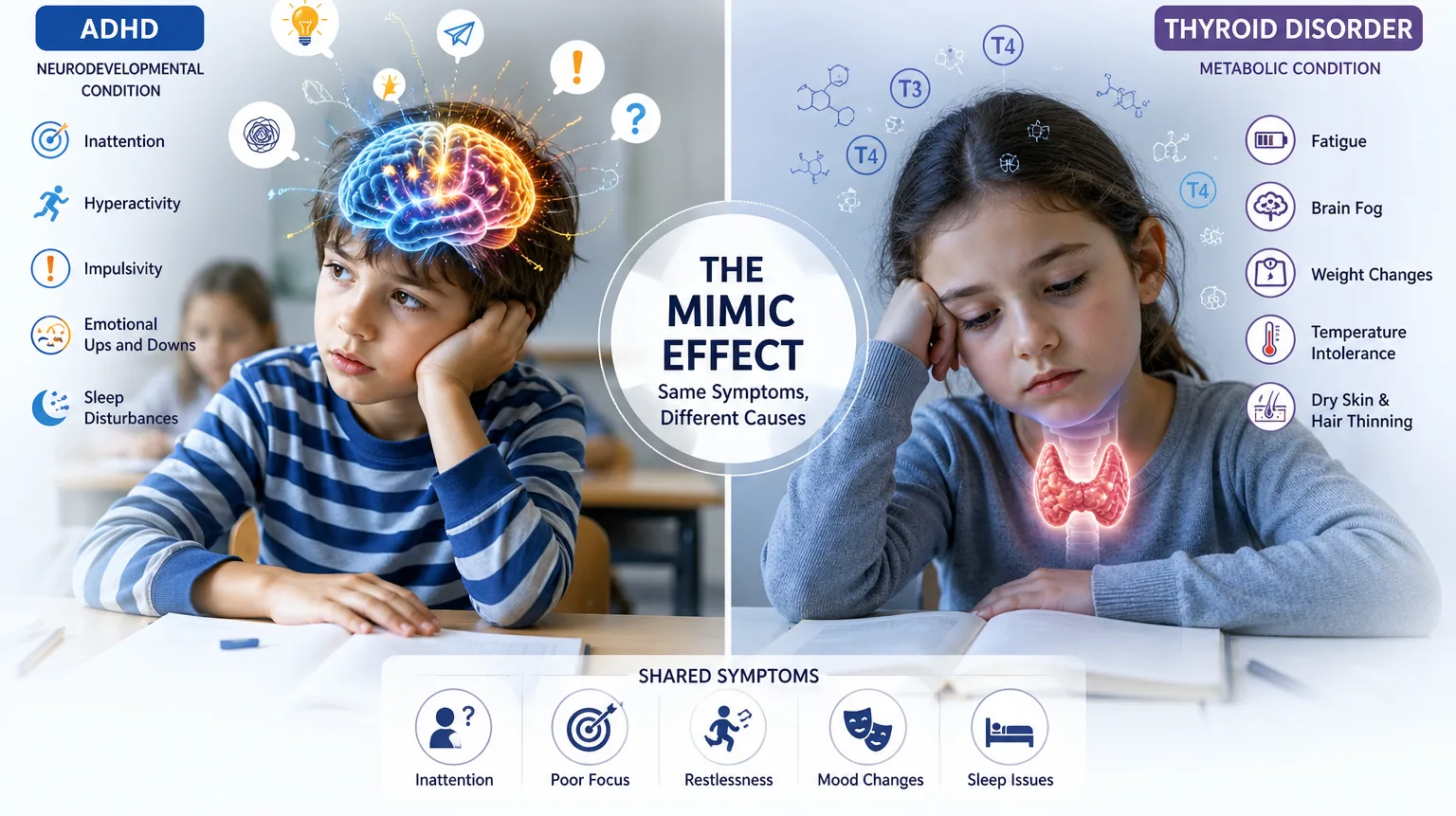
The thyroid gland regulates metabolism, energy production, and brain function. When hormone levels become imbalanced, it can directly affect how a child thinks, behaves, and focuses.
ADHD is a neurodevelopmental condition, while thyroid disorders are hormonal and affect the entire body. Although they are fundamentally different, thyroid dysfunction can influence brain activity in ways that closely resemble ADHD in children.
Shared Symptoms Between ADHD and Thyroid Disorders
Both conditions can present with a similar behavioral pattern, including:
- Inattention and poor focus, sometimes described as mental fog
- Hyperactivity or restlessness driven by hormonal overactivation
- Irritability and mood swings linked to hormonal changes
- Sleep disturbances that worsen daytime attention and behavior
This overlap is a common reason for missed or delayed diagnosis. A thyroid condition can present as a behavioral problem, and without medical screening, it is easy to stop the evaluation too early.
Related reading: If you want a deeper understanding of how ADHD typically presents in children across different ages, read this:
ADHD in Children (Ages 2–12): Early Signs, Brain Development, Sleep Issues & Treatment
The Key Difference: Physical Clues
Behavior alone cannot separate the two. Physical signs are what point toward a thyroid cause.
Thyroid disorders usually affect the body alongside behavior, while ADHD does not produce systemic physical changes. These physical signs include:
- Unexplained weight gain or weight loss.
- Persistent dry skin or noticeable hair thinning.
- Temperature sensitivity (feeling unusually cold in hypothyroidism or heat intolerance in hyperthyroidism).
- Slowed or altered growth patterns in children.
If these physical signs appear along with attention or behavior concerns, a thyroid evaluation should be considered before confirming an ADHD diagnosis.
Hypothyroidism vs Hyperthyroidism: How Each Mimics ADHD Differently
Thyroid disorders can affect brain function in different ways depending on whether the gland is underactive or overactive. This leads to distinct symptom patterns that may resemble different types of ADHD in children.
1. The Inattentive Mimic: Hypothyroidism
When thyroid hormone levels are low, brain activity slows down. Children may appear distracted or unresponsive, but the underlying issue is reduced metabolic and cognitive speed rather than attention deficit.
Children may experience:
- Brain fog: Slowed thinking, delayed responses, and difficulty following multi-step instructions.
- Poor short-term memory: Forgetting recent instructions or losing track of tasks midway through.
- Low motivation and fatigue: Difficulty initiating or completing routine activities despite genuine effort.
👉 These symptoms closely resemble inattentive-type ADHD. The distinction lies not in behavior but in the metabolic cause driving it.
2. The Hyperactive Mimic (Hyperthyroidism)
When thyroid hormone levels are too high, the nervous system becomes overstimulated. This can create behavior that appears hyperactive or impulsive, even when the child is not intentionally restless.
Children may show:
- Physical jitters or tremors: Subtle shaking of the hands or body even at rest.
- Racing thoughts: Rapid shifting between ideas that makes sustained focus difficult.
- Constant restlessness: A persistent urge to move even during calm or preferred activities.
👉 These symptoms may resemble hyperactive-impulsive ADHD, but they are driven by hormonal overstimulation rather than behavioral dysregulation.
Should Children with ADHD Symptoms Be Evaluated for Thyroid Disorders?
Yes. When a child shows persistent attention difficulties, restlessness, or mood changes, both ADHD and thyroid disorders deserve consideration rather than an either-or approach.
ADHD affects attention regulation, impulse control, and behavior over time.
Thyroid disorders are metabolic and influence how the brain receives hormonal input, directly affecting focus, mood, activity levels, and physical development.
These are not mutually exclusive. Some children carry both conditions simultaneously, and treating only one leaves the other unaddressed.
Why a Structured Evaluation Matters
Relying on behavior alone can lead to missed or incomplete diagnoses in children with attention and behavior concerns.
According to the Centers for Disease Control and Prevention (CDC) and the American Academy of Pediatrics (AAP), ADHD diagnosis should always involve a comprehensive clinical evaluation.
This includes medical history and assessment of other conditions that may mimic symptoms.
A child with undetected hypothyroidism may receive ADHD medication with limited improvement, as the underlying metabolic issue remains unaddressed.
Similarly, a child with ADHD who also has a thyroid disorder may not respond optimally to treatment until both conditions are identified and managed together.
A structured evaluation that includes clinical examination and targeted thyroid testing, when indicated, helps clarify the underlying cause of symptoms.
This distinction is essential in determining whether the child requires metabolic treatment, behavioral intervention, or a combination of both.
7 Red Flags That Suggest Thyroid Disorders in Children, Not ADHD
“How can I tell if my child’s ADHD symptoms are really thyroid related?”
The answer lies in the physical. ADHD does not typically cause physical changes like weight, skin, or growth abnormalities. Thyroid disorders can.
These signs point toward a metabolic cause rather than a behavioral one.
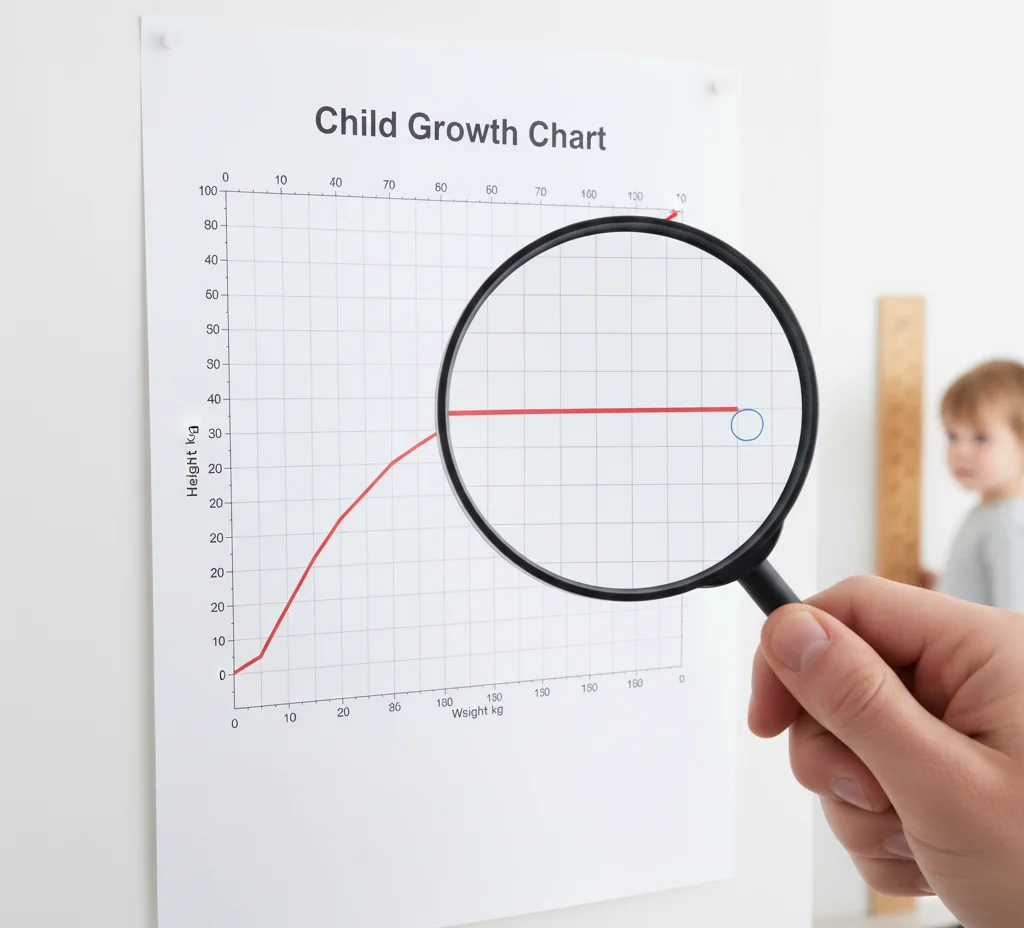
1. Unexplained Changes in Growth or Weight
One of the strongest clues is a visible change in physical development.
Hypothyroidism may slow growth and lead to height stagnation, while hyperthyroidism can result in sudden weight loss due to increased metabolism. ADHD does not directly affect growth or body weight.
Key point: If attention problems appear alongside stalled growth or unexplained weight changes, metabolic testing should come before a behavioral diagnosis.
2. Sleep Struggles That Do Not Respond to Routine
Unlike ADHD-related sleep issues, thyroid-driven sleep problems do not improve with routine or behavioral strategies.
Hypothyroidism causes extreme daytime drowsiness, while hyperthyroidism may lead to night sweats or a racing heart that prevents deep sleep. In ADHD, sleep difficulties are usually related to difficulty winding down mentally rather than physical symptoms.
Key point: Persistent night sweats or severe fatigue despite ten or more hours of sleep may indicate a thyroid cause.
3. Mood Swings Without a Trigger
ADHD involves emotional dysregulation, but it is usually situation-driven. Thyroid-related mood changes may appear without a clear external trigger.
Children may show unexplained anxiety, irritability, or low mood even in calm environments. In ADHD, emotional outbursts are more often linked to specific situations such as frustration or overstimulation.
Key point: Persistent mood changes without context should prompt further metabolic evaluation.
4. Energy Levels That Do Not Match the Moment
Hypothyroidism often feels like a constant lack of energy, while hyperthyroidism may cause internal overactivity even during rest. In ADHD, energy levels typically fluctuate based on interest and stimulation.
Key point: Physical symptoms like a racing heart or constant fatigue during rest suggest a thyroid imbalance.
5. Sensitivity to Temperature
Unlike ADHD, thyroid disorders can affect how the body regulates temperature.
Hypothyroidism may cause cold sensitivity with persistently cold hands and feet, while hyperthyroidism may lead to heat intolerance and excessive sweating. ADHD does not affect temperature regulation.
Key point: Consistent complaints of being too cold or too hot compared to others may indicate thyroid dysfunction.
6. Changes in Skin, Hair, or Appearance
Physical appearance changes are important clinical clues that are not seen in ADHD.
Hypothyroidism may cause dry skin and thinning of the outer third of the eyebrows, while hyperthyroidism can make skin appear moist or clammy.
Key point: Skin or hair changes alongside attention problems should prompt thyroid evaluation.
7. Focus Problems Accompanied by Physical Heaviness
In thyroid disorders, attention problems often occur with physical fatigue, muscle weakness, or mental heaviness. In ADHD, attention issues are more related to interest and environment rather than physical state.
Key point: If poor focus consistently comes with physical fatigue or weakness, a thyroid panel should be considered.
Key Difference Between ADHD and Thyroid Symptoms in Children
To understand thyroid-related attention issues clearly, a comparison of behavior and physical signs is essential. Thyroid blood test (TSH, Free T3, Free T4) helps confirm diagnosis when symptoms overlap.
| Symptom Area | ADHD Pattern | Thyroid Pattern (Hypo/Hyper) |
|---|---|---|
| Growth & Weight | Normal growth curve; stable weight | Stalled height or unexplained weight gain/loss |
| Sleep Quality | Difficulty shutting down at night | Daytime fatigue (Hypo) or insomnia/night sweats (Hyper) |
| Mood Swings | Reactive emotional changes | Anxiety, irritability, or low mood without clear triggers |
| Energy Levels | Interest-driven energy changes | Persistent fatigue or overactivity regardless of situation |
| Temperature | Normal temperature regulation | Cold intolerance (Hypo) or heat intolerance with sweating (Hyper) |
| Physical Appearance | No physical changes | Dry skin, hair thinning, or facial puffiness |
| Type of Focus | Distracted by environment/interests | Brain fog or racing thoughts with physical symptoms |
When NOT to Assume a Thyroid Problem in Children
Not every attention or behavior issue is related to thyroid dysfunction. In many children the pattern is clearly consistent with ADHD, especially when symptoms start early in life and remain stable over time.
Thyroid causes are less likely when growth is normal, weight is stable, and there is no fatigue, temperature sensitivity, or changes in skin or hair.
If a child’s focus and behavior vary mainly with interest or environment, ADHD is more likely than a metabolic cause.
When the symptom pattern is longstanding and consistent with neurodevelopmental history, an ADHD diagnosis should not be delayed in favor of metabolic testing.
Thyroid testing is most useful when behavioral symptoms are new, changing, or accompanied by physical signs.
Research Evidence on ADHD and Thyroid Disorders in Children
Scientific research confirms a direct link between thyroid health and brain development, focus, and behavior. This connection explains why thyroid dysfunction is frequently missed when evaluation focuses on behavior alone.
1. Hyperthyroidism and ADHD-like symptoms (2024 Study)
A 2024 study published in BMC Neurology reported that individuals with hyperthyroidism often experience symptoms nearly identical to ADHD, including anxiety, nervousness, irritability, and increased physical restlessness.1
The study indicates that abnormal thyroid activity directly disrupts the pathways responsible for attention and behavioral control.
2. Maternal Hypothyroidism & ADHD Risk in Children (2020 Study)
Research from 2020 found that children born to mothers with hypothyroidism were significantly more likely to receive an ADHD diagnosis.2
Even mild thyroid hormone deficiency during early pregnancy (hypothyroxinemia) was linked to higher rates of ADHD-like symptoms compared to children of mothers with optimal thyroid levels. This highlights how maternal metabolic health sets the stage for early brain development.3
3. Free T3 Hormone Levels & ADHD Symptoms (2020 Study)
A separate 2020 study found a correlation between elevated Free T3 levels and hyperactivity in children.4
Children with higher levels of this active thyroid hormone showed greater attention difficulties and physical restlessness, closely mimicking classic hyperactive-impulsive ADHD.
4. Hyperthyroidism & ADHD Risk Ratio (2019 Study)
A 2019 study determined that children with hyperthyroidism carry a 1.7 times higher risk of being diagnosed with ADHD than those with normal thyroid function.5
This finding supports the clinical pattern described throughout this article: thyroid overactivity can produce fidgeting, impulsivity, and inattention that are clinically indistinguishable from ADHD without metabolic testing.
How Thyroid Problems Affect School Performance in Children
Children with thyroid imbalance often struggle in the classroom in ways that closely resemble ADHD.
Teachers and parents may misread these behaviors as laziness or lack of effort when the underlying cause is hormonal.
Unlike ADHD, where challenges are usually linked to interest and stimulation, thyroid-related learning difficulties are driven by hormonal imbalances that the child cannot control.
- Hypothyroidism: A child may appear sluggish, forgetful, or unable to keep up with assignments because their brain is physically slowing down.
- Hyperthyroidism: A child may seem restless, defiant, or unable to sit still because their nervous system is in a state of constant overstimulation.
Without proper testing these children risk being labeled as unmotivated or difficult. That label does not just delay treatment. It damages a child’s confidence and self-esteem in ways that can last for years.
Real Clinical Case Example: ADHD-Like Symptoms Caused by Thyroid Disorder
A 9-year-old boy was referred for evaluation after teachers reported poor attention, constant restlessness, and difficulty completing schoolwork.
He was initially diagnosed with ADHD and started on behavioral therapy, with little improvement.
During a follow-up evaluation, the clinician identified physical signs that had not been captured in the initial behavioral assessment
- Persistent fatigue despite adequate sleep,
- A noticeable slowdown in his growth pattern,
- Dry skin on the arms and legs.
A full thyroid panel was ordered and revealed hypothyroidism.
Following thyroid hormone replacement therapy, his energy stabilized, attention and mental clarity improved, and school performance showed steady progress over the following months.
The case reflects a pattern seen in clinical practice: attention difficulties, fatigue, and mood changes driven by thyroid imbalance can present in ways that are indistinguishable from ADHD without metabolic testing.
When to Consider Thyroid Testing and Evaluate ADHD vs Thyroid in Children
Thyroid imbalances can worsen gradually if left undetected. Consider asking your pediatrician about thyroid testing if your child’s attention or behavior concerns appear alongside any of the following:
- Stalled growth: A sudden plateau in height or a delay in the onset of puberty.
- Sudden behavioral shifts: A child who was previously developing normally and then became restless, unfocused, or irritable over a period of three to six months
- Physical jitters: Visible tremors in the fingers or a heartbeat that feels unusually fast even at rest.
- Family history: A known history of Hashimoto’s disease, Graves’ disease, or thyroid conditions in close family members.
- Neck fullness: Any visible swelling or thickening at the base of the neck where the thyroid gland sits.
Step-by-Step Evaluation Checklist for Parents
When evaluating attention and behavior concerns in children, a structured approach helps avoid misdiagnosis and ensures the underlying cause is properly identified.
1. Request a Full Thyroid Panel
Do not rely on TSH alone.
Ask your pediatrician for a complete thyroid evaluation, including:
- TSH (Thyroid Stimulating Hormone)
- Free T4
- Free T3
- Thyroid antibodies (TPO and, if needed, TG antibodies)
Early or autoimmune thyroid dysfunction may not be detected by TSH alone. In some cases, hormone imbalance begins before standard markers become abnormal.
2. Check Iron Levels (Ferritin)
Low iron stores can closely mimic ADHD symptoms such as poor concentration, fatigue, irritability, and restlessness.
A serum ferritin test helps assess iron reserves, which are essential for dopamine regulation, thyroid hormone metabolism, and cognitive energy.
Related ADHD Conditions, Nutritional Deficiencies, and Tests:
Some children presenting with ADHD-like symptoms may also have low magnesium, iron, or zinc levels, which can affect focus, sleep, and behavior:
- Magnesium for ADHD in Children: Can This Mineral Calm Hyperactivity?
- ADHD vs Iron Deficiency in Children: 7 Hidden Signs to Avoid Misdiagnosis
- Zinc and ADHD in Children: Does It Really Help With Focus and Hyperactivity?
- Blood Tests for ADHD in Children: What Tests Doctors May Consider in ADHD Evaluation
3. Observe the Symptom Timeline
Timing often provides one of the clearest diagnostic clues.
- ADHD symptoms typically appear early in childhood (often between 4–6 years) and remain relatively consistent over time.
- Thyroid-related symptoms may appear suddenly or worsen progressively over weeks to months, particularly when prior development was normal.
A noticeable change in behavior after a period of normal development should prompt metabolic evaluation.
4. Evaluate Sleep Quality
Sleep patterns differ significantly between the two conditions:
- In ADHD: Difficulty falling asleep due to an overactive mind, but overall sleep duration may still be normal.
- In thyroid disorders: Children may sleep longer than usual yet wake up tired, unrefreshed, or mentally “foggy.”
This difference in sleep quality is a clinically useful distinguishing feature.
If a child with undiagnosed hyperthyroidism is given stimulant medication commonly used for ADHD, it can place additional stress on an already overactive cardiovascular system and may elevate blood pressure to clinically significant levels. This is why thyroid screening should always be completed before ADHD medication is started.
How to Talk to Your Doctor About ADHD vs Thyroid Concerns in a Child
Many parents feel dismissed when they raise concerns that go beyond behavior. Having a clear, specific script helps.
Try saying something like this:
“I have been tracking my child’s symptoms. They look like ADHD, but I have also noticed [mention a physical sign such as cold hands, weight changes, or tremors].
Before starting any ADHD treatment, I would like to rule out a thyroid problem. Can we run a full thyroid panel including TSH, Free T4, Free T3, and TPO antibodies?”
Bringing a written note with specific observations, such as a sleep log or growth chart, shows your doctor exactly what you have been seeing at home.
Most physicians will order the labs when a parent presents clear physical concerns alongside behavioral ones. That conversation is often shorter than parents expect.
Conclusion
Thyroid disorders can closely resemble ADHD in children, particularly when symptoms involve attention difficulties, restlessness, and mood changes.
However, thyroid conditions often include physical signs that ADHD does not, such as growth changes, fatigue, or temperature sensitivity.
A complete evaluation including thyroid testing is important before confirming an ADHD diagnosis or starting long-term treatment.
This ensures that underlying metabolic causes are not missed.
Early identification of thyroid dysfunction can significantly improve outcomes, reducing the risk of both misdiagnosis and delayed treatment.
Frequently Asked Questions About ADHD vs Thyroid in Children
Q1: Can thyroid problems mimic ADHD in children?
Yes. Both hypothyroidism and hyperthyroidism can cause focus issues, restlessness, or mood swings that look like ADHD. The difference is that thyroid conditions also bring physical changes such as weight shifts, growth delays, or temperature sensitivity.
Q2: What are the signs my child’s ADHD symptoms are thyroid-related?
Look for physical clues ADHD does not cause: unexplained weight gain or loss, stalled height growth, fatigue despite rest, sensitivity to heat or cold, or changes in skin and hair (like thinning eyebrows).
Q3: Should thyroid testing be done before ADHD medication?
It is highly recommended. Ask for a Full Thyroid Panel (TSH, Free T4, Free T3, and thyroid antibodies) before beginning ADHD treatment. Misdiagnosis can lead to inappropriate medication, which is especially risky in cases of hyperthyroidism.
Q4: Can a child have both ADHD and a thyroid condition?
Yes. Some children may have a neurological ADHD diagnosis alongside a thyroid imbalance. In these cases, treating the metabolic issue first often makes behavioral interventions much more effective.
Q5. Can Treating the Thyroid Improve ADHD-Like Symptoms?
Yes. In many cases, once metabolic health is restored, the ADHD-like symptoms may significantly improve. Correcting the imbalance leads to improvements in attention, energy levels, and mood stability. While some children may have both conditions, the metabolic cause should always be treated first.
Q6: How do thyroid symptoms differ from ADHD symptoms in daily life?
ADHD symptoms are usually consistent from early childhood and are often situational (a child can focus better on tasks they enjoy). Thyroid symptoms often appear more suddenly, worsen over months, and include physical “tells” like cold hands, dry skin, or constant exhaustion.
Q7: What should parents do if they suspect thyroid issues instead of ADHD?
Keep a 2-week log of your child’s growth, sleep quality, mood, and energy patterns. Share these observations with your pediatrician and specifically request a full thyroid panel and a ferritin (iron) test.
Q8: Why is ADHD misdiagnosis dangerous for children with thyroid imbalance?
Treating thyroid imbalance with stimulants is high-risk. These medications can dangerously raise heart rate and anxiety in hyperthyroid children while leaving the underlying metabolic issue untreated, potentially affecting long-term development.
References
📚 Click to view all study references
- Chen G, Gao W, Xu Y, et al. Serum TSH Levels are Associated with Hyperactivity Behaviors in Children with ADHD. Neuropsychiatr Dis Treat. 2023;19:557-564. [View Study]
- Peltier MR, Fassett MJ, Chiu VY, Getahun D. Maternal Hypothyroidism Increases the Risk of ADHD in the Offspring. Am J Perinatol. 2021;38(02):191-201. [View Study]
- Modesto T, et al. Maternal Mild Thyroid Hormone Insufficiency in Early Pregnancy and ADHD Symptoms in Children. JAMA Pediatr. 2015;169(9):838-45. [View Study]
- Albrecht D, Ittermann T, et al. The association between thyroid function biomarkers and attention deficit hyperactivity disorder. Sci Rep. 2020;10(1):18285. [View Study]
- Zader SJ, Williams E, Buryk MA. Mental Health Conditions and Hyperthyroidism. Pediatrics. 2019;144(5):e20182874. [View Study]
