
Written by: MediHealth PRO Editorial Team
Scientifically Reviewed by: Dr. Amit Pande, PhD
Molecular Biologist & Independent Scientific Advisor
Key Takeaways
- ADHD burnout in children is a state of mental and emotional exhaustion, not laziness or defiance, although it is not an official medical diagnosis.
- Common signs include increased irritability, emotional outbursts, avoidance of everyday tasks, withdrawal, headaches, and persistent fatigue.
- Recovery varies from child to child and depends on the level of stress, available support, and any underlying challenges.
- Reducing unnecessary pressure, maintaining healthy routines, and working with your child’s school can support recovery.
- Seek advice from a pediatrician or qualified mental health professional if symptoms persist, worsen, or significantly interfere with daily life.
Does your child, who once enjoyed favorite activities or managed everyday tasks more easily, now tire quickly, become frustrated over small things, or say, “I can’t do this”?
It is not always laziness, defiance, or a lack of motivation. Sometimes, these changes may be signs of ADHD burnout.
ADHD burnout in children can develop when a child spends a long time using extra effort to manage attention, emotions, schoolwork, routines, and daily expectations.
From the outside, it may look like avoidance or poor motivation. In reality, it may reflect a state of mental and emotional exhaustion after prolonged stress and effort.
Understanding ADHD burnout can help parents recognize these changes early, reduce unnecessary pressure, and provide the support their child needs to recover and regain confidence.
What Is ADHD Burnout in Children?
ADHD burnout in children is a state of mental, emotional, and sometimes physical exhaustion that develops after prolonged stress from managing ADHD-related challenges. Although it is not an official medical diagnosis, the term is widely used to describe this pattern of exhaustion in some children with ADHD.
Burnout is different from ADHD itself, which is a neurodevelopmental condition. If you would like a broader overview of ADHD symptoms, diagnosis, and treatment, see our complete guide to ADHD in children.
While ADHD is formally diagnosed by a healthcare provider following a structured evaluation process, burnout is not a diagnostic category.
Many children with ADHD work harder than their peers to stay focused, control impulses, remember instructions, and meet everyday expectations. For some, this constant effort can become mentally and emotionally exhausting over time.
Ordinary tiredness usually improves with rest, but ADHD burnout may persist. A child may become emotionally drained, lose motivation, struggle with everyday tasks, or react more intensely to minor frustrations.
Recognizing these changes early can help reduce their impact on a child’s well-being, learning, and relationships.
Why Does ADHD Burnout Happen in Children?
Children with ADHD often spend far more mental energy on everyday tasks than most people realize. Paying attention in class, following instructions, controlling impulses, and switching between tasks can require continuous effort throughout the day.
Research suggests that children with ADHD often need to use more mental effort to regulate their attention, behaviour, and emotions than their peers.
Over weeks or months, this extra mental load can build up, especially when combined with academic pressure, emotional stress, poor sleep, or unrealistic expectations.
The CDC notes that ADHD symptoms often become more noticeable as daily demands increase. Over time, these growing demands may contribute to the prolonged stress that can increase the risk of burnout. Without enough time to rest and recover, some children may begin to feel mentally and emotionally overwhelmed.
The risk goes up when daily demands become more than a child can cope with, especially with limited support at home or school. Children who already work harder than their peers are often more likely to experience burnout.
Once burnout develops, everyday tasks may become even harder to manage, increasing stress and making recovery more difficult without appropriate support.
Signs and Symptoms of ADHD Burnout in Children
ADHD burnout can affect a child’s emotions, behaviour, thinking, and physical well-being.
The signs often develop over time and can look like worsening ADHD symptoms or everyday stress at first glance. Looking for changes in your child’s usual behaviour is often more helpful than focusing on a single symptom.
Emotional Symptoms
Common emotional signs of ADHD burnout include:
- Becoming more irritable or frustrated than usual.
- Frequent emotional outbursts or meltdowns.
- Feeling overwhelmed by small challenges.
- Losing confidence in their abilities and avoiding challenges they once handled well.
- Becoming more anxious or tearful.
Behavioural Symptoms
Parents may notice changes in their child’s behaviour, such as:
- Avoiding homework or everyday responsibilities.
- Losing interest in hobbies or favourite activities.
- Giving up more easily when tasks become difficult.
- Withdrawing from friends or family.
- Appearing less motivated than usual.
Some children may also avoid difficult situations by hiding problems or using lying as an avoidance behaviour when they feel stressed or unable to cope.
Cognitive Symptoms
ADHD burnout can also affect a child’s thinking, making it harder to:
- Concentrate or stay focused.
- Remember instructions.
- Make decisions or solve simple problems.
- Start or finish everyday tasks.
Physical Symptoms
ADHD burnout physical symptoms can include:
- Persistent tiredness or low energy.
- Headaches or stomach aches without an obvious cause.
- Changes in sleep patterns.
- Changes in appetite.
These symptoms are not unique to ADHD burnout and can occur with other physical or mental health conditions. If they persist, worsen, or significantly affect your child’s daily life, it is important to seek advice from a qualified healthcare professional.
What Does ADHD Burnout Look Like in Kids?
ADHD burnout often builds slowly rather than appearing overnight. Parents may first notice small changes that become more obvious over time. A child who once managed everyday routines may suddenly struggle with tasks that previously felt manageable.
ADHD burnout in children may look like a child who:
- Comes home from school completely exhausted and needs hours to recover before they can engage with anything else.
- Melts down over a change in plans that would not have bothered them a few months ago.
- Needs several reminders to start a task they used to begin on their own.
- Says they feel “too tired” or “can’t do it anymore,” even after a full night’s sleep.
- Goes quiet for stretches of the day instead of their usual energy or chatter.
Children may respond to burnout in different ways. Some become restless, irritable, or argumentative, while others withdraw, lose motivation, or appear emotionally flat.
These differences in how challenges appear are not unique to burnout. Our article on how ADHD shows up differently in girls and boys explores why ADHD symptoms may look different from child to child.
The most important clue is a lasting change from your child’s usual behaviour rather than a single difficult day.
ADHD Burnout vs Normal ADHD Symptoms
ADHD burnout and ADHD symptoms can look similar, but they are not the same. One is a lifelong neurodevelopmental condition, while the other is a state of mental and emotional exhaustion that may develop after prolonged stress or sustained effort.
The key difference is a clear change from how a child usually acts and copes. During burnout, ADHD symptoms may seem worse, and everyday tasks that were once manageable can suddenly feel overwhelming.
The table below highlights the main differences.
| ADHD Symptoms | ADHD Burnout |
|---|---|
| Lifelong neurodevelopmental condition | State of mental and emotional exhaustion |
| Symptoms are relatively consistent | Symptoms worsen after prolonged stress or sustained demands |
| Difficulty with attention, impulsivity, and executive functioning | Increased exhaustion, reduced motivation, and emotional overwhelm |
| Improves with standard ADHD strategies and support | May also require rest, reduced demands, and recovery time |
| Reflects the child’s usual pattern of functioning | Represents a noticeable change from the child’s usual pattern |
Some ADHD traits, such as impulsivity, can appear in different ways in daily life. For example, some children with ADHD may talk more than others their age. Learn more about excessive talking in children with ADHD.
How Long Does ADHD Burnout Last?
There is no fixed timeline for ADHD burnout recovery. Some children begin to feel better within days after stress is reduced and routines are restored, while others may need weeks or longer, particularly if burnout has been building for a long time or is accompanied by anxiety, sleep problems, or other challenges.
Recovery depends on several factors, including the child’s overall stress level, the demands placed on them, the quality of their sleep, family and school support, and whether any underlying conditions are also contributing to their symptoms.
Rather than expecting a quick recovery, focus on small, steady improvements. Signs such as better mood, increased interest in favourite activities, improved concentration, or greater willingness to take on everyday tasks often indicate that a child is beginning to recover.
If your child’s symptoms persist, worsen, or significantly interfere with school, relationships, or daily life, seek advice from a qualified healthcare professional for a comprehensive assessment.
How to Help a Child Recover From ADHD Burnout
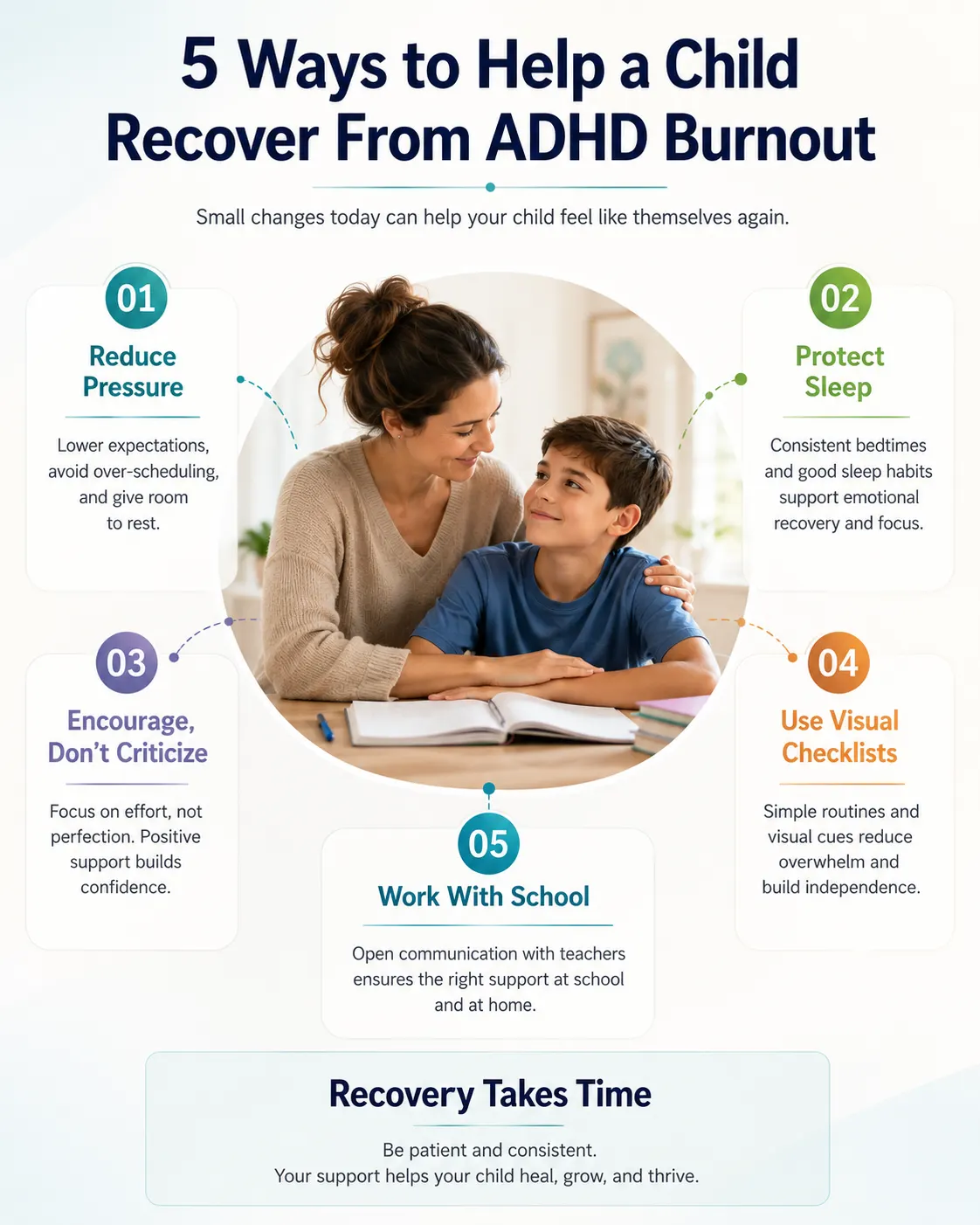
Recovery from ADHD burnout takes time and patience. The goal is not to eliminate every challenge but to reduce unnecessary stress while helping your child steadily regain their energy and confidence.
1. Reduce Pressure Temporarily
If possible, ease non-essential demands for a short period. Postponing optional activities, allowing extra time to complete tasks, or temporarily lowering expectations at home can help prevent your child from becoming even more overwhelmed.
2. Prioritize Sleep and Daily Routines
Regular sleep, balanced meals, physical activity, and predictable routines help children recover from prolonged stress. Even small improvements in daily habits can support emotional regulation and overall well-being.
3. Focus on Encouragement, Not Criticism
Children experiencing burnout often feel discouraged. Acknowledge their effort, celebrate small successes, and offer reassurance instead of focusing on mistakes or unfinished tasks.
4. Use Visual Tools and Checklists
Checklists, visual schedules, or timers can make tasks feel more manageable during burnout. They show a child clear starting and stopping points.
This reduces the mental effort needed to figure out what comes next, which is often where children with ADHD lose momentum.
5. Work With Your Child’s School
If burnout is affecting learning or behaviour, speak with teachers about temporary adjustments. Simple accommodations, such as reducing unnecessary workload or allowing additional time for assignments, may help lower stress while your child recovers.
With patience, reduced stress, and consistent support, most children recover from ADHD burnout over time. However, if symptoms persist or begin to interfere with everyday life, additional professional support may be needed.
When to Seek Professional Help
Occasional stress and tiredness are part of childhood, but persistent or worsening symptoms should not be ignored. If your child’s behaviour changes significantly or burnout begins to interfere with everyday life, it is a good idea to seek professional advice.
Consider speaking with your pediatrician or a qualified mental health professional if your child:
- Remains emotionally exhausted despite adequate rest.
- Refuses school or daily activities for an extended period.
- Shows persistent sadness, anxiety, or loss of interest in favourite activities.
- Has significant changes in sleep or appetite.
- Struggles with learning, friendships, or family relationships more than usual.
- Has symptoms that continue to worsen despite support at home.
A healthcare professional can check for other conditions that cause similar symptoms, such as anxiety, depression, sleep disorders, learning difficulties, or medication issues.
In some cases, a doctor may recommend additional evaluation to look for other possible contributors. Our guide on blood tests for children with ADHD-like symptoms explains when laboratory tests may be considered and what they can help identify.
This aligns with CDC guidance, which recommends screening for co-occurring conditions such as anxiety, depression, and sleep disorders when a child shows ADHD-like symptoms. An early assessment can help your child receive the right support and prevent symptoms from becoming more disruptive.
Final Thoughts
ADHD burnout in children is not a sign of laziness or a lack of motivation. It reflects genuine mental and emotional exhaustion that can develop after sustained stress from managing everyday challenges.
Early recognition allows parents to step in before burnout starts affecting how a child manages school, friendships, and daily life.
Recovery takes time, but small, consistent changes can help. Reducing unnecessary pressure, protecting healthy sleep, offering encouragement instead of criticism, and working closely with your child’s school can all support recovery.
If symptoms persist, worsen, or significantly interfere with daily life, seek advice from a pediatrician or qualified mental health professional.
Burnout does not look the same for every child with ADHD. By noticing lasting changes in your child’s usual behaviour and responding with patience, understanding, and appropriate care, you can help your child regain confidence, rebuild resilience, and feel like themselves again.
Frequently Asked Questions
What does ADHD burnout look like in kids?
ADHD burnout may cause a child to become emotionally exhausted, lose motivation, avoid everyday tasks, or react more strongly to minor frustrations. Some children become irritable and restless, while others withdraw, become unusually quiet, or lose interest in activities they previously enjoyed. A lasting change from the child’s usual behaviour is often the clearest sign.
How long does ADHD burnout last?
There is no fixed timeline for recovery. Some children improve within days after stress is reduced, while others may need weeks or longer. Recovery depends on factors such as the child’s stress level, sleep, daily demands, support at home and school, and whether other conditions are also affecting their well-being.
Can children recover from ADHD burnout?
Yes. With reduced stress, consistent routines, emotional support, and professional care when needed, most children recover from ADHD burnout over time. Recovery takes time and is usually steady rather than immediate.
What are the physical symptoms of ADHD burnout?
Some children may experience persistent tiredness, headaches, stomach aches, changes in sleep patterns, or changes in appetite. Because these symptoms can have many possible causes, persistent symptoms should be assessed by a healthcare professional.
Can ADHD burnout make ADHD symptoms worse?
Yes. During burnout, children may find it even harder to concentrate, manage emotions, stay organized, or complete everyday tasks. This does not necessarily mean their ADHD is worsening permanently. Instead, burnout can temporarily make everyday ADHD challenges harder to manage.
Can school pressure contribute to ADHD burnout?
Yes. Heavy workloads, frequent deadlines, academic expectations, social challenges, and limited opportunities to rest can increase stress for children with ADHD. Working with teachers to provide appropriate support may help reduce the risk of burnout.
Can ADHD burnout happen even if my child takes ADHD medication?
Yes. Medication can help manage ADHD symptoms, but it does not eliminate everyday stress or prevent burnout. Healthy sleep, balanced routines, emotional support, and appropriate school accommodations remain important for a child’s overall well-being.
Is ADHD burnout the same as depression?
No. Although both conditions can cause low energy, reduced motivation, and withdrawal, they are not the same. Because the symptoms can overlap, any child with persistent or severe changes in mood or behaviour should be evaluated by a qualified healthcare professional.
What does ADHD fatigue feel like in children?
Children with ADHD may sometimes experience mental fatigue, especially during periods of prolonged stress or burnout. They may feel mentally exhausted even after enough sleep, have difficulty concentrating, and lack the energy to manage everyday tasks. Since fatigue can stem from several different causes, ongoing symptoms are worth raising with a doctor.
Scientific References
📚 Click to view references
- Centers for Disease Control and Prevention. Diagnosing ADHD.
Available at: https://www.cdc.gov/adhd/diagnosis/index.html
- Centers for Disease Control and Prevention. About ADHD in Children.
Available at: https://www.cdc.gov/adhd/about/index.html
- Centers for Disease Control and Prevention. Clinical Care of ADHD in Children.
Available at: https://www.cdc.gov/adhd/hcp/clinical-care/index.html
- Shaw P, Stringaris A, Nigg J, Leibenluft E. Emotional Dysregulation and Attention-Deficit/Hyperactivity Disorder.
Available at: https://pmc.ncbi.nlm.nih.gov/articles/PMC4282137/
