Written by: MediHealth PRO Editorial Team
Scientifically Reviewed by: Dr. Amit Pande, PhD
Molecular Biologist & Independent Scientific Advisor
Key Takeaways:
- ADHD signs in 5-year-old girls include daydreaming, inattention, excessive talking, fidgeting, impulsivity, emotional outbursts, and friendship difficulties.
- ADHD often looks different in girls, with inattentive symptoms more common and easier to miss.
- Symptoms are concerning when they persist for six months or more, appear in multiple settings such as home and school, and affect daily functioning.
- There is no single test. Diagnosis is based on a full evaluation involving parents, teachers, and healthcare professionals.
- Early identification and support through parenting strategies, school support, and behavioural interventions can improve confidence and daily functioning.
Your daughter loses her shoes every morning, stops listening halfway through instructions, and bursts into tears when a game does not go her way. A friend tells you her son did the exact same thing at five and grew out of it.
Most five-year-olds are occasionally distracted, forgetful, or emotional. ADHD signs in a 5-year-old girl can be harder to recognise than in boys, since they often appear as quiet inattention, emotional sensitivity, or daydreaming rather than obvious hyperactivity. These patterns are often mistaken for shyness, immaturity, or simply part of growing up.
Occasional slips are a normal part of childhood. However, when these behaviours repeat consistently, occur in multiple settings, and interfere with daily life, they deserve a closer look.
If you want to explore ADHD symptoms across a wider age range, read our guide on 10 Early Signs of ADHD in Girls Parents Should Never Ignore.
ADHD vs Normal 5-Year-Old Behaviour: How to Tell the Difference
ADHD is diagnosed based on a consistent pattern of symptoms that affects a child’s daily functioning. Based on DSM-5 diagnostic criteria, healthcare professionals consider whether the symptoms:
- Occur most days, not just once in a while.
- Have been present for at least six months.
- Appear in more than one setting, such as home and school.
- Interfere with learning, friendships, family life, or everyday activities.
The table below shows what that difference can look like in practice.
| Typical 5-Year-Old Behaviour | Behaviour that may suggest ADHD |
|---|---|
| Occasionally loses focus | Frequently struggles to stay focused |
| Sometimes forgets instructions | Regularly forgets or completes only part of a task |
| Gets upset over disappointments | Has intense emotional reactions to minor frustrations |
| Occasionally interrupts | Frequently interrupts or talks excessively |
| Is active during play | Constantly fidgets or struggles to remain seated when expected |
| Has occasional friendship conflicts | Repeatedly struggles with friendships because of impulsive or emotional behaviours |
ADHD Signs in a 5-Year-Old Girl at a Glance
The CDC outlines that ADHD symptoms generally fall into patterns of inattention, hyperactivity, or a combination of both. No two children show the exact same signs.
In young girls, this commonly shows up as daydreaming, difficulty focusing, excessive talking, fidgeting, emotional outbursts, or difficulty with friendships. Having one or two of these behaviours does not necessarily mean a child has ADHD.
- Frequently daydreams or seems “lost in thought”
- Has trouble paying attention during play or learning activities
- Struggles to follow multi-step instructions
- Is easily distracted by sights, sounds, or other activities
- Often forgets everyday tasks or loses belongings
- Talks excessively or interrupts conversations
- Fidgets, squirms, or finds it difficult to stay seated
- Acts before thinking about the consequences
- Has frequent emotional outbursts or low frustration tolerance
- Becomes upset easily by criticism or small setbacks
- Finds it difficult to make or keep friendships
- Has trouble taking turns or sharing during group activities
If your child is younger than five, the pattern can look somewhat different; see Early Signs of ADHD in Toddlers (Ages 2–5): Normal Behaviour vs Red Flags.
Inattentive ADHD Symptoms in 5-Year-Old Girls
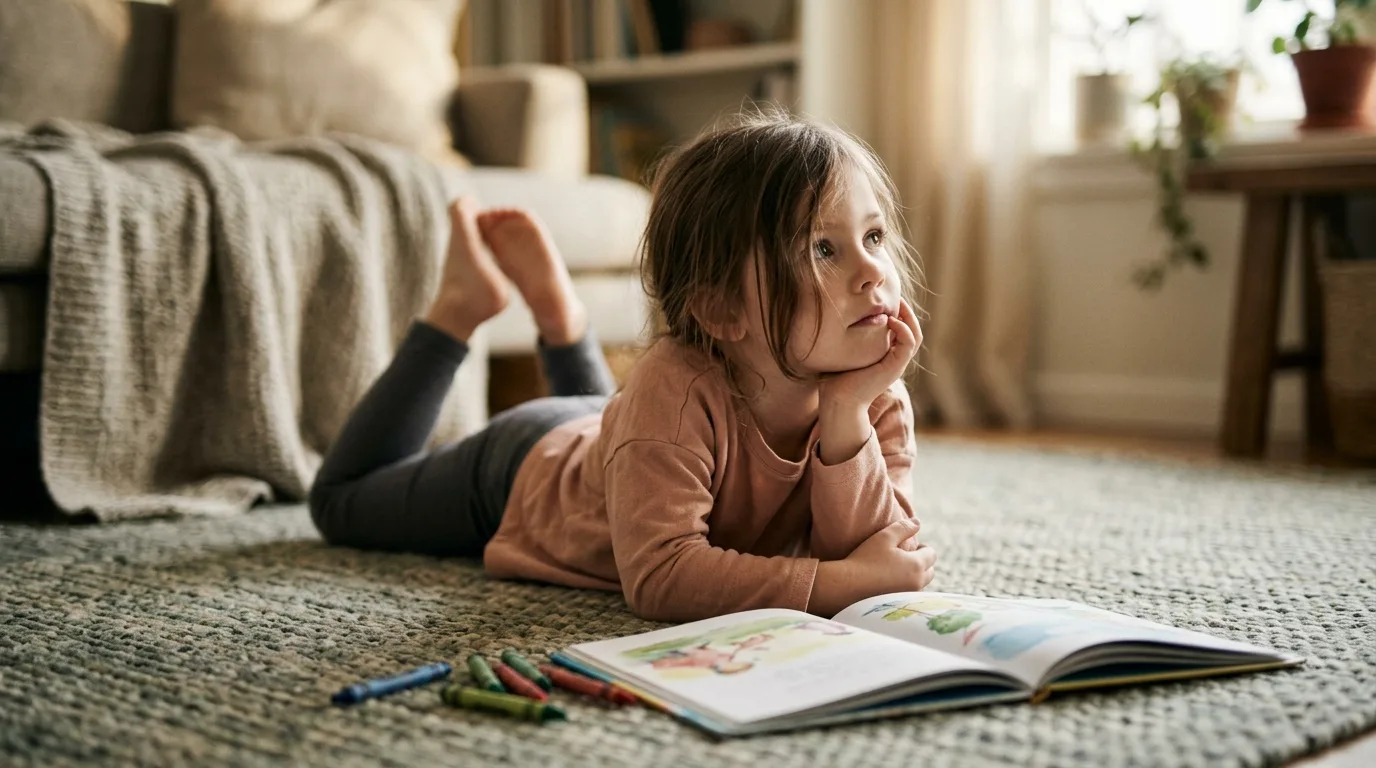
Many people associate ADHD with hyperactivity, but inattentiveness is often the most noticeable feature in young girls.
A child may appear quiet and well behaved while silently struggling to pay attention, follow routines, or finish everyday tasks. Because these behaviours are less disruptive, they are often mistaken for daydreaming, shyness, or a lack of interest.
Daydreaming and Appearing “Spacey”
A 5-year-old girl with ADHD may frequently seem lost in her own thoughts, staring out the window, losing track of conversations, or drifting away during story time without noticing.
Difficulty Following Instructions
Multi-step directions can be hard to remember. A child may complete only part of a task, forget what she was asked to do, or need frequent reminders for everyday routines.
Losing Focus During Activities
Girls with ADHD often struggle to sustain attention even during tasks they enjoy. They might leave puzzles unfinished, lose interest in games partway through, or drift off before completing something they chose themselves.
Forgetfulness and Disorganisation
A child may regularly misplace toys, school things, or personal belongings. She might forget to bring items home or struggle to keep tasks organised without repeated adult support.
Hyperactive and Impulsive ADHD Symptoms in Girls
Hyperactivity does not always look like running or climbing. Impulsivity can be far more subtle, showing up as excessive talking, fidgeting, impatience, or acting before thinking.
These signs often become more noticeable in structured settings like the classroom, where children are expected to sit quietly, wait their turn, and follow routines.
Excessive Talking and Interrupting
Some girls with ADHD talk almost continuously, interrupt conversations, answer before a question is finished, or struggle to wait for others to speak.
If you want to understand why some children with ADHD seem to talk constantly, Read Why Do Kids With ADHD Talk So Much: Causes, Brain Science & Practical Strategies.
Difficulty Waiting Their Turn
Waiting in line, taking turns during games, or sharing attention with others can be genuinely difficult. Your girl may grow impatient, interrupt activities, or act before it is her turn.
Fidgeting and Constant Movement
Instead of running around the room, a girl may tap her feet, swing her legs, play with her hands, wiggle in her seat, or get up repeatedly when expected to stay seated.
Acting Before Thinking
Your child may grab toys from classmates, blurt out answers, climb where it is not safe, or rush into activities without pausing to think about the consequences.
Emotional Signs of ADHD in 5-Year-Old Girls
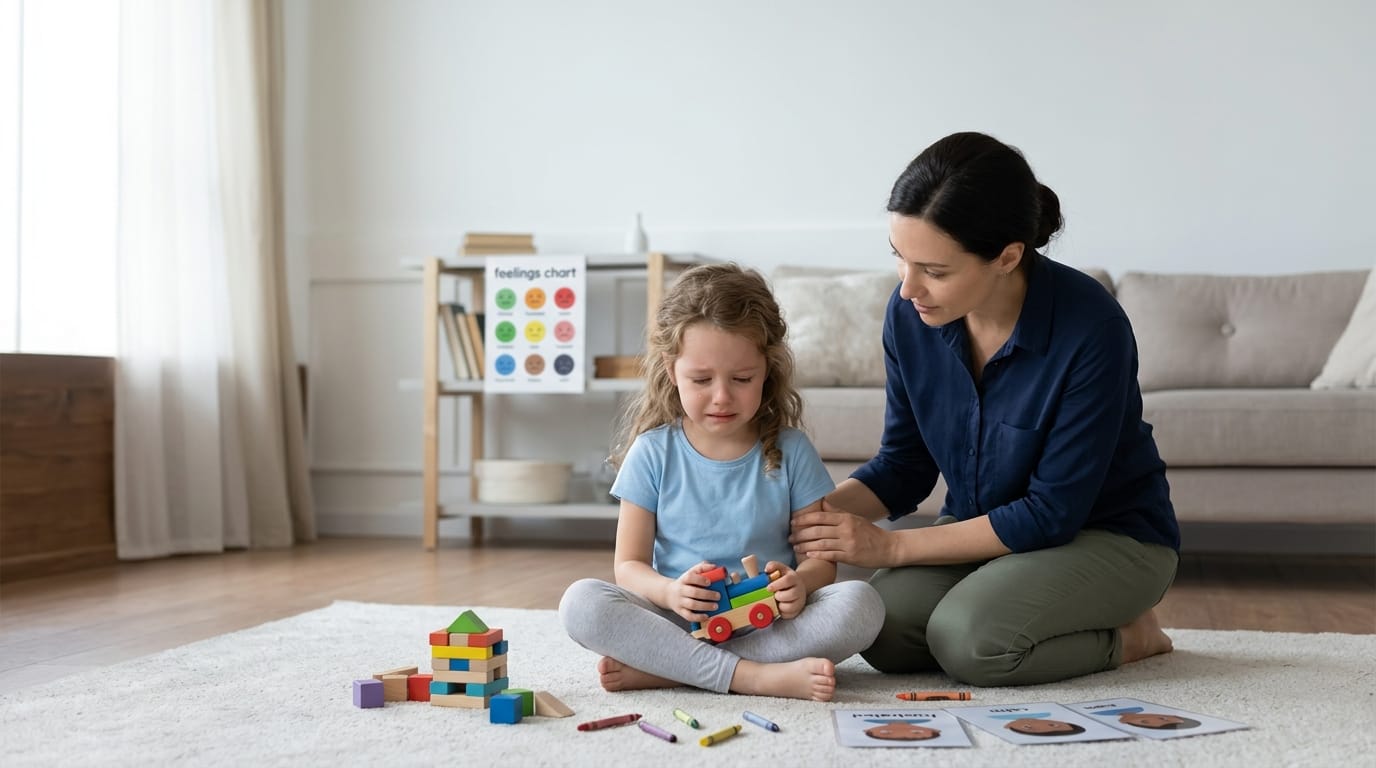
ADHD affects more than attention and activity levels. Many 5-year-old girls also struggle to regulate their emotions, making reactions seem far bigger than the situation warrants. They might get upset in an instant and struggle to calm down afterward.
Emotional Sensitivity
Some girls react more strongly to criticism, disappointment, or changes in routine than their peers. Even small setbacks can feel overwhelming, leading to tears or withdrawal.
Frequent Meltdowns
Outbursts may occur when a task feels difficult, plans suddenly change, or a child becomes overstimulated. These meltdowns are often linked to difficulty managing emotions rather than intentional misbehaviour.
Low Frustration Tolerance
Activities that require patience or repeated effort can quickly become frustrating. Your daughter may give up easily, become angry when things go off-script, or avoid challenging tasks altogether.
Rejection Sensitivity
Some girls appear unusually hurt by correction or perceived exclusion. They might worry that others are mad at them, get highly distressed over minor disagreements, or avoid situations where they fear making mistakes.
Perfectionism and Anxiety
Some girls with ADHD manage their difficulties by trying to do everything perfectly, becoming anxious about mistakes, spending extra time checking their work, or avoiding new activities for fear of getting them wrong.
Note: According to CDC, nearly 78% of children with ADHD have at least one co-occurring condition, most commonly anxiety (39%) or behavioural difficulties (44%).
Social Signs of ADHD in 5-Year-Old Girls
Social interactions become more important as children enter preschool and kindergarten. For girls with ADHD, difficulties with attention, impulsivity, or emotional regulation can make it harder to build and keep relationships with other children.
Friendship Challenges
A child may enjoy making friends but struggle to keep those friendships, with more frequent disagreements, upset during play, or difficulty working through conflicts.
Difficulty Reading Social Cues
Some girls have trouble recognising facial expressions, tone of voice, or body language. They may interrupt conversations, miss cues that another child wants a turn, or continue a behaviour after others have lost interest.
Problems During Group Activities
Group games and classroom activities often require children to listen, wait, share, and follow instructions. A girl with ADHD may find these situations challenging, leading to frustration or difficulty participating with peers.
Peer Relationship Struggles
Repeated social misunderstandings can affect a child’s confidence over time. She may feel left out, avoid group activities, or become anxious about making friends despite wanting company.
According to research published in PMC, girls with ADHD often have friendship problems that can continue into their teenage years. This is why early support matters so much. These struggles are more likely to be linked to ADHD when they keep happening in different places and start to affect how a child feels about herself, through withdrawal, anxiety, or not wanting to join in.
Why ADHD Is Often Missed in Girls
Many girls with ADHD are diagnosed later than boys because their symptoms are less disruptive and easier to overlook. According to a review published in PMC, inattentive symptoms are less likely to be noticed by teachers since they cause less classroom disruption, and girls are often referred for evaluation less often as a result.
Instead of obvious hyperactivity, they are more likely to daydream, lose focus, appear quiet, or become emotionally sensitive. These specific difficulties are easily mislabelled as shyness, anxiety, or quirky personality traits.
Some girls also work hard to hide their struggles. They may copy classmates, rely on reminders from adults, or put extra effort into staying organised. This kind of masking can also show up as lying or minimising mistakes; see Why Does My Child With ADHD Lie? Real Reasons and What Parents Can Do for more on this pattern.
These coping strategies can mask symptoms for a time, but they do not address the underlying difficulties, and tend to become harder to sustain as school demands increase.
ADHD Checklist for 5-Year-Old Girls
This checklist is not a diagnostic tool, but it can help parents and teachers recognise patterns that may warrant further evaluation.
Parent Observation Checklist
Does your child regularly:
| Observation | Yes / No |
|---|---|
| Daydreams or seems “lost in thought” much of the time | ☐ |
| Has difficulty following simple or multi-step instructions | ☐ |
| Loses focus before finishing activities | ☐ |
| Frequently misplaces toys, books, or other belongings | ☐ |
| Talks excessively or interrupts conversations | ☐ |
| Fidgets or struggles to stay seated when expected | ☐ |
| Becomes easily frustrated or has frequent emotional outbursts | ☐ |
| Acts before thinking about the consequences | ☐ |
| Has difficulty making or keeping friends | ☐ |
| Needs repeated reminders to complete everyday tasks | ☐ |
Teacher Observation Checklist
Does your child regularly:
| Observation | Yes / No |
|---|---|
| Has trouble paying attention during lessons or group activities | ☐ |
| Needs frequent redirection to stay on task | ☐ |
| Interrupts classmates or speaks out of turn | ☐ |
| Has difficulty waiting for her turn | ☐ |
| Appears forgetful or disorganised | ☐ |
| Makes careless mistakes despite understanding the task | ☐ |
| Struggles to follow classroom routines | ☐ |
| Experiences ongoing social difficulties with peers | ☐ |
If several of these behaviours occur regularly, have been present for at least six months, are seen in more than one setting, and interfere with learning or daily life, consider discussing your concerns with your child’s paediatrician or another qualified healthcare professional.
How ADHD Is Diagnosed in Young Girls
According to the American Academy of Pediatrics (AAP), evaluation for ADHD should include input from parents, teachers, and other caregivers, since symptoms must be observed across more than one setting to confirm a diagnosis.
There is no single test for ADHD. Doctors diagnose it by observing a child’s behaviour over time and gathering information from parents, teachers, and caregivers, to understand how symptoms affect her daily life at home, school, and in social situations.
Screening Process
The evaluation usually starts with questions about when symptoms began, how often they occur, and where they happen, at home, at preschool or school, and during play or social activities.
Family history matters too, since ADHD often runs in families. The doctor also checks for other explanations, such as hearing or vision problems, sleep disorders, anxiety, or learning difficulties, that can cause similar symptoms.
Behaviour Rating Scales
Parents and teachers often complete standardised questionnaires, such as the Vanderbilt ADHD Rating Scale or the Conners Rating Scales, comparing a child’s behaviour with what is typical for her age.
Input from both home and school matters, since ADHD symptoms must appear in more than one setting.
Professional Evaluation
A paediatrician, developmental paediatrician, child psychologist, or child psychiatrist typically carries out the assessment, which may include observation, a review of developmental milestones, and hearing or vision checks.
Because ADHD in girls is often less obvious, the evaluation looks beyond hyperactivity to consider attention, organisation, impulsivity, and emotional regulation as well.
A diagnosis is made only when symptoms have been present for at least six months, occur in more than one setting, and affect a child’s learning, relationships, or everyday activities. The process often spans more than one visit, since a single appointment rarely gives a complete picture.
How to Support a 5-Year-Old Girl With ADHD

Support works best when it is simple, consistent, and kind. A five-year-old cannot manage ADHD alone, but the right approach at home and school can make daily life considerably easier.
Behaviour Therapy
Behavioural parent training is the first-line treatment for children this age, often recommended before medication.
A therapist teaches parents specific techniques, such as encouraging positive behaviour, giving clear and consistent consequences, and using structured routines, which parents then practise at home.
Involving teachers in the same approach helps it carry over into the classroom.
Positive Parenting Strategies
Short, clear instructions work better than long explanations. One step at a time is always easier to follow than a massive chore list. Praise small successes, such as finishing an activity or waiting her turn, rather than focusing on mistakes.
Classroom Accommodations
A seat near the teacher, away from windows or busy corners, can reduce distractions. Breaking tasks into smaller steps, using visual reminders, and allowing short movement breaks help her stay engaged through the school day.
Emotional Regulation
Stay calm when your child has a meltdown. Children often learn how to manage their emotions by watching the adults around them.
Give a simple warning before changing activities, such as saying, “Five more minutes until playtime ends.” This can make transitions easier and help reduce emotional outbursts.
Play-Based Activities
Simple turn-taking games help children practise listening, following directions, waiting patiently, and controlling impulses in a fun, low-pressure way.
Daily outdoor play is also important. It gives children a healthy way to use their energy while building confidence and improving physical and social skills. You do not need to be a perfect parent. Small, consistent changes at home and school can make a big difference over time.
Conclusion
ADHD in 5-year-old girls often looks different from what many people expect. Instead of constant movement or disruptive behaviour, it may appear as daydreaming, quiet inattention, emotional sensitivity, or ongoing difficulties with friendships. Because these signs are less obvious, many girls are not identified until school or social demands make the pattern harder to miss.
One difficult day or a single challenging behaviour does not mean your daughter has ADHD. However, if these patterns are consistent, occur in different settings, and begin to affect her learning, relationships, or everyday life, it is worth discussing your concerns with a paediatrician.
With the right support, most girls with ADHD do well. Consistent routines, patience, positive encouragement, and close communication between home and school can help your child build confidence and develop the skills she needs over time.
If you would like to understand how ADHD can affect learning, emotional development, and long-term outcomes, read How Does ADHD Affect Growth and Development in Children?
Frequently Asked Questions About ADHD in 5-Year-Old Girls
Q1. What are the biggest red flags for ADHD in girls?
The biggest red flags include persistent inattention, frequent daydreaming, excessive talking, impulsive behaviour, emotional outbursts, and difficulty making or keeping friends. These symptoms should be present for at least six months, occur in more than one setting, and affect the child’s daily life.
Q2. Can a 5-year-old girl be diagnosed with ADHD?
Yes. ADHD can be diagnosed in children as young as four years old when symptoms meet established diagnostic criteria. A diagnosis is based on a comprehensive evaluation rather than a single test.
Q3. What is inattentive ADHD in girls?
Inattentive ADHD is a type of ADHD in which problems with attention are more noticeable than hyperactivity. Girls with this presentation may daydream frequently, lose focus, forget instructions, appear disorganised, or struggle to finish tasks, making their symptoms easier to overlook.
Q4. How does ADHD affect friendships?
Children with ADHD may interrupt conversations, struggle to wait their turn, react strongly to small disagreements, or miss social cues. These challenges can make it harder to build and maintain friendships.
Q5. Can ADHD symptoms improve with age?
Many children learn strategies to manage their symptoms as they grow older, especially with early support. However, ADHD is a long-term neurodevelopmental condition, and some symptoms may continue into adolescence and adulthood.
Q6. Is excessive talking a sign of ADHD in girls?
It can be. Excessive talking is a common sign of hyperactive-impulsive ADHD, although not every child who talks a lot has ADHD. It becomes more concerning when it occurs alongside other persistent symptoms and affects learning, social interactions, or daily functioning.
Q7. What should I do if I think my daughter has ADHD?
Start by talking to your child’s paediatrician or another qualified healthcare professional. Keep a record of the behaviours you have noticed, ask the teacher for their observations, and discuss whether a formal ADHD evaluation is appropriate.
Q8. Can ADHD be mistaken for anxiety in girls?
Yes. Girls with ADHD may appear anxious, shy, or perfectionistic because they often show inattention and emotional sensitivity rather than obvious hyperactivity. A comprehensive evaluation can determine whether ADHD, anxiety, or both are present.
References
📚 Click to view scientific references
- American Academy of Pediatrics. (2019). Clinical Practice Guideline for the Diagnosis, Evaluation, and Treatment of Attention-Deficit/Hyperactivity Disorder in Children and Adolescents. Pediatrics. Avalable from: https://publications.aap.org/pediatrics/article/144/4/e20192528/81590/Clinical-Practice-Guideline-for-the-Diagnosis
- Centers for Disease Control and Prevention. Signs and Symptoms of ADHD. Avalable from: https://www.cdc.gov/adhd/signs-symptoms/index.html
- Centers for Disease Control and Prevention. Data and Statistics on ADHD. Avalable from: https://www.cdc.gov/adhd/data/index.html
- American Psychiatric Association. What Is ADHD? Available from: https://www.psychiatry.org/patients-families/adhd/what-is-adhd
- Babinski DE, et al. Behavioral Treatment for the Social-Emotional Difficulties of Preadolescent and Adolescent Girls with ADHD. PubMed Central (PMC). Avalable from: https://pmc.ncbi.nlm.nih.gov/articles/PMC7954235/
- Quinn PO, Madhoo M. A Review of Attention-Deficit/Hyperactivity Disorder in Women and Girls: Uncovering This Hidden Diagnosis. PubMed Central (PMC). Avalable from: https://pmc.ncbi.nlm.nih.gov/articles/PMC4195638/
