

When a child struggles with focus, hyperactivity, or restlessness, the first label many parents hear is ADHD. But here’s the catch: not all attention or behavior challenges are neurological. Sometimes, the root cause is metabolic—specifically, the thyroid.
Thyroid imbalances, such as hypothyroidism (underactive) or hyperthyroidism (overactive), produce symptoms that often lead to misdiagnosis and unnecessary or ineffective treatment. Therefore, understanding the difference between ADHD vs. thyroid in children is critical before starting any treatment plan.
If your child shows persistent restlessness, mood swings, or difficulty concentrating, look beyond brain chemistry and consider metabolic health. Here’s what to watch for when differentiating ADHD from thyroid issues.
⚡ Executive Summary:
- Our Goal: Clearly distinguish ADHD from thyroid-related symptoms to avoid misdiagnosis and protect your child’s long-term health.
- 2026 Evidence: Research shows children with hyperthyroidism have a 1.7x higher risk of being mislabeled with ADHD.
- Overlapping Signs: ADHD and thyroid disorders share inattention, hyperactivity, irritability, and sleep issues, but thyroid disorders also show physical markers.
- Physical Markers: Unlike ADHD, thyroid disorders show visible signs: dry skin, sudden weight changes, hair thinning, and temperature sensitivity.
- Onset & Consistency: ADHD is a steady, lifelong condition; thyroid symptoms often develop suddenly or worsen rapidly over a few months.
- Diagnostic Standard: A Full Thyroid Panel (TSH, Free T4, Free T3, and TPO antibodies) is essential—TSH alone is insufficient.
- Safety Warning: Using ADHD stimulants on a child with undiagnosed hyperthyroidism can be dangerous for the heart and spike blood pressure.
- The Verdict: Always rule out metabolic imbalances first. Thyroid health is the body’s “fuel for focus” and must be stabilized before confirming an ADHD diagnosis.
Why ADHD and Thyroid Issues Look Alike: The “Mimic” Effect
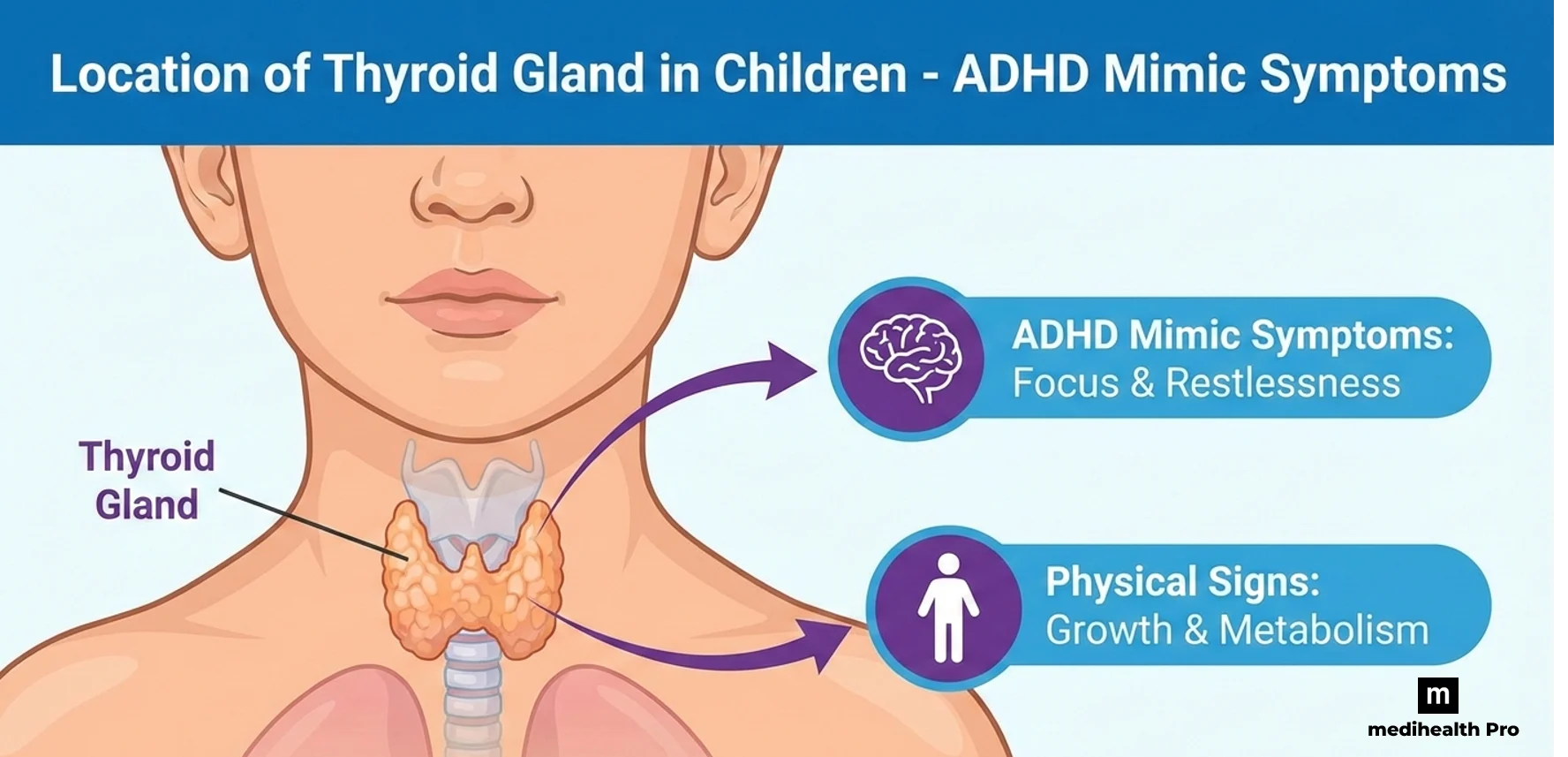
At first glance, ADHD and thyroid disorders seem very different—one is neurological, the other metabolic. However, in children, thyroid imbalances can closely mimic classic ADHD symptoms, which can lead to confusion and misdiagnosis if the underlying thyroid issue is missed.
Both ADHD and thyroid disorders commonly share:
- Inattention,
- Hyperactivity,
- Irritability, and
- Sleep problems
Thyroid disorders, however, also show physical markers such as:
- Dry skin,
- Weight changes,
- Hair thinning, or
- Temperature sensitivity.
These physical clues are important. When they appear alongside attention or behavior concerns, they can help parents and clinicians differentiate between ADHD and a thyroid-related condition.
Understanding the Mimic Effect
To understand this mimic effect more clearly, we first need to know whether thyroid hormone levels are low or high.
1. The Inattentive Mimic (Hypothyroidism)
When the thyroid is underactive, the brain lacks the “fuel” needed to process information efficiently. Consequently, children may experience:
- Brain fog: Trouble thinking clearly, slow responses, and difficulty remembering even simple instructions.
- Poor short-term memory: Forgetting what they were just told or losing track of tasks.
- Low motivation: Difficulty starting homework or daily activities, even when they want to try.
Key Point: These signs resemble inattentive-type ADHD, but the root cause is low thyroid hormone (T3 and T4).
2. The Hyperactive Mimic (Hyperthyroidism)
When the thyroid is overactive, the nervous system shifts into overdrive. In this case, children may show:
- Physical jitters or tremors: Small, uncontrollable shaking of the hands or body, even at rest.
- Racing thoughts: Jumping between ideas so fast they cannot slow down to speak.
- Constant restlessness: An urge to move that does not stop even during a favorite movie or quiet game.
Key Point: These behaviors mimic hyperactive-impulsive ADHD, but are driven by excess thyroid hormone.
Note: If your child’s focus problems or restlessness come with physical symptoms (like tremors, weight changes, or temperature sensitivity), consider thyroid testing first.
Scientific Evidence on ADHD and Thyroid Function in Children
Scientific research confirms that thyroid health is intrinsically linked to brain development, focus, and behavior. This biological connection explains why thyroid disorders are frequently mistaken for neurological ADHD.
1. Hyperthyroidism and ADHD-like symptoms (2024 Study)
A 2024 study published in BMC Neurology reported that individuals with hyperthyroidism often experience symptoms nearly identical to ADHD, including anxiety, nervousness, irritability, and increased physical restlessness.1 The study suggests that abnormal thyroid activity directly disrupts the pathways responsible for attention and behavioral control.
2. Maternal Hypothyroidism & ADHD Risk in Children (2020 Study)
Research from 2020 found that children born to mothers with hypothyroidism were significantly more likely to receive an ADHD diagnosis.2
Even mild thyroid hormone deficiency during early pregnancy (hypothyroxinemia) was linked to higher rates of ADHD-like symptoms compared to children of mothers with optimal thyroid levels. This highlights how maternal metabolic health sets the stage for early brain development.3
3. Free T3 Hormone Levels & ADHD Symptoms (2020 Study)
Another 2020 study found a correlation between elevated Free T3 hormone levels and hyperactivity.4 Children with higher levels of this active thyroid hormone showed greater attention difficulties and physical restlessness, closely mimicking classic hyperactive-impulsive ADHD.
4. Hyperthyroidism & ADHD Risk Ratio (2019 Study)
A 2019 study determined that children with hyperthyroidism carry a 1.7 times higher risk of being diagnosed with ADHD than those with normal thyroid function.
This finding reinforces the “mimic effect”: thyroid overactivity can trigger the exact behaviors—fidgeting, impulsivity, and lack of focus—commonly used to diagnose ADHD.5
ADHD vs. Thyroid in Children: Key Differences
To help you understand the overlap, below is a practical, real-life comparison to help you distinguish between neurological and metabolic symptoms.
A Comparison at a Glance
Symptom Area ADHD Pattern Thyroid Pattern (Hypo/Hyper) Growth & Weight Normal growth curve; weight is usually stable. Stalled height milestones or sudden, unexplained weight shifts. Sleep Quality Trouble "shutting down" the brain at night. Extreme daytime fatigue (Hypo) or night sweats and racing heart (Hyper). Mood Swings Emotional shifts are usually reactive to events. Persistent sadness or "wired" anxiety without a clear trigger. Energy Levels High energy that shifts based on interest. A "battery that won't charge" or a "motor that won't stop" regardless of activity. Temperature Normal regulation of body heat. Feeling chilly in the sun (Hypo) or overheated/sweaty in the shade (Hyper). Physical Look No changes to skin, hair, or nails. Dry, doughy skin, brittle hair, or puffiness around the eyes and neck. Type of Focus Distracted by external environment/interests. Mental "brain fog" or racing thoughts paired with physical discomfort.
7 Red Flags That Suggest Thyroid Issues, Not ADHD
Parents often ask: “How can I tell if my child’s ADHD symptoms are really thyroid‑related?”
The answer lies in identifying physical markers that ADHD simply cannot cause. Below are seven red flags that suggest a metabolic imbalance rather than a neurological one.
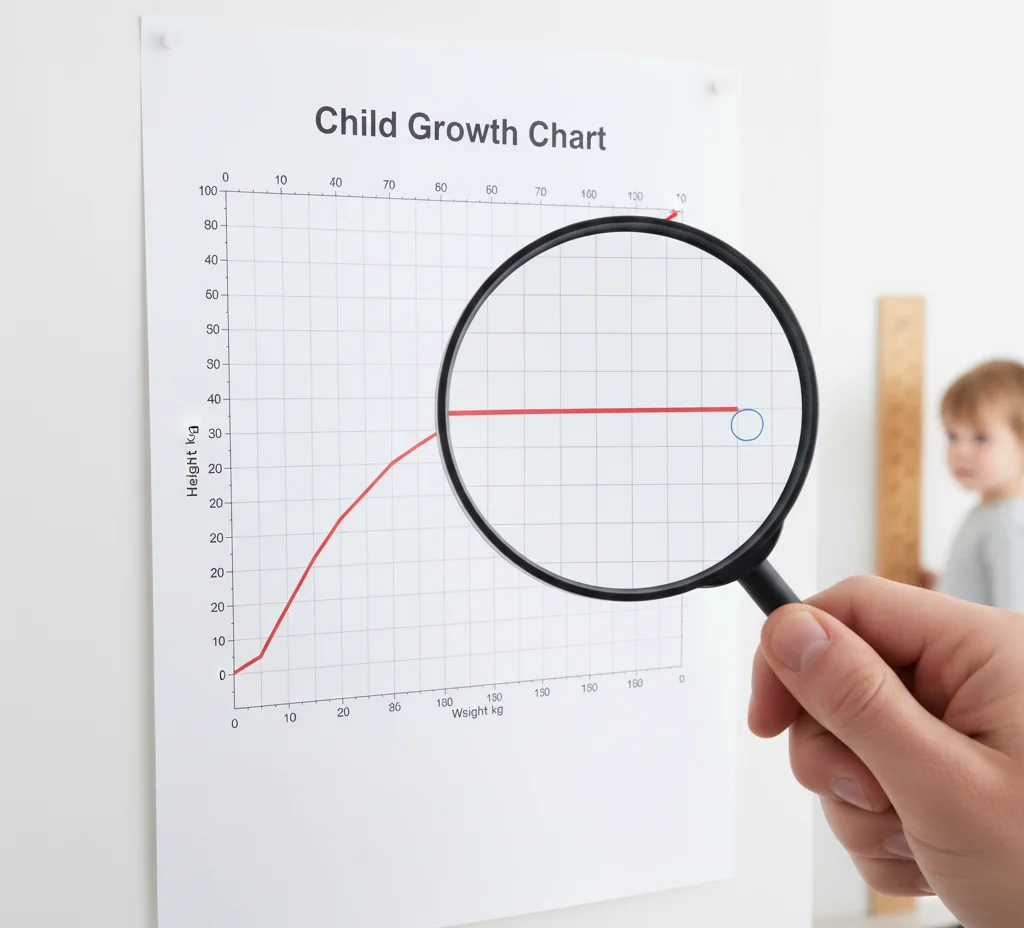
1: Unexplained Changes in Growth or Weight
One of the strongest clues that symptoms are metabolic is a visible change in physical development.
- The Thyroid Pattern: Hypothyroidism can slow growth and cause weight gain or a height “plateau.” Hyperthyroidism speeds metabolism, producing rapid weight loss and jitteriness.
- The ADHD Pattern: ADHD does not cause weight changes or growth delays. While stimulants can affect appetite, the condition itself is not metabolic.
- Key Difference: If attention problems are accompanied by stalled growth or sudden weight shifts, prioritize thyroid testing.
2: Sleep Struggles That Don’t Respond to Routine
Almost every parent of a child with ADHD deals with bedtime battles. However, thyroid-driven sleep issues have a different “flavor” that usually won’t improve with standard sleep hygiene or behavioral routines.
- The Thyroid Pattern: Hypothyroidism causes extreme daytime drowsiness and un-restorative sleep. Hyperthyroidism produces a “wired” feeling, night sweats, or a racing heart that prevents deep sleep.
- The ADHD Pattern: Children with ADHD resist bedtime, have trouble winding down, or wake up easily because their brains stay “switched on.” These patterns often improve with consistent routines and behavioral strategies.
- Key difference: Persistent night sweats or severe exhaustion despite 10+ hours of sleep point toward a thyroid issue.
3: Mood Swings That Don’t Match the Situation
While kids with ADHD have “big emotions,” thyroid-driven mood shifts often feel disconnected from reality.
- Thyroid Pattern: Hypothyroidism can cause persistent low mood or low motivation. hyperthyroidism often causes anxiety or irritability that occurs even in calm settings.
- ADHD Pattern: Kids with ADHD may get frustrated quickly, act impulsively, or shift from excitement to irritability. These swings are usually triggered by specific events like homework stress or overstimulation, and often improve with structure and support.
- Key difference: If a child seems anxious or depressed without a clear trigger, it may be metabolic.
4: Energy Levels That Don’t Match the Moment
Children with ADHD are often “always on the go,” but their energy usually shifts based on what they are doing. Thyroid energy is different—it’s like a thermostat that is stuck either too high or too low, regardless of the room temperature.
- The Thyroid Pattern: Hypothyroidism feels like a “battery that won’t charge.” Hyperthyroidism feels like a “motor that won’t stop,” even during activities the child enjoys.
- The ADHD Pattern: A child may be hyperactive during a boring lecture but sit still for a movie. Their energy is fueled by interest.
- Key Difference: If a child is physically jittery (shaking legs, racing heart) during a quiet activity they enjoy, it’s a red flag for thyroid health.
5: Sensitivity to Temperature
This is a major “tell” for parents because ADHD does not affect how a child regulates heat or cold.
- The Thyroid Pattern: Hypothyroidism causes cold sensitivity (cold hands/feet) and a preference for heavy layers in warm weather. Hyperthyroidism leads to heat intolerance and excessive sweating.
- The ADHD Pattern: Unless they are extremely overstimulated and “running hot” from physical activity, kids with ADHD generally react to the weather the same way everyone else does.
- The Key Difference: Persistent complaints of being “too cold” or “too hot” compared to everyone else are strong indicators of a thyroid issue.
6: Changes in Skin, Hair, or Appearance
This is one of the most reliable clues. ADHD does not change physical appearance.
- The Thyroid Pattern: Hypothyroidism causes dry, “doughy” skin, brittle hair, and a classic thinning of the outer third of the eyebrows. Hyperthyroidism can make the skin feel perpetually warm or clammy.
- The ADHD Pattern: There are no physical markers for ADHD regarding skin or hair.
- The Key Difference: If “ADHD symptoms” appear alongside thinning eyebrows or skin changes, the issue is likely metabolic.
7: Focus Problems With Physical Symptoms
While both conditions cause focus issues, the type of distraction differs.
- Thyroid Pattern: Concentration problems almost always arrive with physical fatigue, muscle weakness, or brain fog; the child may report feeling “heavy” or mentally sluggish even after adequate rest.
- ADHD Pattern: Distraction usually fluctuates with interest and stimulation—a child can be inattentive in one setting but highly engaged in another.
- The Key Difference: If poor focus consistently occurs alongside physical heaviness, unexplained tiredness, or neuromuscular symptoms, request a full thyroid panel (TSH, Free T4, Free T3, and TPO antibodies) rather than assuming primary ADHD.
The “Lazy” Label: How Thyroid Problems Affect School
Children with thyroid imbalance often struggle in classrooms in ways that look like ADHD but are actually metabolic. Teachers and even parents may misinterpret these behaviors as laziness or a lack of effort. Unlike ADHD—where challenges are often about interest and stimulation—thyroid-related learning issues are driven by hormonal fuel shortages or excesses.
- Hypothyroidism: A child may appear sluggish, forgetful, or unable to keep up with assignments because their brain is physically “slowing down.”
- Hyperthyroidism: A child may seem restless, defiant, or unable to sit still because their nervous system is in a state of constant over-stimulation.
Without proper testing, these children risk being mislabeled as “unmotivated” or “defiant.” This doesn’t just delay medical treatment; it damages a child’s self-esteem and academic confidence.
When Thyroid Testing Should Not Be Delayed
Thyroid imbalances are progressive. Delaying diagnosis can strain a child’s developing body. Screening is a medical priority if your child’s symptoms occur alongside:
- Stalled Growth: A sudden plateau in height milestones or a delay in the onset of puberty.
- Sudden Behavioral Shifts: If your child was “totally fine” and suddenly became restless, foggy, or irritable over 3–6 months.
- Physical Jitters: Visible tremors in the fingers (ask them to hold their hands out flat) or a heart that feels like it’s racing even when they are sitting still.
- Family History: A known history of Hashimoto’s, Graves’ disease, or generic “thyroid issues” in immediate family members.
- Neck Fullness: Any visible swelling or “thickening” at the base of the neck where the thyroid is located.
Checklist: Rule Out Thyroid Before an ADHD Diagnosis
If you are investigating ADHD vs. thyroid in children, follow this checklist to ensure an accurate diagnosis:
- Request a Full Thyroid Panel: Do not just test TSH. Ask for TSH, Free T4, Free T3, and Thyroid Antibodies (TPO) to rule out autoimmune issues like Hashimoto’s or Graves’ disease.
- Check Iron Levels: Ask for a Ferritin test. Low iron can weaken thyroid function and cause restlessness or poor focus that looks like ADHD. Other nutrients, like magnesium, also play a role in attention and hyperactivity. See our guide: [Magnesium for ADHD in Children: Can This Mineral Calm Hyperactivity? (2026 Research Update)]
- Track the “Timeline: ADHD symptoms are chronic and usually appear by ages 4 to 6. If your child was fine but suddenly develops focus issues or mood swings within a few months, it is a major red flag for a thyroid imbalance rather than ADHD.
- Observe Sleep Quality: Children with ADHD struggle to fall asleep. Children with thyroid issues often have “unrestorative sleep”—they may sleep 10 hours and still wake up with severe brain fog.
How to Talk to Your Doctor: The Script
Many parents feel dismissed when asking for extra testing. Use this literal script to ensure your concerns are taken seriously:
“I have been tracking my child’s symptoms. While they look like ADHD, I have also noticed physical signs such as [insert red flag, e.g., cold hands or growth changes]. To be sure we are not missing a metabolic issue, I’d like to request a Full Thyroid Panel — TSH, Free T4, Free T3, and TPO antibodies — before starting ADHD treatment.”
Note: Bring a symptom diary (growth, sleep, mood, energy) to your appointment. It strengthens your case for testing.
Takeaway
When a child struggles with focus, restlessness, or mood swings, ADHD is often the first explanation. But thyroid imbalances can mimic many of the same behaviors. Recognizing the difference between ADHD vs. thyroid in children is essential for accurate diagnosis and effective treatment.
By watching for the seven red flags, parents can determine if a child’s challenges are neurological, metabolic, or both. When in doubt, ask for thyroid testing first. It can prevent years of unnecessary struggle and ensure your child receives the right care.
📝 ADHD vs. Thyroid Symptom Tracker
A Parent’s Tool for Clinical Advocacy
The Growth & Energy Log
(Changed in the last 6 months_________)
(Sudden gain or loss _________)
Energy Pattern Check:
| “Battery won’t charge” (Exhaustion after full sleep) | |
| “Motor won’t stop” (Racing heart/jitters at rest) | |
| “Fluctuates” (Shifts based on interest — ADHD Pattern) |
Physical Red Flag Checklist
★ If you check 2 or more, a Full Thyroid Panel is recommended.
| Temperature: Cold hands/feet OR sweating in cool rooms. | |
| Skin/Hair: Dry skin or thinning of outer eyebrows. | |
| Tremors: Shaking in fingers when hands are held flat. | |
| Neck: Visible fullness or swelling at base of throat. | |
| Sleep: Night sweats OR “Brain Fog” immediately upon waking. |
The Doctor’s Lab Request
“I request a Full Thyroid Panel (TSH, Free T4, Free T3, TPO) to rule out metabolic mimics before an ADHD diagnosis.”
Note: You may take a screenshot and share with your doctor.
Frequently Asked Questions
Q1: Can thyroid problems mimic ADHD in children?
Yes. Both hypothyroidism and hyperthyroidism can cause focus issues, restlessness, or mood swings that look like ADHD. The difference is that thyroid conditions also bring physical changes such as weight shifts, growth delays, or temperature sensitivity.
Q2: What are the signs my child’s ADHD symptoms are thyroid-related?
Look for physical clues ADHD does not cause: unexplained weight gain or loss, stalled height growth, fatigue despite rest, sensitivity to heat or cold, or changes in skin and hair (like thinning eyebrows).
Q3: Should thyroid testing be done before ADHD medication?
It is highly recommended. Ask for a Full Thyroid Panel (TSH, Free T4, Free T3, and thyroid antibodies) before beginning ADHD treatment. Misdiagnosis can lead to inappropriate medication, which is especially risky in cases of hyperthyroidism.
Q4: Can a child have both ADHD and a thyroid condition?
Yes. Some children may have a neurological ADHD diagnosis alongside a thyroid imbalance. In these cases, treating the metabolic issue first often makes behavioral interventions much more effective.
Q5. Can Treating the Thyroid Improve ADHD-Like Symptoms?
Yes. In many cases, once metabolic health is restored, the “ADHD” behaviors vanish. Correcting the imbalance leads to improvements in attention, energy levels, and mood stability. While some children may have both conditions, the metabolic cause should always be treated first.
Q6: How do thyroid symptoms differ from ADHD symptoms in daily life?
ADHD symptoms are usually consistent from early childhood and are often situational (a child can focus better on tasks they enjoy). Thyroid symptoms often appear more suddenly, worsen over months, and include physical “tells” like cold hands, dry skin, or constant exhaustion.
Q7: What should parents do if suspect thyroid issues instead of ADHD
Keep a 2-week log of your child’s growth, sleep quality, mood, and energy patterns. Share these observations with your pediatrician and specifically request a full thyroid panel and a ferritin (iron) test.
Q8: Why is ADHD misdiagnosis dangerous for children with thyroid imbalance?
Treating thyroid imbalance with stimulants is high-risk. These medications can dangerously raise heart rate and anxiety in hyperthyroid children while leaving the underlying metabolic issue untreated, potentially affecting long-term development
References
📚 Click to view all study references
- Chen G, Gao W, Xu Y, et al. Serum TSH Levels are Associated with Hyperactivity Behaviors in Children with ADHD. Neuropsychiatr Dis Treat. 2023;19:557-564. [View Study]
- Peltier MR, Fassett MJ, Chiu VY, Getahun D. Maternal Hypothyroidism Increases the Risk of ADHD in the Offspring. Am J Perinatol. 2021;38(02):191-201. [View Study]
- Modesto T, et al. Maternal Mild Thyroid Hormone Insufficiency in Early Pregnancy and ADHD Symptoms in Children. JAMA Pediatr. 2015;169(9):838-45. [View Study]
- Albrecht D, Ittermann T, et al. The association between thyroid function biomarkers and attention deficit hyperactivity disorder. Sci Rep. 2020;10(1):18285. [View Study]
- Zader SJ, Williams E, Buryk MA. Mental Health Conditions and Hyperthyroidism. Pediatrics. 2019;144(5):e20182874. [View Study]
