
Written by: MediHealth PRO Editorial Team
Scientifically Reviewed by: Dr. Amit Pande, PhD
Molecular Biologist & Clinical Research Expert | Independent Scientific Reviewer, MediHealth PRO
Key Takeaways
- ADHD toddler mornings are hard because attention, transitions, and emotional regulation are still developing
- Predictable routines reduce stress and improve cooperation
- Visual schedules and “now-next” language reduce confusion and improve understanding
- Fewer choices and simple instructions help prevent overwhelm
- Night-before preparation reduces morning pressure
- Sensory activities and structured steps help regulate energy and emotions
- Consistency reduces both the frequency and intensity of meltdowns
The sun is not fully up yet, but you already feel drained. For many parents of toddlers with ADHD, mornings can feel overwhelming. Simple tasks like getting dressed, eating breakfast, or leaving the house can spiral into resistance and tears.
When building a morning routine for an ADHD toddler, even small transitions may trigger pushback or meltdowns, making the start of the day feel chaotic.
Your child is not being difficult. Their brain is still developing, particularly in areas linked to attention, impulse control, and emotional regulation, which makes predictable structure essential, not optional.
This guide explains why mornings are especially hard for ADHD toddlers and walks through five science-backed steps that can make them calmer and more manageable.
Why a Morning Routine for ADHD Toddlers Feels So Hard
Many parents notice a similar pattern. Mornings often feel rushed, emotional, and unpredictable, even when the tasks themselves are simple.
This is not due to a lack of effort. It is more about how the ADHD brain processes planning, transitions, and emotional control. Several underlying factors make mornings especially challenging for toddlers with ADHD:
1. Delays in Executive Function
One key reason mornings feel difficult is delayed executive function skills, which include attention, impulse control, and emotional regulation.
These skills help a child follow steps in order and complete tasks independently.1,2, 3
In children with ADHD, these skills develop more slowly compared to peers. As a result, a simple instruction like “get ready” can feel like multiple overwhelming steps that are hard to organize.
2. Difficulty with Transitions
Children with ADHD often struggle to switch from one activity to another because their attention can become strongly fixed on what they are currently doing.4
Moving from play to getting dressed requires stopping, shifting focus, and starting a new task.
Because these shifting skills are still developing, resistance is common. When your child pushes back, it is not stubbornness. It reflects a genuine difficulty in switching cognitive states.
3. Sensory Sensitivities
Research suggests that 40–60% of children with ADHD experience sensory processing differences.5,6
Morning routines often involve bright lights, clothing textures, sounds, and movement all at once.
For a toddler with ADHD, these everyday sensations can quickly become overwhelming, sometimes triggering emotional overload or meltdowns before the day even begins.
4. Sleep Difficulties
Sleep challenges are common in children with ADHD.7 Poor or insufficient sleep reduces patience, focus, and emotional regulation the next morning.
When a child is sleep-deprived, even small demands can feel overwhelming, making morning routines significantly harder to manage.
Signs Your Toddler’s Morning Struggles May Be ADHD-Related
Most toddlers resist transitions or dislike getting dressed from time to time. But in children with ADHD, these patterns tend to be more frequent, intense, and persistent.
Here are a few signs that morning challenges might reflect more than typical toddler behavior:
- Daily meltdowns during simple transitions
- Strong resistance to routine tasks such as brushing teeth or putting on shoes
- Difficulty following even simple one step instructions
- High impulsivity or constant movement soon after waking
- Emotional reactions that feel much larger than the situation
The key difference is consistency and intensity. If these patterns occur almost every morning and significantly disrupt your family’s daily life, it may be worth speaking with a pediatrician or child psychologist for further evaluation.
5 Science-Backed Steps for a Morning Routine for ADHD Toddlers
To turn mornings from a daily struggle into a predictable rhythm, the key is working with a toddler’s developing brain. Here are five practical, science-backed steps to cut the friction and build calmer transitions.
1. Use a Visual Schedule (Show, Do not Just Tell)
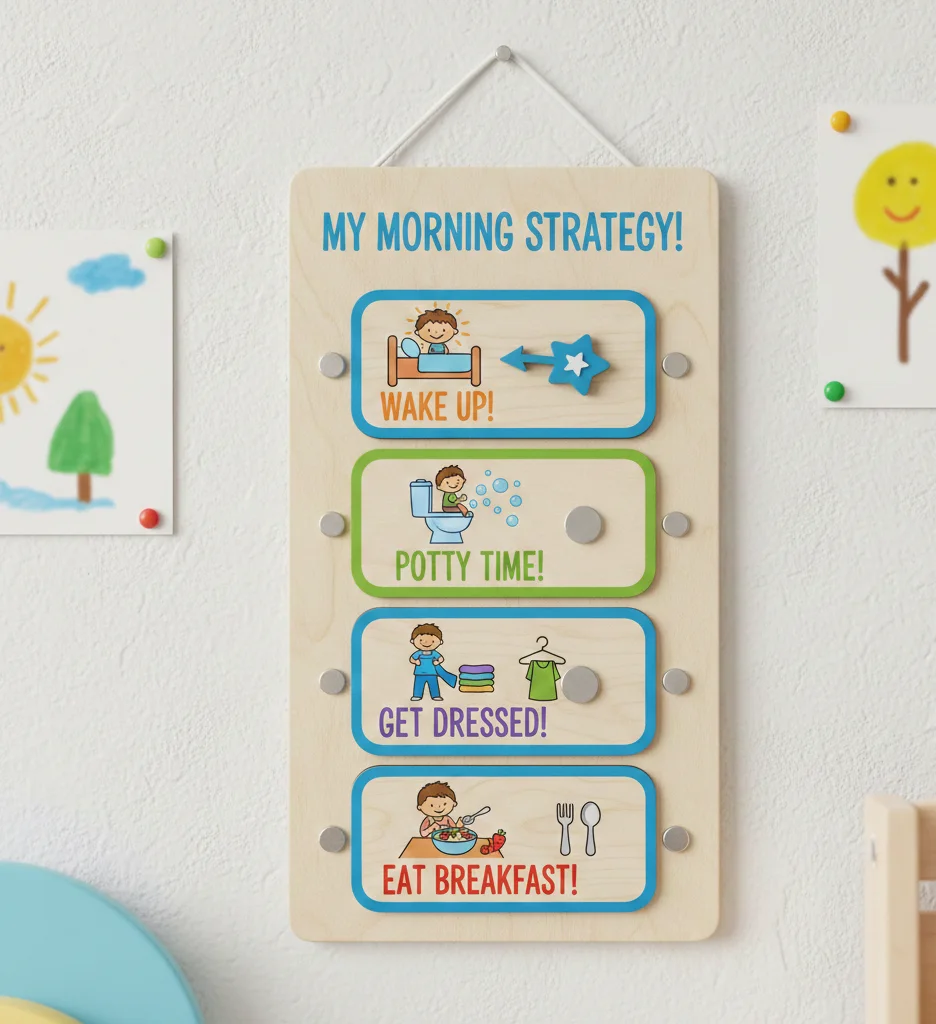
Kids with ADHD often struggle with working memory. This means they can forget multi-step instructions almost instantly. A verbal command like “go brush your teeth” can easily get lost along the way.
- The approach: Set up a basic visual board using pictures or icons for each morning step, like waking up, brushing teeth, getting dressed, and eating breakfast.
- Why this helps: Visual cues stay right in front of them, lowering cognitive load. It acts like an external memory system, helping them move through the routine without relying entirely on verbal prompts.
2. Implement “Heavy Work” for Sensory Regulation

Some toddlers wake up dysregulated and need movement before they can settle. This often points to a need for proprioceptive input, which helps ground their nervous system.
- The approach: Include about 5 minutes of “heavy work” right after waking up, such as bear crawls, pushing a heavy laundry basket, or carrying a stack of books.
- Why this helps: Deep physical pressure helps calm the body and improve focus. It prepares the child to handle structured tasks like sitting for breakfast or getting dressed.
3. The “Two-Choice” Power Play

Open-ended questions or broad instructions can easily overwhelm an ADHD toddler, leading to resistance or disengagement.
- The approach: Offer two specific options. Instead of saying “get dressed,” ask, “Do you want the grey shirt or the dinosaur shirt today?”
- Why this helps: It reduces decision fatigue while still giving a sense of independence, which improves cooperation and reduces power struggles.
4. Use “Now-Next” Language to Bridge Transitions

Shifting attention is difficult because the ADHD brain struggles to disengage from what it is currently focused on.
- The approach: Use simple sequencing language like “Now we are brushing teeth, next we will eat breakfast.” You can also support this with a visual timer.
- Why this helps: It prepares the brain for transitions, reduces surprise, and makes changes feel safer and more predictable.
5. Front-Load the Prep (The 10-Minute Night Shift)

A smooth morning often begins the night before. Too many choices in the morning can increase stress for both parent and child.
- The approach: Lay out clothes, pack daycare bags, and prepare breakfast items before bedtime.
- Why this helps: Fewer decisions in the morning lowers stress and helps you stay calm, consistent, and emotionally available during the morning routine.
The Perfect ADHD Toddler Morning Schedule
This sample schedule is designed to support the executive function gap and sensory needs commonly seen in toddlers with ADHD.
Parent Pro Tip: Do not focus on exact minutes. Focus on the sequence. The order of events creates a sense of safety and predictability for an ADHD brain.
Example Morning Routine for ADHD Toddlers (Simple 90-Minute Plan)
| Time | Task | The ADHD Friendly Secret |
|---|---|---|
| 7:00 AM | Gentle Wake Up | Use a “Now Next” bridge while the child is still in bed. Keep lights low and voice calm. |
| 7:15 AM | Sensory Heavy Work | Five minutes of animal crawls, jumping, or pushing activities to help regulate the nervous system. |
| 7:20 AM | Visual Schedule Review | Point to each step and say “Now we eat, next we dress” to support sequencing. |
| 7:45 AM | Breakfast + Dopamine Support | Use a special plate, preferred foods, or calming background audio to improve engagement. |
| 8:10 AM | Two Choice Dressing | Offer only two options to reduce decision overload and prevent resistance. |
| 8:25 AM | Final Transition Routine | Use a consistent cue such as a transition song. Shoes on, bag ready, final check. |
| 8:30 AM | Success Moment | Reinforce completion with praise, a high five, or moving a visual done marker. |
What to Avoid in a Morning Routine for ADHD Toddlers
Even with a well-planned morning routine for ADHD toddlers, a few common habits can quietly disrupt your progress. These missteps often increase stress levels and make transitions much harder than they need to be.
1. The “Hurry Up” Trap
It is the most natural thing to say when you are running late, but telling an ADHD toddler to “hurry up” often makes things worse.
When they feel rushed, their brain processes information less efficiently. Instead of speeding up, they may freeze, shut down, or have a meltdown.
- A better approach: Use external cues instead of verbal pressure. For example, “When the red timer beeps, we are leaving the house.”
2. Morning Screen Time
Turning on cartoons may seem like an easy way to keep them occupied while you get ready. However, screens provide intense stimulation that an ADHD brain can easily become overstimulated by. When it is time to turn the TV off, resistance is often strong.
- The fix: Keep mornings screen free until the routine is fully complete and your child is ready to leave.
3. Multi-Step Instructions
It is easy to say, “Grab your shoes, pack your bag, and come downstairs.” But children with ADHD often struggle to hold multiple steps in working memory at once. They may start the first task and forget the rest.
- Try this instead: Give one instruction at a time, or support them with a visual checklist they can follow step by step.
4. High-Sugar Breakfasts
Sugary cereals or pastries may feel convenient, but they can affect mood and energy regulation. A quick sugar spike is often followed by a crash, which can impact focus and emotional balance.
- The alternative: Choose balanced breakfasts with protein and healthy fats such as scrambled eggs, Greek yogurt, or toast with nut butter.
How to Stay Calm During Your ADHD Toddler’s Morning Routine
A child’s nervous system is highly responsive to the emotional state of the parent. In simple terms, if you are stressed or rushed, your child is more likely to become dysregulated as well.
To support a calmer morning environment, these co-regulation strategies can help:
Take a 60-Second Reset
If you feel your blood pressure rising, physically step away. Go into the bathroom for one minute of deep box breathing. You have to regulate your own nervous system before you can help regulate theirs.
Drop Your Volume
It’s human nature to raise your voice when things get chaotic, but you need to do the exact opposite. The louder your child gets, the quieter you should become. Dropping your volume forces their brain to pause and focus on what you are saying.
Reframe the Moment
When resistance hits, catch yourself before you think, “They are being difficult.” Instead, actively remind yourself, “They are having a hard time.” This mental shift from frustration to empathy can shift how you respond to the stress.
Final Thoughts: Moving from Chaos to Calm
Mornings with an ADHD toddler can feel overwhelming, but they are manageable with the right structure. Once you understand the underlying differences in attention, transitions, and emotional regulation, it becomes much easier to respond with structure instead of frustration.
Simple tools like visual schedules and “now-next” sequencing act as external scaffolding for your child’s developing brain.
Completing preparations the night before relieves morning pressure, and skipping early screen time prevents overstimulation and emotional crashes before the day even begins.
Building a morning routine for ADHD toddlers is not about perfection or rigid control. It is about creating predictability, lowering stress in your home, and protecting the connection you have with your child.
With small, consistent changes, your mornings can shift from chaos to calmer, more cooperative starts, helping both of you begin the day with greater confidence.
Frequently Asked Questions
Q1. What age should I start a morning routine for my ADHD toddler?
You can start as early as age 2 or 3. Toddlers do best with predictability, and an early routine can support independence and reduce stress.
Q2. What should I do if my toddler refuses to follow the visual schedule?
Make it interactive. Let your child move a sticker or “done” marker after each step. This gives them more ownership and can reduce power struggles.
Q3. How long should a morning routine for ADHD toddlers take?
Aim for 60 to 90 minutes. Extra time reduces rushing and gives room for transitions.
Q4. Can screen time ever be part of the morning?
Yes, but it is best to keep screens off until your child is fully dressed and ready to leave.
Q5. What if my toddler still melts down despite the routine?
That can still happen. The goal is not to stop every meltdown, but to reduce how often they happen and how intense they are.
Q6. How do I handle mornings when sleep was especially poor?
Keep the routine simple. Focus on the essentials, offer fewer choices, and adjust your expectations for that morning.
Q7. Should I talk to my pediatrician about morning routine struggles?
Yes. If mornings are consistently very hard, or if you are seeing strong emotional or behavior concerns, a pediatrician can help guide next steps.
Q8. What is the best morning routine for ADHD toddlers?
The best routine is simple, predictable, and visual. It should include sensory regulation, clear sequencing with now-next language, two-choice dressing, and night-before preparation to reduce morning pressure.
References
📚 Click to view references
- Shaw P, Eckstrand K, Sharp W, et al. (2007). Attention-deficit/hyperactivity disorder is characterized by a delay in cortical maturation. Proceedings of the National Academy of Sciences, 104(49), 19649–19654. Available from: https://pmc.ncbi.nlm.nih.gov/articles/PMC2148343/
- National Institute of Mental Health. (2014). Focusing on ADHD. Available from: https://newsinhealth.nih.gov/2014/09/focusing-adhd
- Sadozai AK, Sun C, Demetriou EA, et al. (2024). Executive function in children with neurodevelopmental conditions: A systematic review and meta-analysis.
Nature Human Behaviour, 8(12), 2357–2366. Available from: https://www.nature.com/articles/s41562-024-02000-9 - Rauch WA, Gold A, Schmitt K. (2012). Task-switching deficits in children with ADHD.
Attention Deficit and Hyperactivity Disorders, 4(4), 179–187. Available from: https://pubmed.ncbi.nlm.nih.gov/22760550/ - Little LM, Dean E, Tomchek S, Dunn W. (2018). Sensory Processing Patterns in Autism, ADHD, and Typical Development. Physical & Occupational Therapy in Pediatrics, 38(3), 243–254. Available from: https://pubmed.ncbi.nlm.nih.gov/29240517/
- Söderlund GBW, Hadjikhani N, Thorsson M, et al. (2024). Sensory white noise in clinical ADHD.
Scandinavian Journal of Child and Adolescent Psychiatry and Psychology, 12(1), 92–99. Available from: https://pmc.ncbi.nlm.nih.gov/articles/PMC11585357/ - Sciberras E, Hiscock H, Cortese S, et al. (2023). Variation in sleep profiles in children with ADHD. Journal of Child Psychology and Psychiatry, 64(10), 1462–1469. Available from: https://pmc.ncbi.nlm.nih.gov/articles/PMC10952554/
