
Written by: MediHealth PRO Editorial Team
Scientifically Reviewed by: Dr. Amit Pande, PhD
Molecular Biologist & Independent Scientific Advisor
Key Takeaways:
- Autism meltdowns happen when a child can no longer cope with sensory input, emotions, communication challenges, or changes.
- Unlike tantrums, meltdowns are not intentional and are not a way to get something.
- Recognizing triggers, early warning signs, and supportive strategies can help reduce distress.
- Your calm presence matters more than stopping the behavior. Keep your child safe and let the moment pass.
Does your child suddenly cover their ears, drop to the floor, or become difficult to calm? It may look like a tantrum. For some children, it is actually an autism meltdown.
This post explains the difference between autism meltdowns and tantrums, along with the common signs, triggers, and practical strategies to help your child.
What Is an Autism Meltdown?
An autism meltdown is an intense response to sensory, emotional, or cognitive overload. It may be triggered by loud noises, bright lights, crowded places, unexpected changes, communication difficulties, or strong emotions.
Unlike a tantrum, an autism meltdown is generally not driven by a goal or an attempt to get something. During a meltdown, a child cannot simply stop the behavior. Instead, they need time, support, and a calm environment to recover.
A 2025 review published in Psychological Review describes meltdowns as an intense reaction to sensory and cognitive stress, linked to differences in how the brain processes stress signals in autism.
Signs of an autism meltdown include:
- Crying or screaming
- Dropping to the floor
- Covering the ears or eyes
- Running away or trying to escape
- Hitting, kicking, or throwing objects
- Self-injurious behaviors, such as head banging or biting, in some children
- Becoming unable to speak or communicate
If you are concerned about early autism signs, our guide on autism symptoms by age can help you understand what to look for at different developmental stages.
The 6 Stages of an Autism Meltdown
Many meltdowns follow a recognizable pattern. Not every child moves through every stage, and the order can vary, but knowing what typically comes first can help you step in early.
- Trigger: Something causes sensory, emotional, or communication overload.
- Building Up: The child grows increasingly distressed or overwhelmed, even if it is not obvious yet.
- Escalation: Signs of distress become harder to miss, such as pacing, covering the ears, or repetitive movements.
- Crisis: The meltdown reaches its most intense point.
- De-escalation: The child begins to calm, though they may still be upset or worn out.
- Recovery: The child returns to their usual state and may need rest or quiet time.
The earlier you recognize these stages, the more room you have to help before a meltdown reaches its peak.
At What Age Do Autism Meltdowns Start?
Autism meltdowns often become more noticeable between ages 2 and 5, as communication, sensory processing, and emotional regulation demands increase. However, some autistic children may experience meltdowns earlier or later, depending on their individual development, sensory needs, and environment.
The American Academy of Pediatrics recommends autism-specific screening at 18 and 24 months, in addition to routine developmental screening at 9, 18, and 30 months. Early screening can help identify developmental differences and support timely intervention, even before meltdowns become a concern.
Autism Meltdowns vs. Tantrums: What’s the Difference?
Autism meltdowns and tantrums can look very similar. Both may involve crying, screaming, dropping to the floor, or becoming very upset. The behaviors may look alike, but the reasons behind them are different.
A tantrum usually happens because a child wants something or wants to avoid doing something. An autism meltdown happens when a child’s brain is overwhelmed and cannot process what is happening around them.
The table below summarizes the main differences:
| Autism Meltdown | Tantrum |
|---|---|
| Triggered by sensory, emotional, or communication overload | Usually triggered by wanting something or avoiding something |
| Not under the child’s control | Often has a specific goal |
| Usually continues even if the child gets what they wanted | Often stops once the child gets what they want or realizes they will not get it |
| The child appears overwhelmed and distressed | The child may look to see how others are reacting |
| Recovery takes time, even after the trigger is removed | Usually settles once the situation changes |
| Best managed with calm support and a low-stimulation environment | Usually responds to consistent limits and calm parenting |
What Causes an Autism Meltdown?
Every child has different triggers. A busy shopping mall might overwhelm one child, while a sudden change in routine or difficulty communicating may overwhelm another.
Sensory differences are very common in autism. According to research published on NCBI, they affect an estimated 69% to 93% of autistic children and adults. This helps explain why sensory overload is one of the most common autism meltdown triggers.
Autism meltdown triggers often include:
- Sensory overload: Loud noises, bright lights, crowded places, strong smells, or uncomfortable clothing.
- Changes in routine: Unexpected plans, transitions, or disruptions to familiar routines.
- Communication difficulties: Struggling to express wants, needs, feelings, or discomfort.
- Strong emotions: Frustration, anxiety, excitement, or disappointment.
- Physical discomfort: Hunger, tiredness, illness, or pain.
- Too many demands: Back-to-back activities or tasks without enough time to rest or recover.
Autism Meltdown vs. Sensory Overload: What’s the Difference?
Sensory overload and an autism meltdown are closely related, but they are not the same.
Sensory overload happens when a child takes in more sensory information than they can process. They may cover their ears, close their eyes, become unusually quiet, or try to get away from the source of the overload.
An autism meltdown can happen when that overload becomes too much to cope with. The child may cry, scream, run away, or lose control of their behavior until they begin to recover.
For example: A child who covers their ears in a noisy room may be experiencing sensory overload. If the distress continues and develops into crying, screaming, or trying to escape, it may have become an autism meltdown.
Learn more about ADHD sensory issues in children and how they affect daily behavior.
Early Warning Signs Parents Often Notice
Many autistic children show subtle warning signs before a meltdown begins. These early signals are different from the behaviors seen during a full meltdown and may give parents an opportunity to reduce stress before the situation escalates.
Research published on NCBI suggests that emotional regulation differences are among the earliest observable characteristics in many autistic children. These differences may make it harder to cope with increasing stress or sensory overload, making early warning signs easier to recognize.
Warning signs to watch for:
- A sudden increase in stimming, such as hand flapping, rocking, or pacing
- Speaking faster, louder, or repeating the same phrase multiple times
- Clenching fists, jaw, or showing other signs of muscle tension
- Becoming suddenly irritated by situations they usually tolerate
- Repeating the same question even after receiving an answer
- Losing interest in an activity they normally enjoy
- Becoming tearful or emotionally overwhelmed without much warning
These behaviors often signal that a child is reaching their coping limit, not misbehaving. Over time, parents can learn their child’s unique autism meltdown warning signs and respond early before a full meltdown occurs.
If you are unsure whether your child’s signs point to autism, ADHD, or speech delay, our guide on autism vs. ADHD vs. speech delay can help you understand the differences.
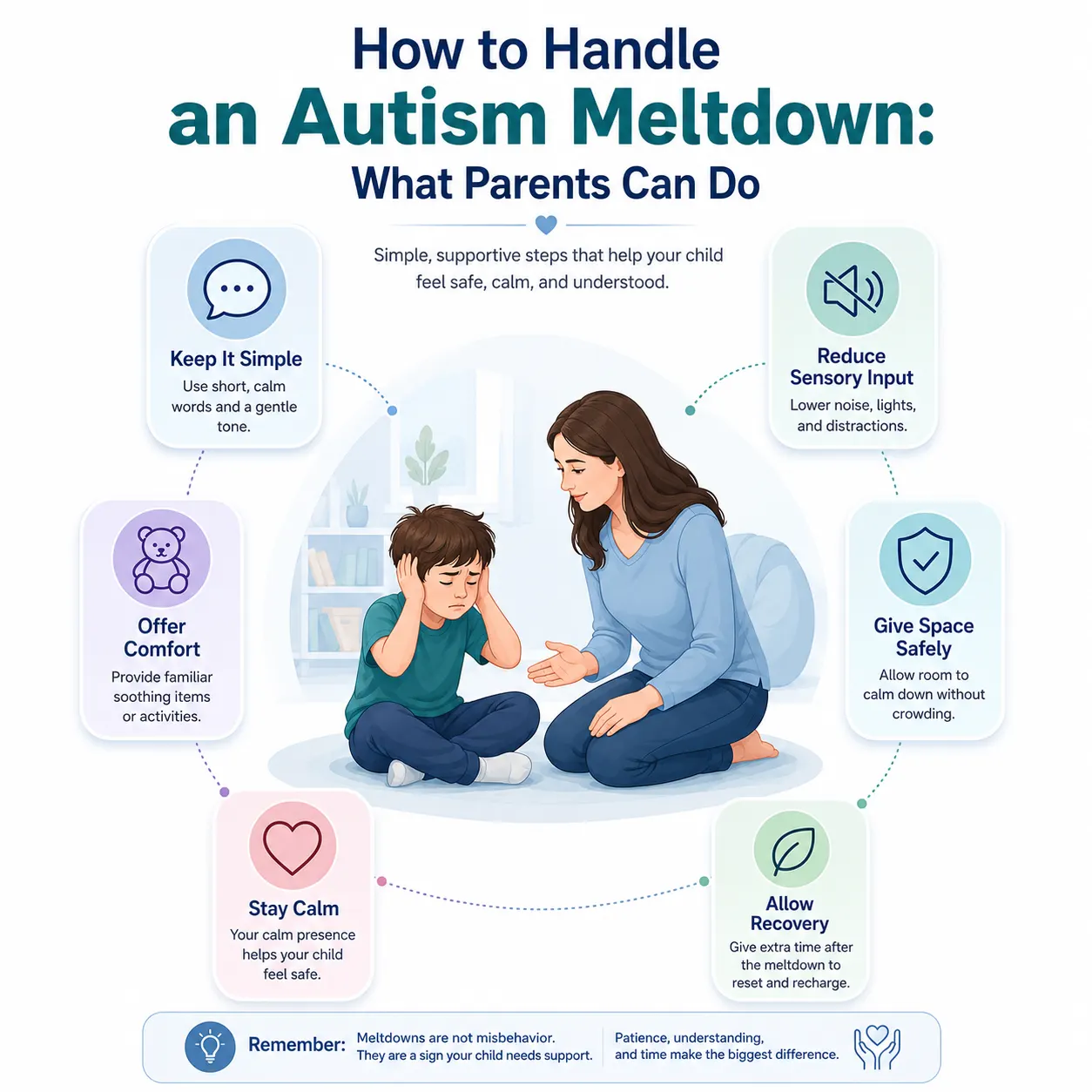
How to Handle an Autism Meltdown: What Parents Can Do
During an autism meltdown, your child may not be able to process questions, explanations, or instructions. The goal is not to stop the meltdown immediately but to help your child feel safe, reduce distress, and allow time for recovery.
Keep Communication Simple
Avoid long explanations, repeated questions, or trying to reason with your child during a meltdown. Many children struggle to process additional information at this time. Use short, calm phrases such as:
- “You are safe.”
- “I am here.”
- “Take your time.”
Wait until your child has recovered before talking about what happened.
Reduce Sensory Triggers
If possible, reduce the sensory input that may be increasing your child’s distress. Move away from loud sounds, bright lights, crowds, or other difficult situations.
Helpful steps may include:
- Turning down music or screens
- Moving to a quieter area
- Reducing unnecessary noise or activity
Give Space While Keeping Them Safe
Some children need space during a meltdown, while others feel better with a trusted adult nearby. Stay close enough to keep your child safe, but avoid forcing touch, hugs, or eye contact unless your child finds them comforting. Remove nearby hazards such as sharp, hot, heavy, or breakable objects.
Offer Comfort Without Pressure
If your child uses sensory supports, place familiar items nearby without insisting they use them. Examples include:
- Noise-canceling headphones
- A favorite toy
- A comfort object
- A quiet space
Allow your child to choose what feels helpful.
Stay Calm and Patient
A calm response can help create a safer environment while your child recovers. Use a gentle voice, relaxed body language, and a patient approach. Avoid punishment, threats, or raising your voice. Your child is not choosing to become overwhelmed.
Allow Time for Recovery
Many children need quiet time before jumping back into activities right after a meltdown ends. They may feel tired, emotional, or drained. Wait until your child is calm before asking questions or teaching coping strategies. Later, you can gently discuss what happened and what may help during future situations.
Parent Tip: Managing Autism Meltdowns in Public Places
A public meltdown can feel stressful, especially when others are watching or offering advice. Your child’s safety and comfort matter more than outside reactions.
You do not need to explain everything in the moment. If needed, a simple response such as, “My child is having a difficult moment. We’re okay.” is enough.
Planning ahead can make outings easier. Bring helpful items such as headphones or comfort objects, choose quieter times when possible, and give transition warnings before changes in activities.
What Not to Do During an Autism Meltdown
Your response can influence how quickly your child feels safe again. Even well-intentioned actions may unintentionally increase distress.
- Do not reason or negotiate. Many children cannot process explanations or make decisions while overwhelmed. Save problem-solving for later, once your child has recovered.
- Do not raise your voice. A calm, steady tone helps more than a louder one, especially when sensory input is already part of the problem.
- Do not force eye contact or touch. Some children find physical contact comforting during a meltdown, while others find it distressing. Let your child decide what feels okay, and follow their lead.
- Do not punish the meltdown. An autism meltdown is a response to overload, not a choice. Saying something like “Stop crying, you are being naughty” can make things worse. Staying calm and helping your child feel safe does more good than scolding them in the moment.
- Do not rush the recovery. A child may need time even after the crying or shouting stops. Sit with them quietly for a few minutes before moving on to the next activity.
- Do not jump straight to questions. Asking what happened right away can feel like too much during recovery. Wait, then ask one simple question later, such as, “Would you like to tell me what bothered you?”
- Do not expect the same strategy to work every time. Meltdown triggers and intensity can change. If something that usually helps, like headphones, is being pushed away, try a different calming option instead.
After the Meltdown: Helping Your Child Recover
After a meltdown, many children need time to recover. They may appear tired, quiet, emotional, or need extra space.
Some children may:
- Want to rest or spend time alone
- Seek comfort from a parent
- Return to activities slowly
- Find it difficult to explain what happened
The recovery period is not the right time for punishment or detailed discussions. Once your child is calm, you can talk about possible triggers and plan for future situations.
How to Prevent Autism Meltdowns: Practical Strategies That Help
Prevention works best before a meltdown begins. The goal is not to prevent every meltdown, but to reduce stress and help your child manage difficult situations more easily.
Track Patterns, Not Just Incidents
A single meltdown may seem random, but patterns often appear over time. Note what happened before each episode, including the place, sounds, activities, sleep, hunger, and changes in routine. These details can help identify common triggers.
Warn Before Transitions
Many difficult transitions happen because they feel sudden. Giving advance notice and using the same words each time can make changes easier. For example, “Five more minutes, then bath, then bed” can make bedtime more predictable.
Keep the Big Structure the Same
A predictable daily rhythm can reduce uncertainty. Consistent wake times, meals, and routines create a familiar structure that helps children handle unexpected changes.
Give Your Child a Way to Say “Too Much”
Some children have meltdowns because they cannot express that they need help or a break. A word, picture card, or hand signal can give them a way to communicate before frustration builds.
Adjust the Environment Early
Small changes can prevent sensory overload. Bring headphones before a noisy event, choose quieter times for busy activities, or plan breaks before your child reaches their limit.
Practice Calming Skills When Calm
New coping skills are difficult to learn during a meltdown. Practice strategies such as asking for a break, using a quiet space, or deep breathing during calm moments.
Respond to Early Warning Signs
Early signs such as increased stimming, repeating the same question, or sudden irritability may signal rising stress. Reducing demands or offering a break at this stage may prevent the situation from escalating.
When to Seek Help for Autism Meltdowns
Many autism meltdowns can be managed at home, but professional support may help when meltdowns become frequent, severe, or harder to manage.
Talk to your pediatrician if meltdowns:
- Become longer, more intense, or happen more often despite support
- Involve self-injury, aggression, or safety concerns
- Interfere with school, family activities, or daily routines
- Continue without clear triggers despite tracking patterns
An occupational therapist, developmental specialist, psychologist, or speech therapist may help identify sensory, communication, or behavioral needs and suggest strategies that fit your child.
Bottom line
An autism meltdown happens when a child can no longer cope with the situation around them. It is not intentional behavior or a way to seek attention.
Understanding your child’s triggers, recognizing early signs, and creating a supportive environment can make autism meltdowns easier to manage. Calm responses, predictable routines, and communication support can help reduce distress over time.
You cannot prevent every meltdown, but the right strategies can help your child feel safer and recover more comfortably.
Frequently Asked Questions About Autism Meltdowns
How is an autism meltdown different from a tantrum?
A tantrum is usually goal-directed, such as trying to get something or avoid a demand. An autism meltdown happens when a child becomes unable to manage the situation and needs support to recover.
How long does an autism meltdown last?
The duration of an autism meltdown varies. Some children recover within a few minutes, while others may need longer depending on the trigger, environment, and support available.
Are autism meltdowns dangerous?
Most meltdowns are not dangerous, but some children may hurt themselves or others during severe episodes. Safety planning and professional guidance can help when there are injury risks.
Can autism meltdowns be prevented?
Not every meltdown can be prevented, but identifying triggers, preparing for transitions, supporting communication, and creating predictable routines can reduce stress and make meltdowns easier to manage.
Are autism meltdowns a sign of bad behavior?
No. An autism meltdown is not a sign of poor parenting or intentional misbehavior. It is a response to distress when a child cannot cope with what is happening around them.
Do autistic children remember meltdowns?
Some autistic children may remember parts of a meltdown, while others may not remember much afterward. It depends on the child, the intensity of the meltdown, and how overwhelmed they were at the time.
Can a child outgrow autism meltdowns?
Some children have fewer meltdowns as they develop communication skills, coping strategies, and emotional regulation. However, autistic individuals may continue to experience meltdowns when overwhelmed, especially during stressful situations.
What is the difference between an autism meltdown and a shutdown?
A meltdown is an outward response to overload, often crying, screaming, or physical behavior. A shutdown is the opposite: a child goes quiet, withdrawn, less responsive, or unable to communicate. Both come from the same overload, but the child’s body handles it in a different direction.
When should parents seek help for autism meltdowns?
Professional support may help if meltdowns become frequent, more intense, involve safety concerns, interfere with daily life, or become difficult to manage at home.
References
📚 Click to view scientific references
- Soden PA, Bhat A, Anderson AK, Friston K. The meltdown pathway: A multidisciplinary account of autistic meltdowns. Psychol Rev. 2025 Oct;132(5):1209-1240. https://pubmed.ncbi.nlm.nih.gov/40323827/
- American Academy of Pediatrics. Autism. https://www.aap.org/en/patient-care/autism/
- Savarese G, et al. Preliminary Results of Sensorimotor Room Training for the Improvement of Sensory and Motor Skills in Children with Autism Spectrum Disorders. Pediatr Rep. 2025 Jan 8;17(1). https://pmc.ncbi.nlm.nih.gov/articles/PMC11755627/
- Christensen D, Zubler J. CE: From the CDC: Understanding Autism Spectrum Disorder. Am J Nurs. 2020 Oct;120(10):30-37. https://pmc.ncbi.nlm.nih.gov/articles/PMC8214927/
