
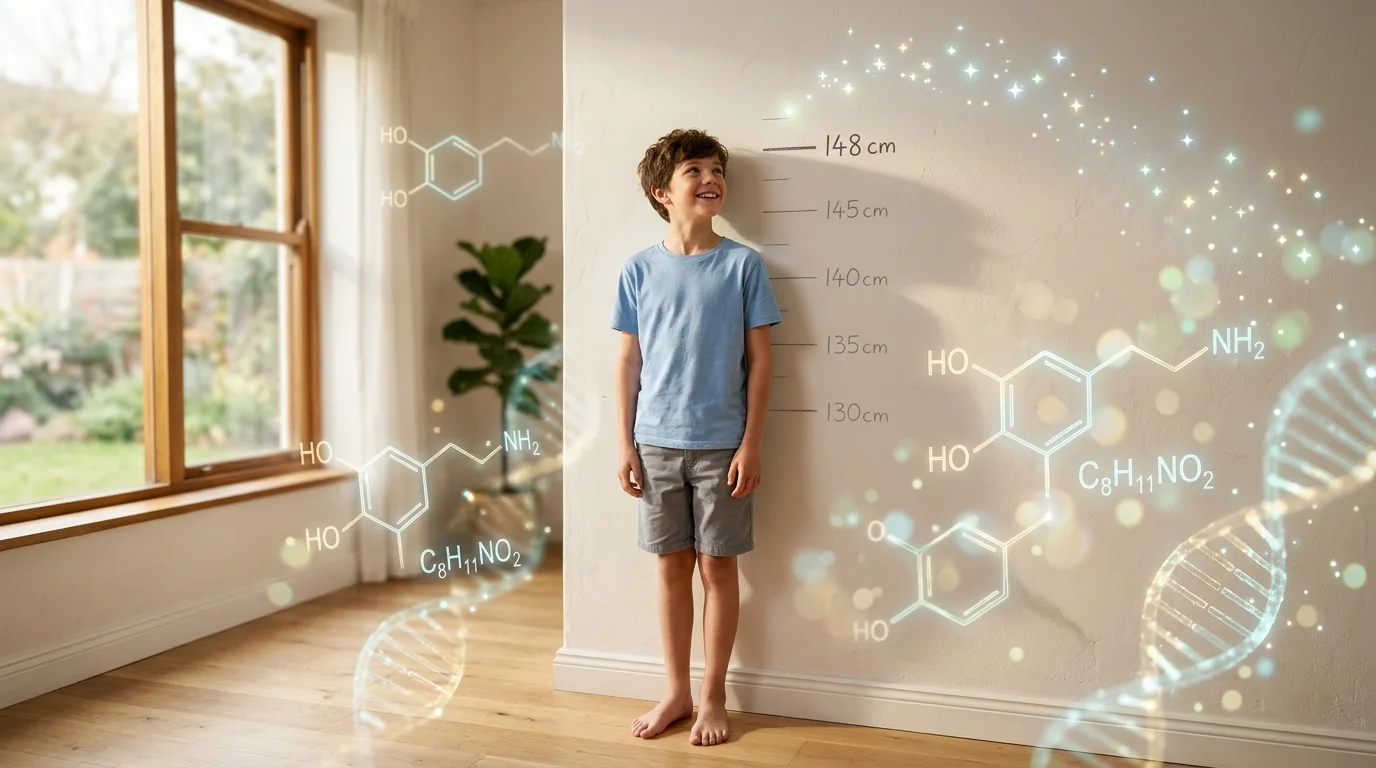
As a parent, deciding whether to start your child on ADHD medication is not simple. You want them to focus, succeed in school, and feel confident, but those late-night Google searches can be overwhelming. You see headlines about “stunted growth” and “delayed development,” and suddenly, the prescription ADHD medicine feels like a heavy burden.
In my 15 years of clinical diagnostic experience, the most common question families ask is: Does ADHD medication delay growth or affect puberty in children? This concern is understandable, especially when treatment may continue for several years during critical developmental stages.
In this article, we’ll move past the myths and explore the molecular science of how FDA-approved ADHD medications like Ritalin, Adderall, and Vyvanse interact with a child’s endocrine system—and what parents truly need to know about growth velocity and hormonal health.
Does ADHD Medication Delay Growth or Puberty? (Quick Answer)
No. ADHD medication does not delay growth or puberty in children. Long-term clinical studies, including the MTA study, show no impact on final adult height or the timing of puberty.
Here is the clinical truth:
- Puberty Timing: There is no evidence that stimulants like Ritalin, Adderall, and Vyvanse significantly delay the hormonal onset of puberty.
- Growth Velocity: Some children experience a temporary “dip” in growth speed (about 1–2 cm) during the first 2 years of treatment, usually due to reduced appetite.
- Final Adult Height: Most children undergo “catch-up growth” during breaks or late adolescence, reaching their full genetic adult height.
- The Key Factor: Supporting development with proper nutrition and deep sleep is the most effective way to protect a child’s natural growth while on medication.
How ADHD Medications Work in the Brain?
The U.S. Food and Drug Administration (FDA) has approved two main types of stimulant medications for children aged 6 and older:
- Methylphenidates: (e.g., Ritalin, Concerta, Daytrana)
- Amphetamines: (e.g., Adderall, Vyvanse, Dexedrine)
These medications are classified as stimulants. Despite the name, they do not “speed up” a child; instead, they strengthen executive function—the brain’s “control center” in the prefrontal cortex.
This includes:
- Attention: staying on task despite distractions
- Working memory: holding instructions long enough to act
- Impulse control: pausing before reacting
- Emotional regulation: managing strong feelings calmly
In children with ADHD, this control system often develops more slowly, sometimes about a few years later than in other children. Medication helps improve brain signaling so these skills become easier to use.
Importantly, these medicines act on brain pathways—not directly on growth hormones. Therefore, they do not delay growth or puberty.
ADHD Medication and Growth: Exploring the Biological Mechanism
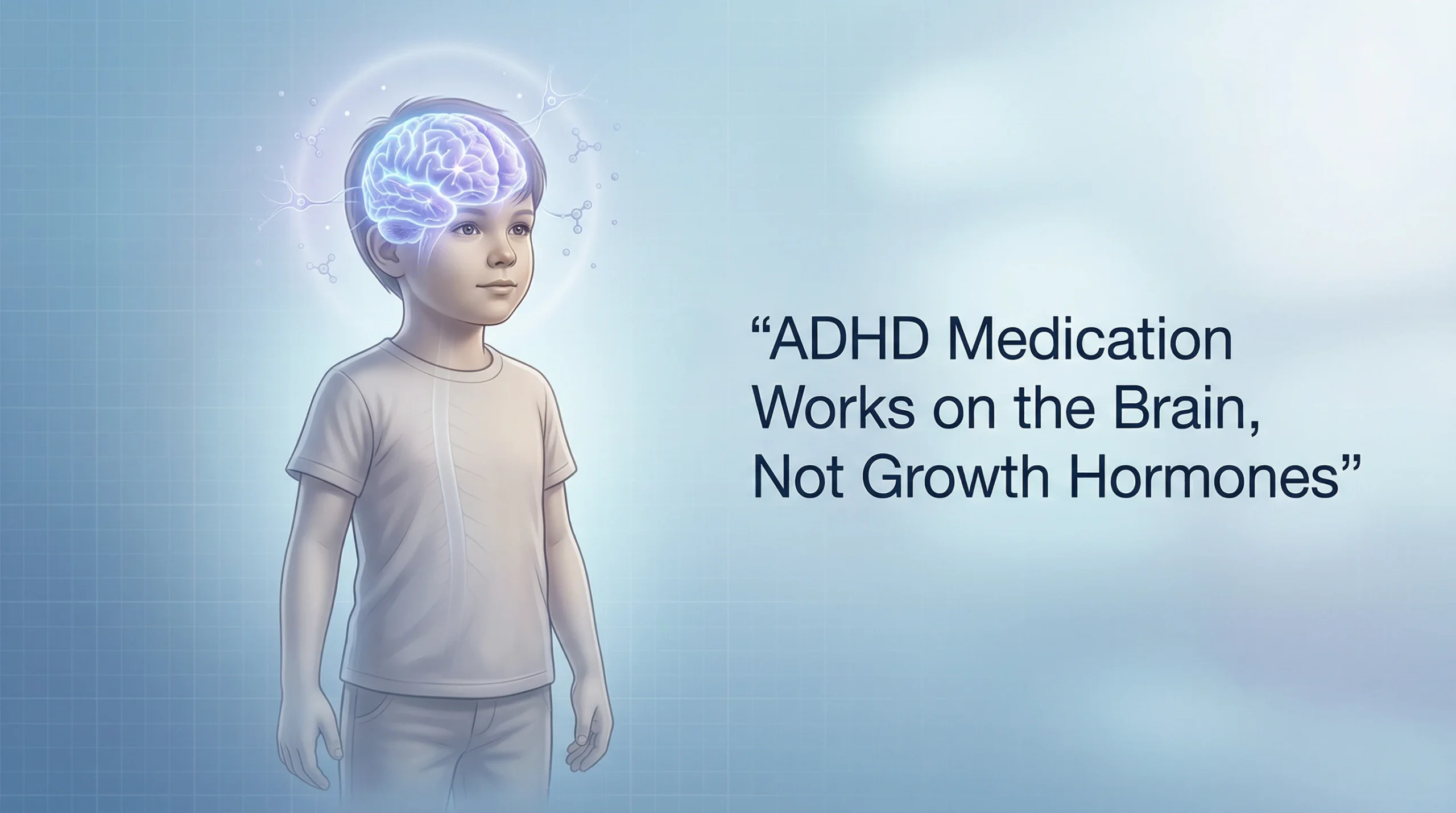
To truly understand whether ADHD medication affects growth or puberty, we need to look at what happens inside the body at a molecular level.
This may sound complex. However, the core idea is simple: these medications primarily act on the brain, not directly on growth hormones.
1. Dopamine Pathway and Appetite Regulation
Stimulant medications increase dopamine levels to improve focus. However, they also influence appetite regulation.
When dopamine levels rise, hunger signals often decrease, children may feel full sooner, and their daily calorie intake can drop
Why this matters: The effect on growth is indirect. Reduced calorie intake can temporarily slow weight gain, which may slightly affect height growth over time.
2. The Somatotropic Axis (HPS Axis)
Child growth is controlled by the hypothalamic-pituitary axis. This system controls growth hormone (GH) and insulin-like growth factor (IGF-1).
Current evidence shows that ADHD medications do not directly suppress growth hormone release. The hormonal signaling for growth remains intact, and puberty-related hormones are not blocked or delayed.
In practice: This means your child’s body still has the biological ability to grow normally.
3. Sleep and Growth Hormone Release
Growth hormone is mainly released during deep sleep. Stimulant medications may sometimes delay sleep onset or reduce total sleep duration.
If sleep quality drops, growth hormone release can decrease slightly, which may temporarily affect growth patterns.
For parents, the key is to protect sleep: consistent bedtimes, reduced evening screen time, and calming routines help ensure the body gets the deep rest it needs for growth.
4. Metabolism and Energy Balance
Stimulants can slightly increase metabolic rate while reducing appetite. This shift in energy balance means the body may have less fuel available for growth processes.
However, this effect is manageable with nutrient-dense meals, strategic meal timing, and regular monitoring of growth charts.
Clinical Evidence: Does ADHD Medication Affect Final Adult Height or Puberty? (MTA Study)
If you are concerned about the long-term side effects of stimulants, the most reassuring information comes from the Multimodal Treatment Study of ADHD (MTA study).
This trial is one of the largest and longest-running studies in pediatric history, following nearly 600 children aged 7–9 for more than a decade.
1. ADHD Medicine vs Final Adult Height
Data from the MTA study and research indexed in NCBI show that children treated with stimulants like methylphenidate or amphetamine may show a temporary decrease in growth velocity (about 1–2 cm) during the first two years of treatment.
The Catch-Up: By their late teens and early 20s, there was no significant difference in final adult height compared to those who were never medicated. This confirms that ADHD medication does not stunt growth or prevent children from reaching their genetic height potential.
This confirms that ADHD medication does not stunt growth or prevent children from reaching their full genetic height potential. In other words, any early slowdown is short-term and reversible, with long-term growth outcomes remaining normal.
2. ADHD Medicine vs Puberty Timing
Does ADHD medication “delay” the puberty? Clinical evidence shows no meaningful link between stimulant treatment and the age at which puberty begins in boys or girls.
However, some children—whether they take ADHD medication or not—naturally enter puberty later than their peers. This is known as constitutional delay of growth and puberty, often referred to as the “late bloomer” effect.
In practice, this means that if a child on medication starts puberty later, it is usually due to this natural variation rather than the medication itself. It is quite common and can occur in children with or without ADHD.
For example, a child with ADHD may begin their growth spurt at 14 while peers start at 12, but they typically catch up and reach their full adult height.
For more on how ADHD often involves a delay in brain maturity, see: Why Children with ADHD May Act Younger Than Their Age: Understanding Brain Maturity Delays
ADHD Medication Dosage and Height: The “Dose-Dependent” Effect
Research indexed in NCBI suggests a clear distinction between how different dosing strategies affect development:
- Low Dose Effect: Children on lower, consistent doses rarely see any change in their growth percentile.
- High Dose Effect: Children on higher doses, or those who take medication year-round without breaks (365 days a year), are more likely to see a temporary dip in growth velocity (about 1–2 cm).
The Clinical Priority: “Lowest Effective Dose”
This is why the clinical community emphasizes finding the “Lowest Effective Dose”—the smallest amount of medication needed to manage ADHD symptoms effectively while minimizing appetite suppression and sleep disruption.
Strategic Break of ADHD Medicine
For children on higher doses, many pediatricians suggest “medication holidays” during summer vacations or long weekends.
These strategic breaks allow the body a window for catch-up growth, helping children stay aligned with their natural genetic growth curve and reach their full adult height.
ADHD Medication Side Effects: When Should Parents Be Concerned?
Although most children on ADHD medication grow and develop normally, it is still important to watch for early warning signs.
Monitoring helps you act early and adjust care if needed. The key is not to panic, but to stay informed and observant.
Red Flags You Should Not Ignore
In my experience, a single “bad week” of eating is rarely a concern. However, you should consult your pediatrician if you notice these persistent patterns:
- No Weight Gain for 3 to 6 Months: Growth requires a caloric surplus. If the “fuel tank” stays empty for an entire quarter, it can start to impact height.
- A Noticeable Drop in Growth Percentile: Pediatricians look for a “steady curve.” If your child drops across two or more major percentile lines on their growth chart, it warrants a closer look at their nutrition and dosage.
- Persistent Loss of Appetite: If a child is consistently skipping two out of three meals a day, their energy balance is shifted away from growth.
- Sleep Problems That Do Not Improve: Since growth hormone is released during deep sleep, chronic insomnia or late-night “rebound” hyperactivity can disrupt the biological growth window.
- Delayed Puberty Signs: While many children with ADHD are natural “late bloomers,” you should seek an evaluation if you see:
- In Girls: No breast development by age 13.
- In Boys: No testicular enlargement by age 14.
6 Ways to Support Healthy Growth While on ADHD Medication
If your child is taking a stimulant like Ritalin, Adderall, or Vyvanse, these five strategies are the most effective ways to ensure their “fuel tank” stays full and their growth stays on track.
1. Prioritize High-Calorie, Nutrient-Dense Foods
Since appetite may be lower during the day, every bite needs to count. We want to focus on “caloric density”—getting the most energy into the smallest volume of food.
- Protein-rich foods: Eggs, milk, paneer, and Greek yogurt.
- Healthy fats: Ghee, butter, peanut butter, and avocado.
- Complex carbs: Whole grains, oats, and brown rice.
The Strategy: These foods provide sustained energy. High-fat additions like ghee or nut butters are “invisible” calories that boost energy without making a child feel overly full.
For more on how nutrition supports growth and focus in children with ADHD, see: Best Diet for ADHD Kids: 5 Iron-Rich Superfoods & Supplements to Boost Focus and Dopamine
2. Time Your Meals Strategically
In clinical practice, we see that appetite often returns as the medication effects wear off. Instead of fighting the mid-day “no-hunger” window, work with your child’s natural rhythm.
- Power Breakfast: Serve this before the morning dose when their appetite is at its peak.
- The “Second Dinner”: Many children naturally become hungry at 8:00 PM or 9:00 PM. Use this window for a calorie-rich meal.
The Strategy: Don’t stress over a light lunch. If they eat a massive breakfast and a late dinner, their total daily “fuel tank” will still be full.
3. Use “Liquid Gold”: Smart Snacks and Smoothies
When a child is focused on medication, chewing a heavy meal can feel like a chore. Liquids are often much easier to consume.
- The “Growth Smoothie”: Blend bananas, peanut butter, full-fat milk, and a bit of honey.
- Nutrient-Dense Snacks: Cheese sandwiches, dry fruits, or homemade laddoos.
The Strategy: A high-calorie shake after school is an easy way to boost caloric intake without the pressure of a formal meal.
4. Protect Sleep for Growth Hormone Release
As a molecular researcher, I cannot overstate this: Deep sleep is when the body builds. Growth hormone is released in pulses during Stage 3 NREM sleep.
- The Routine: Maintain a consistent bedtime and a “Digital Sunset” (no screens) one hour before sleep.
The Strategy: Better sleep quality directly supports the HPS axis (the growth hormone pathway), ensuring the body uses the day’s nutrients effectively.
5. Encourage Daily Physical Activity
It may seem counterintuitive to burn calories, but regular activity is a natural appetite stimulant.
- The Options: Outdoor play, cycling, or organized sports.
The Strategy: Movement supports bone density and muscle growth, signaling to the body that it needs to “build” more tissue.
6. Monitor Growth Consistently (Not Obsessively)
Tracking is about identifying trends, not reacting to a single day on the scale.
- The Schedule: Measure height every 3 to 6 months and track weight monthly.
- The Tool: Use a CDC Growth Percentile chart to ensure your child is staying near their established curve.
The Strategy: Consistency matters more than perfection. We are looking for a steady “growth velocity” over the long term.
The Key Takeaways
To ensure your child reaches their full potential, keep these five clinical essentials at the heart of your strategy:
- Final Height is Protected: The landmark MTA Study confirms that ADHD medications do not change a child’s ultimate adult height.
- The “Gap” is Metabolic, Not Hormonal: Slower growth is almost always due to a “fuel deficit” (appetite) rather than a direct suppression of the HPS growth axis.
- Growth Happens at Night: Protecting the deep sleep window is just as important as the food on their plate, as this is when growth hormone pulses occur.
- “Catch-Up” is a Biological Reality: During “drug holidays” or late adolescence, the body naturally accelerates growth to reach its genetic blueprint.
- Trends Matter More than Days: Don’t obsess over one quiet lunch. Watch the growth velocity over 6 months to ensure they stay on their natural curve.
The bottom line: Keep the “fuel tank” full, protect the sleep window, and stay in close communication with your pediatrician. Your child has the biological blueprint to thrive.
Frequently Asked Questions About ADHD Medication and Growth
Q1. Does ADHD medication stunt growth in children?
No. The term “stunted” implies a permanent failure to reach genetic potential. Research shows stimulants may cause a temporary slowing of growth (about 1–2 cm in the first two years), usually linked to reduced appetite. However, most children experience catch-up growth later and reach their full adult height.
Q2. How does ADHD affect growth and development?
Interestingly, ADHD itself is often associated with a “lag” in brain maturation (specifically in the prefrontal cortex) and physical timing. Many children with ADHD are natural “late bloomers.” While the medication may temporarily slow growth velocity due to appetite suppression, it does not change the biological blueprint of a child’s development or their final adult stature.
Q3. Will my child reach normal adult height on ADHD medication?
Yes. Long-term clinical data, including the landmark MTA Study, confirm that children on ADHD medication reach their predicted genetic adult height. The body has a remarkable way of compensating during “growth spurts” in later adolescence.
Q4. How long does growth slowing last?
Any slowing is typically short-term and is most noticeable in the first one to two years of treatment. Growth velocity usually normalizes over time as the body adjusts, or through strategic dose adjustments and “drug holidays” during school breaks.
Q5. What causes growth changes with ADHD medication?
The primary factor is metabolic, not hormonal. Stimulants can suppress the brain’s hunger signals, leading to reduced calorie intake. While this can temporarily slow weight and height gain, the hormones that drive the HPS axis and puberty remain unaffected.
Q6. Can kids outgrow ADHD medication?
Not exactly. Attention Deficit Hyperactivity Disorder often continues into adulthood. Symptoms may improve with age, but treatment needs can change. Some children may rely less on medication over time, with guidance from a specialist.
Q7. Should I stop ADHD medication if my child is not growing well?
Not on your own. Abruptly stopping medication can lead to a “rebound” of symptoms. Growth concerns should be discussed with your child’s doctor, who may adjust dosage, timing, or explore alternatives.
Q8. How can I improve my child’s appetite while on ADHD medication?
Focus on Caloric Density. Offer nutrient-dense meals like eggs, paneer, and nut butters. Encourage a large “Power Breakfast” before the morning dose, and plan your largest, most calorie-rich meal for the evening when the medication wears off and the “rebound appetite” kicks in.
Q9. Are non-stimulant medications better for growth?
Non-stimulants (like Atomoxetine or Guanfacine) do not typically affect appetite or the growth axis. They are excellent clinical alternatives if a child is highly sensitive to the side effects of stimulants, though their effectiveness for focus varies by individual.
References
📚 Click to view references
- FDA. Treating and Dealing with ADHD. View source
- National Institute of Mental Health. MTA Study: Questions and Answers. View source
- Goldman RD. ADHD stimulants and growth in children. Can Fam Physician (2010). View source
- Poulton AS et al. Stimulant effects on growth and bone age. (2016). View source
- Wojnowski NM et al. Effect of stimulants on final adult height. (2022). View source
