

Key Takeaways
- Sleep regression is a temporary phase that commonly occurs between 4 months and 4 years as children go through developmental changes.
- The TRUST Method for Sleep Regression focuses on security, routine, gentle support, a safe sleep environment, and independent settling skills.
- Consistency and predictability help children feel secure while developing healthier sleep habits.
- Sleep strategies should be adapted to your child’s age, temperament, and developmental stage.
- Seek pediatric advice if sleep problems involve breathing concerns, pain, illness, or ongoing difficulties.
If you are asking, “Why is my baby suddenly waking up all night?” you are in the right place.
Sudden sleep problems can be frustrating for both you and your child. One of the most common reasons is sleep regression. A baby who was sleeping well may suddenly wake more often, fight bedtime, need extra reassurance, or struggle with changes in sleep patterns.
These changes usually happen during periods of rapid physical, emotional, and cognitive development.1 New skills, separation anxiety, and changing sleep needs are the most common triggers.
The TRUST Method for Sleep Regression is a gentle, structured framework built to address the real causes behind these sleep disruptions, not just the night wakings themselves.
What Is the TRUST Method for Sleep Regression?
The TRUST Method for Sleep Regression is a gentle, structured framework designed to help parents understand and respond to these challenges from 4 months to 4 years.
Instead of focusing only on stopping night wakings, TRUST focuses on the foundations that support healthy sleep: security, consistency, comfort, a supportive sleep environment, and developing independent settling skills.
These principles align with established pediatric sleep recommendations and evidence-based behavioral sleep guidance.2, 3
The TRUST Method is flexible and can be adapted to your child’s age, temperament, and developmental stage.
It is built around five simple principles:
| TRUST Step | Main Focus |
|---|---|
| Teach “I Always Return” | Separation anxiety and emotional security |
| Routine Is Your Baby’s Security | Predictability and sleep cues |
| Use Gentle Sleep Methods | Comfort without creating dependency |
| Secure the Sleep Environment | Safe and supportive sleep space |
| Time to Practice Alone | Independent settling skills |
Sleep Regression vs Normal Sleep Changes: How to Tell the Difference
Not every difficult night is a sleep regression. Babies and toddlers have occasional sleep disruptions for many reasons.
Knowing the difference can help you choose the right approach and avoid making unnecessary changes to your child’s sleep routine.
| Sleep Regression | Normal Sleep Variation |
|---|---|
| Sudden sleep changes after a period of consistent sleep | Occasional difficult nights without a clear pattern |
| Often linked to developmental changes, such as new skills, separation anxiety, or nap transitions | Often linked to travel, illness, teething, or a temporary schedule disruption |
| May continue for several weeks and affect multiple nights or naps | Usually improves within a short time when the trigger passes |
| Consistent routines and supportive strategies can help children adjust | May resolve naturally without major changes |
Sleep regression is usually temporary and improves with time, consistency, and appropriate support. However, ongoing sleep difficulties, breathing concerns, pain, or signs of illness may need evaluation by a pediatrician.
How the TRUST Method Changes by Age: 4 Months to 4 Years
The TRUST Method follows the same core principles at every age, but the way parents apply each step changes as children grow and develop.
| Age Range | What Changes at This Stage | TRUST Approach |
|---|---|---|
| 4–6 months | Sleep cycles mature, and babies begin developing early settling skills | Focus on predictable routines, safe sleep practices, and gentle opportunities to practice settling |
| 8–12 months | Separation awareness increases, and new developmental skills can affect sleep | Strengthen security through Teach “I Always Return” and consistent responses |
| 12–24 months | Independence grows, and toddlers begin testing boundaries | Use predictable routines, reassurance, and calm bedtime boundaries |
| 2–4 years | Imagination, fears, and bedtime resistance become more common | Focus on emotional connection, clear expectations, and confidence with sleep |
The TRUST Method for Sleep Regression: 5 Gentle Sleep Solutions
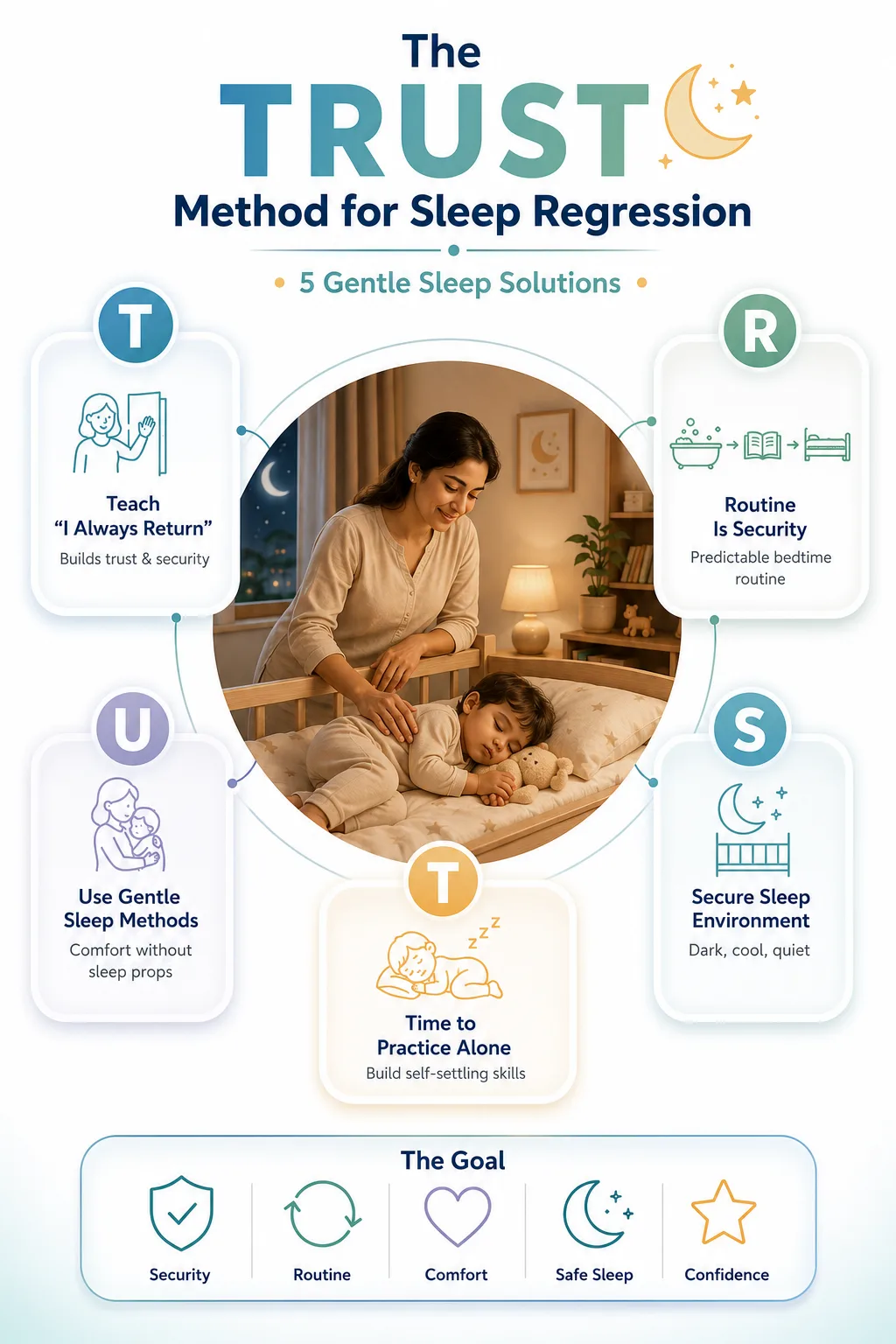
The TRUST Method is based on five practical principles. Together, they help parents support healthy sleep habits and respond to sleep regression in a gentle, age-appropriate way.
T – Teach “I Always Return”
Separation Anxiety Focus
Sleep regression often overlaps with periods of increased attachment and separation awareness.4 A baby or toddler who previously settled easily may suddenly cry when a parent leaves the room, resist bedtime, or wake frequently looking for reassurance.
Teach “I Always Return” helps children learn that separation is safe and temporary. Through repeated experiences, children begin to understand that even when a caregiver leaves, they will return.
Putting It Into Practice
For babies (around 4 to 18 months):
- Play simple games like peekaboo to introduce the idea of leaving and returning.
- Practice brief separations during the day when your baby is calm and engaged.
- Use a consistent reassuring phrase, such as “I will come back.”
For toddlers (18 months to 4 years):
- Use simple hide-and-seek games to strengthen the concept of returning.
- Explain short separations before they happen: “I am going to the kitchen, and I will come back.”
- Give your child opportunities to play independently while knowing you are nearby.
The message you are helping your child learn is simple: I am safe. My parent leaves, and my parent returns.
R – Routine Is Your Baby’s Security
Consistency Is King
Children feel more secure when they know what happens next. A predictable bedtime routine acts as a signal that sleep time is approaching and helps the brain transition from activity to rest.
Research shows that consistent bedtime routines are associated with better sleep quality, shorter sleep onset, and fewer bedtime problems in young children.5
A bedtime routine does not need to be complicated. The most important factor is repeating the same calming sequence consistently.
Example Bedtime Routine
Bath → Pajamas → Story → Feeding → Bed
Putting It Into Practice
- Keep bedtime and wake-up times reasonably consistent.
- Follow the same calming sequence each night.
- Reduce stimulating activities before bedtime.
- Adjust routines as your child’s developmental needs change.
For younger babies, routines rely more on sensory cues such as touch, voice, and repetition. For toddlers, routines can include small choices, emotional connection, and predictable boundaries.
U – Use Gentle Sleep Methods
Comfort Without Props
During sleep regression, children often need extra reassurance. Parents may naturally increase rocking, feeding, holding, or staying beside their child to help them settle.
Comfort is important. However, when a child depends on one specific condition every time they fall asleep, they may find it harder to return to sleep during normal night awakenings.
The goal of gentle sleep methods is to balance reassurance with opportunities to develop independent settling skills.
Putting It Into Practice
- Respond calmly and consistently.
- Offer comfort without creating a new sleep dependency.
- Make gradual changes that match your child’s age and temperament.
- Choose an approach that feels appropriate for your family.
Gentle sleep support does not mean ignoring your child. It means helping them feel secure while learning new sleep skills.
S – Secure the Sleep Environment
Safety and Comfort
A safe and predictable sleep environment helps children feel calm and supports healthy sleep patterns.
For babies:
- Keep the sleep space dark and comfortable.
- Follow age-appropriate safe sleep recommendations.6
- Keep the crib free from pillows, loose blankets, bumpers, and soft objects.
- Use consistent sleep cues, such as darkness and steady background noise if helpful.
For toddlers:
- Maintain a calm and predictable bedroom environment.
- Keep bedtime surroundings consistent.
- A familiar comfort item may provide security when developmentally appropriate.
A secure sleep environment helps children recognize that bedtime is a safe and familiar part of their daily rhythm.
T – Time to Practice Alone
Skill Building
Falling asleep independently is a skill that develops with time and practice. Like walking, talking, or other developmental milestones, children need opportunities to practice before they become confident.
Time to Practice Alone does not mean leaving children without support. It means creating safe opportunities for children to experience their own ability to settle.
Putting It Into Practice
For babies:
- Place your baby down calm and awake when developmentally appropriate.
- Allow opportunities to practice settling.
- Provide reassurance when needed.
For toddlers:
- Use a predictable bedtime goodbye.
- Set loving but consistent boundaries.
- Encourage your child to remain in bed and practice settling.
The goal is not perfect sleep overnight. The goal is helping children develop confidence that they can fall asleep and return to sleep.
Applying the TRUST Method in Everyday Life
Every child experiences sleep regression differently. You do not need to apply every TRUST principle at once. Start with the challenges your child is facing now, then build from there.
The TRUST Method is most effective when used consistently over time. As your child grows, you can adapt each principle to match their age, temperament, and changing sleep needs.
Ready for Age-Specific Sleep Regression Help?
The TRUST Method can be adapted based on your child’s developmental stage. Explore our completSleep regression changes as children grow.
For a complete overview, read our Sleep Regression Symptoms by Age guide to learn what to expect from 4 months to 4 years. If you’re looking for guidance for your child’s current stage, explore the age-specific guides below.
- 4-Month Sleep Regression
- 6-Month Sleep Regression
- 8-Month Sleep Regression
- 12-Month Sleep Regression
- 18-Month Sleep Regression
- 2-Year Sleep Regression
What Not to Do During Sleep Regression
During a sleep regression, parents often try different strategies out of exhaustion. However, some common responses can unintentionally make sleep challenges harder to improve.
Constantly Changing the Routine
Changing bedtime, naps, or your response approach every night can make it difficult for your child to know what to expect. Consistency and predictability are important parts of the TRUST Method for Sleep Regression, especially during periods of developmental change.
Creating New Sleep Dependencies
Extra comfort is natural when your child is struggling. However, if your child always needs rocking, feeding, or a specific type of help to fall asleep, they may begin relying on that same support during every night waking.
The goal is not to remove comfort, but to balance reassurance with opportunities to develop independent settling skills.
Overstimulation Before Bedtime
Bright lights, active play, screens, and exciting activities close to bedtime can make it harder for children to transition into sleep mode.
A calm bedtime routine helps signal that the day is ending and prepares the body and mind for rest.
Skipping Naps to Improve Night Sleep
Many parents assume that reducing daytime sleep will help their child sleep longer at night. However, missed naps can lead to overtiredness, which may make settling and night waking more difficult.
Age-appropriate naps and a predictable daily rhythm often support better nighttime sleep.
Changing Everything After One Difficult Night
Sleep regressions are temporary developmental phases. One difficult night does not mean your entire routine needs to change.
Small, consistent adjustments are usually more helpful than frequent major changes. Give your child time to adapt while continuing to provide a calm and predictable approach.
Self-Care Is Not Selfish
Sleep regression can be exhausting for parents. Supporting your child becomes much easier when you also protect your own energy and wellbeing. A calmer, more rested parent is often better able to respond consistently and patiently during challenging nights.
Practical ways to care for yourself:
- Share responsibilities when possible. If you have a partner or support person, take turns with nighttime care.
- Rest strategically. Use short naps or quiet breaks when your child sleeps instead of trying to complete every task.
- Simplify your evenings. Reduce unnecessary responsibilities during difficult sleep phases.
- Accept support. Allow trusted family or friends to help when available.
- Protect your basics. Staying hydrated, eating regular meals, and taking small breaks can support your physical and emotional health.
- Be patient with yourself. Feeling tired or frustrated during sleep disruption is a normal parenting experience.
Sleep regression is temporary, and caring for yourself helps you stay consistent while your child develops new sleep skills.
When to See a Pediatrician
Most sleep regressions between 4 months and 4 years are temporary and related to normal development. However, some sleep problems may need medical attention.
Talk with your pediatrician if your child has:
- Loud snoring, gasping, or pauses in breathing during sleep, which may suggest a sleep-related breathing problem.7
- Persistent daytime tiredness, difficulty staying awake, or unusual changes in daytime behavior.
- Frequent episodes of confusion, intense crying, sweating, or screaming during sleep, which may be different from typical night wakings.
- Ongoing congestion, ear discomfort, pain, or nighttime breathing difficulties.
- Sleep difficulties lasting longer than 6 weeks despite consistent routines and appropriate sleep support.
If you are concerned about your child’s sleep, discussing it with your pediatrician is always appropriate.
Final Thoughts: Helping Your Child Through Sleep Regression
Sleep regression can be exhausting, but it is usually a temporary part of your child’s development. Changes in sleep often happen as babies and toddlers learn new skills, become more independent, and experience emotional growth.
The TRUST Method for Sleep Regression focuses on the foundations that support healthy sleep: security, consistency, gentle support, a safe sleep environment, and skill building over time.
Every child develops at a different pace. The goal is not to create perfect sleep overnight, but to provide a predictable and supportive approach that helps your child feel safe and become more confident with sleep.
Frequently Asked Questions About Sleep Regression and the TRUST Method
How long does sleep regression usually last?
Most sleep regressions are temporary and often improve within 2 to 6 weeks, although the duration varies from child to child. Consistent routines, a calm response, and age-appropriate sleep support can help children adjust more smoothly during this phase.
At what age do sleep regressions commonly happen?
Sleep regressions can happen at different stages between 4 months and 4 years. Common periods include:
- Around 4 months: changes in sleep cycles and increased awareness.
- Around 8 to 10 months: new developmental skills, mobility, and increased attachment.
- Around 12 to 18 months: growing independence and separation anxiety.
- Around 2 to 4 years: imagination, boundaries, and bedtime resistance.
The TRUST Method for Sleep Regression can be adapted to support children through these different developmental stages.
How long does it take for gentle sleep strategies to work?
Every child responds differently. Some families notice improvement within a short time, while others need several weeks of consistent practice. The goal is not an overnight fix, but helping children develop healthier sleep habits over time.
Is the TRUST Method the same as Cry It Out?
No. The TRUST Method for Sleep Regression is a gentle approach focused on security, predictable routines, reassurance, and gradual skill development. Unlike traditional Cry It Out approaches that involve no parental response, TRUST emphasizes supporting the child while creating opportunities to build confidence with independent settling.
What should I do when my baby cries after being placed down awake?
Some protest or crying is common when babies are learning new sleep habits. Stay calm, provide reassurance, and respond consistently. The Use Gentle Sleep Methods approach focuses on offering comfort while allowing your baby opportunities to practice settling skills.
Why does my toddler keep getting out of bed after I leave?
Toddlers often get out of bed because they want reassurance, connection, or are exploring their growing independence. This is common during early childhood development. A predictable bedtime routine, clear boundaries, and calm responses can help your child understand that bedtime is safe and consistent.
Why does my baby wake up crying multiple times at night?
Night waking can happen for many reasons, including developmental changes, separation anxiety, hunger, discomfort, the sleep environment, or difficulty settling between sleep cycles. The TRUST Method for Sleep Regression addresses these challenges by focusing on emotional security, consistent routines, a supportive sleep environment, and healthy sleep skills.
Can I use the TRUST Method if my baby still needs night feeds?
Yes. The TRUST Method is flexible and can be adapted for babies who still need nutritional feeds. During night feeds, keep lights low and interaction calm, avoid creating a full wake period, return your baby to the sleep space afterward, and continue supporting independent settling when developmentally appropriate. If you are unsure about your baby’s feeding needs, discuss night feeding changes with your pediatrician.
Can sleep regression happen at 2, 3, or 4 years old?
Yes. Sleep challenges can continue into the toddler and preschool years. At this stage, bedtime resistance, imagination, fears, changing routines, and growing independence can affect sleep. The TRUST Method can still help by focusing on emotional security, predictable routines, healthy boundaries, and confidence with sleep.
How do I know if it is sleep regression or a sleep problem?
Sleep regression is usually temporary and linked to developmental changes. However, some signs may suggest another issue. Speak with your pediatrician if your child has loud snoring or pauses in breathing during sleep, significant daytime tiredness or difficulty staying awake, frequent pain, illness, congestion, or discomfort affecting sleep, or ongoing sleep difficulties despite consistent routines and support.
References
📚 Show References
- Tham EK, Schneider N, Broekman BF. Infant sleep and its relation with cognition and growth. https://pmc.ncbi.nlm.nih.gov/articles/PMC5440010/
- Centers for Disease Control and Prevention (CDC). About Sleep. Updated May 15, 2024. Accessed July 19, 2026. https://www.cdc.gov/sleep/about/index.html
- Mindell JA, Kuhn B, Lewin DS, Meltzer LJ, Sadeh A; American Academy of Sleep Medicine. Behavioral treatment of bedtime problems and night wakings in infants and young children. Sleep. 2006 Oct;29(10):1263-76. https://pubmed.ncbi.nlm.nih.gov/17068979/
- Scher A. Maternal separation anxiety as a regulator of infants’ sleep. https://pubmed.ncbi.nlm.nih.gov/18341549/
- Mindell JA, Williamson AA. Benefits of a bedtime routine in young children: Sleep, development, and beyond. Sleep Med Rev. 2018 Aug;40:93-108. https://pubmed.ncbi.nlm.nih.gov/29195725/
- CDC. Safe Sleep for Babies. https://www.cdc.gov/sudden-infant-death/sleep-safely/index.html
- Marcus CL, Brooks LJ, Draper KA, et al. Diagnosis and Management of Childhood Obstructive Sleep Apnea Syndrome. Pediatrics. 2012;130(3):576–584. American Academy of Pediatrics. https://publications.aap.org/pediatrics/article/130/3/576/30284/Diagnosis-and-Management-of-Childhood-Obstructive
