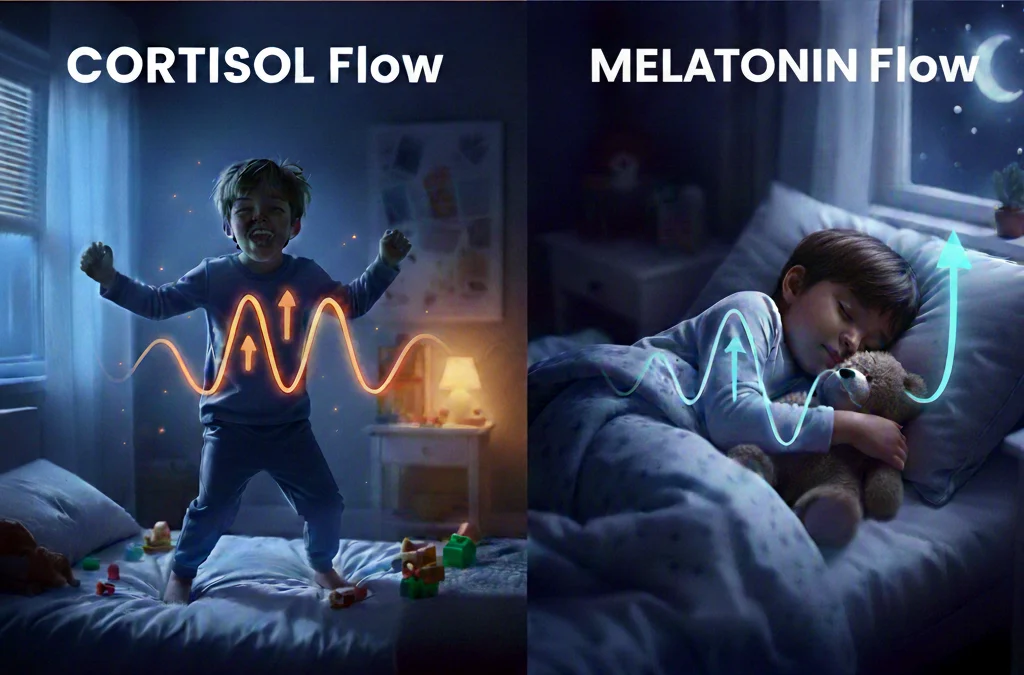
Is your child hyperactive at bedtime right when they are supposed to wind down?
This is common in children aged 3 to 10, and it is not simply a behavior problem. In many cases, it happens because the body’s natural sleep and stress hormones are out of sync. The two main hormones involved are cortisol and melatonin.
When this balance is disrupted, children may experience a second wind and become unusually active instead of sleepy. Over time, this can affect sleep quality, mood, and daytime focus.
In this guide, you will learn why this happens and discover five science-backed strategies to help your child move from an overstimulated state to calm, restful sleep at bedtime.
Why Is My Child Hyperactive at Bedtime? (Quick Answer)
Children often become hyperactive at bedtime because their brain stays in alert mode instead of shifting into sleep mode. Overtiredness can raise cortisol levels while delaying melatonin release, triggering a temporary “second wind” instead of sleepiness.
Screen exposure, irregular sleep schedules, overstimulation, and ADHD-related sleep difficulties can all make bedtime hyperactivity worse.
Cortisol vs Melatonin: Why Children Get Hyperactive at Night
Under normal conditions, a child’s sleep cycle is regulated by two key hormones.
- Cortisol (The “Alert” Hormone): It is the body’s main alertness hormone. It naturally peaks in the morning to help children wake up and stay active during the day.1
- Melatonin (The “Sleep” Hormone): It is the body’s main sleep hormone. It gradually rises in the evening to help the brain prepare for sleep.2
In a well-rested child, cortisol peaks around 8 AM and drops by evening. Melatonin begins rising around 7 to 9 PM.
When a child misses their natural sleep window, the brain can interpret extreme tiredness as a form of stress.
In response, cortisol levels may rise again while melatonin release becomes delayed. Instead of feeling sleepy, children experience a second wind and become more active, emotional, or resistant to bedtime.3
This hormonal mismatch may lead to:
- Trouble settling even when visibly exhausted
- Difficulty falling asleep
- Frequent night wakings
- Lighter or fragmented sleep
Understanding why this happens is the first step. The next section covers the signs that your child may already be overtired at bedtime
Signs Your Child Is Overtired and Hyperactive at Bedtime
An overtired child does not always look sleepy. In many cases, children become more wired, emotional, or restless when their body is struggling to stay awake.
Common signs of overtiredness at bedtime include:
- Sudden bursts of energy late at night
- Running, jumping, or hyperactive behavior before bed
- Bedtime resistance or repeated requests to leave the room
- Emotional meltdowns, irritability, or crying
- Difficulty calming down after screen time or stimulating activities
- Frequent night wakings or restless sleep
- Waking up tired despite spending enough time in bed
These behaviors are usually a sign of disrupted sleep signals, not intentional misbehavior.
Related reading: If you want a deeper understanding of how ADHD typically presents in children across different ages, read this: ADHD in Children (Ages 2–12): Early Signs, Brain Development, Sleep Issues & Treatment
Common Triggers That Keep Kids Wired at Night
Even when parents follow a bedtime routine, certain everyday habits can keep the brain in an alert state and make it harder for children to settle down.
1. Screen Time Before Bed Can Delay Melatonin
Phones, tablets, and televisions emit blue light that can delay melatonin release and make it harder for the brain to prepare for sleep.
2. Stress and Overstimulation Increase Nighttime Alertness
Busy evenings, loud environments, emotional stress, or stimulating activities close to bedtime may activate the body’s stress response and increase nighttime alertness.
3. Sugary or Highly Processed Evening Snacks
Some children may become more restless after consuming sugary or heavily processed foods late in the evening, especially when combined with fatigue or overstimulation.
Read our 2026 Research Update: Does Sugar Actually Cause Hyperactivity? to see how glucose impacts the brain.
4. Irregular Bedtimes Disrupt the Sleep Cycle
Inconsistent bedtimes can disrupt the body’s internal sleep rhythm and delay the natural rise in melatonin.
5. Vigorous Activity Late at Night
Physical activity is healthy for children, but intense play close to bedtime may keep the brain active and make it harder to wind down.
How to Calm a Hyperactive Child at Bedtime: 5 Science-Backed Strategies
To calm bedtime hyperactivity, the goal is to help the brain and body shift from an alert state into a sleep-ready state.
Here are five science-backed strategies that may help lower nighttime alertness, support melatonin release, and make bedtime easier for children.
[table id=62 /]
1. Protect the Sleep Window
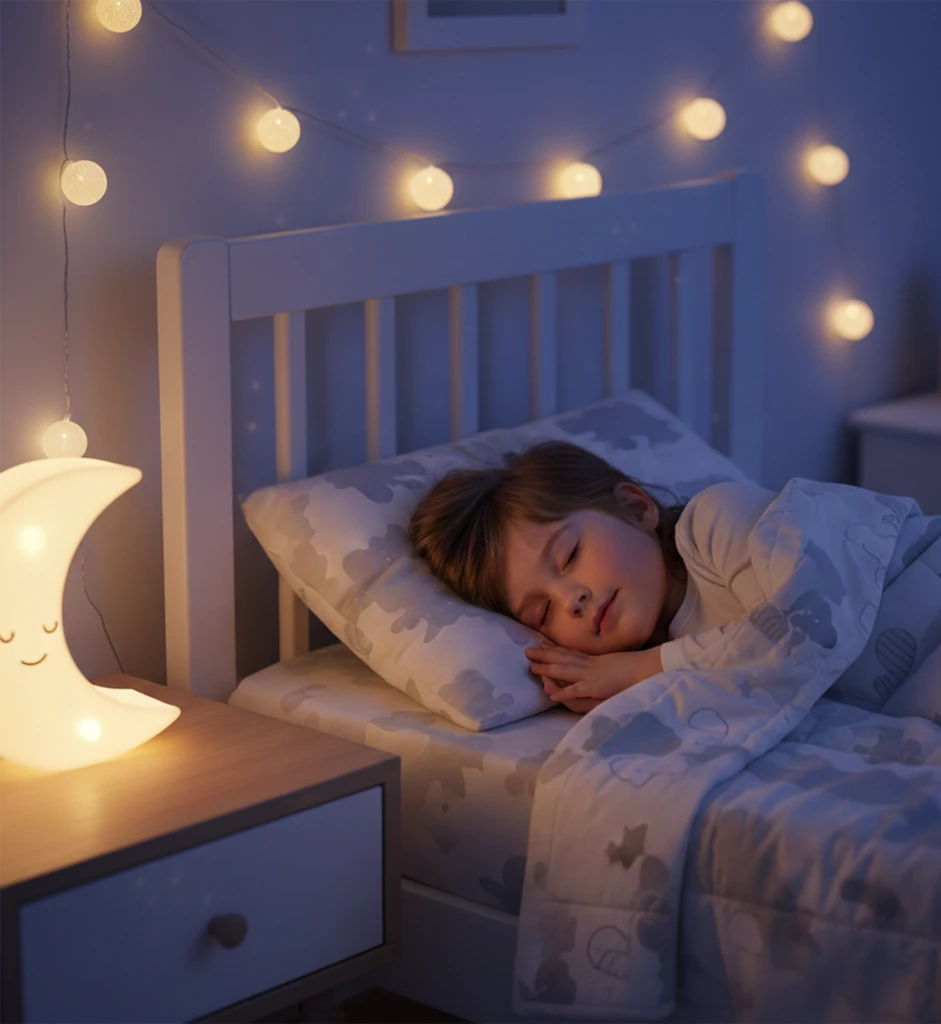
One of the biggest triggers of bedtime hyperactivity is missing the body’s natural sleep window.
When children stay awake past their ideal sleep time, the brain senses increasing fatigue. Instead of slowing down, the body may release more cortisol to stay alert. As a result, children can appear energetic, silly, emotional, or restless. This is often called a second wind.
Typical sleep windows by age include:
- Ages 3 to 5: Around 6:30 PM to 7:30 PM
- Ages 6 to 10: Around 7:00 PM to 8:30 PM
These ranges vary between children, but sudden hyperactivity late in the evening is often a sign that the sleep window has already passed.
Practical tip: Start the bedtime routine 30 to 45 minutes before your target sleep time. Do not wait until your child looks tired. By then, the brain may already be shifting back into an alert state.
2. Try a Protein-Rich Afternoon Snack

Steady blood sugar levels may help reduce late evening energy spikes in some children.
After school, many children reach for sugary snacks that provide a quick burst of energy. However, these foods are often followed by a rapid drop in blood sugar, which may increase irritability, hunger, and nighttime alertness later in the evening.
A protein-rich afternoon snack can help provide more stable energy and support a calmer transition into bedtime.
Good options include:
- Boiled eggs
- Greek yogurt
- Peanut butter with apple slices
- Pumpkin seeds
These foods keep blood sugar steady and help prevent the late‑day cortisol spike.4
For more focus-boosting ideas, see the Best Diet for ADHD Kids: 5 Iron-Rich Superfoods.
3. Use “Heavy Work” Activities (Proprioceptive Input)

Deep pressure and resistance-based activities, often called heavy work, can help the body shift into a calmer and more regulated state.
These activities provide proprioceptive input: pressure and resistance that signal the brain to release calming chemicals and reduce stress hormones.5
Try 5 to 10 minutes of heavy work activities about 60 to 90 minutes before bedtime.
Helpful examples include:
- Animal crawls using both hands and feet
- Wall pushes with firm resistance
- Pushing a laundry basket filled with clothes
- A gentle pillow sandwich — soft pressure applied over the body while the child lies comfortably on the floor, avoiding the face
For more playful ideas, see our full guide on Toddler Activities and Routines.
4. The 60-Minute “Biological Sunset”
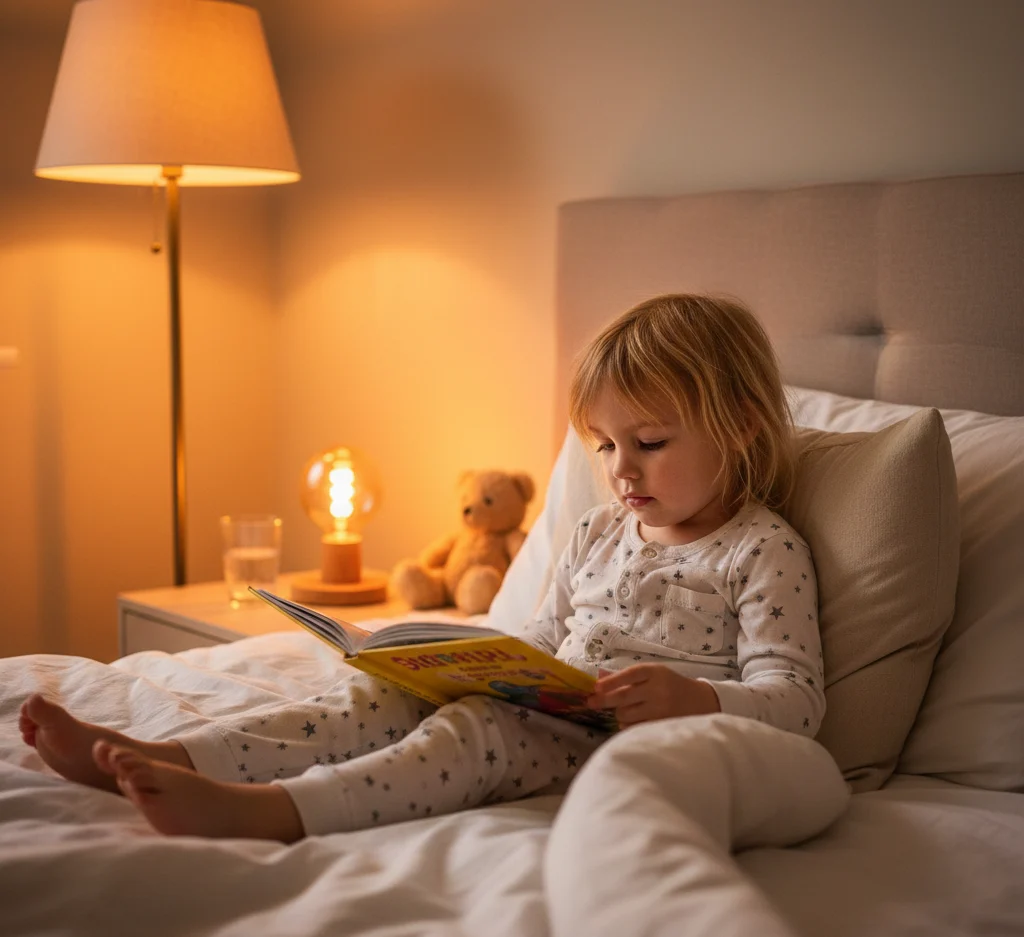
Dimming lights about 60 minutes before bedtime can help mimic the natural sunset and prepare your child’s brain for sleep.
The brain’s sleep system is highly sensitive to light.
Evening exposure to blue light interferes with the conversion of serotonin into melatonin,6 delaying melatonin release.
To support the body’s natural sleep rhythm:
- Dim lights 60 minutes before bed
- Switch to warm or amber-colored lighting
- Turn off bright overhead lights
- Stop screens 60 to 90 minutes before sleep
This gradual shift in lighting signals to the brain that nighttime has arrived.
5. The Temperature “Drop” Method

A gradual drop in body temperature is one of the body’s natural signals for sleep.
As body temperature decreases in the evening, the brain begins shifting into a calmer and more sleep-ready state.
One simple way to support this process is with a warm bath 60 to 90 minutes before bedtime.
After the bath, the body naturally cools as water evaporates from the skin, which may help children feel sleepier and more relaxed before bed.
To make this more effective:
- Use warm, not overly hot, water
- Keep the post-bath environment calm and dimly lit
- Avoid screens or stimulating activities afterward
This gentle cooling effect can help support the body’s natural nighttime sleep rhythm.
Related: To help you differentiate between typical energy and ADHD traits, read our guide: Is It ADHD or Just Toddler High Energy? 5 Neurological Signs Parents Should Know.
When Bedtime Hyperactivity May Need Medical Attention
Occasional bedtime hyperactivity is common in children. However, if sleep difficulties happen frequently and begin affecting mood, learning, behavior, or daytime focus, it may help to look deeper.
Keeping a simple 7-day sleep and behavior log can help parents identify patterns such as:
- Bedtime resistance
- Frequent night wakings
- Restlessness or hyperactivity before sleep
- Morning tiredness
- Daytime inattention or emotional outbursts
In some children, ongoing sleep difficulties may overlap with conditions that can mimic or worsen ADHD-related behaviors, including:
- Iron deficiency
- Magnesium deficiency
- Thyroid imbalance
- Sleep disorders
- Sensory regulation difficulties
If symptoms continue despite healthy sleep routines, consider discussing your concerns with a pediatrician, sleep specialist, or occupational therapist.
Related: ADHD Conditions, Nutritional Deficiencies, and Tests
Bedtime hyperactivity sometimes overlaps with other conditions and nutritional factors. These guides cover what parents commonly ask about next:
- ADHD vs Iron Deficiency in Children: Best for understanding how low iron can mimic ADHD symptoms
- Magnesium for ADHD in Children: Role of magnesium in focus, sleep, and behavior regulation
- ADHD vs Thyroid Problems in Children: How thyroid imbalance can affect attention and mood
- Zinc and ADHD in Children: Does It Really Help With Focus and Hyperactivity?
- Blood Tests for ADHD in Children: What tests doctors may consider in ADHD evaluation
When to Talk to a Doctor About Bedtime Hyperactivity
Talk with your child’s pediatrician if bedtime hyperactivity:
- Happens most nights for several weeks
- Causes severe sleep disruption or frequent night wakings
- Affects daytime learning, mood, or behavior
- Is associated with loud snoring, breathing pauses, or unusual movements during sleep
- Occurs alongside significant anxiety, sensory difficulties, or attention problems
- Does not improve despite consistent sleep routines
A doctor can help rule out sleep disorders, nutritional deficiencies, anxiety-related issues, ADHD-related sleep difficulties, or other medical conditions that may affect sleep and behavior.
The Takeaway
Bedtime hyperactivity is often a sign that a child’s brain and body are struggling to transition into sleep mode.
In many cases, small changes in routine, light exposure, timing, and sensory regulation can gradually make bedtime calmer and more predictable.
If your child seems stuck in a wired but tired cycle, focus on one change at a time:
- Start the bedtime routine earlier to avoid overtiredness
- Offer protein-rich afternoon snacks to support stable energy
- Use calming heavy work activities before bed
- Dim lights and reduce screen exposure in the evening
- Keep bedtime routines calm, consistent, and predictable
Many parents notice improvement when these habits are repeated consistently over time. Small, steady changes can support healthier sleep patterns, mood, and daytime focus.
Frequently Asked Questions (FAQ)
Q1. Is bedtime hyperactivity a sign of ADHD?
Not always. Many children experience occasional “second winds” at bedtime. However, frequent bedtime hyperactivity combined with daytime inattention, impulsivity, or emotional regulation difficulties may sometimes overlap with ADHD related behaviors.
Q2. How can I calm a child hyperactive at bedtime?
Calming routines may help children settle more easily before sleep. Helpful strategies include dimming lights, reducing screen exposure, using calming sensory activities, keeping bedtime consistent, and avoiding overstimulation late in the evening.
Q3. Does screen time make bedtime hyperactivity worse?
Yes. Blue light from phones, tablets, and televisions can delay melatonin release and make it harder for children to feel sleepy at bedtime.
Q4. How do I know if my child is overtired or just misbehaving?
Overtired children do not always appear sleepy. Common signs include sudden bursts of energy, emotional meltdowns, bedtime resistance, restlessness, and difficulty calming down late in the evening.
Q5. What age group is most affected by bedtime hyperactivity?
Bedtime hyperactivity is especially common in children ages 3 to 10 because sleep schedules, school routines, and changing sleep needs can make children more sensitive to overtiredness.
Q6. When should I talk to a doctor about bedtime hyperactivity?
Consider speaking with a pediatrician if bedtime hyperactivity happens most nights, affects daytime learning or behavior, causes severe sleep disruption, or does not improve with healthy sleep routines.
Q7. Can melatonin supplements help a hyperactive child at bedtime?
Melatonin supplements are sometimes used short-term for children with sleep difficulties, but they should only be considered under pediatric guidance. Addressing the underlying causes of bedtime hyperactivity, such as overtiredness and screen exposure, is generally recommended first.
Q8. Does diet affect bedtime hyperactivity in children?
It can. Sugary or heavily processed snacks late in the evening may contribute to blood sugar fluctuations that increase nighttime alertness in some children. A protein-rich afternoon snack may help support more stable energy levels before bed.
References
📚 Click to Expand Citation
- Brum MCB, et al. (2022). Andreadi A, Andreadi S, Todaro F, Ippoliti L, Bellia A, Magrini A, Chrousos GP, Lauro D. Modified Cortisol Circadian Rhythm: The Hidden Toll of Night-Shift Work. Int J Mol Sci. 2025 Feb 27;26(5):2090. Available from: https://pmc.ncbi.nlm.nih.gov/articles/PMC11899833/
- Wong SD, et al. (2022). Development of the circadian system in early life: maternal and environmental factors. J Physiol Anthropol.
Available from: https://pmc.ncbi.nlm.nih.gov/articles/PMC9109407/
- Juliana N, et al. (2025). Cortisol Detection Methods and the Hormone’s Role in Evaluating Circadian Rhythm Disruption. Int J Mol Sci. Available from:
https://pmc.ncbi.nlm.nih.gov/articles/PMC12470794/
- Pattnaik H, et al. (2022). Nutritional Elements in Sleep. Cureus. Available from: https://pmc.ncbi.nlm.nih.gov/articles/PMC9859770/
- Guardado KE, Sergent SR. (2023). Sensory Integration. StatPearls [Internet]. Available from: https://www.ncbi.nlm.nih.gov/books/NBK559155/
