

Many parents think sugar makes children too active. After a birthday party or festival, when kids eat sweets, people often say, “Look, they are running around because of sugar!”
Does sugar really make kids hyper? It’s a question parents have asked for decades and the answers are not always straightforward. Some studies suggest sugar might influence children’s behavior, while many others find no direct link at all. This mix of findings has left families wondering about the real connection between sugar and hyperactivity in children.
In this post, we will explore:
- What science really says about sugar and hyperactivity in children,
- Why the “sugar rush in kids” myth is so common,
- How sugar affects children’s health and behavior in the long run.
⚡ Executive Summary:
- The Myth: Sugar causes an immediate “sugar rush” or directly leads to ADHD.
- The Fact: Research consistently shows sugar does not cause hyperactivity or ADHD.
- What’s Really Happening: “Wild” behavior is typically an adrenaline and dopamine response to excitement—often called the “Party Effect“—rather than a reaction to glucose.
- The Mechanism: While sugar does not cause the disorder, the “Insulin Roller Coaster” (rapid spikes and crashes) can trigger irritability, mood swings, and poor focus that mimic ADHD symptoms.
- The Pro Strategy: Pair treats with protein or fiber (nuts, yogurt) to stabilize energy and behavior.
Why Parents Believe in the Sugar Rush Myth
The idea that sugar causes hyperactivity gained popularity in the 1970s. Dr. Ben Feingold introduced the “Feingold Diet,” which blamed artificial colors, flavors, and certain food chemicals (known as salicylates) for behavioral problems, and sugar soon became associated with these claims.
Despite limited scientific proof, his ideas became popular among parents searching for solutions. Over time, this belief was reinforced by:
- Expectation Bias: When adults expect sugar to cause hyperactivity, they are more likely to notice energetic behavior after sweets. Studies show that parents who believe sugar causes hyperactivity often report behavior changes even when children consume placebo (sugar-free) foods.
- Pop Culture Influence: From movies to TV commercials, the “sugar high” has been used as a comedic trope for decades. By the 1980s, the “sugar rush” became a solidified cultural belief, driven more by stories and parent observations than by actual science.
- The “Party Effect”: Parties are loud, exciting, and involve lots of friends. This environment releases adrenaline and dopamine. These natural hormones increase heart rate and alertness, making kids act “hyper.” In other words, children are not “high” on sugar; they are responding to excitement and hormonal changes from the event.
The Trigger The Internal Response The Outward Behavior Loud Music/Games Adrenaline Spike Running, Shouting, High Energy Social Excitement Dopamine Release Non-stop Talking, Laughter Sweets/Treats Rapid Glucose Rise Temporary "Fuel" Boost End of Event Sensory Exhaustion The "Meltdown" or Crash
Sugar and Hyperactivity in Children: Research Findings (1970s–2026)
When we look at the research, we see two different sides to the story regarding sugar and hyperactivity in children.
Evidence Against a Link
The majority of high-quality clinical studies have found no association between sugar intake and hyperactive behavior in children:
- A 1994 landmark study published in the New England Journal of Medicine tested children by giving some sugar and others a sugar-free substitute. The researchers found no significant difference in behavior or cognitive performance between the two groups.1
- Another study in 2019 looked at children ages 6 to 11 and found that eating sugar (sucrose) did not increase the risk of ADHD.2
- Medical reviews in 2024 and 2025 (including Mayo Clinic and Yale Health) continue to confirm that there is no direct “cause-and-effect” link between sugar and wild behavior.
Evidence Suggesting a Link
While many studies show no connection, some recent research suggests sugar may play a role in certain behaviors:
- In a 2019 review, researchers found that diets high in refined sugar or saturated fat were linked with a greater chance of ADHD-like symptoms.3
A 2020 meta-analysis showed a positive relationship between overall sugar intake (especially sugar-sweetened beverages) and ADHD symptoms.4 This means children who consumed more sugary foods and drinks were more likely to show ADHD-related behaviors.
- In 2023, researchers suggested that the more frequently children consumed sugar-sweetened beverages (SSBs), the higher their risk of hyperactivity symptoms.5 Some studies report higher activity levels in children with high sugar intake.
👉 Summary:
It is vital to understand that sugar does not cause ADHD. However, when studies show a link, it does not always mean the sugar caused the behavior. It might be that active kids simply burn more energy, creating a temporary ‘mimic’ effect of hyperactivity! Furthermore, some children may simply be more sensitive to glucose fluctuations, leading to behavioral changes.
How Sugar Mimics Hyperactivity
Two main mechanisms explain how the body processes sugar and why it can temporarily mimic ADHD‑like behaviors.
1. Blood Sugar Spikes and the “Insulin Roller Coaster”
One of the most immediate effects of sugar on children’s behavior is the disruption of glucose stability.
- The Spike: When a child consumes refined sweets, blood sugar levels shoot up rapidly.
- The Response: The body releases insulin to manage this surge.
- The Result: This rapid rise and fall in blood sugar, often called a sugar spike and crash, may temporarily mimic symptoms associated with hyperactivity, such as restlessness or poor focus during the high, followed by fatigue or irritability during the low. However, this effect is short-lived and does not indicate true hyperactivity or ADHD.
💡Parents sometimes interpret this spike‑and‑crash as a sugar rush in kids, though it’s really an insulin response.
2. The Dopamine Connection
For children diagnosed with ADHD, sugar can significantly affect mood, focus, and impulsivity.
- The Reward: Children with ADHD often have lower baseline levels of dopamine, the brain’s “feel-good” chemical.
- The Fix: Consuming sugar triggers a quick release of dopamine, providing a temporary neurological “reward” that can briefly improve mood. However, this effect is short-lived.
- The Result: When dopamine levels fall, some children may experience increased impulsivity, emotional reactivity, or cravings for more sugar. As a result, this cycle can temporarily mimic or intensify behaviors associated with ADHD, without causing the disorder itself.
💡 This explains why parents ask, “does sugar cause ADHD?” The answer is no—sugar does not cause ADHD, but it can make children’s behavior around sweets more unpredictable.
Other Causes of Hyperactivity (Beyond Sugar)
While the “sugar rush in children” gets all the blame, other factors often play a much larger role in how a child behaves. If you notice your child is particularly restless, these factors often play a larger role:
- Sleep Deprivation: A tired child often displays “wired” behavior as their body produces cortisol to stay awake. This looks remarkably like hyperactivity.
- Artificial Additives: Some studies suggest that certain food dyes (like Red 40 or Yellow 5) and preservatives may have a greater impact on hyperactivity in sensitive children than sugar itself.
- The Environment: Sensory overload from loud music, crowds, or a change in routine (like a holiday) can trigger an adrenaline response.
- Nutritional Gaps: A diet high in processed sugar often lacks iron, which is critical for brain regulation and focus. Learn more about ADHD vs. Iron Deficiency in Kids to spot the 7 hidden signs.
- Medical Misdiagnosis: Symptoms that look like ADHD can sometimes be metabolic. See our guide on ADHD vs. Thyroid Conditions in Children to learn more.
Sugar Rush in Kids: Myth vs. Science-Backed Facts
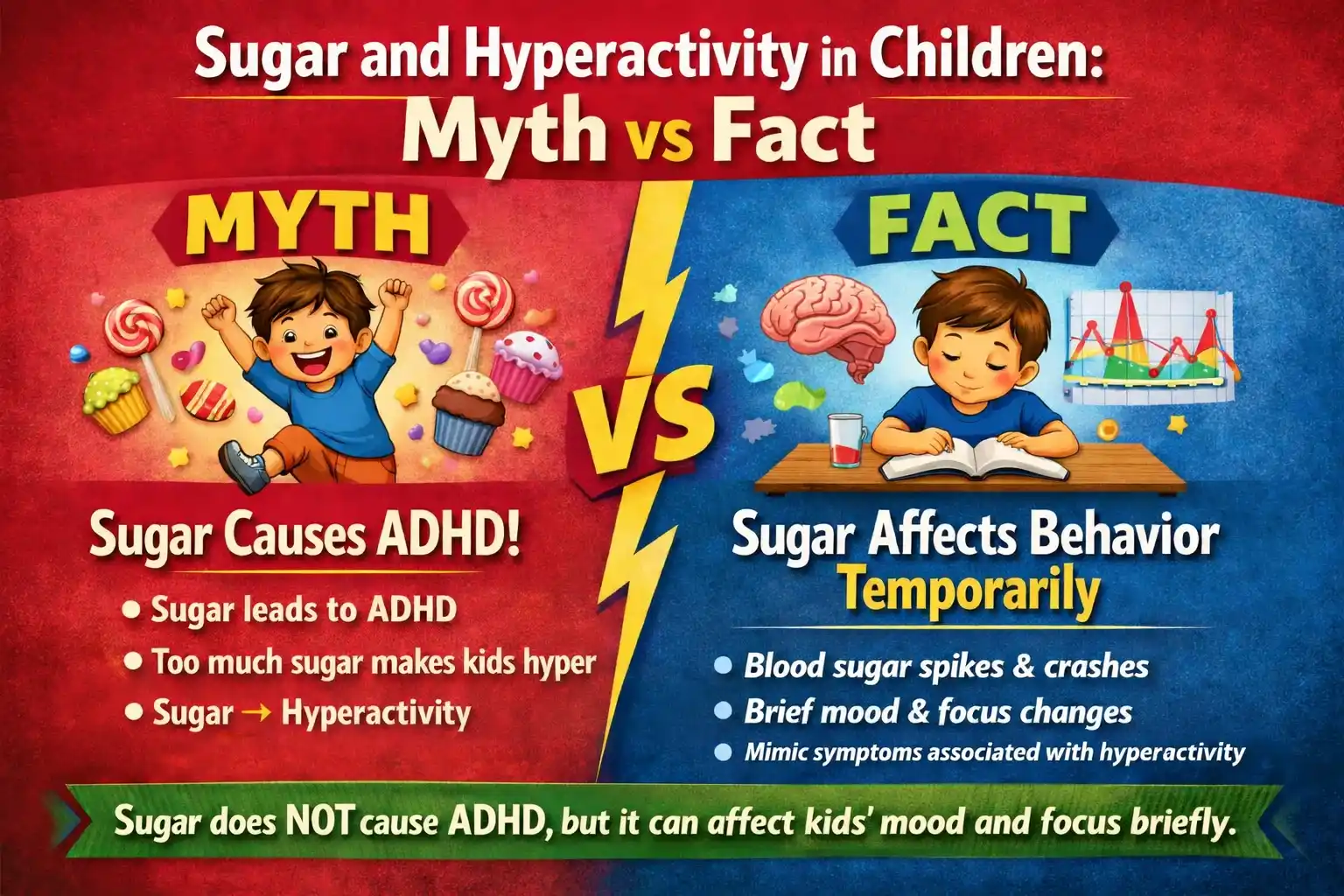
Myth #1: Sugar causes an immediate “sugar rush.”
The Fact: That burst of energy is usually an “Adrenaline Rush.” Most high-sugar moments happen at birthday parties or festivals where children are surrounded by friends, games, and loud music. The environment triggers adrenaline and cortisol, which makes them run around—not the cupcake itself.
Myth #2: Science has proven that sugar causes ADHD.
The Fact: ADHD is a neurological condition, not a dietary one. While a 2023 study suggests that sugary drinks can make ADHD symptoms (like impulsivity) more noticeable, sugar does not create the disorder.6 It’s a matter of symptom management rather than a root cause.
Myth #3: Parents can easily “see” when their child has had sugar.
The Fact: This is often Expectation Bias. In a famous study, parents were told their children had been given sugar when they had actually received a sugar-free placebo. The parents still reported their children were significantly more hyperactive. We often see the behavior we expect to see.
Myth #4: All sugar is a “brain toxin” for children.
The Fact: Glucose is actually the primary fuel for the brain. While refined white sugar lacks nutrients, the glucose found in fruit and carbohydrates is essential for a child’s focus and cognitive development.7 The issue is the source and amount, not the sugar itself.
Myth #5: The “Crash” is proof that the sugar was the problem.
The Fact: The “meltdown” at the end of a party is usually Sensory Overload. After hours of high stimulation, loud noises, and skipped naps, a child’s nervous system is exhausted. They aren’t just crashing from sugar; they are crashing from the entire event.
Long‑Term Health Effects of Sugar in Children
Eating too much sugar doesn’t just affect a child’s energy in the moment—it can have lasting impacts on their health and development.
- Weight Gain and Obesity: Extra sugar adds calories without nutrients. Over time, this can lead to unhealthy weight gain and increase the risk of childhood obesity.
- Insulin Resistance and Diabetes Risk: Frequent spikes in blood sugar force the body to release more insulin. Over years, this can make cells less responsive, raising the risk of type 2 diabetes.
- Dental Problems: Sugary foods and drinks feed bacteria in the mouth, leading to cavities and tooth decay.
- Mood and Behavior Swings: Constant sugar highs and crashes can make children more irritable, anxious, or unfocused.
- Nutritional Deficiencies: Diets high in sugar often push out healthier foods. This means children may miss out on key nutrients like Omega‑3s, zinc, and magnesium, which are vital for brain growth and focus.
- Heart Health Concerns: High sugar intake is linked to higher cholesterol and blood pressure, which can set the stage for heart problems later in life.
Parent Tips to Reduce Sugar Without Banning Treats
You don’t have to ban birthday cake to keep the peace. Instead, focus on balance and timing to avoid the dreaded blood sugar roller coaster.
- Pair Sugar with Protein or Fiber: If your child is having a sweet treat, pair it with some nuts, cheese, or fruit. Protein and fiber slow down the absorption of sugar, preventing the “spike and crash.”
- Focus on “Whole” Sweets: Choose naturally sweet foods like berries or yogurt with honey, which provide nutrients alongside the glucose.
- Watch the Liquid Sugar: Sodas and fruit juices hit the bloodstream much faster than solid food. Encourage water or milk as the primary drink at parties.
- Check the Labels for Dyes: If you suspect your child is sensitive, try switching to treats that use natural colorants (like beet juice or turmeric) instead of synthetic dyes.
- Set a “Cool Down” Routine: After a high-energy event, transition to a quiet activity like reading or a warm bath to help the nervous system reset.
The Takeaway
While sugar and hyperactivity in children are often linked in conversation, the science tells a different story. Sugar provides fuel, but adrenaline and the “Insulin Roller Coaster” drive the behavior. By focusing on balanced snacks and managing the environment, you can enjoy the treats without the meltdowns.
Have you ever noticed your kids getting ‘sugar high’ even when they’ve had sugar-free treats? Share your stories below!
If sugar is not causing your child’s restlessness, look deeper into biological causes. Explore our guide on Magnesium for ADHD in Children to learn how this mineral helps calm the nervous system.
FAQs
Q1. Does sugar cause ADHD in children?
No. ADHD is a brain-based developmental disorder. However, a high-sugar diet can make existing ADHD symptoms harder to manage due to energy crashes.
Q2. Why do kids seem hyper after eating sweets?
It is usually due to the context (parties, holidays) or “Expectation Bias.” The adrenaline from the event and the child’s psychological excitement about getting a treat are the primary drivers of the extra energy.
Q3. How can parents reduce sugar without banning treats?
Focus on ‘clothed’ sugar by pairing sweets with fiber, fats, or proteins. Swap sugary sodas for sparkling water with fruit, and keep treats as a part of a meal rather than a standalone snack.
Q4. Is fruit sugar different from refined sugar?
Chemically, the sugar molecule is similar. However, fruit contains fiber, which slows down the release of sugar into the bloodstream, preventing the spike-and-crash cycle.
Q5. Can some children be more sensitive to sugar?
Q6. Why do people with ADHD crave sugar?
References
📚 Click to view references
- Wolraich ML, et al. Effects of diets high in sucrose or aspartame on the behavior and cognitive performance of children. N Engl J Med. 1994. [View Source]
- Del-Ponte B, et al. Sugar consumption and attention-deficit/hyperactivity disorder (ADHD): A birth cohort study. J Affect Disord. 2019. [View Source]
- Del-Ponte B, et al. Dietary patterns and ADHD: A systematic review and meta-analysis. J Affect Disord. 2019. [View Source]
- Farsad-Naeimi A, et al. Sugar consumption, sugar sweetened beverages and ADHD: A systematic review. Complement Ther Med. 2020. [View Source]
- Zhang Y, et al. Association between Hyperactivity and SSB Consumption in Schoolchildren. Nutrients. 2023. [View Source]
- Yingchankul N, et al. Is Added Sugar Associated with ADHD Symptoms in Medical Students? Nutrients. 2023. [View Source]
- Mergenthaler P, et al. Sugar for the brain: the role of glucose in physiological and pathological brain function. Trends Neurosci. 2013. [View Source]
