
Written by: MediHealth PRO Editorial Team
Scientifically Reviewed by: Dr. Amit Pande, PhD
Molecular Biologist & Independent Scientific Advisor
Medically Reviewed by: Dr. Arghyadeep Marik, MD
Independent Medical Reviewer, MediHealth PRO
Key Takeaways:
- Autism does not have one single cause. It develops through multiple genetic and developmental factors.
- Genetics is the strongest known factor linked to autism, but no single gene determines whether a child will be autistic.
- Certain pregnancy and birth-related factors may increase the likelihood of autism, but they do not cause autism on their own.
- Many of the developmental changes linked to autism begin before birth.
- Vaccines, parenting styles, and specific foods do not cause autism.
One child carefully lines up toy cars. Another child does not consistently turn when their name is called. For many families, these small moments may be the first signs that something feels different. A diagnosis may follow, and one question often arises: What causes autism?
Many parents wonder whether vaccines, parenting styles, or specific foods played a role. Current evidence shows that these factors do not cause autism.
Autism develops through a complex interaction of genetics, early brain development, and certain prenatal and early-life factors. Many of these developmental processes begin before birth.
This guide explains what current evidence tells us about autism and addresses common myths and concerns.
What Causes Autism?
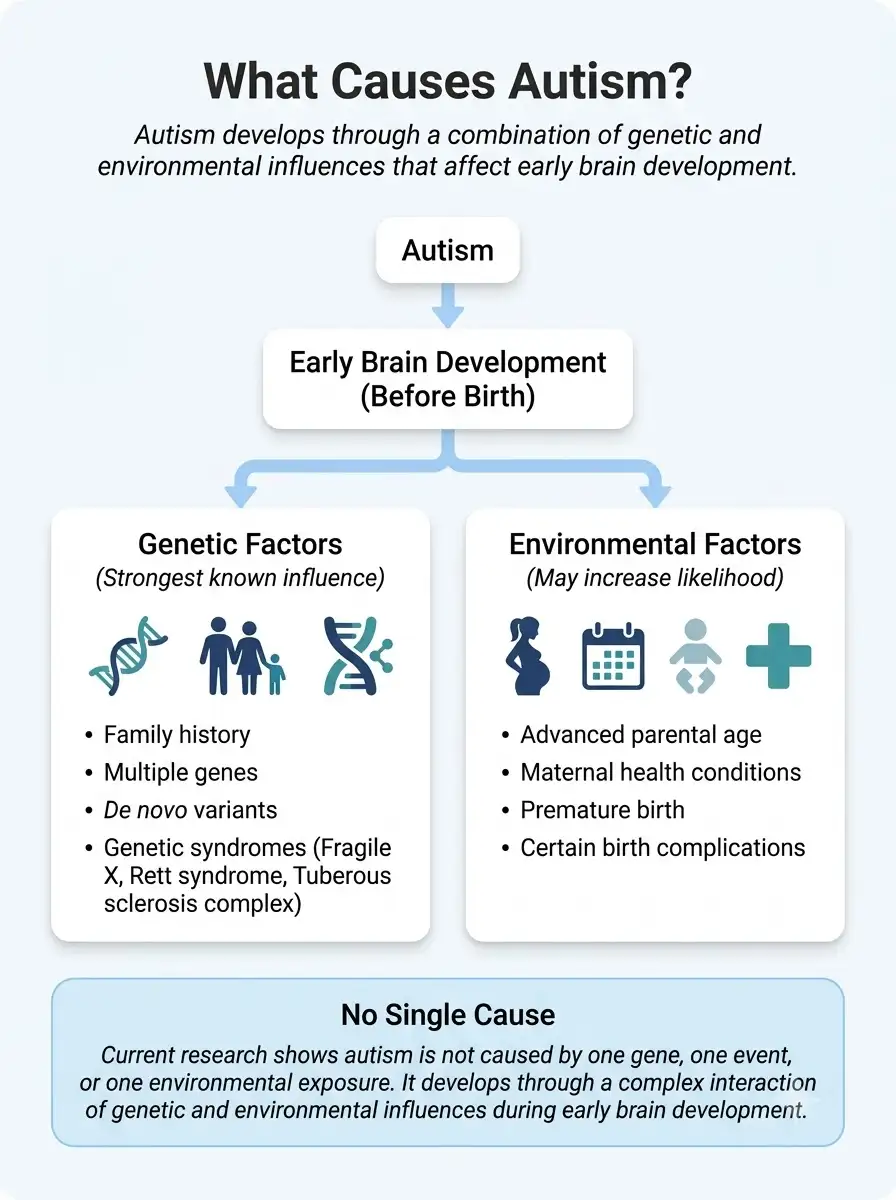
Autism spectrum disorder (ASD) does not have a single known cause. Research suggests that genetics play a major role, with many different genes and genetic changes linked to the condition. Scientists are also studying how early brain development and certain prenatal factors may contribute.1
It’s important to note that autism develops differently in every child. Some children with known risk factors never develop autism, while others are diagnosed without any obvious risks.
This shows that autism is influenced by a combination of factors rather than one single cause.
1. Genetic Factors Associated With Autism
Genetics is one of the strongest known contributors to autism. More than 100 genes involved in brain development have been linked to autism, and these genes may interact in complex ways rather than acting alone.2
This means there is no single “autism gene.” Multiple genetic variations can contribute to autism, often working together in complex ways.
How Do Genetic Changes Contribute to Autism?
Autism-related genetic changes can happen in different ways. Some children inherit genetic variants from their parents, while others have new genetic changes that develop for the first time in the child. These are called de novo variants.
Some genetic differences involve missing or extra pieces of DNA. These changes, known as copy number variants, can affect how certain genes work.
In some children, autism is linked to a specific genetic syndrome, such as Fragile X syndrome, Rett syndrome, or tuberous sclerosis complex. These conditions involve changes in specific genes that can affect brain development and may cause autism-related features along with other developmental or health differences.
However, many autistic children do not have an identifiable genetic cause. Autism can involve the combined effects of many genetic differences, a pattern known as polygenic inheritance.
A family history of autism or certain genetic conditions may increase the chance of autism, but genetics alone cannot determine whether a child will be autistic. Other developmental and environmental factors may also play a role.
Is Autism Hereditary?
Yes. Autism has a strong genetic connection and often runs in families, but it is not inherited in a simple way like eye color or blood type. If one child has autism, their younger brother or sister has a higher chance of also being autistic compared with other children.
Studies suggest that about 1 in 5 younger siblings of autistic children are also diagnosed with autism.3
The chance can be higher in families with more than one autistic child. This is why the CDC and American Academy of Pediatrics recommend closer developmental monitoring for younger siblings.4
Environmental Factors Associated With Autism
Some pregnancy and birth-related factors are associated with a higher likelihood of autism. These include:
- Advanced parental age
- Maternal health conditions during pregnancy
- Premature birth or very low birth weight
- Birth complications that reduce oxygen to the baby’s brain
None of these factors cause autism on their own. They may contribute in some children, but autism usually involves multiple genetic and developmental processes.5
How Does Brain Development Affect Autism?
Differences in brain development linked to autism are believed to begin before birth, although many signs become noticeable during infancy or early childhood. During pregnancy, the brain forms complex networks that support communication, social interaction, learning, and sensory processing.6
Small differences in how these networks develop may affect how a child communicates, learns, interacts with others, and responds to sensory information. Since every child’s brain develops differently, autism can appear in many ways. This wide range of characteristics is why autism is described as a spectrum.
Why Do Some Children Lose Previously Acquired Skills?
Some autistic children experience developmental regression, which means they lose skills they had already developed. This may include changes in language, social interaction, or play skills. Scientists are still studying why regression happens in some children with autism but not in others.7
Developmental regression is not part of every autistic child’s experience. It may involve a complex combination of genetic factors and early brain development, but there is no single explanation that applies to all children.
Myths and Misconceptions About What Causes Autism
Because the exact cause of autism is still not fully understood, myths and misinformation continue to spread. These claims can leave parents feeling confused or guilty, even though they are not supported by scientific evidence.
Do Vaccines Cause Autism?
No. More than 40 high-quality studies involving over 5 million children have found no link between childhood vaccines and autism.8 The American Academy of Pediatrics and the American Medical Association continue to affirm this conclusion.
The vaccine-autism myth began with a 1998 study that claimed a link between the MMR vaccine and autism. The study was later retracted after an investigation found the patient data had been altered. Multiple large studies conducted since then have found no evidence that vaccines cause autism.9
Does Parenting Style Cause Autism?
No. Autism begins during early brain development and is not caused by how a child is raised. Parenting style, emotional warmth, discipline, or family relationships do not cause autism.
Do Diet or Specific Foods Cause Autism?
No. Some autistic children have food preferences, sensory sensitivities, or digestive problems, but there is no evidence that eating or avoiding specific foods causes autism.
Does Screen Time Cause Autism?
No. Screen time has not been shown to cause autism. Some autistic children are especially interested in screens because of their sensory preferences or specific interests, but this does not mean screen time caused their autism.
Do Ultrasounds During Pregnancy Cause Autism?
No. There is no evidence that routine prenatal ultrasounds cause autism. Ultrasound uses sound waves, not radiation, and has not been linked to differences in autism likelihood.
Why Are Autism Rates Rising?
Autism diagnoses have increased sharply over the past two decades. CDC data show autism prevalence among 8-year-olds reached at 1 in 31 in 2022,10 up from 1 in 36 in 2020, 1 in 44 in 2018, and 1 in 150 in 2000.
Much of this increase is linked to changes in how autism is recognized and diagnosed. Several factors have contributed:
- The definition of autism has expanded over time, from the DSM-III to the DSM-5, allowing more children with a wider range of traits and support needs to receive a diagnosis.11
- The Modified Checklist for Autism in Toddlers (M-CHAT), introduced in 2001, helped healthcare professionals identify early signs of autism more consistently.12
- In 2007, the American Academy of Pediatrics recommended autism screening at 18- and 24-month checkups, though routine adoption by pediatricians took years to catch up with the recommendation.13
- Awareness and access to evaluation have improved for groups that were previously missed more often, including girls, children from minority communities, and children with less obvious signs of autism.14
Genetics remains an important factor in autism, while the rise in diagnoses is largely linked to better recognition, broader diagnostic criteria, and improved screening.
Why Is Autism Sometimes Diagnosed Later in Girls?
The factors associated with autism are similar in girls and boys. However, autism signs can look different in some girls, making them harder for families and healthcare professionals to recognize during early childhood.
Some girls may appear to have stronger social skills, copy the behavior of peers, or find ways to manage social situations despite having underlying challenges. These differences can sometimes delay an autism evaluation or diagnosis.
Experts continue to study why some girls receive an autism diagnosis later and how differences in the way autism appears may affect recognition.
How Does Genetic Testing Work in Autism?
After an autism diagnosis, a pediatrician or developmental specialist might suggest genetic testing.
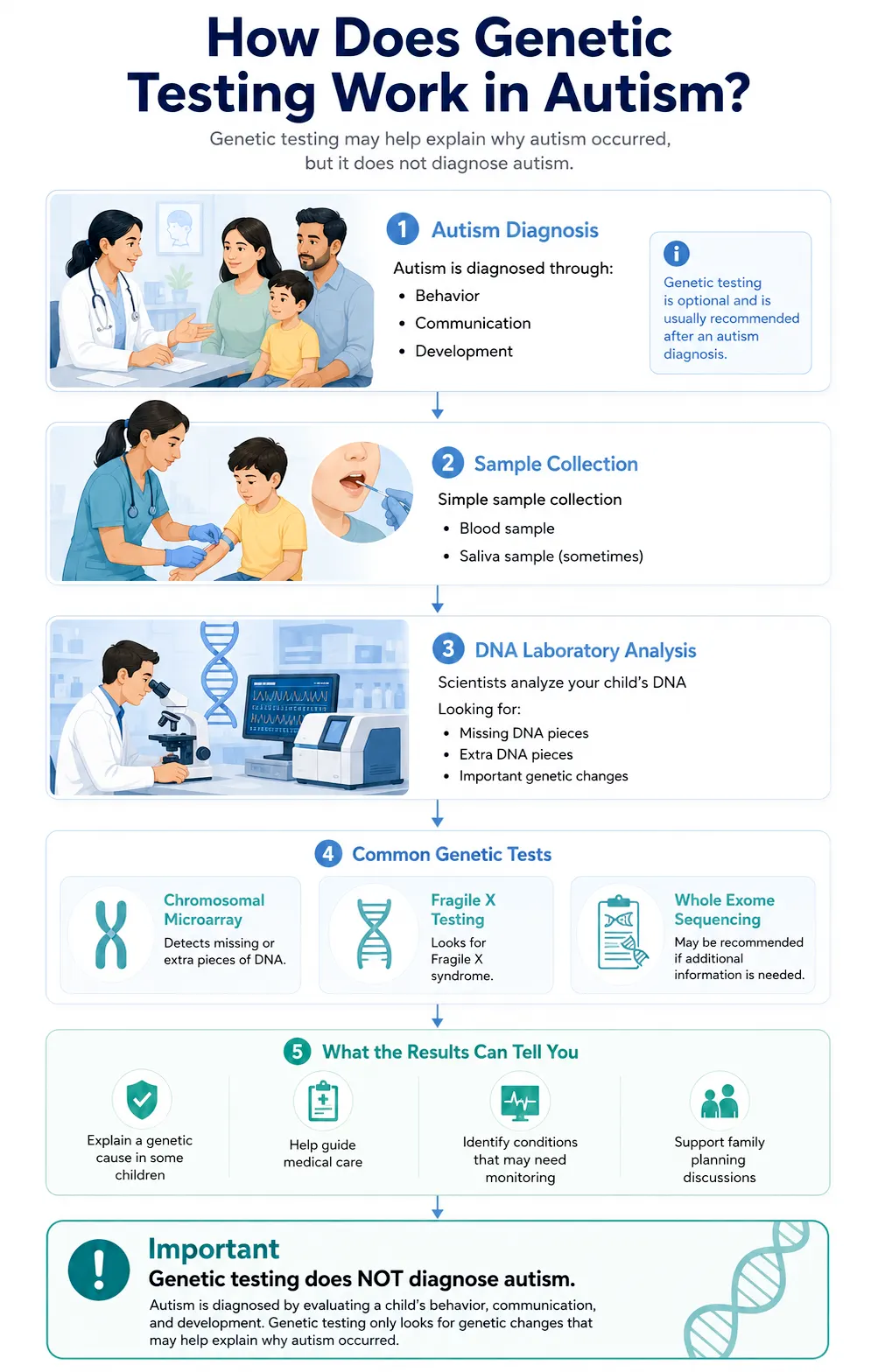
Parents often ask whether genetic testing can diagnose autism. It cannot. Autism is diagnosed by observing a child’s behavior, communication, and development. Genetic testing looks for specific biological changes that may help explain why autism developed.
For many parents, genetic testing can feel confusing. You may wonder what the process involves or whether the results will change your child’s diagnosis.
What Does the Test Actually Involve?
Genetic testing is a simple process and is similar to other routine laboratory tests.
It usually involves either:
- A blood sample collected at your doctor’s office or a local laboratory
or - A saliva sample collected using a cheek swab in some cases
The sample is sent to a laboratory, where specialists analyze the child’s DNA for genetic changes that may be linked to autism or related developmental conditions.
What Are the Labs Looking For?
Genetic testing looks for differences in a child’s DNA, including missing pieces, extra copies, or other changes that may affect how the brain develops.
Pediatricians usually start with two standard tests recommended by genetic guidelines.15
- Chromosomal microarray analysis checks the chromosomes for missing or extra pieces of DNA.
- Fragile X testing looks for a specific genetic change that causes Fragile X syndrome, a condition that is strongly associated with autism.
Depending on these results and a child’s medical history, a doctor may recommend further testing, such as whole exome sequencing. This test examines many genes in detail to look for smaller changes that may be related to autism or other developmental differences.
Why Consider Genetic Testing?
If the test finds a specific genetic cause, it does not change a child’s autism diagnosis or their core therapies, such as speech or occupational therapy. It can still provide important medical information.
A genetic finding can help guide monitoring and care. Some gene variants linked to autism are also associated with conditions such as seizures, heart problems, or kidney issues. Knowing about these risks can help doctors watch for related concerns and provide appropriate care when needed.
A genetic finding can also answer questions about family planning. If an inherited genetic change is identified, it can help parents, and eventually the child’s siblings, better understand the likelihood of autism or related conditions in future pregnancies.
What If the Test Finds Nothing?
It is common for parents to undergo genetic testing and receive results that do not identify a specific genetic cause. This does not mean that genetics are not involved. Hundreds of genes are involved in autism, and scientists are still working to understand how these genetic differences interact and contribute to autism.
A specific genetic cause can be identified in about 15% to 20% of autistic children.16 Whether or not a genetic cause is found, the focus remains on understanding the child’s needs and providing appropriate support.
Can Autism Be Prevented?
Based on current evidence, there is no proven way to prevent autism.1
The reasons why autism develops in some children but not others are still being studied. Maintaining a healthy pregnancy supports a child’s overall development, but no specific diet, supplement, parenting approach, or lifestyle choice has been shown to prevent autism.
The most important step is not prevention, but early recognition. Clinical evidence shows that early intervention programs can greatly improve a child’s development and lead to better outcomes, as young children often respond best to support during this stage of growth.17
What Should Parents Do If They Have Concerns?
If you are concerned about your child’s development, talk with your child’s pediatrician. Share your concerns rather than waiting to see if your child grows out of it.
A developmental screening can help determine whether further evaluation is needed. If autism or another developmental condition is suspected, early support can begin while the assessment process is underway.
Most autism signs appear during the first two years of life. See our complete guide to Autism Symptoms by Age: Early Signs From 6 Months to 5 Years for what to watch for at each stage.
Bottom Line
No single test, gene, or event explains why one child develops autism and another does not. Research shows that autism involves a combination of genetic and developmental factors, rather than one specific cause.
Autism cannot currently be prevented or predicted with certainty, but early recognition can help children receive support sooner. The right support at the right time can help children build communication, learning, and everyday skills while supporting their individual strengths.
Frequently Asked Questions About Autism Causes
Can Autism Be Inherited From Mother or Father?
Autism-related genetic factors can come from either parent. Some genetic variations are inherited, while others develop for the first time in a child (de novo variants). Autism usually involves a combination of many genetic factors rather than a single gene passed from the mother or father.
Can a Child Develop Autism Without Any Known Risk Factors?
Yes. Many children diagnosed with autism do not have an identifiable risk factor. Autism can develop through a complex combination of genetic and early developmental factors that are not always fully understood.
Can Stress During Pregnancy Cause Autism?
No. Everyday stress during pregnancy has not been shown to cause autism. Severe or prolonged psychological distress may affect pregnancy and early child development, but stress alone does not explain why autism develops. Autism is understood as a complex neurodevelopmental condition influenced by multiple genetic and developmental factors.18
Can Autism Begin Before Birth?
Yes. Evidence suggests that autism-related differences in brain development may begin before birth. Signs of autism may become noticeable later during infancy or early childhood, when communication, social interaction, and developmental skills become easier to observe.6
Can Autism Be Detected Before Birth?
There is currently no routine prenatal test that can predict whether a baby will develop autism. Some genetic changes linked with autism can be identified before birth, but most autism diagnoses are made by evaluating a child’s development and behavior after birth.4
Can Folic Acid Prevent Autism?
Folic acid supports healthy brain and nervous system development during pregnancy, but it has not been proven to prevent autism. Some studies suggest that taking folic acid during pregnancy may be associated with a lower likelihood of autism, but the relationship is still being studied.19
Can Autism Symptoms Appear Suddenly?
Autism begins during early brain development, but signs may become noticeable at different ages. Some children show early differences in infancy, while others are identified later when social communication, language, or behavior expectations become more complex. One early sign some parents notice is that a baby does not consistently respond to their name. Learn more about Babies Not Responding to Name: When to Worry and What It May Mean.
Can Autism Skip a Generation?
Yes, autism-related genetic factors can appear to “skip” generations. This can happen because some family members may carry genetic variations linked with autism without showing noticeable autistic traits.20
Autism is not inherited in a simple pattern, and having a family history does not mean a child will definitely develop autism.
Does Every Child With Autism Have the Same Symptoms?
No. Autism is a spectrum, meaning signs, abilities, and support needs vary widely between children. Some children may have noticeable communication differences, while others may have more subtle social, behavioral, or sensory differences.
Can Autism Develop Later in Life?
No. Autism begins during early brain development, although some people are diagnosed during adolescence or adulthood. A later diagnosis usually means the signs were not recognized earlier, not that autism developed suddenly.
Can Autism Go Away as a Child Grows?
No. Autism is a lifelong neurodevelopmental condition. Early support and therapies can help children build communication, learning, and daily living skills while supporting their individual strengths.
Scientific References
📚 Click to view references
- NICHD – Autism Causes. View Source
- Rylaarsdam L, Guemez-Gamboa A. Genetic Causes and Modifiers of Autism Spectrum Disorder. View Study
- Familial Recurrence of Autism: Updates From the Baby Siblings Research Consortium. View Study
- CDC – Screening and Diagnosis of Autism Spectrum Disorder. View Source
- Modabbernia A, Velthorst E, et al. Environmental Risk Factors for Autism: An Evidence-Based Review of Systematic Reviews and Meta-Analyses. View Study
- CDC – About Autism. View Source
- ScienceDirect – Developmental Regression in Children: Current and Future Directions. View Study
- AAP News – Stop Wasting Government Resources to Amplify Vaccine Misinformation. View Source
- History of Vaccines – Do Vaccines Cause Autism? View Source
- CDC – Autism Data and Research. View Source
- The Transmitter – Evolution of Autism Diagnosis Explained. View Source
- Robins DL, Fein D, Barton ML, Green JA. The Modified Checklist for Autism in Toddlers: An Initial Study Investigating the Early Detection of Autism and Pervasive Developmental Disorders. View Study
- AAP – Genetic Evaluation of the Child With Intellectual Disability or Global Developmental Delay: Clinical Report. View Source
- Christensen D, Zubler J. From the CDC: Understanding Autism Spectrum Disorder. View Study
- Shen Y, Dies KA, Holm IA, et al. Clinical Genetic Testing for Patients With Autism Spectrum Disorders. View Study
- CHOP CAR Autism Roadmap – What Causes Autism? View Source
- CDC – Accessing Autism Treatment Services. View Source
- Frontiers in Psychology – Prenatal Maternal Psychological Distress and Risk of Autism Spectrum Disorders in Offspring: A Meta-Analysis. View Study
- PMC – Maternal Folic Acid and Multivitamin Supplementation and Autism Spectrum Disorders: An Umbrella Review. View Study
- PMC – Rare Exonic Variants in NRXN1 Microdeletion Carriers and Penetrance for Autism Spectrum Disorder. View Study
