
Written by: MediHealth PRO Editorial Team
Scientifically Reviewed by: Dr. Amit Pande, PhD
Molecular Biologist & Clinical Research Expert | Independent Scientific Reviewer, MediHealth PRO
Medically Reviewed by: Dr. Arghyadeep Marik, MD
Independent Medical Reviewer, MediHealth PRO
If your child has ADHD, you have probably spent countless hours looking for ways to help them focus better, feel calmer, and manage daily challenges more easily.
According to the Centers for Disease Control and Prevention (CDC)1, ADHD is one of the most common neurodevelopmental disorders of childhood, affecting millions of families worldwide.
One nutrient that has gained increasing attention in ADHD research is zinc.
Zinc is an essential mineral involved in brain development, immune function, and healthy growth. It also plays a role in several brain processes linked to attention, learning, emotional regulation, and behavior.
If you have been wondering whether zinc is worth looking into for your child, this article reviews what current research shows, including potential benefits, limitations, side effects, and practical guidance for families.
What Is Zinc and Why Does It Matter for Children with ADHD?
Although the body only needs zinc in small amounts, it plays a critical role in healthy brain development, immune function, growth, and nervous system activity.
Because the body cannot produce or store large amounts of zinc on its own, it must come regularly from food or supplements.
In the developing brain, zinc helps support several important functions, including:
- Neurotransmitter synthesis: helps the brain make chemicals such as dopamine.
- Synaptic signaling: helps brain cells communicate with each other.
- Cognitive development: supports memory and the ability to learn new things.
- Executive function: contributes to attention, impulse control, and behavioral regulation.
These are some of the key areas often affected in children with ADHD.
The Zinc-ADHD Connection
Zinc acts as a cofactor for several enzymes involved in the synthesis and regulation of dopamine, a neurotransmitter closely linked to focus, motivation, attention, and impulse control.2
Some studies suggest that children with ADHD may have comparatively lower zinc status than their peers.3
Because zinc supports dopamine regulation, brain signaling, and neurodevelopment, deficiency may affect attention and behavioral regulation in some children.
Still, ADHD is a multifactorial condition, and symptoms may also be influenced by many other factors, including iron deficiency, magnesium imbalance, thyroid disorders, sleep problems, and developmental or hormonal factors.
These conditions can sometimes overlap with or worsen ADHD symptoms, which is why doctors evaluate the broader clinical picture rather than focusing on a single nutrient alone.
Related ADHD Conditions, Nutritional Deficiencies, and Tests
Other nutritional and medical factors can also affect attention and behavior in children with ADHD. These guides explore some of the most commonly overlooked ones:
- ADHD vs Iron Deficiency in Children: Best for understanding how low iron can mimic ADHD symptoms
- Magnesium for ADHD in Children: Role of magnesium in focus, sleep, and behavior regulation
- ADHD vs Thyroid Problems in Children: How thyroid imbalance can affect attention and mood
- Blood Tests for ADHD in Children: What tests doctors may consider in ADHD evaluation
Why Not Everyone Is Zinc Deficient
Even though zinc is essential and the body cannot produce it on its own, this does not mean most children are deficient.
Many children get enough zinc through a normal, balanced diet. Foods like meat, eggs, dairy products, legumes, nuts, and seeds provide a steady supply of this mineral in everyday meals.
The body also has its own regulatory mechanism. When zinc intake is lower, absorption from food increases and losses through the body are reduced, helping prevent deficiency in most healthy children.
Zinc deficiency in children typically occurs only in specific circumstances, such as:
- A very restricted or poor-quality diet,
- High intake of processed foods,
- Gut conditions that affect nutrient absorption,
- Increased nutritional needs during rapid growth phases.
This is why not every child with ADHD has low zinc levels.
Before zinc supplementation is considered, testing and a proper medical evaluation by a paediatrician are essential first steps.
Signs of Possible Zinc Deficiency in Children
Some possible signs include:
- Poor appetite or selective eating,
- Slow growth or poor weight gain,
- Frequent minor infections,
- Difficulty concentrating or mental fatigue,
- Increased irritability or behavioral changes,
- Dry skin or slow wound healing,
- Hair thinning or white spots on the nails.
These symptoms alone do not confirm zinc deficiency. A clinical assessment and testing are needed for an accurate diagnosis.
ADHD Symptoms vs Zinc Deficiency Signs: Key Differences
Some symptoms of zinc deficiency can overlap with attention and behavioral difficulties seen in ADHD. However, they are not the same condition.
The comparison below highlights key differences that doctors may consider during evaluation.
| Feature | Typical ADHD Symptoms | Possible Signs of Zinc Deficiency |
|---|---|---|
| Focus and behavior | Distractibility, impulsivity, hyperactivity, constant fidgeting | Poor concentration, mental fatigue, irritability |
| Growth and immunity | Usually normal physical growth | Slow growth and more frequent minor infections |
| Eating habits | Picky eating may occur | Poor appetite or changes in taste and smell |
| Learning and memory | Difficulty staying focused or organized | Brain fog, memory difficulties, slower learning |
| Physical signs | No specific physical signs directly linked to ADHD | Dry skin, slow wound healing, hair thinning, white nail spots |
It is important to remember that these symptoms can overlap, and zinc deficiency alone does not explain every case of ADHD.
Related reading: If you want a deeper understanding of how ADHD typically presents in children across different ages, read this:
ADHD in Children (Ages 2–12): Early Signs, Brain Development, Sleep Issues & Treatment
Zinc and ADHD in Children: What the Research Says
Research on zinc and ADHD in children suggests there may be a link between low zinc levels and more severe attention and behavioral symptoms in specific cases.
Some studies have found that children with ADHD tend to have lower zinc levels compared to children without ADHD.4
A double-blind, placebo-controlled trial published in AAP Grand Rounds5 found that children with ADHD who received zinc sulfate alongside methylphenidate (stimulant medications) showed significantly greater improvement in symptoms compared to those receiving methylphenidate alone — suggesting zinc may serve as a useful adjunct to standard stimulant treatment in some cases.
Broader clinical trials have similarly shown that zinc supplementation, particularly zinc sulfate, was associated with mild improvements in hyperactivity and impulsive behavior, especially in children with confirmed zinc deficiency.6 The effect on attention problems, however, has been less consistent.
While some children may benefit, others show little or no improvement.7 This suggests that zinc is not a universal treatment for ADHD and may be more helpful in children who already have low zinc levels or poor nutritional status.
Therefore, most medical professionals do not recommend routine mineral testing or supplementation as a standard approach to diagnosing or treating ADHD.8
Possible Benefits of Zinc in Children with ADHD
Some potential benefits suggested by research include:
- Reduced hyperactivity: Zinc may help reduce restlessness and overactivity in some children with zinc deficiency.
- Reduced impulsivity: Zinc may help support behavioral self-control and reduce impulsive behavior in some children with ADHD.
- Better attention support: Zinc may help support focus and concentration in some children with low zinc levels, although effects on attention have been less consistent.
- Support for brain development: Adequate zinc intake supports healthy brain growth, learning, and cognitive function during childhood.
However, these benefits appear to be more likely in children with confirmed zinc deficiency, while supplementation has shown less consistent results in children with normal zinc levels.
Zinc may support symptom management in some children, but it should never replace proper medical evaluation and evidence-based ADHD care.
Natural Ways to Increase Zinc in Children
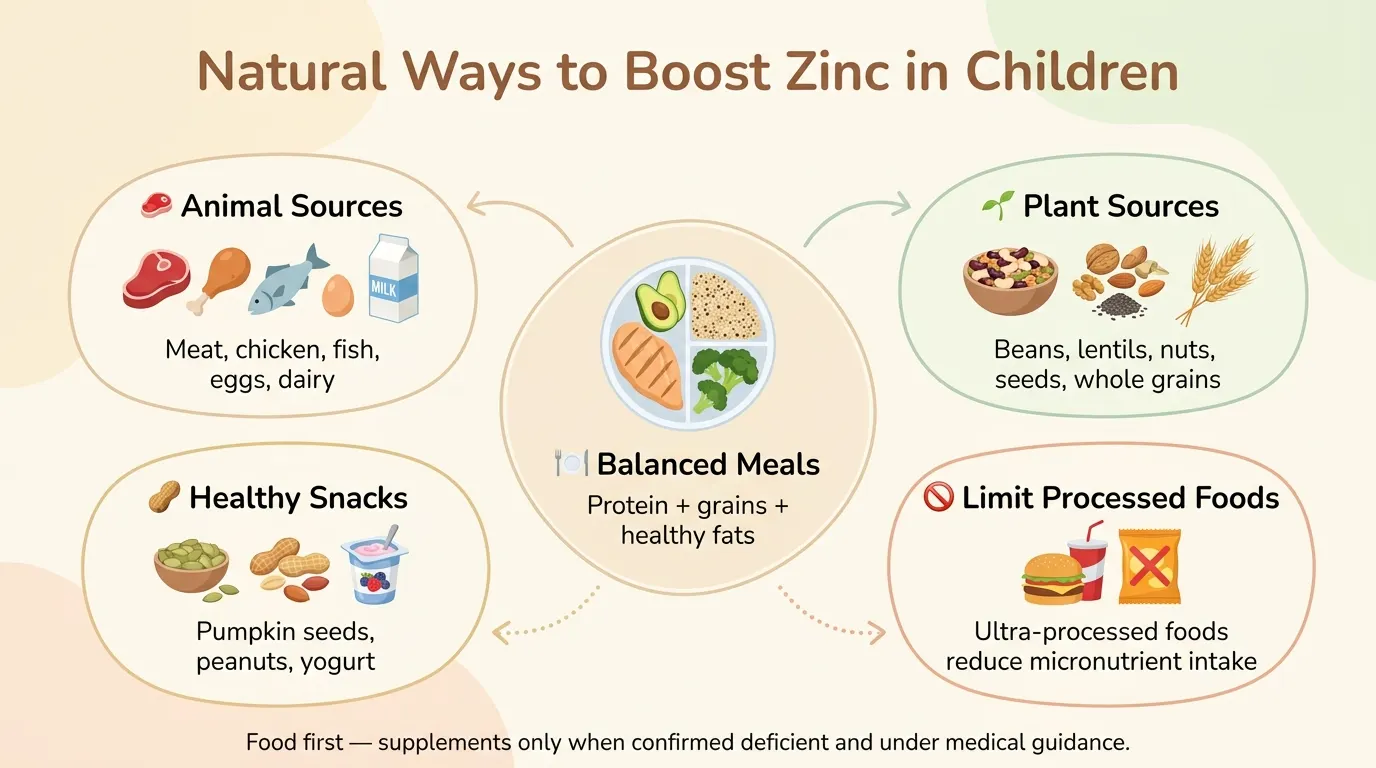
Before considering supplements, it is often best to improve zinc intake through everyday foods. A balanced diet can usually meet a child’s zinc needs if it is consistent and varied.
- Animal-based sources: Meat, chicken, fish, eggs, and dairy products are rich and easily absorbed sources of zinc.
- Plant-based sources: Beans, lentils, chickpeas, nuts, seeds, and whole grains also contain zinc, though absorption may be slightly lower due to the presence of phytates, naturally occurring compounds that can reduce mineral uptake.
- Snack options: Pumpkin seeds, peanuts, and yogurt are simple and child-friendly ways to add zinc to the diet.
- Balanced meals: Including a mix of protein, grains, and healthy fats across meals helps support overall nutrient absorption.
- Limit ultra-processed foods: Diets high in ultra-processed foods may indirectly reduce micronutrient intake overall, so limiting these where possible supports broader nutritional health.
If dietary changes are not sufficient or a deficiency is confirmed through testing, zinc supplementation may be worth discussing with a paediatrician who can assess your child’s specific nutritional needs.
Zinc Supplements: When Are They Needed?
Supplementation makes sense only when there is a clear reason for it.
- Confirmed deficiency: If blood tests or a clinical assessment show that a child’s zinc levels are low, a doctor may recommend a supplement to correct this.
- Poor dietary intake: Children who eat a very limited or unbalanced diet may not get adequate zinc from food alone. In such cases, short-term supplementation can help while dietary habits are addressed.
- Absorption problems: Certain gut conditions can interfere with how the body absorbs zinc from food. Children with these conditions may need additional support despite eating well.
- ADHD and related conditions: Zinc has been studied in children with ADHD, but it is only considered as part of a broader, doctor-supervised treatment plan, not as a remedy on its own.
The right dose depends on the child’s age, weight, diet, and overall health.
Excess intake carries real risks, which the next section covers in detail. Always consult a doctor before starting any supplement.
Safety of Zinc Supplementation in Children with ADHD: Limitations and Side Effects
Zinc is generally well tolerated at appropriate doses, but excessive or unsupervised long-term use carries real risks that parents and clinicians should be aware of.
The most common short-term complaints are gastrointestinal — nausea, stomach cramps, vomiting, or loose stools. These typically resolve when the dose is reduced or zinc is taken with food rather than on an empty stomach.
A more clinically significant concern with chronic overuse is copper depletion.
Zinc and copper compete for intestinal absorption, and sustained high zinc intake can suppress copper levels enough to cause anemia. In prolonged cases, this may extend to neurological involvement, including peripheral neuropathy.
Other reported effects include reduced appetite, taste disturbance, headaches, and fatigue. At very high doses, zinc may also paradoxically suppress immune function — the opposite of its intended role.
Given these risks, zinc supplementation in children should always be initiated and monitored by a healthcare professional. Any new or unexplained symptoms following the start of supplementation warrant prompt review before continuing.
Should Children with ADHD Get Their Zinc Levels Tested?
Zinc testing is not routine for every child with ADHD, but there are situations where it genuinely makes sense.
Testing may be worth considering if:
- The child has a poor or very restricted diet.
- There are physical signs of deficiency, such as slow growth, frequent illness, skin rashes, or poor appetite.
- ADHD symptoms remain poorly controlled despite standard medication or behavioural treatment.
A blood test measuring serum zinc levels can help a doctor identify a possible deficiency.
However, blood zinc levels do not always give the full picture, so results are usually interpreted alongside symptoms, diet history, and overall clinical evaluation.
Parents considering testing or supplementation should speak with a qualified healthcare professional before making any decisions.
Important Guidance for Parents and Clinicians
Zinc may play a supportive role in managing ADHD symptoms, but it is not a quick fix and should never replace evidence-based treatment.
Here are some important points for both parents and clinicians to keep in mind.
For Parents
- Do not start zinc supplements without speaking to a doctor or qualified healthcare professional.
- Focus on zinc-rich foods before considering supplements.
- If your child already takes ADHD medication, inform the treating doctor before adding any supplement.
- Watch for side effects such as nausea, stomach upset, reduced appetite, or fatigue after starting supplements.
- Be cautious of products marketed as “natural ADHD cures” — no supplement replaces a proper treatment plan.
For Clinicians
- Consider screening for zinc deficiency in the situations outlined in the testing section above, particularly in children with poor dietary intake or persistent symptoms.
- Supplement only when deficiency is suspected or confirmed, and as part of a broader management plan.
- Monitor copper status in children receiving long-term zinc supplementation.
- Help families understand that zinc may offer supportive benefits in confirmed deficiency, but it is not a cure for ADHD.
Conclusion
Research suggests there may be a connection between zinc and ADHD in children, particularly when zinc deficiency is present.
Some children with low zinc levels may experience mild improvements in hyperactivity or impulsive behavior once zinc levels are restored, although effects on attention have been less consistent.
However, zinc is not a cure for ADHD and should be considered a supportive part of standard treatment rather than a replacement for it.
For most families, the safest first step is focusing on a balanced diet that includes natural zinc-rich foods. Supplements should only be considered when there is a clear medical reason and under professional guidance.
ADHD is a complex condition influenced by genetics, brain development, sleep, emotional wellbeing, environment, and nutrition. If you are concerned that zinc deficiency may be affecting your child’s symptoms, speak with your child’s doctor before starting supplements or testing.
Frequently Asked Questions (FAQs)
Q1. Can low zinc cause ADHD symptoms?
Low zinc does not cause ADHD, but it may worsen attention, behavior, and learning difficulties in some children. These symptoms can overlap with ADHD, which is why proper evaluation is important.
Q2. Can zinc improve ADHD symptoms in children?
Zinc may help improve symptoms such as restlessness or impulsive behavior in some children, especially if they have low zinc levels. While some parents hope for improved focus, effects on attention have been less consistent.
Q3. What foods are naturally high in zinc?
Foods rich in zinc include meat, eggs, dairy products, fish, beans, lentils, chickpeas, nuts, seeds, and whole grains. A balanced diet is usually the safest way to maintain healthy zinc levels in children.
Q4. Should all children with ADHD take zinc supplements?
No. Most children with ADHD do not automatically need zinc supplements. Supplementation is usually considered only when a deficiency is suspected or confirmed by a healthcare professional.
Q5. Can too much zinc be harmful for children?
Yes. Excess zinc intake can cause side effects such as nausea, stomach pain, diarrhea, poor appetite, and reduced copper absorption over time. This is why supplements should only be used under medical guidance.
Q6. How can doctors check zinc levels in children?
Doctors may use a blood test called a serum zinc test to evaluate zinc levels. However, test results are usually interpreted along with symptoms, diet history, and overall clinical evaluation.
Q7. Is zinc a replacement for ADHD medication or therapy?
No. Zinc should be viewed as a supportive nutritional factor. The best outcomes for children with ADHD come from a comprehensive plan that includes medical care, behavioral therapy, school support, and healthy nutrition, not from any single supplement.
References
📚 Click to view references
- Centers for Disease Control and Prevention (CDC). Attention-Deficit/Hyperactivity Disorder (ADHD).
https://www.cdc.gov/adhd/ - American Academy of Pediatrics — AAP Grand Rounds. Zinc, Methylphenidate, and ADHD.
https://publications.aap.org/aapgrandrounds/article-abstract/12/1/6/87514/Zinc-Methylphenidate-and-ADHD - Tseng PT, et al. Peripheral zinc levels in children with attention-deficit hyperactivity disorder: a systematic review and meta-analysis. PMC.
https://pmc.ncbi.nlm.nih.gov/articles/PMC13063148/ - Gheissari R, et al. Zinc status in attention-deficit/hyperactivity disorder: a systematic review and meta-analysis of observational studies. Scientific Reports. 2021.
https://pmc.ncbi.nlm.nih.gov/articles/PMC8285486/ - Granero R, et al. The Role of Iron and Zinc in the Treatment of ADHD among Children and Adolescents: A Systematic Review of Randomized Clinical Trials. Nutrients. 2021.
https://pmc.ncbi.nlm.nih.gov/articles/PMC7583976/ - Akhondzadeh S, et al. Zinc sulfate as an adjunct to methylphenidate for the treatment of attention deficit hyperactivity disorder in children: a double-blind and randomized trial. BMC Psychiatry. 2004.
https://pubmed.ncbi.nlm.nih.gov/14687872/ - Cortese S, et al. Zinc for treating children and adolescents with attention-deficit hyperactivity disorder: a systematic review of randomized controlled clinical trials. PubMed. 2012.
https://pubmed.ncbi.nlm.nih.gov/23169472/ - Mayo Clinic. Attention-deficit/hyperactivity disorder (ADHD) in children — Diagnosis and treatment.
https://www.mayoclinic.org/diseases-conditions/adhd/diagnosis-treatment/drc-20350895
