

Written by: MediHealth PRO Editorial Team
Scientifically Reviewed by: Dr. Amit Pande, PhD
Molecular Biologist & Clinical Research Expert
Medically Reviewed by: Dr. Arghyadeep Marik, MD
Independent Medical Reviewer, MediHealth PRO
Most parents expect teething to begin around 6 months of age, when the first teeth start appearing and babies may become fussier or need extra comfort. But many parents are surprised when teething and sleep regression happen at the same time.
During this stage, a baby who was sleeping well may suddenly start waking more often, resisting naps, crying at bedtime, or needing extra help to settle. Teething can cause gum discomfort, while sleep regression can disrupt sleep patterns as your baby’s brain develops new skills.
When both conditions happen together, nights can become much more challenging, leaving parents unsure about what is causing the sudden changes in their baby’s sleep.
Why Does Teething and Sleep Regression Happen at the Same Time?
Around 6 to 8 months, many babies go through several changes at once. They are learning new skills, becoming more aware of their surroundings, and their sleep patterns are changing. This is also the age when the first teeth often start coming in.
Teething and sleep regression are different things, but they often appear together. Teething can make babies uncomfortable, especially at night when they are lying down. Sleep regression happens because of normal developmental changes that can temporarily affect how a baby sleeps.
During this phase, parents may notice that their baby:
- Wakes up more often during the night
- Needs more help to settle back to sleep
- Resists naps or takes shorter naps
- Becomes more fussy or wants extra comfort
- Has trouble falling asleep at bedtime
When both teething discomfort and sleep changes happen together, it can be hard to know what is causing the disrupted sleep. Knowing the difference between the two can help parents provide comfort while keeping healthy sleep habits in place.
Related Post: If your baby is resisting naps around 6 to 8 months, they may also be ready for the 4-to-3 nap transition, which often overlaps with sleep regression.
Teething vs Sleep Regression: How Can Parents Tell the Difference?
Teething and sleep regression often overlap between 6 and 8 months of age. Teething can cause sore gums and discomfort, while sleep regression is linked to normal brain development. Together, they may lead to frequent night waking, shorter naps, and difficulty settling, but these changes are usually temporary.
Here are some common differences:
| Teething Signs | Sleep Regression Signs |
|---|---|
| Increased chewing or biting on objects | More frequent night waking |
| Swollen or tender gums | Difficulty settling without extra help |
| More drooling than usual | Shorter naps or nap resistance |
| Increased fussiness during the day | More frequent waking between sleep cycles |
| Wanting comfort because of discomfort | Wanting parental reassurance to fall back asleep |
Remember: Teething and sleep regression often overlap, so your baby may show signs of both rather than one single cause.
Myth vs Fact: Teething and Sleep Regression
Myth: Every night waking during teething is caused by tooth pain.
Fact: Not always. Many babies experience teething and sleep regression at the same time. While sore gums can make it harder to settle, developmental changes can also cause frequent night waking. Look for other signs, such as swollen gums, increased drooling, or new developmental milestones, to better understand what may be affecting your baby’s sleep.
At a Glance: Is It Teething, Sleep Regression, or Both?
| If your baby… | It may be… |
|---|---|
| Chews on toys, fingers, or other safe objects more than usual | Teething |
| Has swollen or tender gums | Teething |
| Wakes more often without obvious signs of discomfort | Sleep regression |
| Suddenly resists naps or takes shorter naps | Sleep regression |
| Starts practicing new skills like rolling, sitting, or crawling at bedtime | Sleep regression |
| Has sore gums and frequent night waking | Both may be contributing |
How Long Does Teething and Sleep Regression Last?
For many parents, the biggest question is: “When will my baby start sleeping normally again?” The answer depends on your baby’s development, comfort level, and sleep habits.
Teething discomfort usually comes and goes. Some babies may have a few unsettled days before a tooth appears, while others may experience more noticeable fussiness for a longer period. The discomfort is often worse when a tooth is close to breaking through the gum.
Sleep regression also tends to be temporary. It may last for a few weeks as your baby adjusts to new developmental changes, although the exact duration varies from one child to another.
When both conditions happen together, sleep disruptions may feel longer because two different changes are affecting your baby at the same time. During this phase, many parents notice:
- More night waking than usual
- Changes in nap patterns
- Increased need for comfort
- Difficulty settling at bedtime
Signs Your Baby May Be Going Through Teething and Sleep Regression Together
It can be difficult to know whether your baby’s sleep changes are caused by teething, a developmental leap, or normal changes in sleep patterns. When both happen at the same time, the signs may overlap.
Parents often notice a combination of physical teething symptoms and changes in their baby’s usual sleep behavior.
Common signs include:
- More frequent night waking: Your baby may wake up more often than before and need extra reassurance to settle.
- Increased fussiness: A baby who is usually calm may become more irritable, especially during evenings or bedtime.
- Chewing on everything: Babies often bite toys, fingers, or other safe objects to soothe sore gums.
- Changes in naps: Your baby may take shorter naps, resist naps, or have difficulty settling during the day.
- More need for comfort: Some babies want extra holding, feeding, or closeness while they are uncomfortable.
- Difficulty falling asleep: Bedtime may take longer because your baby is struggling to relax.
Not every baby will show all these signs. Some babies handle teething with very little disruption, while others may have noticeable changes in sleep and mood.
Why Does Teething Affect Baby Sleep at Night?
Many parents notice that their baby becomes more unsettled at night when teeth start coming in. This is because nighttime removes many of the distractions that keep babies comfortable during the day.
While playing, feeding, and exploring, babies may not pay much attention to gum discomfort. But once the room becomes quiet and they are trying to sleep, that discomfort may become more noticeable.
Some babies also find it harder to settle when lying down because they are already feeling irritated or uncomfortable. If they wake between normal sleep cycles, they may need extra support to fall back asleep.
Teething may affect sleep because of:
- Sore or sensitive gums
- Increased need for cuddling or reassurance
- More frequent waking during the night
- Difficulty settling after waking up
However, teething is not always the only reason for these changes. Around the same age, many babies are also learning new skills such as sitting, crawling, or becoming more aware of their surroundings. These developmental changes can also contribute to sleep regression.
If you are dealing with early waking, which often spikes during regressions, you might find relief here: 5 AM Wake-Up Fix.
How to Help Your Baby Sleep During Teething and Sleep Regression
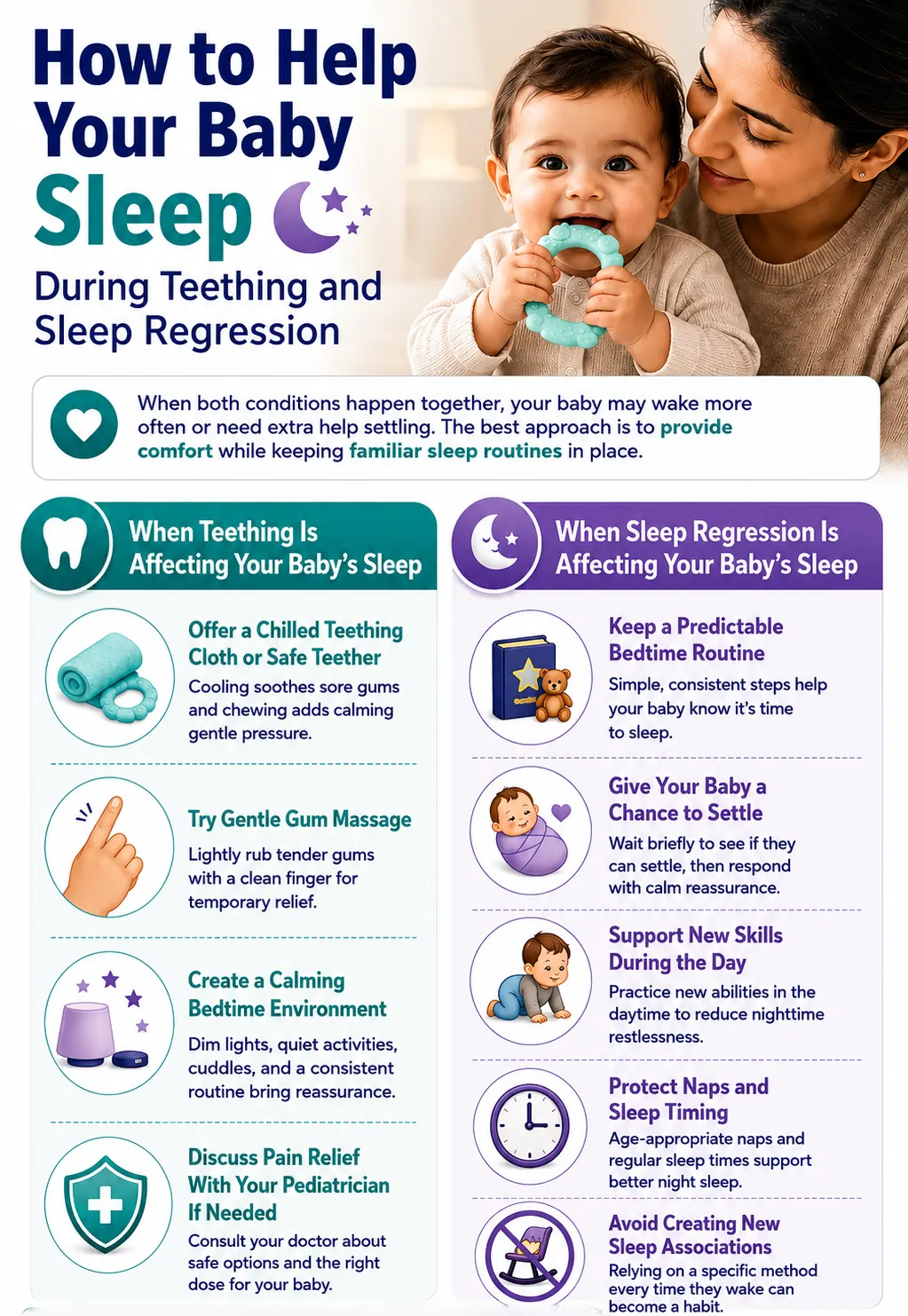
When both conditions happen together, your baby may wake more often or need extra help settling. The best approach is to provide comfort while keeping familiar sleep routines in place.
When Teething Is Affecting Your Baby’s Sleep
If gum discomfort is making bedtime harder, simple soothing methods can help your baby feel more comfortable.
- Offer a Chilled Teething Cloth or Safe Teether: A chilled (not frozen) washcloth or age-appropriate teether can help soothe sore gums. The cooling sensation may reduce discomfort, while chewing provides gentle pressure that many babies find calming. Avoid freezing teethers, as extremely cold temperatures can irritate sensitive gums.
- Try Gentle Gum Massage: Wash your hands thoroughly and gently rub your baby’s tender gum areas with a clean finger. The light pressure can provide temporary relief and may help calm your baby before sleep.
- Create a Calming Bedtime Environment: When your baby is uncomfortable, a predictable bedtime routine can provide extra reassurance. Dim lights, quiet activities, cuddling, and a consistent sleep routine can help your baby relax before bedtime.
- Discuss Pain Relief With Your Pediatrician If Needed: If your baby appears very uncomfortable or teething symptoms are affecting sleep, speak with your pediatrician about safe pain relief options. Your doctor can guide you on whether medication is appropriate and provide the correct dose based on your baby’s age and weight.
When Sleep Regression Is Affecting Your Baby’s Sleep
During sleep regression, babies may wake more often, resist naps, or need extra reassurance even if they previously slept well.
- Keep a Predictable Bedtime Routine: A consistent bedtime routine helps your baby recognize when it is time to sleep. Simple activities such as a bath, feeding, quiet play, or a bedtime story can create familiar sleep cues.
- Give Your Baby a Chance to Settle: When your baby wakes, allow a brief moment to see if they can settle back down. If they become upset, offer comfort and reassurance while keeping the response calm and consistent.
- Support New Skills During the Day: Sleep changes often happen when babies are learning new abilities such as rolling, sitting, crawling, or becoming more aware of their surroundings. Giving them time to practice these skills during the day may reduce nighttime restlessness.
- Protect Naps and Sleep Timing: An overtired baby may have more difficulty falling asleep and staying asleep. Keeping age-appropriate naps and regular sleep times can support better nighttime sleep.
- Avoid Creating New Sleep Associations: During difficult nights, extra comfort is normal. However, if your baby begins depending on a specific method every time they wake, such as being rocked or fed back to sleep, it may become harder to return to their usual sleep pattern later.
Related Posts:
Sleep regression can happen at different stages as your baby grows and develops new skills. If your baby’s sleep changes match a specific age, these detailed guides can help you understand the cause and find practical solutions:
- 4-Month: 4-Month Sleep Regression Roadmap
- 6-Month: 6-Month Sleep Regression Roadmap
- 8-Month: 8-Month Sleep Regression Guide
- 12-Month: 12-Month Sleep Regression Guide
- 18-Month: 18-Month Sleep Regression Roadmap
When Should You Call a Pediatrician?
Most sleep changes during this phase are temporary. However, some signs may suggest that your baby needs medical advice.
Contact your pediatrician if your baby has:
- A fever, especially if it is high or persistent
- Poor feeding or fewer wet diapers than usual
- Unusual sleepiness, weakness, or difficulty waking
- Signs of severe pain or constant distress
- Symptoms that do not improve or seem to be getting worse
Teething can make babies fussy, but it should not cause significant illness. If you are unsure whether your baby’s symptoms are from teething, sleep changes, or something else, your pediatrician can help you identify the cause and guide you on the next steps.
Conclusion
Although teething and sleep regression can make nights feel exhausting, both are usually temporary parts of your baby’s normal development. While sore gums may cause discomfort, developmental changes can also lead to frequent waking, shorter naps, and difficulty settling.
The key is to focus on your baby’s needs—offer safe teething relief when they are uncomfortable, keep bedtime routines consistent, and provide calm reassurance during night wakings. With patience and consistency, most babies gradually return to their usual sleep patterns without long-term sleep problems.
If your baby’s symptoms seem unusual, become more severe, or you are concerned about their health, contact your pediatrician for personalized advice.
Frequently Asked Questions
How long does teething and sleep regression last?
Teething discomfort usually comes and goes around the time a tooth is erupting, while sleep regression often lasts a few weeks. If both happen together, sleep disruption may seem to last longer, but it is usually temporary.
How can I tell if my baby is waking because of teething or sleep regression?
Teething is more likely if your baby has swollen gums, increased drooling, or is chewing on objects. Sleep regression is usually linked to developmental changes, more frequent night waking, and difficulty settling without obvious signs of discomfort.
How can I help my baby during teething and sleep regression?
Focus on keeping your baby comfortable while maintaining a consistent bedtime routine. Safe teething relief, age-appropriate naps, and a calm sleep environment can help your baby through this phase.
Can teething cause my baby to not sleep at night?
Yes, teething can make it harder for some babies to fall asleep or stay asleep because of sore gums. However, if your baby is also going through sleep regression, developmental changes may be contributing to the frequent waking.
What age has the most challenging sleep regression?
Many parents find the 4-month sleep regression the most challenging because it marks a permanent change in how babies cycle through sleep. However, regressions at 6, 8, 12, and 18 months can also disrupt sleep as babies reach new developmental milestones.
What is the hardest stage of teething?
There is no single stage that is hardest for every baby. Many parents notice more discomfort when the first teeth or molars come through, but every baby responds differently to teething.
References
📚 Click to view references
- American Academy of Pediatrics. Teething & Tooth Care. HealthyChildren.org. Retrieved October 6, 2025, from- https://www.healthychildren.org/English/ages-stages/baby/teething-tooth-care/Pages/default.aspx
- Mayo Clinic. Helping Baby Sleep Through the Night. Retrieved October 6, 2025, from- https://www.mayoclinic.org/healthy-lifestyle/infant-and-toddler-health/in-depth/baby-sleep/art-20045014
- NHS. Baby Teething Symptoms. Retrieved October 6, 2025, from
https://www.nhs.uk/baby/babys-development/teething/baby-teething-symptoms/ - Cleveland Clinic. The 4-Month Sleep Regression: What Parents Need to Know. Retrieved October 6, 2025, from- https://health.clevelandclinic.org/the-4-month-sleep-regression-what-parents-need-to-know
- American Academy of Pediatrics. Fever and Your Baby. HealthyChildren.org. Retrieved October 6, 2025, from- https://www.healthychildren.org/English/health-issues/conditions/fever/Pages/Fever-and-Your-Baby.aspx
