
Written by: MediHealth PRO Editorial Team
Scientifically Reviewed by: Dr. Amit Pande, PhD
Molecular Biologist & Clinical Research Expert | Independent Scientific Reviewer, MediHealth PRO
Medically Reviewed by: Dr. Arghyadeep Marik, MD
Independent Medical Reviewer, MediHealth PRO
Understanding ADHD in children is not always simple. Young children are naturally active, curious, emotional, and sometimes impulsive — and in many cases, that is completely normal.
The concern usually begins when these behaviors become more intense than expected for a child’s age, happen consistently across different settings, and start affecting daily life at home, preschool, or school.
ADHD can also look different at different ages. A toddler may seem constantly “on the go” and unable to settle during quiet activities, while an older child may struggle to focus in class, follow instructions, finish homework, or manage impulsive reactions during play and social situations.
Early recognition can make a meaningful difference. With the right support, many children gradually improve attention, emotional control, learning skills, and confidence over time.
This guide covers ADHD in children ages 2 to 12, including early signs in toddlers, brain development, sleep issues, and treatment options, based on current clinical guidance from the CDC and peer-reviewed research available through NCBI.
What is ADHD in Children?
Attention-Deficit/Hyperactivity Disorder (ADHD) is a neurodevelopmental condition that affects attention, impulse control, and activity regulation in children.
Children with ADHD often find it difficult to sit still, maintain attention, or control impulsive behavior compared to others of the same age.
ADHD is not caused by poor parenting, lack of discipline, or bad behavior. Instead, it is linked to differences in brain development, especially in areas responsible for attention, planning, and self-control.
According to the CDC, ADHD is one of the most common neurodevelopmental disorders in children and can continue into adolescence and adulthood.
Types of ADHD
The CDC identifies three types of ADHD:
- Inattentive Type (formerly ADD): The child struggles mostly with focus, following instructions, and organization. They might seem forgetful, lose things easily, or act like they are daydreaming.
- Hyperactive-Impulsive Type: The child is constantly moving. They fidget relentlessly, struggle to wait their turn, and frequently interrupt others or act before thinking.
- Combined Type: The most common diagnosis. This is when a child shows strong signs of both inattention and hyperactivity/impulsivity.
How ADHD is Diagnosed in Children
ADHD is diagnosed through a detailed clinical evaluation rather than a single medical test. Doctors assess whether symptoms form a consistent pattern that affects daily functioning across different environments.
According to DSM-5 criteria, symptoms of inattention and/or hyperactivity-impulsivity must persist for at least 6 months, be more intense than expected for the child’s developmental level, and begin before the age of 12.
These behaviors must also be present in at least two settings, such as home, school, or social situations, and must interfere with daily life or learning.
Clinicians often use standardized rating scales such as the Vanderbilt or Conners scales to collect structured feedback from parents, teachers, and caregivers. Before confirming ADHD, other possible causes such as sleep problems, vision or hearing issues, emotional stress, and learning difficulties are carefully ruled out.
There is no single blood test, brain scan, or biomarker that can confirm ADHD. Diagnosis is based on long-term behavioral patterns observed across multiple settings.
How ADHD Appears at Different Ages
ADHD does not look the same in every child. The symptoms often change as the child grows and daily demands increase.
1. ADHD Symptoms in Early Childhood (2–5 Years)
At this stage, it can be difficult to separate normal activity from ADHD. However, concerns arise when behaviors are more intense and persistent than expected.
You may notice:
- Constant running, climbing, or inability to sit still
- Very short attention span, even during play
- Frequent tantrums or difficulty calming down
- Trouble following simple instructions
Many parents describe their child as always on the go. The key factor is not the energy itself, but how consistently these behaviors occur across different situations and settings.
For clearly identification, see: ➤ Early Signs of ADHD in Toddlers (Ages 2–5): What Is Normal vs. a Neurological Red Flag?
2. ADHD Symptoms in School Age (6–12 Years)
School is often where ADHD becomes more visible. Structured environments require sustained attention and self-control, which makes challenges harder to ignore.
Common signs include:
- Difficulty focusing in class or completing homework
- Careless mistakes in schoolwork due to inattention
- Forgetting instructions or daily tasks
- Interrupting others or difficulty waiting their turn
- Trouble staying organized with books and assignments
Teachers are often the first to notice these patterns, as classroom demands make attention difficulties more apparent.
ADHD vs Normal Behavior in Children
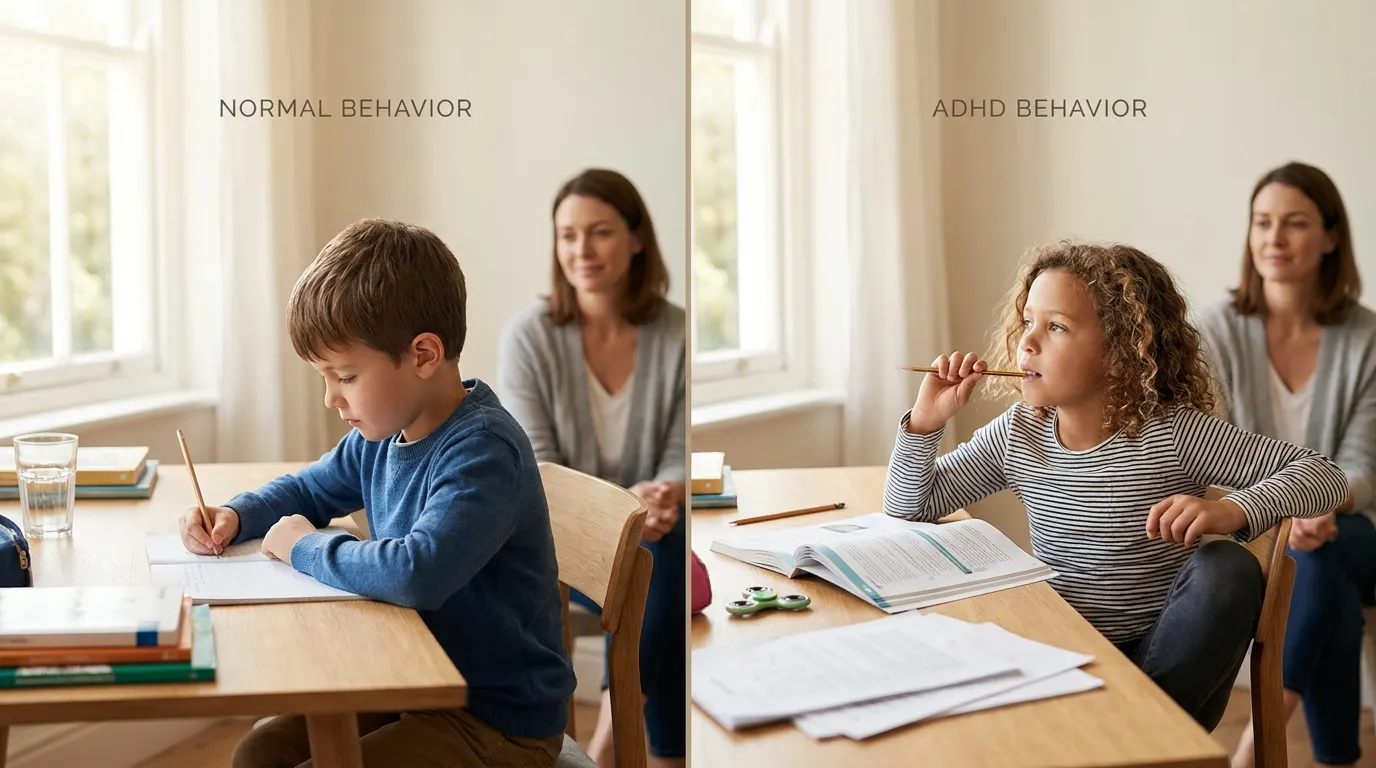
One of the most common concerns parents have is whether a child’s behavior reflects ADHD or normal childhood energy, especially in younger children where activity, curiosity, and short attention spans are part of typical development.
The key difference is not a single behavior, but the pattern, intensity, and impact on daily functioning over time.
1. Energy and activity
All children can be active. A typically developing child may be energetic during play but is usually able to calm down during meals, bedtime, or structured activities. A child with ADHD often appears constantly driven and may find it difficult to slow down even in calm or routine situations.
2. Attention and focus
Short attention spans are normal in early childhood, particularly when tasks are less engaging. However, children can usually focus on activities they enjoy.
In ADHD, attention difficulties are more consistent and affect most activities, including enjoyable ones. Children may frequently switch tasks and struggle to complete what they start.
3. Impulsivity
Occasional impulsive behavior is part of normal development, especially in toddlers, and usually improves with age.
In ADHD, impulsivity is more frequent, harder to manage, and may involve actions that go beyond what is expected for the child’s age.
4. Listening and following instructions
It is normal for children to need reminders during play or transitions between activities.
In ADHD, listening difficulties are more persistent. The child may appear not to respond to direct instructions or may quickly forget multi-step directions even shortly after hearing them.
Not sure if it’s ADHD or normal behavior? Read: ➤ Is It ADHD or Normal 3-Year-Old Behavior? A Science-Backed Signs & Milestone Checklist
Quick Reference: Normal Childhood Behavior vs ADHD Behavior
| Behavior Area | Normal Child | ADHD Concern |
|---|---|---|
| Activity Level | Active during play but can settle during routines | Constant restlessness; appears “driven by a motor” |
| Focus | Loses interest in boring tasks but can focus on enjoyable activities | Persistent difficulty focusing across most activities |
| Impulsivity | Occasional; improves with age | Frequent, disruptive, sometimes risky behavior |
| Following Instructions | Follows directions with occasional reminders | Struggles with multi-step instructions or forgets quickly |
| Daily Impact | Minimal disruption to home or school life | Noticeable impact on school, home routines, and friendships |
ADHD Brain Development and Executive Function in Children
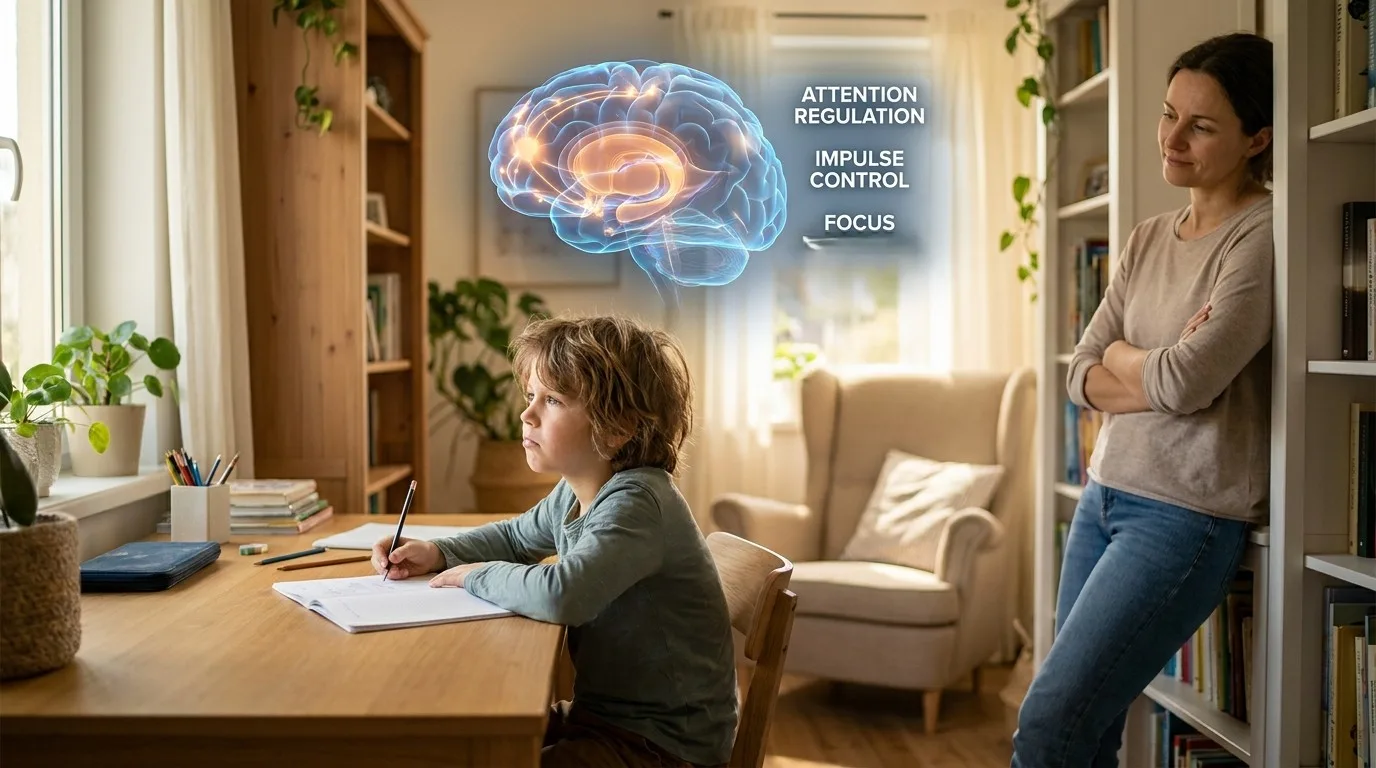
According to research indexed in the NCBI, children with ADHD may experience slower development of brain systems compared to typical age expectations.
One of the key regions involved is the prefrontal cortex, often called the brain’s control center. This region manages executive functions, the mental skills that help children:
- Focus and shift attention
- Control impulses before acting
- Manage emotions
- Plan and complete tasks
In many children with ADHD, this area develops on a different timeline. This does not mean the brain is damaged—it simply means it matures differently compared to other children of the same age.
Research suggests that children with ADHD may show a delay in executive function development of around 2–3 years, although this can vary from child to child.
What This Means in Daily Life
Because these brain functions are still developing, children may:
- Forget multi-step instructions quickly
- Get distracted midway through a task
- Need repeated reminders to start or finish activities
- Struggle to break work into smaller steps
- Underestimate how long tasks take
- Feel mentally stuck before beginning something difficult
These behaviors are not intentional or behavioral problems. They reflect ongoing development of executive function systems in the brain.
Why Some Children Focus Better on Interesting Activities
Many parents notice that children with ADHD can focus very well on games, videos, or activities they enjoy, but often struggle with homework or everyday tasks.
This happens because engaging activities increase dopamine, which helps activate attention pathways in the brain. Less stimulating tasks do not provide the same boost, making focus harder to sustain.
Why IQ Does Not Match Maturity
A common question parents ask: “My child is so smart, so why can’t they act their age?”
Children with ADHD follow the same developmental path as other children, but at a different pace. Full maturity still happens, though it may take a few years longer than expected for their age group.
This is why a child may be intellectually strong, such as reading early or solving math problems, yet still struggle with everyday responsibilities like remembering school items or following routines.
This gap between ability and daily functioning is what most confuses and worries parents.
Key Message:
ADHD in children is closely linked to brain development, not behavior choice. With time, structure, and the right support strategies, children can gradually improve attention, self-control, and emotional regulation.
Emotional Regulation & Behavior Issues in ADHD

Emotional regulation is one of the most commonly overlooked aspects of ADHD in children. Attention and activity levels are often the focus, but many parents find that emotional responses are equally challenging to manage.
According to research indexed in the NCBI, emotional dysregulation is commonly seen in children with ADHD. Many parents notice their child reacts more strongly or more quickly than other children in similar situations.
These reactions are not intentional. They are closely related to how the brain develops self-control and processes emotions.
1. Tantrums vs ADHD Meltdowns (Emotional Dysregulation)
All young children can have tantrums, especially when they are tired, hungry, or frustrated. However, emotional responses in ADHD are often different in pattern and intensity.
- Typical Tantrum (Goal-Driven Behavior): Usually triggered when a child wants something (for example, a toy or extra screen time). The behavior is goal-oriented, and it often reduces once the need is met or attention shifts.
- ADHD Meltdown (Emotional Dysregulation): More often triggered by overwhelm, frustration, sensory overload, or sudden changes in routine. The reaction may appear sudden, intense, and difficult to calm even after the trigger is removed.
2. Why Emotions Feel Too Big
In ADHD, the brain systems responsible for emotional control are still developing. As a result, feelings such as anger, excitement, or disappointment can feel overwhelming for the child.
For example, a small event like losing a toy or making a mistake in homework may lead to a strong emotional reaction that seems out of proportion to the situation.
The child is not being deliberately difficult—they are struggling to manage intense emotions in real time.
3. Impulsivity and Low Frustration Tolerance
Another important feature of ADHD in children is impulsivity combined with low frustration tolerance. This means children may react quickly and struggle to cope when things do not go as expected.
You may notice:
- Quick frustration and giving up easily when tasks feel difficult
- Strong emotional reactions to small setbacks
- Interrupting conversations or activities without waiting
- Difficulty waiting their turn in games or group settings
These behaviors are not intentional. They reflect difficulties in impulse control and emotional regulation, which are core aspects of ADHD brain development.
Key Message:
Children with ADHD are not being “difficult on purpose.” Their brain is still learning how to pause, process emotions, and respond calmly. With consistent support, clear structure, and patience, these skills gradually improve over time.
ADHD Sleep Issues in Children
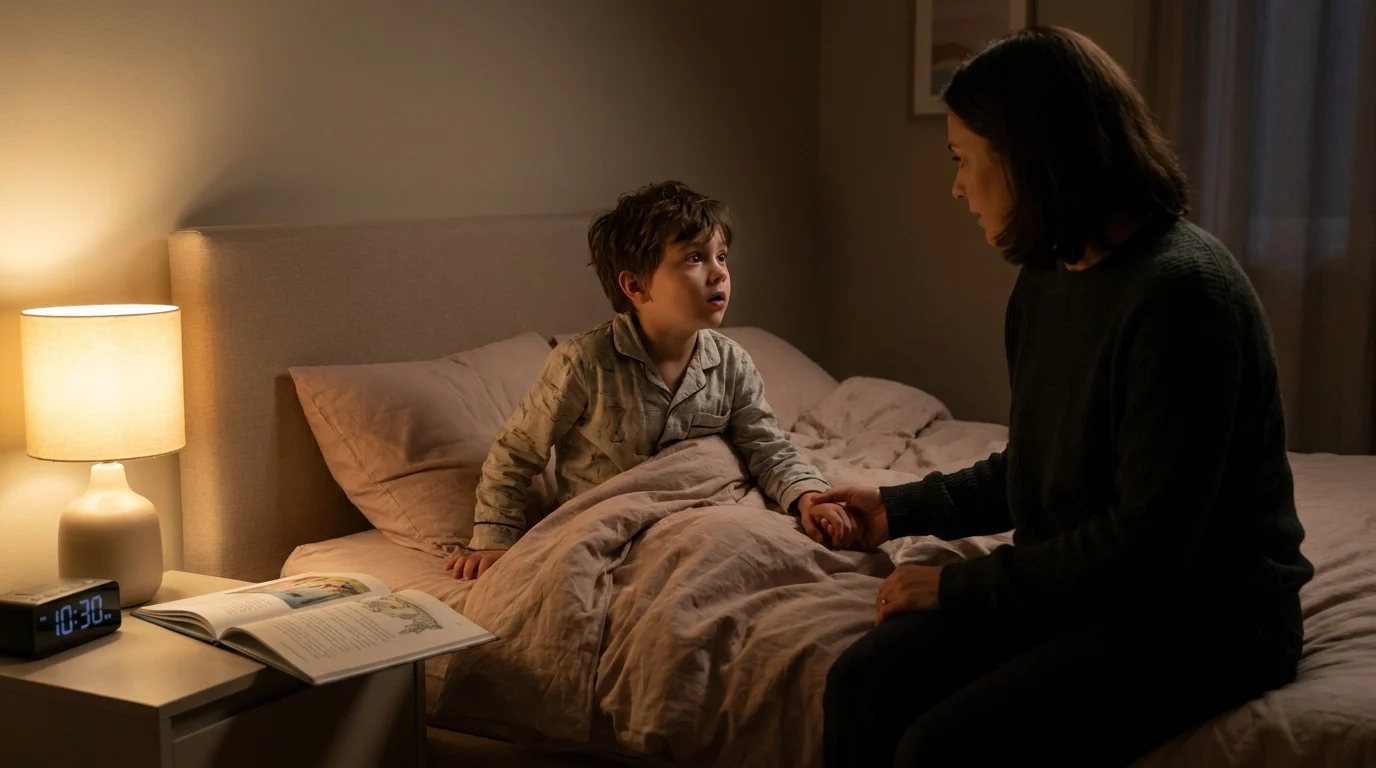 Sleep problems are common in children with ADHD and can affect behavior, attention, and emotional control during the day.
Many parents notice that even after a full night’s sleep, their child still appears tired, restless, or emotionally sensitive in the morning.
According to research indexed in the NCBI, children with ADHD have a higher rate of sleep disturbances compared to typically developing children, which can further impact attention and behavior during the day.
1. Why Sleep Problems Happen in ADHD
Children with ADHD often release melatonin later than other kids, which means the body takes longer to recognize that it is time to sleep. This makes it hard to wind down at night. Thoughts stay busy, the body stays restless, and for many families, bedtime becomes one of the hardest parts of the day.
Common sleep problems include:
- Difficulty falling asleep even when tired
- Restlessness or frequent movement in bed
- Resistance to bedtime routines
- Waking multiple times during the night
This is not a habit problem. The causes are biological. Racing thoughts and difficulty settling down make it worse.
Some children also have a delayed sleep cycle. They feel most alert late at night and struggle to wake up in the morning. This is not laziness. It is how their brain is wired.
2. How Poor Sleep Affects Behavior
When sleep is not adequate or restful, ADHD symptoms often become more noticeable during the day.
Parents may observe:
- Increased restlessness and hyperactivity
- More frequent emotional outbursts
- Difficulty focusing in school or during homework
- Lower frustration tolerance
- Irritability, especially in the morning
In many cases, poor sleep and behavioral challenges create a cycle—each one making the other more difficult to manage.
3. Bedtime Challenges in Children with ADHD
For many families, bedtime is the hardest part of the day. Common difficulties include:
- Resistance to going to bed
- Delaying sleep with repeated requests or questions
- Difficulty staying in bed after lights are off
- Dependence on screens or stimulation before sleep
These behaviors are usually not defiance. They are often related to difficulty with transitions, self-regulation, and winding down after a stimulating day.
4. Practical Ways to Improve Sleep
Simple and consistent routines can significantly improve sleep quality over time:
- Maintain a fixed bedtime and wake-up schedule, even on weekends
- Limit screen exposure at least 1 hour before bedtime
- Establish a calm and predictable bedtime routine (bath, reading, quiet time)
- Keep the sleep environment quiet, dim, and comfortable
- Avoid highly stimulating activities close to bedtime
A consistent routine matters more than a perfect one. Over time, the brain begins to associate these cues with sleep.
Key Message:
ADHD in children often affects both sleep and daytime behavior. Improving sleep quality is often one of the first and most effective steps in helping children show better focus, improved mood, and reduced behavioral difficulties during the day.
Why Children with ADHD May Act Younger Than Their Age
Many parents notice that a child with ADHD may seem emotionally younger than peers, even when they are intellectually capable or advanced.
This happens because executive function and emotional regulation systems in the brain develop more slowly in ADHD compared to typical developmental timelines.
A child may understand academic concepts well but still struggle with patience, self-control, organization, and managing emotions. This gap between ability and daily behavior is often what creates confusion for parents.
To understand this better, read: ➤ Why Children with ADHD May Act Younger Than Their Age: Understanding Brain Maturity Delays
With structured routines, step-by-step guidance, and consistent expectations, children can gradually improve planning, organization, and task completion skills over time.
The Catch-Up Myth: Is This Delay Permanent?
Many parents worry whether their child will always be “behind.” The short answer is no.
Although ADHD is a neurodevelopmental condition that can continue into adulthood, the developmental gap in attention, impulse control, and executive function often reflects a delay in brain maturation rather than a permanent limitation.
ADHD is not a broken brain. It is a brain that develops along a different timeline.
Brain processes such as myelination (which improves signal speed between brain cells) and synaptic pruning (which strengthens important connections and removes weaker ones) may follow a slightly different pattern in children with ADHD.
Research indexed in NCBI suggests that brain maturation, especially in regions responsible for executive function, may continue into the mid-to-late twenties.
Many individuals show gradual improvement in attention, organization, and self-regulation over time, although some traits such as distractibility may persist to varying degrees.
Why Are Transitions So Hard for Kids with ADHD?
Many children with ADHD struggle to switch from one activity to another. Stopping playtime for homework or moving from screens to bedtime can feel genuinely disruptive for them.
The reason is neurological. Executive function skills responsible for flexibility, attention shifting, and task switching develop more slowly in children with ADHD.
How it may appear
Children may:
- Get upset when asked to stop an activity
- Delay or refuse starting the next task
- Need repeated reminders before shifting
- React strongly to changes in routine
These are not signs of defiance. They reflect difficulty in shifting attention and adjusting to change.
Why it matters
Transition difficulties can affect the entire day including mornings, school routines, and bedtime.
Predictable structure and advance warnings such as “five more minutes, then we stop” can make transitions significantly easier for most children.
Struggle with transitions between activities? Read more in: ➤ ADHD Transition Difficulties in Kids: Why Routines are Challenging & 5 Strategies to Help
When Should Parents Be Concerned?
Young children are naturally active, emotional, and easily distracted. That is normal. The question is whether what you are seeing is typical development or something that keeps creating real problems across different areas of life.
Concern makes sense when behaviors are not occasional but consistent, intense, and disruptive — at home, at school, and in social situations.
1. What Clinicians Look For
Before considering an ADHD diagnosis, healthcare professionals look for a pattern that is persistent, age-inappropriate, and present across more than one setting.
a. Duration of Symptoms
Symptoms are typically present for at least 6 months and are not explained by a recent life change, stress, or a new environment.
b. Pervasiveness Across Settings
Symptoms must appear across multiple settings. According to the AAP, behaviors present in only one setting are not sufficient to support a diagnosis.
c. Functional Impact on Daily Life
Behaviors become clinically significant when they affect:
- Learning and academic progress
- Friendships and social interactions
- Daily routines like sleep, meals, and homework
- Overall emotional wellbeing
2. ADHD Red Flags Parents Should Watch For
Seek professional advice if you consistently notice:
- Safety concerns: Impulsive behaviors that put the child at risk, such as running into roads or unsafe climbing, despite repeated correction.
- School difficulties: Teacher reports of ongoing focus problems, incomplete work, or classroom disruption affecting academic progress.
- Social challenges: Difficulty making or keeping friends due to impulsivity, interrupting, or not following group rules.
- Low self-esteem: Negative self-talk such as “I am bad” or “I cannot do anything right,” often due to repeated corrections or struggles.
- Family stress: Daily routines like mornings, homework, or bedtime becoming consistently overwhelming for the entire family.
If these patterns are frequent and affecting your child across multiple areas of life, early assessment is worth pursuing. Waiting rarely helps.
What Parents Should Do If They Notice These Signs
If these concerns are consistently present, do not wait. Early support makes a real difference in a child’s learning, behavior, and emotional development.
Step 1: Start With a Pediatric Evaluation
The first step is a visit to a pediatrician or primary care doctor. They will review the child’s developmental history, assess behavior patterns across settings, and determine whether further evaluation is needed.
This visit also helps rule out other conditions that can look like ADHD, such as sleep difficulties, vision or hearing problems, emotional stress, or learning difficulties.
Step 2: Specialist Referral If Needed
If concerns continue after the initial evaluation, the doctor may refer the child to a specialist such as
- Child psychologist
- Developmental pediatrician
- Behavioral or neurodevelopmental specialist
These professionals carry out a more detailed assessment across different environments before making any conclusions.
Step 3: Begin Support Early
A diagnosis is not required to start helping a child. Behavioral strategies, structured routines, and school accommodations can all be introduced early and adjusted as more information becomes available.
Key Message:
Seeking an evaluation is not about labeling a child. It is about understanding how their brain works so the right support can be put in place early.
Treatment Options for ADHD in Children
ADHD treatment focuses on improving daily functioning, behavior, and emotional regulation, not changing a child’s personality. The most effective approach is usually a combination of strategies tailored to the child’s age, symptoms, and environment.
1. Behavioral Therapy (First-Line Support)
Behavioral therapy is often the first recommended treatment, especially for younger children. It focuses on teaching practical skills such as:
- Improving attention and task completion
- Managing impulses
- Handling frustration and emotions
- Developing better social interactions
Children build these skills gradually through consistent practice and structured support.
2. Parent Management Training (Supporting the Family)
ADHD affects the entire family. Parent training programs help caregivers learn clear, structured techniques to guide behavior, reduce conflict, and improve daily routines.
These may include:
- Giving simple, step-by-step instructions
- Using positive reinforcement
- Creating predictable routines at home
When parents apply consistent strategies, children respond more effectively over time.
3. School Support and Accommodations
Children spend most of their day in school, making classroom support essential. Simple adjustments can significantly improve focus and performance:
- Preferential seating away from distractions
- Shorter, structured tasks
- Extra time for assignments or tests
- Movement breaks during long activities
Collaboration between parents and teachers helps maintain consistent support across settings.
4. Medication (When Needed)
In some children, doctors may recommend medication to help improve attention and reduce hyperactivity and impulsivity. Both stimulant and non-stimulant options are available, and the choice depends on the child’s specific needs and medical history.
Medication is always prescribed and monitored by a qualified doctor. It is not required for every child and works best alongside behavioral strategies.
Key Message:
There is no single cure for ADHD. The right combination of strategies can significantly improve a child’s behavior, learning, and emotional wellbeing.
Practical Home Based ADHD Strategies to Improve Focus and Behavior in Children
 Starting support at home does not require a diagnosis or a specialist. Consistent, simple strategies can improve focus, behavior, and daily routines in children with ADHD.
1. Use Visual Support Instead of Only Verbal Instructions
Children with ADHD often struggle to retain long verbal instructions and may not naturally sense time passing.
Try this:
- A simple visual checklist for morning or bedtime routines
- A sand timer or visual clock for homework or screen time
- Showing rather than only telling
2. Follow the One-Step Rule
Multiple instructions at once can overwhelm a child with ADHD.
Instead:
- Give one clear instruction at a time
- Make eye contact before speaking
- Wait for completion before giving the next step
For example: “Put your shoes on.” Then once done: “Now get your bag.”
3. Use “Body Doubling” for Difficult Tasks
Starting a task is often harder than completing it. Many children with ADHD find it easier to begin when someone is nearby.
Try this:
- Sit near your child while they start homework or a chore
- Do a quiet parallel activity like folding clothes
- Offer presence without pressure or constant instruction
4. Focus on Positive Reinforcement
Children with ADHD tend to receive more correction than praise. Over time this affects motivation and self-image.
Try this:
- Praise specific actions immediately after they happen
- Be descriptive: “You started your homework without being asked”
- Reinforce effort, not just results
5. Try Home based Activities
These activities support attention, emotional regulation, and behavior when used regularly:
- Heavy work: Carrying light objects, pushing or pulling tasks
- Movement: Jumping, balancing, simple yoga
- Sensory play: Water, clay, sand, or texture activities
- Transition tools: Visual timers and First/Then boards
- Visual schedules: Step by step daily routine charts
- Regulation games: Turn taking games, Simon Says
- Environment: Reducing clutter and distractions at home
For more structured early intervention ideas, see: ➤ 7 ADHD Toddler Activities and Routines for Early Signs
6. Work Closely With the School
Home strategies work best when the school is aligned.
Helpful steps:
- Keep regular contact with teachers
- Discuss seating arrangements that reduce distraction
- Explore IEP or 504 accommodations where applicable
- Request structured support like extra time or simplified instructions
Related ADHD Conditions, Nutritional Deficiencies, and Tests
ADHD in toddlers often overlaps with other conditions and nutritional factors. These guides cover what parents commonly ask about next:
- ADHD vs Iron Deficiency in Children: Best for understanding how low iron can mimic ADHD symptoms
- Magnesium for ADHD in Children: Role of magnesium in focus, sleep, and behavior regulation
- ADHD vs Thyroid Problems in Children: How thyroid imbalance can affect attention and mood
- Zinc and ADHD in Children: Does It Really Help With Focus and Hyperactivity?
- Blood Tests for ADHD in Children: What tests doctors may consider in ADHD evaluation
Conclusion: Supporting a Child with ADHD
ADHD is not a discipline problem, and it is not a reflection of parenting. It reflects how a child’s brain processes attention, behavior, and emotion.
The struggles are real, consistent, and often mistaken for defiance or laziness. Children are not choosing these difficulties. They are still developing skills that take more time, structure, and support to build.
With early awareness and the right approach, children with ADHD can improve attention, build emotional control, develop stronger routines, and gain confidence at school and in friendships.
Progress rarely happens quickly. But with consistent support, most children improve in ways that matter. Starting early makes that process easier for the child and for the family.
FAQ: Common Questions from Parents
Q1. Can ADHD be cured?
While ADHD cannot be cured, it is a highly manageable neurodevelopmental condition. With the right combination of behavioral therapy, school accommodations, and targeted medical support, children can manage symptoms effectively.
Q2. Is ADHD genetic?
Yes, ADHD has a strong genetic component and frequently runs in families. Research shows that if a parent or sibling has ADHD, a child has a significantly higher biological likelihood of also presenting with the condition.
Q3. Can screen time worsen ADHD?
While screen time does not cause ADHD, excessive use can exacerbate attention difficulties, increase impulsivity, and disrupt crucial sleep patterns. Setting healthy digital boundaries is recommended to support healthy attention and sleep patterns.
Q4. Can ADHD be confused with normal behavior?
Yes. Many behaviors like high energy, short attention span, or occasional impulsivity are normal in childhood. The key difference in ADHD is that these behaviors are more frequent, persistent, and affect daily functioning at home and school. They also occur across multiple settings, not just in certain situations.
Q5. How early can ADHD be diagnosed?
ADHD symptoms can be noticed as early as preschool age (around 3–5 years), but formal diagnosis is usually more reliable after age 5–6, when school structure makes attention and behavior patterns clearer. A specialist evaluates symptoms over time and across different environments before confirming diagnosis.
Q6. Does ADHD get worse without treatment?
ADHD does not necessarily “get worse,” but untreated symptoms can become more challenging over time as academic, social, and behavioral demands increase. Early support helps children develop coping strategies, improve focus, and reduce long-term difficulties in school and daily life.
Q7. Can children with ADHD succeed in school?
Yes. Children with ADHD can perform well in school with the right support. Structured routines, classroom accommodations, behavioral strategies, and parental involvement can significantly improve learning, focus, and confidence. Many children with ADHD perform very well when their learning environment is adapted to their needs.
Q8. Can ADHD affect sleep in children?
Yes. Sleep problems are common in children with ADHD. Many children find it difficult to fall asleep, stay asleep, or maintain a consistent bedtime routine. Poor sleep can worsen attention, emotional regulation, and behavior during the day. A pediatrician can help identify whether sleep difficulties are related to ADHD or another underlying cause.
References
📚 View Scientific References
- Centers for Disease Control and Prevention (CDC). ADHD Overview. Available at: https://www.cdc.gov/adhd/
- CDC. Symptoms of ADHD. Available at: https://www.cdc.gov/adhd/signs-symptoms/
- PubMed (PMID: 39101832). Peer-reviewed ADHD clinical research. Available at: https://pubmed.ncbi.nlm.nih.gov/39101832/
- Hoogman M, et al. ENIGMA ADHD Brain Structure Study. Available at: https://pmc.ncbi.nlm.nih.gov/articles/PMC5933934/
- Thomas R, et al. ADHD Prevalence Meta-Analysis.Available at: https://pmc.ncbi.nlm.nih.gov/articles/PMC5110580/
- Liang S, et al. Sleep Problems in Children with ADHD. Available at: https://pmc.ncbi.nlm.nih.gov/articles/PMC12935720/
- National Institute of Mental Health (NIMH). Brain Development in ADHD. Available at: https://www.nimh.nih.gov
- American Academy of Pediatrics (AAP). ADHD Clinical Practice Guideline. Available at: https://publications.aap.org
