
Written by: MediHealth PRO Editorial Team
Reviewed by: Dr. Amit Pande, PhD
Molecular Biologist & Clinical Research Expert | Independent Scientific Reviewer, MediHealth PRO
Many parents think sugar makes children too active.
After a birthday party or festival, when kids eat sweets, people often say, “Look, they are running around because of sugar!”
Does sugar really make kids hyper? It is a question parents have asked for decades. Some studies suggest sugar might influence children’s behavior, while many others find no direct link at all.
This has left families wondering about the real connection between sugar and hyperactivity in children.
Why Parents Believe in the Sugar Rush Myth
The idea that sugar causes hyperactivity became popular in the 1970s after Dr. Ben Feingold introduced the “Feingold Diet.”
His theory suggested that certain food additives, artificial colors, and chemicals could contribute to behavioral problems in children.
Despite limited scientific evidence, the theory became popular among parents looking for explanations for difficult behavior. Over time, sugar became linked to these concerns.
Several factors helped keep the belief alive.
1. Expectation Bias
When parents expect sugar to affect behavior, they are more likely to notice energetic or impulsive behavior after sweets.
Parents who believe sugar causes hyperactivity often report behavior changes even when children consume a sugar-free substitute.
2. Pop Culture Influence
The idea of a “sugar high” became common in movies, television, and advertising, spreading through parenting stories and personal observations rather than clinical evidence.
3. The Party Effect
Children usually eat sweets during birthdays, holidays, and celebrations, environments that are naturally exciting and socially stimulating.
These situations increase adrenaline and dopamine levels, making children appear more energetic or overexcited. In most cases, they are reacting to the event itself, not the sugar.
| Factor | What Parents See | What’s Actually Happening |
|---|---|---|
| Expectation Bias | Child seems hyper after sweets | Parents notice what they expect to see |
| Pop Culture Influence | “Sugar rush” treated as fact | Belief spread through stories, not science |
| The Party Effect | Kids hyper at celebrations | Adrenaline and dopamine from excitement |
What Research Shows About Sugar and Hyperactivity
Research on sugar and hyperactivity in children has produced mixed findings over the years. However, most high-quality clinical studies have not found a direct link between sugar intake and hyperactive behavior.
Studies That Found Associations
A landmark 1994 study published in the New England Journal of Medicine found no meaningful differences in behavior or cognitive performance between children who consumed sugar and those given a sugar-free substitute.1
A 2019 study also found that sugar intake did not increase the risk of ADHD symptoms in children ages 6 to 11.2
Current systematic reviews have not found a clear cause-and-effect relationship between sugar intake and hyperactivity in children.
Evidence Against a Direct Link
Some observational research has reported links between high sugar intake and behavioral symptoms.
- A 2019 review found that diets high in refined sugar and saturated fat were associated with a greater likelihood of ADHD-like symptoms.3
- A 2020 meta-analysis reported an association between higher sugar intake, especially sugar-sweetened beverages, and ADHD-related behaviors.4
- A 2023 study found that children who frequently consumed sugar-sweetened beverages were more likely to show hyperactivity symptoms.5
These studies show associations, not proof that sugar directly causes hyperactivity or ADHD.
Summary:
Sugar does not directly cause hyperactivity in children. When studies do find links, other factors are likely involved, including overall diet quality, sleep, lifestyle habits, and stimulating environments.
Most experts now view the sugar rush as a product of context and expectation rather than biology.
How Sugar Can Affect Children’s Behavior
Although sugar does not cause ADHD, some children may seem more energetic or impulsive after consuming large amounts of sugary foods or drinks.
1. Blood Sugar Spikes and Crashes
When a child eats refined sweets, blood glucose rises quickly. The body responds by releasing insulin, which lowers blood sugar levels again.
This rapid rise and fall can temporarily affect mood, energy, attention, and irritability in some children.
Parents often interpret this short-term “spike and crash” as a sugar rush, even though the effect is temporary and not the same as true hyperactivity or ADHD.
2. The Dopamine Connection
Sugary foods activate the brain’s reward system and can briefly increase dopamine activity, which may temporarily affect mood, excitement, or impulsive behavior in some children.
For children who already have ADHD, these short-term changes may make existing symptoms appear more noticeable.
However, sugar does not cause ADHD or create long-term hyperactive behavior.
3. Other Causes of Hyperactivity (Beyond Sugar)
Sugar is rarely the main cause of hyperactive behavior. Several other factors often play a larger role.
- Sleep deprivation: Tired children may appear unusually energetic or impulsive because the body releases stress hormones to stay alert.
- Artificial additives: Some studies suggest certain food dyes and preservatives may affect behavior in sensitive children more than sugar itself.
- Sensory overload: Loud environments, crowded events, and disrupted routines can increase adrenaline and emotional overstimulation.
- Nutritional deficiencies: Diets high in processed foods may lack nutrients such as iron, which are important for attention and brain regulation. Learn more about ADHD vs. Iron Deficiency in Kids
- Underlying conditions: Sleep disorders, anxiety, thyroid problems, and ADHD can sometimes be mistaken for sugar-related hyperactivity. See our guide on ADHD vs. Thyroid Conditions in Children
Related reading: Some children with ongoing restlessness or impulsive behavior may have underlying ADHD rather than temporary sugar-related excitement. Learn more in our guide: ADHD in Children (Ages 2–12): Early Signs, Brain Development, Sleep Issues & Treatment.
Sugar Rush in Kids: Myth vs. Science-Backed Facts
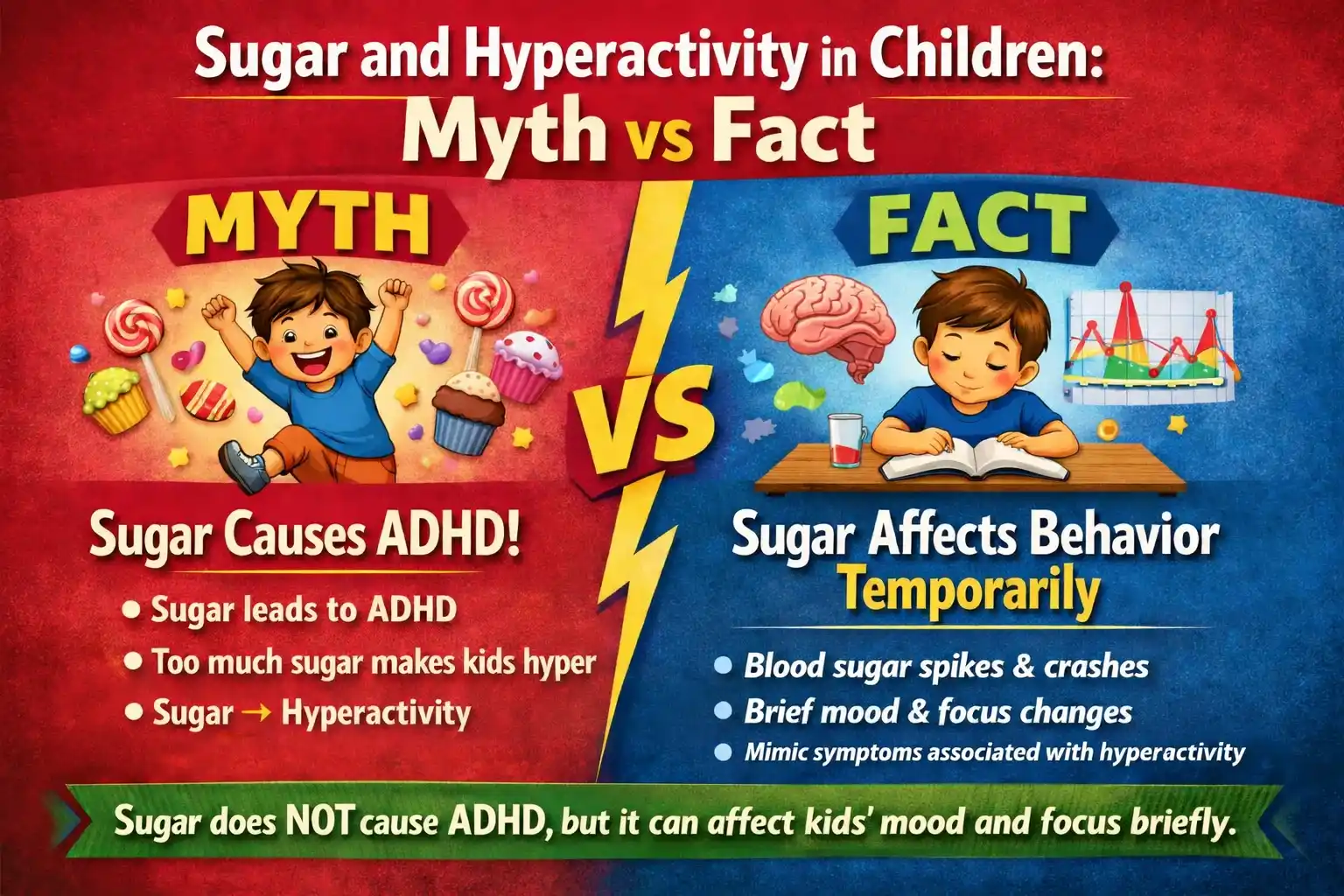
Myth #1: Sugar causes an immediate sugar rush.
The Fact: That burst of energy is usually linked more to excitement than to sugar itself. Most high-sugar moments happen at birthday parties, festivals, or celebrations where children are surrounded by friends, games, noise, and stimulation. These exciting environments can increase adrenaline and emotional excitement, making children appear more energetic or overactive.
Myth #2: Sugar causes ADHD.
The Fact: ADHD is a neurological condition. While a 2023 study suggests that sugary drinks can make ADHD symptoms like impulsivity more noticeable, sugar does not create the disorder. Sugar may affect how symptoms appear, but it is not the cause.
Myth #3: Parents can always see sugar’s effect.
The Fact: This is often expectation bias. In a well-known study, parents were told their children had been given sugar when they had actually received a sugar-free substitute. The parents still reported their children were significantly more hyperactive. Parents tend to notice the behavior they are already expecting.
Myth #4: Sugar is a brain toxin.
The Fact: Glucose is actually the primary fuel for the brain. While refined white sugar lacks nutrients, the glucose found in fruit and carbohydrates is essential for a child’s focus and cognitive development. The issue is the source and amount, not the sugar itself.
Myth #5: The crash proves sugar was the problem
The Fact: The meltdown at the end of a party is usually sensory overload. After hours of high stimulation, loud noises, and skipped naps, a child’s nervous system is exhausted. They are not crashing from sugar alone. They are crashing from the entire event.
Long-Term Health Effects of Too Much Sugar in Children
Eating too much sugar does not only affect a child’s energy in the moment. It can have lasting impacts on their health and development.
- Weight Gain and Obesity: Extra sugar adds calories without nutrients. Over time, this can lead to unhealthy weight gain and increase the risk of childhood obesity.
- Insulin Resistance and Diabetes Risk: Frequent spikes in blood sugar force the body to release more insulin. Over years, this can make cells less responsive, raising the risk of type 2 diabetes.
- Dental Problems: Sugary foods and drinks feed bacteria in the mouth, leading to cavities and tooth decay.
- Mood and Behavior Swings: Constant sugar highs and crashes can make children more irritable, anxious, or unfocused.
- Nutritional Deficiencies: Diets high in sugar often push out healthier foods. This means children may miss out on key nutrients like omega-3s, zinc, and magnesium, which are vital for brain growth and focus.
- Heart Health Concerns: High sugar intake is linked to higher cholesterol and blood pressure, which can set the stage for heart problems later in life.
How to Reduce Sugar Without Banning Treatss
You do not have to ban birthday cake. Instead, focus on balance and timing to keep blood sugar stable.
- Pair Sugar with Protein or Fiber: If your child is having a sweet treat, pair it with nuts, cheese, or fruit. Protein and fiber slow down sugar absorption and prevent the spike and crash.
- Choose Whole Sweets: Naturally sweet foods like berries or yogurt with honey provide nutrients alongside glucose.
- Watch the Liquid Sugar: Sodas and fruit juices reach the bloodstream much faster than solid food. Encourage water or milk as the main drink at parties.
- Check Labels for Dyes: If you suspect your child is sensitive, choose treats that use natural colorants like beet juice or turmeric instead of synthetic dyes.
- Set a Cool Down Routine: After a high-energy event, transition to a quiet activity like reading or a warm bath to help the nervous system settle.
The Takeaway
Sugar and hyperactivity in children are often linked together, but current research does not support sugar as a direct cause of hyperactive behavior or ADHD.
What many parents describe as a “sugar rush” is usually influenced more by excitement, stimulating environments, poor sleep, or high-energy events than by sugar itself.
That does not mean sugar is harmless. Diets high in sugary drinks and processed foods can still affect a child’s overall health, mood, sleep, and energy regulation over time.
Instead of banning treats completely, focus on balance. Pair sweets with protein or fiber, limit sugary drinks, and help children settle down after overstimulating events with quiet routines and good sleep.
If your child’s restlessness, impulsivity, or focus problems continue outside parties and celebrations, it may be worth discussing other possible causes with a healthcare professional.
Frequently Asked Questions
Q1. Does sugar cause ADHD in children?
No. ADHD is a neurodevelopmental disorder and sugar does not cause it. However, diets high in sugar may make existing ADHD symptoms harder to manage in some children.
Q2. Why do kids seem hyper after eating sweets?
Children often eat sweets during parties, holidays, or exciting events. The extra energy is usually linked to excitement, stimulation, and expectation rather than sugar itself.
Q3. How can parents reduce sugar without banning treats?
Parents can reduce sugar by pairing sweets with protein or fiber and limiting sugary drinks. Offering treats with meals instead of as standalone snacks may also help reduce blood sugar spikes.
Q4. Is fruit sugar different from refined sugar?
Fruit contains natural sugar along with fiber, vitamins, and water. The fiber slows sugar absorption, making fruit affect blood sugar differently from refined sugar.
Q5. Can some children be more sensitive to sugar?
Some children may react differently to large amounts of sugar, especially when combined with poor sleep, excitement, or highly stimulating environments. However, sugar sensitivity does not mean sugar causes ADHD.
Q6. Why do people with ADHD crave sugar?
Some people with ADHD may crave sugary foods because they temporarily activate the brain’s reward system. However, the effect is short-lived and may be followed by energy crashes or cravings.
References
📚 Click to view references
- Wolraich ML, et al. Effects of diets high in sucrose or aspartame on the behavior and cognitive performance of children. N Engl J Med. 1994. [View Source]
- Del-Ponte B, et al. Sugar consumption and attention-deficit/hyperactivity disorder (ADHD): A birth cohort study. J Affect Disord. 2019. [View Source]
- Del-Ponte B, et al. Dietary patterns and ADHD: A systematic review and meta-analysis. J Affect Disord. 2019. [View Source]
- Farsad-Naeimi A, et al. Sugar consumption, sugar sweetened beverages and ADHD: A systematic review. Complement Ther Med. 2020. [View Source]
- Zhang Y, et al. Association between Hyperactivity and SSB Consumption in Schoolchildren. Nutrients. 2023. [View Source]
- Yingchankul N, et al. Is Added Sugar Associated with ADHD Symptoms in Medical Students? Nutrients. 2023. [View Source]
- Mergenthaler P, et al. Sugar for the brain: the role of glucose in physiological and pathological brain function. Trends Neurosci. 2013. [View Source]
