
Written by: MediHealth PRO Editorial Team
Scientifically Reviewed by: Dr. Amit Pande, PhD
Molecular Biologist & Clinical Research Expert | Independent Scientific Reviewer, MediHealth PRO
Medically Reviewed by: Dr. Arghyadeep Marik, MD
Independent Medical Reviewer, MediHealth PRO
When parents think about diet and ADHD, the focus is often on foods to avoid rather than nutrients to add. Sugar and artificial food dyes tend to get the spotlight, while iron is frequently overlooked. Yet iron may be one of the most important nutrients in the best diet for ADHD kids.
Iron plays a key role in brain function, including the production of dopamine, a neurotransmitter involved in attention, motivation, and self-regulation. Research published in the Indian Journal of Psychiatry found a significant association between iron deficiency anaemia and ADHD in children. In that study, children with iron deficiency anaemia were 3.82 times more likely to be diagnosed with ADHD.1
This is one reason iron-rich foods deserve attention when planning a balanced diet for children with ADHD.
In this guide, we’ll explore five iron-rich foods for ADHD kids, the science behind the iron-dopamine connection, and when supplementation may be worth discussing with your child’s healthcare provider.
Quick Answer: What Is the Best Diet for ADHD Kids?
Iron-rich foods are an important part of the best diet for ADHD kids because iron helps support dopamine production and brain functions involved in attention, motivation, and self-regulation.
Iron-rich foods to consider:
- Lean red meat
- Eggs
- Lentils and beans
- Spinach and leafy greens
- Iron-fortified cereals
Diet alone can not treat ADHD, but adequate iron intake may support healthy brain function, particularly in children with iron deficiency.
Why Iron Matters for ADHD: The Dopamine Connection
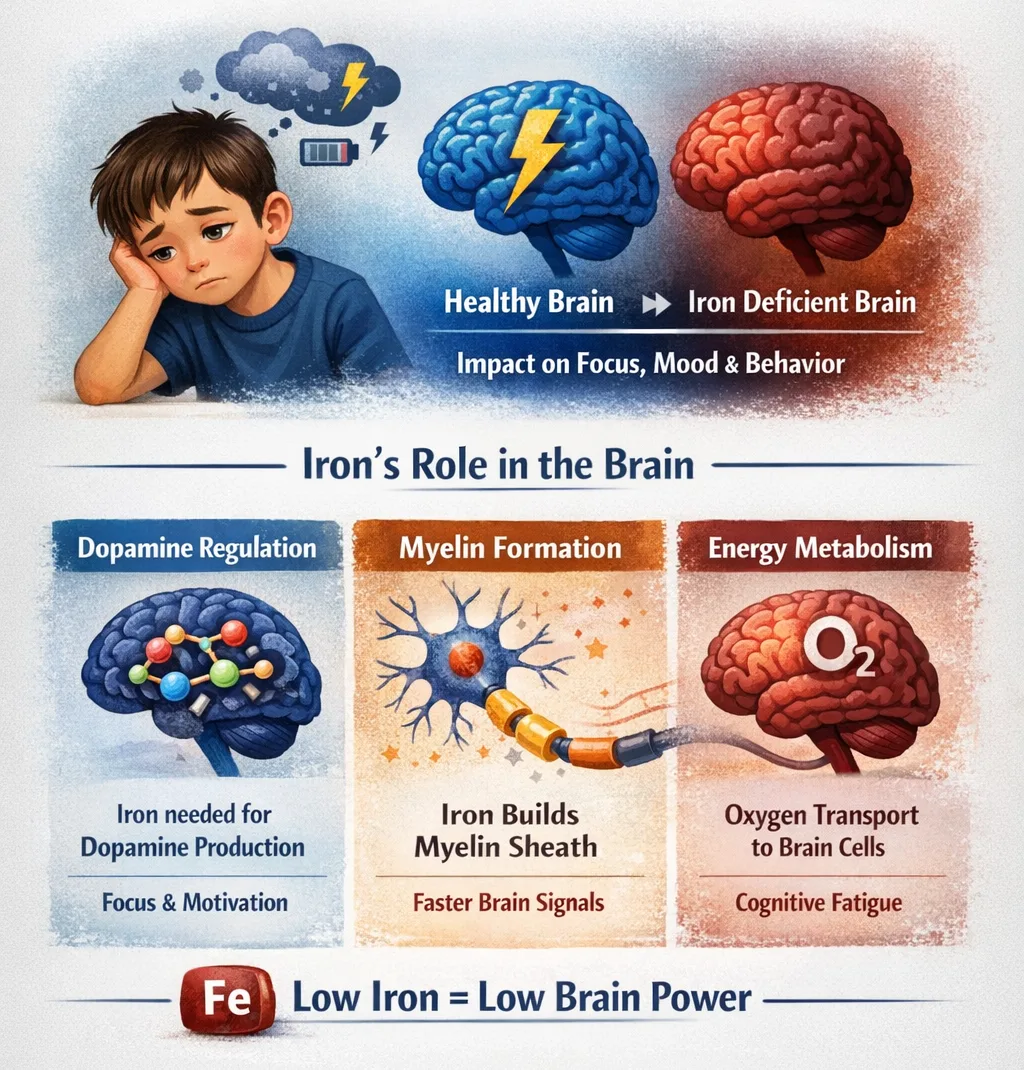
Most people associate iron with red blood cells. However, it also plays an important role in brain development and neurotransmitter function, making it particularly relevant for children with ADHD.
1. Iron Helps the Brain Produce Dopamine
Iron is required for the production of dopamine, a neurotransmitter involved in attention, motivation, reward processing, and self-regulation.2, 3
When iron levels are low, dopamine production may become less efficient, affecting a child’s ability to stay focused, control impulses, and complete tasks.
2. Iron Supports Myelin Formation
Iron helps build myelin, the protective coating around nerve fibres that allows brain signals to travel efficiently.4 Healthy myelin pathways are important for learning, memory, and attention.
3. Low Iron Levels Have Been Linked to ADHD Symptoms
Several studies have found that children with ADHD are more likely to have low ferritin levels, a marker of the body’s iron stores.5
While iron deficiency does not cause ADHD, inadequate iron levels may contribute to attention and behavioural difficulties in some children.
4. Iron Supports Other Functions Important for Children
- Energy Metabolism: Iron helps transport oxygen to brain cells and supports energy production. Low iron levels may contribute to mental fatigue, slower processing, and reduced attention.6
- Immune Strength: Adequate iron helps the body produce and activate immune cells to fight infections.7
- Growth & Development: Iron is essential for normal physical growth and cognitive development during childhood.8
- Sleep Quality: Low ferritin levels have been linked to sleep disturbances and Restless Legs Syndrome (RLS), both of which can affect attention and behaviour.9
Red Flags: Could Your Child Have Low Iron Levels?
Iron deficiency can sometimes mimic or worsen ADHD-related difficulties. While these signs do not confirm iron deficiency, they may be worth discussing with your child’s healthcare provider:
- Restless Sleep or Leg Discomfort: Frequent tossing and turning, difficulty settling at night, or complaints of uncomfortable legs.
- Persistent Fidgeting: Constant foot tapping, knee bouncing, or difficulty sitting still.
- Mental Fatigue: Seeming mentally drained, even after adequate sleep.
- Difficulty Following Instructions: Trouble keeping track of multi-step directions or completing tasks.
- Poor Concentration: Increased distractibility or reduced attention span.
- Mood Changes: Irritability, frustration, or noticeable fluctuations in mood and energy.
A simple blood test, including ferritin and a complete blood count (CBC), can help determine whether low iron levels may be contributing to symptoms.
5 Iron-Rich Foods for ADHD Kids
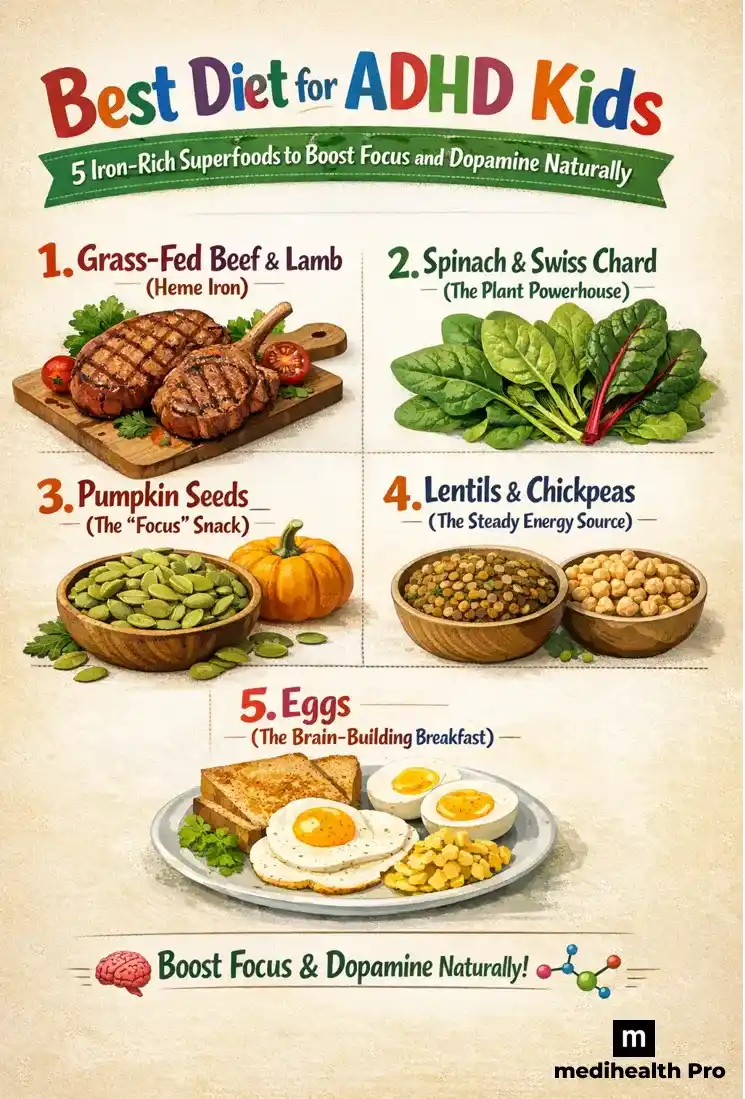
The best diet for ADHD kids starts with iron-rich whole foods.
Not all iron is absorbed equally. Heme iron from animal foods is absorbed more efficiently than non-heme iron from plant foods.
Pairing plant-based iron sources with vitamin C-rich foods can help improve absorption.
1. Lean Beef and Lamb
Lean beef and lamb are among the richest sources of heme iron, making them one of the most effective dietary options for increasing iron intake in children with ADHD.
Serve lean beef in child-friendly meals such as meatballs, stews, soups, or rice dishes.
2. Spinach and Leafy Greens
Spinach and other leafy greens provide iron, folate, and other nutrients important for brain health and cognitive development.
Serve leafy greens in child-friendly meals such as soups, stews, omelettes, or mixed into pasta and rice dishes.
3. Pumpkin Seeds
Pumpkin seeds provide plant-based iron and magnesium, both of which are involved in normal nervous system function.
Serve pumpkin seeds in yoghurt, oatmeal, smoothies, or sprinkled over soups and salads.
4. Lentils and Chickpeas
Lentils and chickpeas provide iron, fibre, and plant-based protein that can help support steady energy levels throughout the day.
Serve them in child-friendly meals such as soups, stews, curries, or mixed into pasta and rice dishes.
5. Eggs
Eggs contain iron, protein, and choline, a nutrient important for brain development and memory.
Serve eggs as omelettes, scrambled eggs, boiled eggs, or paired with fruit for a quick snack.
Related Posts: For a deeper look at ADHD nutrition beyond iron
Related ADHD Conditions, Nutritional Deficiencies, and Tests
ADHD symptoms and nutrition are influenced by multiple factors, including minerals and underlying deficiencies. Explore these related guides:
- Magnesium for ADHD in Children: Can This Mineral Calm Hyperactivity?
- ADHD vs Iron Deficiency in Children: 7 Hidden Signs to Avoid Misdiagnosis
- Zinc and ADHD in Children: Does It Really Help With Focus and Hyperactivity?
- Blood Tests for ADHD in Children: What Tests Doctors May Consider in ADHD Evaluation
7-Day Iron-Rich Indian Meal Plan for ADHD Kids
A balanced Indian diet can be an excellent source of iron and other nutrients important for growing children. This sample meal plan focuses on iron-rich foods and vitamin C-rich pairings to help maximize iron absorption throughout the day.
To support iron intake, dairy products are placed later in the day because calcium can reduce iron absorption when consumed with iron-rich meals.
| Day | Breakfast | Lunch | Evening Snack | Dinner | Bedtime |
|---|---|---|---|---|---|
| Day 1 | Vegetable omelette + orange slices | Rajma curry, brown rice, cucumber salad with lemon | Roasted pumpkin seeds + guava | Chicken curry with chapati and mixed vegetables | Milk |
| Day 2 | Iron-fortified cereal with fruit | Spinach dal, chapati, tomato salad | Roasted chickpeas + amla | Lean lamb stew with rice and vegetables | Yoghurt |
| Day 3 | Moong dal chilla with tomato chutney | Chole, brown rice, carrot salad with lemon | Pumpkin seeds and fresh fruit | Palak chana with chapati | Milk |
| Day 4 | Boiled eggs with whole-wheat toast and orange slices | Lentil curry, rice, lemon salad | Guava slices with roasted peanuts | Fish curry with vegetables and chapati | Curd |
| Day 5 | Vegetable poha with peanuts and lemon | Kidney bean curry, rice, cucumber salad | Roasted chickpeas + orange | Egg curry with chapati and mixed vegetables | Milk |
| Day 6 | Besan chilla with tomato chutney | Spinach and chickpea curry with rice | Pumpkin seeds and strawberries | Lean lamb curry with chapati | Yoghurt |
| Day 7 | Scrambled eggs with guava | Mixed dal, brown rice, vegetable salad with lemon | Roasted peanuts + orange | Chicken and vegetable stew with chapati | — |
Iron Supplements for ADHD Kids: What Parents Need to Know
Food should always be the first approach, but some children may not get enough iron from diet alone or may have confirmed iron deficiency. In these situations, a healthcare professional may recommend iron supplementation.
Types of Iron Supplements
Not all iron supplements are the same, and some may cause digestive side effects.
- Ferrous Sulfate: The most commonly prescribed and widely available form of iron.
- Iron Bisglycinate (Chelated Iron): Often better tolerated and may cause fewer gastrointestinal side effects in some children.
- Polysaccharide Iron Complex: Available in flavoured liquid forms and may be easier for children who have difficulty swallowing tablets.
Getting the Most From Iron Supplements
- Follow your healthcare provider’s instructions regarding timing and dosage.
- Iron is often taken with vitamin C-rich foods such as oranges, strawberries, or citrus juice, as vitamin C may help improve absorption.
- Avoid taking iron with calcium-rich foods or supplements when possible, as calcium can reduce iron absorption.
Possible Side Effects
Most children tolerate iron supplements well, but some may experience:
- Dark green or black stools
- Mild stomach upset
- Constipation
If side effects persist, a healthcare provider may adjust the dose or switch to a better-tolerated formulation.
Important: Iron supplements should only be used under medical supervision, as excessive iron intake can be harmful.
The 3 Golden Rules of Iron Absorption
Getting enough iron-rich foods is only part of the picture. How well the body absorbs iron depends largely on what those foods are paired with.
1. The Vitamin C Rule
Always pair iron-rich foods with vitamin C sources such as oranges, bell peppers, strawberries, or broccoli. Vitamin C helps improve the absorption of non-heme (plant-based) iron.
2. The Milk Gap Rule
Calcium can interfere with iron absorption. Try to keep a 2–3 hour gap between iron-rich meals and dairy products such as milk, curd, or cheese.
3. The Smart Timing Rule
Iron is best absorbed when meals are not combined with inhibitors such as calcium or tea. A balanced breakfast or lunch with iron-rich foods and vitamin C support can help improve overall iron intake during the day.
Ferritin vs Anaemia: The Hidden Iron Deficiency
Many parents assume that a normal haemoglobin test means iron levels are adequate, but iron deficiency and anaemia are not the same condition.
- Haemoglobin test: Detects anaemia but does not measure iron stores.
- Ferritin test: Measures stored iron in the body and reflects iron reserves.
A child can have normal haemoglobin but still have low ferritin. In some cases, this may indicate reduced iron stores even before anaemia develops.
Why Iron Testing Matters
Iron levels should not be assessed or treated based on symptoms alone. Blood testing helps guide safe and appropriate care.
- To ensure safety: Excess iron can be harmful, as it is stored in organs such as the liver.
- To guide treatment: Supplement dosage should be based on medical evaluation rather than guesswork.
- To monitor progress: Iron levels change gradually and may require follow-up testing to assess response.
Tracking Progress in Children
If dietary changes are made, improvements should be evaluated over time using both clinical and behavioural feedback.
Ferritin Testing
Ask your paediatrician whether a full iron panel, including ferritin, is appropriate. Some clinicians consider low ferritin levels potentially relevant in children with attention concerns, but interpretation should always be done in a medical context.
Daily Behaviour Patterns
Parents may notice gradual changes over several weeks, such as:
- Improved task completion with fewer reminders
- Reduced restlessness during focused activities
- Better consistency in attention during school hours
These observations should be considered supportive information, not a diagnostic tool.
Parent Note:
Both laboratory results and real-world behavioural patterns should be discussed with a healthcare professional to determine whether iron status may be affecting your child’s health.
The Takeaway
Iron is an important nutrient that is sometimes overlooked in children with ADHD. Low ferritin levels may be associated with changes in attention, sleep quality, learning capacity, and dopamine-related brain function, even when haemoglobin levels appear normal.
Including iron-rich foods such as lean meat, lentils, eggs, and leafy greens along with vitamin C-rich foods is a practical first step in supporting healthy iron intake. Improvements in iron stores typically take several weeks to months, so consistency is more important than short-term changes.
If iron deficiency is suspected, a full iron panel including ferritin may be worth discussing with a qualified paediatrician before making any changes to diet or supplementation.
If you want a deeper understanding of how ADHD typically presents in children across different ages, read this:ADHD in Children (Ages 2–12): Early Signs, Brain Development, Sleep Issues & Treatment
Frequently Asked Questions (FAQ)
Q1: Can I give my child an iron supplement for ADHD?
Iron supplements should only be used under medical supervision. A blood test, including ferritin levels, is usually recommended before starting supplementation, as both low and high iron levels can affect health.
Q2: How long does it take to see improvement with iron-rich foods?
Iron levels increase gradually. If dietary changes are needed, improvements are typically seen over several weeks to a few months with consistent intake.
Q3: Can a child have low iron even if they eat meat?
Yes. Iron absorption varies between children. Calcium-rich foods and certain compounds in grains and legumes may reduce absorption, while vitamin C-rich foods can help improve it.
Q4: Does iron play a role in attention and memory?
Iron is involved in normal brain function, including processes related to attention and memory. Low iron levels may be associated with fatigue, reduced focus, or slower cognitive processing in some children.
Q5: What are the best iron-rich foods for vegetarian ADHD kids?
Good vegetarian sources include lentils, chickpeas, beans, spinach, tofu, quinoa, seeds, and jaggery in moderation. Pairing these with vitamin C-rich foods may help improve iron absorption.
Q6: Can improving iron levels help sleep in children?
Low iron stores have been associated with sleep disturbances in some children. Improving iron status, when needed, may support healthier sleep patterns, which can indirectly benefit attention and behaviour.
Q7: Should I track diet and behaviour together?
Yes, tracking meals and behaviour patterns may help identify trends over time. However, any concerns should be discussed with a qualified healthcare professional rather than self-diagnosed.
References
📚 Click to view references
- Li Y, Wang H, Cai H, Lan S, Dai Y, Xu B, Su S, Zhang H, Yang Z, Chen Y. Brain iron deficiency in children with attention deficit hyperactivity disorder using iterative magnetic susceptibility source separation (APART-QSM). Quant Imaging Med Surg. 2025;15(7):5980-5990.
Available from: https://pmc.ncbi.nlm.nih.gov/articles/PMC12290788/
- Sonne J, Goyal A, Patel P. Dopamine. [Updated 2025]. In: StatPearls [Internet]. Treasure Island (FL): StatPearls Publishing. Available from: https://www.ncbi.nlm.nih.gov/books/NBK535451/
- Westbrook A, van den Bosch R, Määttä JI, Hofmans L, Papadopetraki D, Cools R, Frank MJ.
Dopamine promotes cognitive effort by biasing the benefits versus costs of cognitive work.
Science. 2020;367(6484):1362-1366. Available from: https://pubmed.ncbi.nlm.nih.gov/32193325/
- Connor JR, Menzies SL. Relationship of iron to oligodendrocytes and myelination. Glia. 1996;17(2):83-93. Available from: https://pubmed.ncbi.nlm.nih.gov/8776576/
- Araújo T, Rodrigues M, Campos D. Impact of Serum Ferritin on the Pathophysiology of Attention-Deficit/Hyperactivity Disorder: What Is the Evidence? Cureus. 2026 Feb 8;18(2):e103196. https://pmc.ncbi.nlm.nih.gov/articles/PMC12883236/
- Kim SL, Shin S, Yang SJ. Iron homeostasis and energy metabolism in obesity. Clin Nutr Res. 2022;11(4):316-330. Available from: https://pmc.ncbi.nlm.nih.gov/articles/PMC9633967/
- Bastiaanan M, et al. A delicate balance: Iron metabolism and diseases of the brain. Molecular Aspects of Medicine. 2020;75:100877. Available from: https://doi.org/10.1016/j.mam.2020.100877
- Lozoff B, et al. Iron deficiency and the developing brain. Blood Reviews. 2021;48:100784.
Available from: https://doi.org/10.1016/j.blre.2021.100784
- Alzaabi FM, Al Tarawneh DJ, Al Tarawneh YJ, Khan A, Khan MAM, Siddiqui TW, Siddiqui RW, Nishat SMH, Alzaabi AA, Siddiqui SW. Restless Legs and Iron Deficiency: Unraveling the Hidden Link and Unlocking Relief. Cureus. 2025;17(4):e82413. Available from: https://pmc.ncbi.nlm.nih.gov/articles/PMC12084866/
