

Written by: MediHealth PRO Editorial Team
Scientifically Reviewed by: Dr. Amit Pande, PhD
Molecular Biologist & Independent Scientific Reviewer
Key Takeaways
- The 24-month sleep regression is a temporary phase marked by bedtime resistance, night wakings, early waking, and nap changes as toddlers develop new skills.
- Rapid brain development, language growth, growing independence, and separation anxiety commonly contribute to sleep disruption around age 2.
- A consistent sleep schedule and calming bedtime routine can help toddlers return to more settled sleep.
- Most sleep disruptions improve within 2–6 weeks with patience and consistency.
- Seek pediatric advice if sleep problems continue beyond 6 weeks or include snoring, breathing pauses, excessive daytime sleepiness, or other health concerns.
Around 24 months, many toddlers who previously slept well begin resisting bedtime, waking during the night, or suddenly changing their nap patterns. This phase is often called the 24-month sleep regression.
At this age, toddlers are going through major developmental changes. They are learning new skills, expanding their language, testing independence, and experiencing stronger emotions, which can make sleep more unpredictable for a while.
These changes can feel exhausting, but they are usually temporary. Understanding what is driving them can help you respond consistently and support healthier sleep habits.
What Is the 24-Month Sleep Regression?
The 24-month sleep regression is a temporary period when toddlers who previously slept more predictably begin showing changes in their sleep patterns around age 2.
It is not a medical condition but a common developmental phase that may affect sleep patterns for a short period.
For guidance on earlier sleep regressions, explore our guides on the 4-month, 6-month, 8-month, 12-month, and 18-month sleep regressions.
Signs Your Toddler Is Going Through the 24-Month Sleep Regression
Common signs include bedtime resistance, night wakings, nap changes, and early morning waking.
1. Nap Resistance and Shorter Naps
Many toddlers begin resisting their usual daytime nap or sleep for much less time than before.
A toddler may refuse a nap despite appearing tired, take much longer than usual to fall asleep, or wake much earlier than expected after only a short nap.
If your toddler is transitioning from two naps to one, our guide to the 2-to-1 nap transition explains when this change typically happens and how to adjust nap timing while helping prevent overtiredness.
2. Bedtime Resistance and Stalling
As toddlers become more independent, bedtime often becomes a time for testing limits and delaying sleep.
Common patterns include crying or protesting at bedtime, repeated requests for another drink, story, hug, or trip to the potty, and taking much longer than usual to fall asleep.
3. Frequent Night Wakings
Toddlers who previously slept through the night may suddenly begin waking more often.
A toddler may wake more frequently than usual, need a parent nearby to settle back to sleep, or wake upset, frightened, or seeking extra reassurance.
Why Does the 24-Month Sleep Regression Happen?
Around age 2, several developmental and lifestyle changes can affect how easily toddlers settle and stay asleep.
1. Growing Independence
Around 2 years of age, toddlers exhibit greater independence and may display defiant behaviour as part of typical development.1 Bedtime often becomes one of the first places where they test limits, leading to bedtime resistance and stalling.
2. Rapid Brain and Language Development
By 2 years, most toddlers are forming short phrases and following simple instructions as part of expected developmental milestones.2 An active mind can make it harder to settle at bedtime or fall back asleep after normal night wakings.
3. Separation Anxiety
Separation anxiety is a normal stage of emotional development that commonly persists into the second year and can affect settling at bedtime.3 This can lead to crying, calling for a parent, or difficulty settling without comfort.
4. Changing Sleep Needs
Toddlers aged 1 to 2 years require 11 to 14 hours of sleep in a 24-hour period, including naps.4 As this need shifts, bedtimes that are too early or too late, inconsistent naps, or changes in routine can all affect sleep quality.
5. Shifts in Daily Routine
Disruptions to routine can unsettle sleep temporarily.5 Events such as starting daycare, travelling, moving to a toddler bed, or welcoming a new sibling can have this effect.
How Long Does the 24-Month Sleep Regression Last?
Most toddlers move through the 24-month sleep regression within 2 to 6 weeks. Improvement often happens in stages, with easier bedtimes returning before night wakings settle, or naps stabilising before overnight sleep does.
Timing varies by child. A toddler working through several developmental changes at once, such as language growth alongside toilet training, may take longer to settle than one facing a single change. A consistent schedule and bedtime routine tends to shorten this stage.
If sleep has not improved after 6 weeks of consistent routines, speak with a pediatrician, as outlined further below.
How to Help Your Toddler Through the 24-Month Sleep Regression
At age 2, the focus is on maintaining predictable routines, supporting your toddler’s growing independence, and responding calmly to bedtime struggles and night wakings.
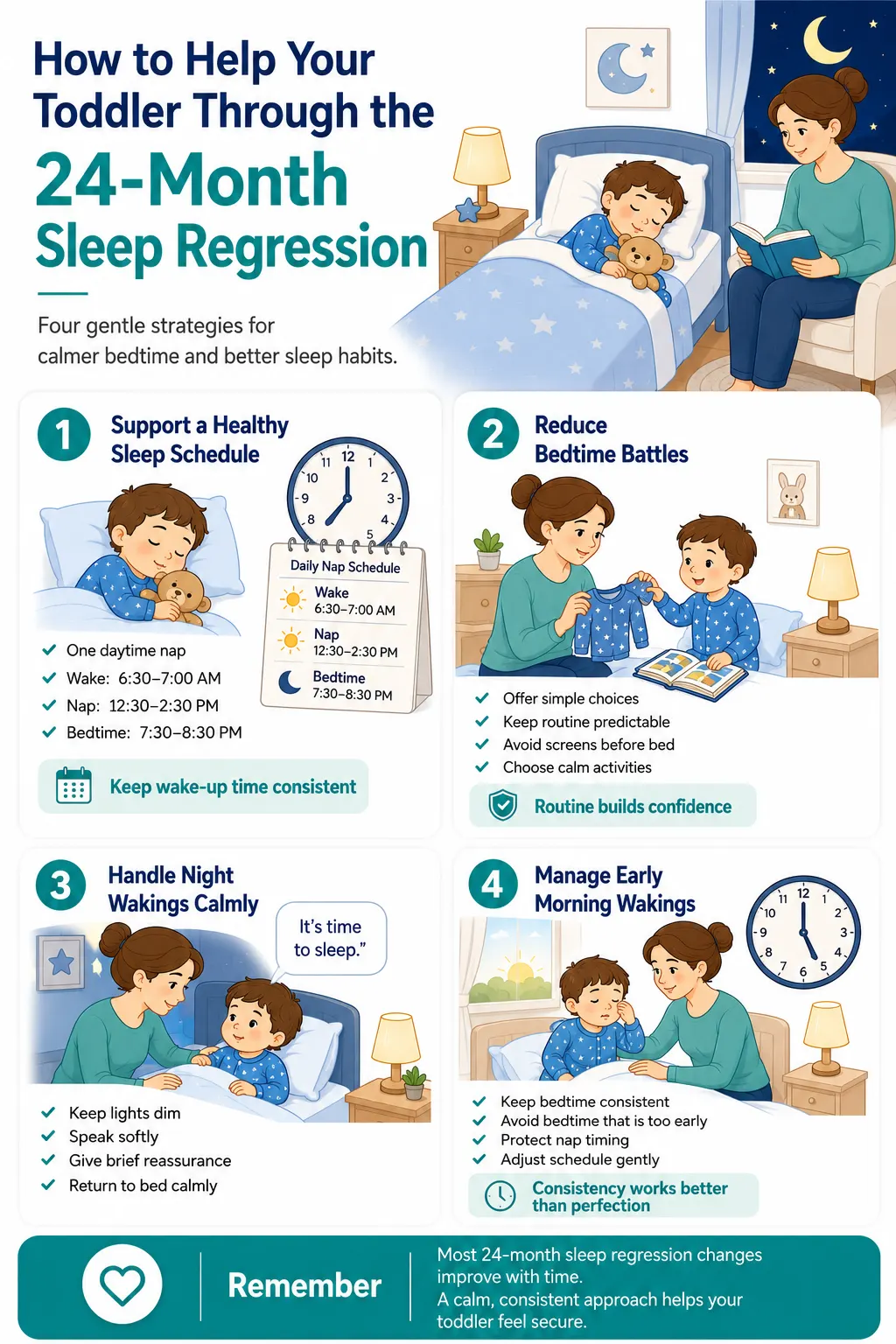
1. Support a Healthy Sleep Schedule
A well-balanced daytime schedule helps build enough sleep pressure for an easier bedtime and more settled nights.
a. Keep One Consistent Nap
Most 2-year-olds still benefit from one daytime nap. Dropping it too early can lead to overtiredness, making bedtime resistance and night wakings more likely.
A typical schedule may look like this:
| Time | Activity |
|---|---|
| 6:30–7:00 AM | Wake |
| 12:30–2:30 PM | Nap |
| 7:30–8:30 PM | Bedtime |
Aim for about 5 to 6 hours of awake time between the end of the nap and bedtime. For example, if the nap ends at 3:00 PM, bedtime is often easiest around 8:00 PM.
b. Offer Quiet Time When Naps Are Refused
Some toddlers begin refusing naps even though they still need daytime rest. On these days, 45 to 60 minutes of quiet time in bed or a calm play area with books or quiet toys can substitute for the nap.
If your toddler misses the nap, consider moving bedtime 20 to 30 minutes earlier to help prevent overtiredness.
2. Reduce Bedtime Battles
A calm, predictable bedtime routine helps toddlers know what to expect, reducing repeated requests, delays, and bedtime struggles.
a. Give Simple Choices
Offer small choices that allow your toddler to feel independent while keeping the bedtime routine on track, such as choosing between two pairs of pyjamas, picking which two bedtime stories to read, or deciding whether to brush teeth before or after putting on pyjamas.
b. Keep the Last Hour Calm
Avoid screens during the hour before bedtime. Instead, choose quiet activities such as reading together, listening to soft music, or cuddling in dim lighting. A calming routine helps your toddler prepare for sleep.
c. Set Clear Bedtime Boundaries
Many toddlers delay bedtime with repeated requests for another drink, another hug, or one more story. Try to include these needs in the bedtime routine before lights out. Once bedtime begins, respond calmly and consistently so your toddler learns what to expect each night.
3. Respond Calmly to Night Wakings
Night wakings are common during this stage. Your toddler may wake looking for reassurance, especially during periods of separation anxiety or rapid development.
Keep lights low, speak softly, and offer brief reassurance without introducing new sleep habits that may be difficult to maintain. Returning your toddler to bed in a calm, consistent way often works better than long conversations or stimulating activities during the night.
If your toddler sleeps in a bed and comes out of the bedroom, quietly walk them back each time using the same short phrase, such as, “It’s time to sleep.” Consistency is more effective than lengthy explanations.
4. Manage Early Morning Wakings
Early morning waking around 5:00 AM is common during the 24-month sleep regression and often points to a scheduling mismatch rather than a genuine problem.
A bedtime set too early or too late, a nap ending too late in the afternoon, or insufficient daytime sleep can all push morning waking earlier.
Holding nap times, bedtime, and wake-up time steady each day helps regulate a toddler’s circadian rhythm and reduces early waking over time.
For more details, read our 5 AM Wake-Up Fix guide for age-specific scheduling tips and practical solutions.
What If Your Toddler’s Sleep Problems Do Not Improve?
Most toddlers move through the 24-month sleep regression within a few weeks. If sleep difficulties continue beyond this period, review your toddler’s schedule, bedtime routine, and responses to night wakings.
Small adjustments, such as keeping wake times consistent, protecting nap timing, and responding calmly at night, can help reinforce healthy sleep habits.
If you need more guidance, explore our TRUST Method for Sleep Regression, a connection-based approach designed to help reduce night wakings in babies and toddlers from 4 months to 4 years.
Looking After Yourself During Toddler Sleep Challenges
Sleep disruptions at age 2 can be exhausting for parents as well as toddlers. Taking care of yourself can help you stay patient, consistent, and better able to support your child’s sleep.
Simple ways to care for yourself include:
- Rest when you can. Even a short nap or quiet break while your toddler sleeps can help restore your energy.
- Share nighttime responsibilities. If possible, alternate night wakings with your partner or another caregiver to reduce exhaustion.
- Take short breaks. A few minutes of quiet time, a short walk, or asking someone else to help can reduce stress during difficult days.
- Limit caffeine late in the day. Too much caffeine may make it harder for you to sleep when you have the opportunity.
- Accept help. Family and friends may be able to assist with meals, household tasks, or childcare so you can rest.
If ongoing sleep disruption is leaving you overwhelmed, our guide on Parental Burnout During Sleep Regressions offers practical strategies for protecting your own health while supporting your toddler.
Common Mistakes That Can Make Sleep Problems Worse
Certain responses can unintentionally make sleep challenges last longer.
Frequently changing bedtime or nap schedules, or skipping naps because your toddler resists sleep, can make it harder for them to settle into a predictable rhythm.
Introducing new sleep habits that may be difficult to maintain, such as rocking your toddler to sleep every night or bringing them into your bed if this is not part of the usual routine, can create new challenges once the regression passes.
Screens before bedtime, inconsistent responses to night wakings, and changing expectations from one night to the next can also make bedtime less predictable and prolong sleep disruptions.
When to Talk to Your Pediatrician
Most toddlers improve within 2 to 6 weeks as they adjust to developmental changes and new sleep patterns. However, ongoing sleep problems may sometimes have another underlying cause that needs evaluation.
Speak with your pediatrician if your toddler:
- Snores loudly, gasps, or has pauses in breathing during sleep.
- Seems unusually sleepy during the day despite getting enough sleep.
- Wakes frequently with severe distress, confusion, or repeated night terrors.
- Has persistent ear infections, nasal congestion, or breathing difficulties that affect sleep.
- Has feeding difficulties, poor growth, or other health concerns.
- Continues to have significant sleep problems for more than 6 weeks despite consistent sleep routines.
Final Thought
The 24-month sleep regression is a temporary stage that many toddlers experience as they grow and develop. Disrupted sleep during this stage usually improves with time and consistent sleep habits, even when it unsettles the household for a few weeks.
Every toddler follows their own developmental timeline, so the timing and severity of sleep changes can vary. If sleep problems continue for several weeks or are accompanied by any of the symptoms above, speak with your pediatrician for further evaluation.
Frequently Asked Questions
Why is my 2-year-old suddenly waking at 5:00 AM?
Early morning waking is common during the 24-month sleep regression. A bedtime that is too early or too late, a late afternoon nap, or changing sleep needs can all contribute. Small adjustments to your toddler’s sleep schedule often help.
Should I drop my toddler’s nap during the 24-month sleep regression?
Usually not. Most 2-year-olds still benefit from one daytime nap. Dropping the nap too early can lead to overtiredness, making bedtime resistance and night wakings more likely.
How can I reduce bedtime battles during the 24-month sleep regression?
Keep the bedtime routine calm and consistent, offer simple choices such as selecting pajamas or a bedtime story, and respond to stalling with gentle but predictable boundaries each night.
How should I respond to night wakings?
Offer brief reassurance in a calm, quiet way while keeping nighttime interactions to a minimum. Consistent responses help your toddler feel secure without creating new sleep habits that may be difficult to change later.
Can separation anxiety affect my toddler’s sleep?
Yes. Around 2 years of age, some toddlers become more aware when a parent leaves the room. This may lead to bedtime resistance, night wakings, or needing extra reassurance before settling back to sleep.
Can teething cause sleep problems at 2 years?
Yes. Teething can temporarily disrupt sleep and may occur alongside the 24-month sleep regression. If your toddler has swollen gums, increased drooling, or seems uncomfortable during the day, teething may also be contributing to sleep problems.
Will the 24-month sleep regression affect potty training?
It can. Some toddlers who are learning to use the toilet may wake during the night or ask to use the potty at bedtime. Keeping bedtime routines predictable while supporting potty training often helps reduce disruption.
When should I talk to my pediatrician?
Speak with your pediatrician if your toddler’s sleep problems last longer than 6 weeks, or if they are accompanied by loud snoring, pauses in breathing, poor growth, persistent daytime sleepiness, or other concerning symptoms.
References
📚 Show References
- American Academy of Pediatrics. Positive Parenting Tips: Toddlers (1–2 Years). CDC Child Development. Retrieved July 21, 2026, from https://www.cdc.gov/child-development/positive-parenting-tips/toddlers-1-2-years.html
- Centers for Disease Control and Prevention. Milestones by 2 Years. Learn the Signs. Act Early. Retrieved July 21, 2026, from https://www.cdc.gov/act-early/milestones/2-years.html
- American Academy of Pediatrics. How to Ease Your Child’s Separation Anxiety. HealthyChildren.org. Retrieved July 21, 2026, from https://www.healthychildren.org/English/ages-stages/toddler/Pages/Soothing-Your-Childs-Separation-Anxiety.aspx
- American Academy of Pediatrics. AAP Endorses New Recommendations on Sleep Times. AAP News. Retrieved July 21, 2026, from https://publications.aap.org/aapnews/news/6630/AAP-endorses-new-recommendations-on-sleep-times
- American Academy of Pediatrics. Toddler Bedtime Trouble: 7 Tips for Parents. HealthyChildren.org. Retrieved July 21, 2026, from https://www.healthychildren.org/English/healthy-living/sleep/Pages/bedtime-trouble.aspx
