

Is your child sick every two weeks? It often starts the same way: a sniffle, then a fever, and suddenly you are back in the pediatrician’s waiting room for the third time this month. You are not just unlucky. You are exhausted and worried.
Many parents are told it is just daycare exposure or school infections. But when your child never seems fully well, that explanation feels incomplete. Frequent infections in children can be normal, but they can also signal treatable problems—from allergies and asthma to immune disorders.
In this guide, you will learn the common causes, the red flags that require urgent evaluation, and the three blood tests required for the right diagnosis.
Is It Normal for a Child to Be Sick Every Two Weeks?
Yes. It is medically normal for a child to be sick every two weeks, especially those in daycare or preschool. Although the statistical average for a healthy child is 5 to 7 colds per year, children in high-exposure environments often experience 8 to 12 infections annually.
While this frequency is exhausting, what matters most for a healthy immune system is the quality of recovery, not the frequency of the sniffles.
According to the Mayo Clinic, how many colds per year is normal depends on age and environment, but 12 infections annually—roughly once a month—is common. During winter, these infections often bunch together, creating the “child sick every two weeks” cycle.
What the Research Says
Research highlights three distinct patterns for pediatric infections:
- The Preschool Average: Most healthy children in this age group will experience 5 to 7 colds per year.1
- The “High-Frequency” Group: Roughly 10% to 15% of perfectly healthy children catch 12 or more infections annually—averaging one every single month.1
- The School-Age Shift: Good news is on the horizon. By elementary school, these numbers typically drop by 50%, settling at an average of 2–3 infections per year as the immune system matures.2
The “Daycare Factor”
Environment plays a massive role in these statistics. Research consistently shows that children who attend daycare typically have 50% more respiratory infections than those who do not.1
According to the American Academy of Pediatrics (AAP) and the Centers for Disease Control and Prevention (CDC), these frequent viral infections are a developmentally expected part of early childhood, especially in group settings. However, both organizations emphasize a crucial point:
“Frequency alone is not the primary concern. What truly matters is the severity of the illness and the quality of the recovery.”
The “Severity Check”: 4 Questions to Ask
To determine if your child’s frequency is normal or a red flag, ask yourself:
- Severity: Does a simple cold almost always turn into a secondary infection (like a painful ear infection or bronchitis)?
- Recovery Time: Does it take your child 3 weeks to bounce back from a 3-day virus?
- Complication Rates: Are they requiring multiple rounds of antibiotics or hospital visits for every “simple” cold?
- Growth & Development: Is your child struggling to gain weight or meet developmental milestones despite having a healthy appetite?
The Viral Overlap: Why a Child Sick Every Two Weeks Feels Endless
One of the most common reasons a child appears sick every two weeks is a phenomenon clinicians call viral overlap. To parents, this feels like one never-ending, month-long illness. Medically, however, it is a sequence of separate viral infections hitting back-to-back with almost no recovery time in between.
How the Overlap Happens:
- Virus A (Days 1–7): Initial fever, runny nose, and congestion.
- The Vulnerable Window (Days 8–10): Symptoms begin to improve. However, the airway lining remains inflamed.
- Recovery (Days 11-14): Energy returns, but the “lingering cough” from Virus A has not fully disappeared yet. A post-viral cough can last up to six weeks!
- Virus B (Day 15): Exposure to a new germ triggers another fever before the cough from Virus A has fully cleared.
The Result: To you, it looks like one 30-day illness. To a pediatrician, however, it is two distinct infections overlapping in time. Each infection helps the immune system “build its library” of defenses, which is a normal part of immune development. Yet for parents, it often feels like endless worry rather than progress.
5 Red Flags: When the “Every Two Weeks” Cycle Is Not Normal
The key issue is not how often your child gets sick. It is how severe the infections are and how well they recover. If you notice these five patterns, it is time to discuss a deeper evaluation with your pediatrician.
1. Severe or Recurrent Pneumonia
A single, mild chest infection is one thing. However, pneumonia is different.
Red Flag: If your child has had two or more pneumonias in a single year, or if they have ever needed a hospital stay for oxygen or monitoring because of a lung infection, that’s a major red flag.
2. Chronic Ear or Sinus Infections
Ear infections are common in toddlers, but they should not be a permanent fixture in your life.
Red Flag: Four or more new ear infections within one year, or two or more serious sinus infections that require medical intervention. This often means the body is failing to clear the “bacterial debris” left behind after a cold.
3. Bacterial Infections or a Need for IV Antibiotics
Most viral colds clear on their own, but bacterial infections are different.
Red Flag: If your child needs multiple courses of antibiotics in a year, or stronger treatments like IV antibiotics, it may signal the immune system isn’t fully clearing infections.
4. Poor Growth or Falling Off the Growth Curve
Frequent colds alone rarely affect the growth curve.
Red Flag: If your child is not gaining weight, is dropping percentiles on their growth chart, or shows persistent, bone-deep fatigue even when they aren’t “sick,” this is a significant warning sign.
5. No “Healthy Windows” or Unusual Deep Infections
Healthy kids “bounce back.” They get sick, then have a few weeks of being high-energy, wild, and themselves.
Red Flag: If your child has zero healthy weeks—meaning they never regain their baseline energy before the next fever hits—their body is not resolving the “viral overlap.” Additionally, watch for deep infections that are rare in healthy children, such as skin abscesses or persistent oral thrush that continues past infancy.
Other Common Causes Beyond Infections
If your child is sick every two weeks but does not consistently have fever, the cause may not be infection at all. Consider these common mimics:
- Allergies: Frequent colds in toddlers are often actually undiagnosed seasonal or environmental allergies (allergic rhinitis).
- Undiagnosed Asthma: A “lingering cold” that involves a persistent nighttime cough or wheezing is a classic sign of pediatric asthma.
- Enlarged Adenoids: Swollen tissue in the back of the throat can trap bacteria, leading to constant mouth breathing and “fake” colds.
- Environmental Factors: Exposure to secondhand smoke or mold can keep a child’s airways in a state of constant inflammation.
- Sleep Deprivation: A tired immune system is a weak one; children who do not get age-appropriate sleep are more susceptible to every germ they encounter.
When to Request a Blood Test?
Not every child who gets sick frequently requires blood work. However, if you are seeing the Red Flags mentioned above—particularly recurrent pneumonia, a need for IV antibiotics, or a total lack of “healthy windows”—it is time to move beyond the “wait and see” approach.
Of course, your pediatrician will decide if and when blood work is necessary based on your child’s clinical history. Blood tests are not meant to diagnose every common cold; instead, they serve as a diagnostic tool to rule out hidden underlying issues.
The 3 Essential Blood Tests for Frequent Childhood Infections
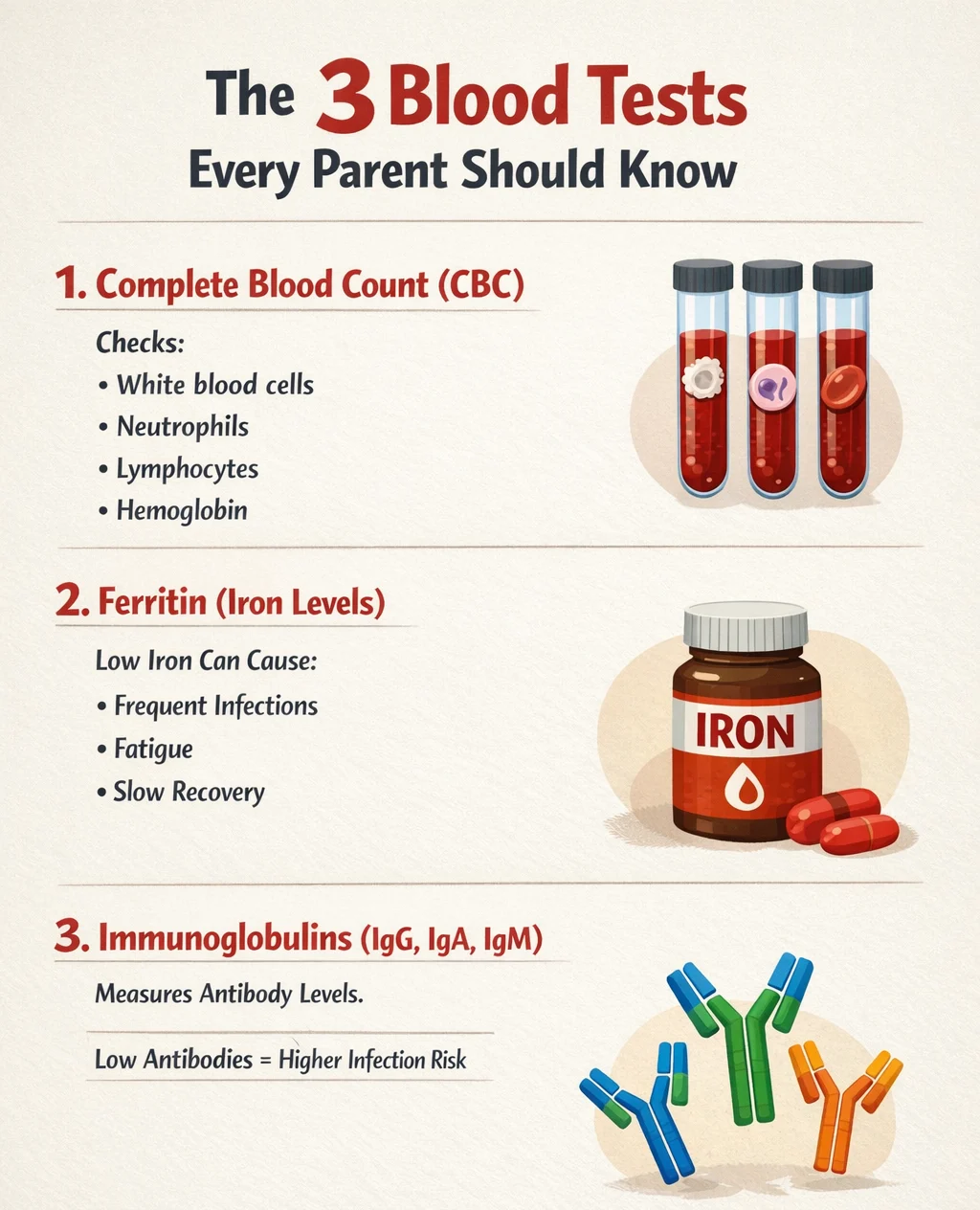
If your child truly needs evaluation, pediatricians usually start simple. Not with a long panel or dozens of markers. Just three core tests tell the story of your child’s immune function and baseline health:
1. Complete Blood Count (CBC)
The CBC is the starting point for understanding a child’s health. It measures the specific cells that fight infection and carry oxygen.
For children who get sick often, doctors pay close attention to these key markers:
- White Blood Cell Count (WBC): Shows the body’s overall infection-fighting capacity.
- Neutrophils: The first line of defense against bacterial infections.
- Lymphocytes: Crucial for fighting viral infections and building “immune memory.”
- Red Blood Cells (RBCs) & Hemoglobin: These work together to deliver oxygen throughout the body, directly reflecting a child’s overall baseline recovery capacity.
👉Note: If these values are within the normal range for your child’s age, it is strongly reassuring. If they are not, the specific patterns help your doctor narrow down the next diagnostic step quickly.
2. Ferritin (Iron Stores)
A ferritin test specifically measures the body’s iron stores, identifying deficiencies even before anemia develops. Low ferritin is extremely common in growing children, and even without severe anemia, it can:
- Increase infections: Children get sick more often.
- Prolong recovery: Illnesses take longer to resolve.
- Cause lingering fatigue: Energy remains low even between infections.
👉Note: In many cases, addressing iron deficiency helps break the “sick every two weeks” cycle, often leading to stronger immune strength and quicker recovery than parents anticipate.
3. Immunoglobulins (IgG, IgA, IgM)
These measure your child’s actual antibody levels—the “special forces” that recognize and kill specific germs.
- IgG provides long-term, systemic immunity against bacteria and viruses in blood/tissues.
- IgM is the first responder to new infections, acting as a primary, fast-acting defense.
- IgA protects mucosal surfaces (gut, respiratory tract, saliva).
👉Note: Low levels may suggest an antibody deficiency. However, these results must always be interpreted by a professional based on your child’s age, as the immune system naturally matures over time.
➕ Optional: Inflammatory Markers (CRP or ESR)
While the three tests above check your child’s capacity to fight, a doctor may optionally add C-Reactive Protein (CRP) or ESR.
- The Purpose: These are “smoke alarms” that detect active inflammation.
- The Limitation: They only tell you if a child is sick right now. They do not explain why a child gets sick frequently.
- When to include: These are most helpful if your child has an active, unexplained high fever during the blood draw.
🔗 Related: If you are also concerned about ADHD mimics, check out 7 Essential ADHD Blood Tests for Children.
Why Only These Three Blood Tests?
By testing these three specific markers, you and your pediatrician can answer the big questions:
- Are infection-fighting cells present? (The CBC confirms the quantity of cells).
- Is nutrition weakening immunity? (The Ferritin test checks for the “fuel” the system needs).
- Is antibody production adequate? (The Immunoglobulin panel checks for the “memory” to fight future bugs).
These labs are not about proving your child has a weak immune system; they are about ruling out hidden obstacles when red flags appear.
👉Note: It is important to remember that most children with frequent infections have normal results. If something is abnormal, these three tests help guide the next step in evaluation.
Beyond Blood Tests: When is a Chest X-ray Necessary?
If your child is sick every two weeks and the primary symptom is a deep, wet, or “rattling” cough, your pediatrician may move beyond blood work to imaging.
A Chest X-ray can help rule out or identify:
- Rule Out Recurrent Pneumonia: If a child seems to recover but then develops a high fever and cough again, an X-ray can help determine if the lungs are still affected by an earlier infection.
- Identify Structural Issues: Imaging can reveal narrow or blocked airways that trap mucus and contribute to repeated illness.
- Foreign Bodies: Sometimes small inhaled objects mimic chronic respiratory illness, and an X-ray helps rule this out.
Key Takeaway
It is normal for a child in daycare or school to get sick every two weeks and catch 8–12 colds a year. This is “immune training,” not immune failure. The most important measure of health is not how often your child gets sick, but how well they recover.
- Healthy Signs: If your child quickly regains their usual energy between illnesses, it’s a strong sign their immune system is working properly.
- The Red Flags: If your child is sick every two weeks and never has a truly healthy stretch, struggles with poor growth, or develops serious infections like pneumonia or those requiring IV antibiotics, it’s time to move beyond the “wait and see” approach.
- Diagnostic Steps: If red flags are present, three targeted blood tests—CBC, ferritin, and immunoglobulins—assess the immune “soldiers,” while a Chest X-ray checks that the lungs are clear.
The Bottom Line: Track the recovery patterns, not the frequency. Frequent colds with full recovery are part of growing up, but constant illness without recovery is not. By asking for these specific labs when red flags appear, you shift from endless worry to informed, proactive parenting—and that’s the most powerful step you can take.
FAQ: Common Questions About Frequent Childhood Illness
Q1. How many colds per year are normal for a child in daycare?
According to the Mayo Clinic, it is normal for healthy children in daycare or school to have 8–12 respiratory infections per year. Since each cold can last 10–14 days, it often feels like a child is sick every two weeks, especially during peak viral seasons.
Q2. Does a child sick every two weeks need to see an immunologist?
Most children are well-served by their pediatrician. A specialist (immunologist) is typically only needed if your child hits the “Red Flags” mentioned above, such as repeated pneumonia, failure to grow, or infections that require hospitalization or IV antibiotics.
Q3. Can iron deficiency (low ferritin) make a child get sick more often?
Yes. Iron is a critical fuel source for immune cell production. When a child has low ferritin stores, their immune system cannot respond as aggressively to viruses, leading to more frequent infections, slower recovery times, and lingering fatigue.
Q4. Is it “Viral Overlap” or a weakened immune system?
The biggest clue is the Recovery Window. In viral overlap, the child is catching new, separate germs back-to-back. In a weakened immune system, the child often struggles to clear the same infection, leading to chronic symptoms that never go away or lead to serious complications like abscesses or organ involvement.
Q5. When is the best time to do the recommended blood tests?
Ideally, blood tests are done when your child is between infections or feeling relatively stable. While an active fever can temporarily affect white blood cell counts, testing should not be delayed if infections are severe or concerning. Your pediatrician will help you determine the best window for an accurate “baseline” reading.
Q6. What blood tests check a child’s immune system?
Pediatricians typically start with three foundational tests: a Complete Blood Count (CBC) to check white blood cell levels, a Ferritin test to check iron stores, and an Immunoglobulin panel (IgG, IgA, IgM) to see if the child is producing enough antibodies to fight off bacteria and viruses.
🔗 Related: If you’re also concerned about ADHD mimics or thyroid issues, check out Is It ADHD or a Thyroid Condition? 7 Hidden Signs of Misdiagnosis in Children.
Q7. Can frequent daycare colds actually strengthen my child’s immune system?
Yes. While exhausting for parents, repeated viral exposure helps children build immune memory. Over time, this “immune library” reduces the severity and frequency of infections as they grow older.
Q8. Should I keep my child home from daycare if they get sick every two weeks?
Not usually. Mild colds are expected in group settings. The key is monitoring recovery and watching for red flags like poor growth, repeated pneumonia, or infections needing IV antibiotics. If those occur, consult your pediatrician.
References
📚 Click to view references
- Loo M. Upper Respiratory Tract Infection. Integrative Medicine for Children. 2009:450–5.
View source - Turner RB. The Common Cold. Mandell, Douglas, and Bennett’s Principles and Practice of Infectious Diseases. 2015:748–752.e2.
View source - Mayo Clinic. (2025). The Constant Cold: Why Kids Are Always Sick and What to Do About It.
View source - American Academy of Pediatrics. Prevention in Child Care or School. HealthyChildren.org.
View source - Centers for Disease Control and Prevention. About Common Cold. CDC.gov.
View source
