
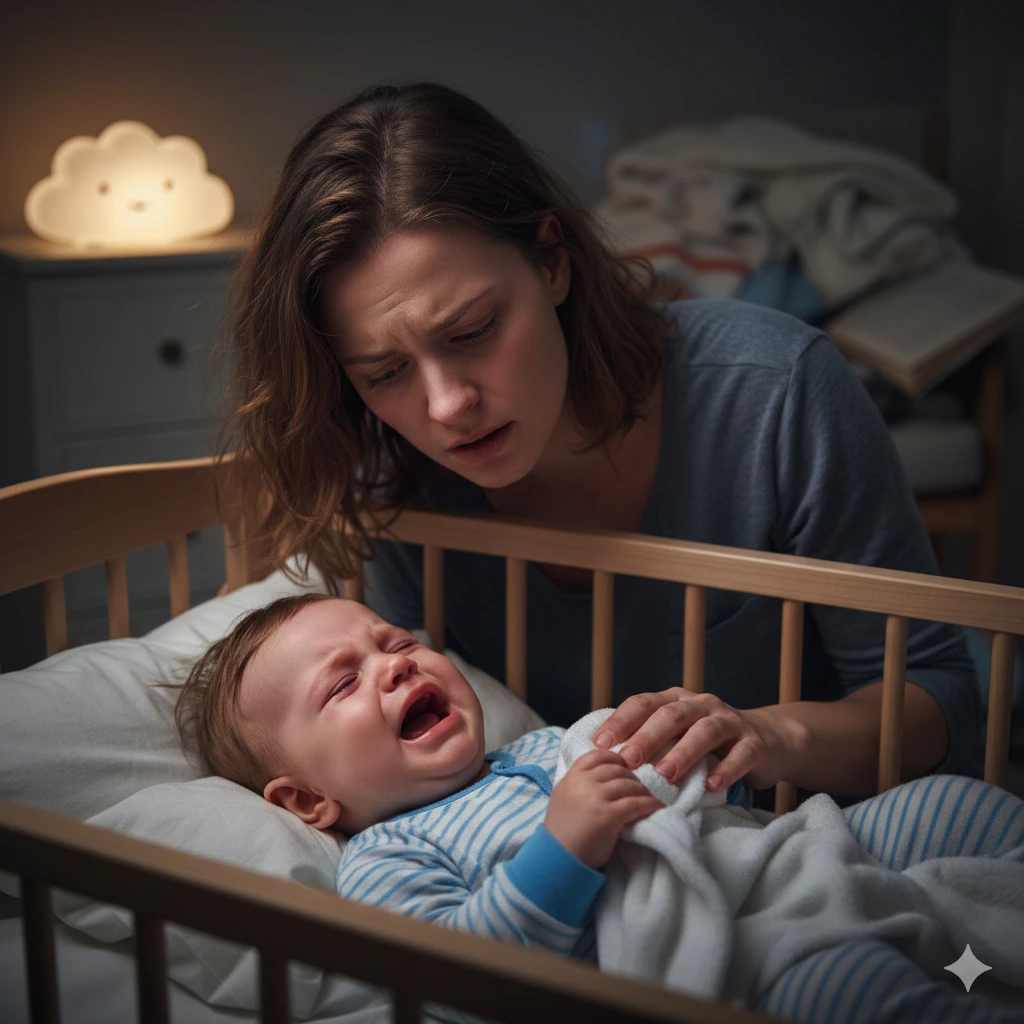
Sleep regression strikes without warning, turning peaceful nights into a cycle of cries, restlessness, and endless awakenings. However, the biggest mistake exhausted parents make is guessing. Is this a normal sleep regression sign that will resolve over time, or are there specific sleep regression red flags that need attention? If these red flags are missed, the underlying issue may worsen and lead to longer sleep struggles.
Instead of guessing, clear your doubt and get the clarity you need. This guide explains the key differences, outlines the 8 non-negotiable Sleep Regression Red Flag Signs (Atypical Sleep Signs), and gives you a simple solution plan to protect your child’s sleep health and restore peace in your home.
EXECUTIVE SUMMARY:
Sleep disruption can be either a short 2 to 6 week developmental phase or an Atypical Sleep Sign that may point to an underlying medical concern. When in doubt, seek clarity rather than guessing.
✅ Typical Sleep Regression Signs
Usually short-term and linked to developmental leaps, minor schedule changes, or emerging skills.
- Frequent night waking
- Short naps or nap refusal
- Clinginess or bedtime resistance
🚩 Atypical Sleep Red Flags
These last more than six weeks or signal possible medical concerns that warrant professional evaluation.
- ! Snoring, gasping, or pauses in breathing
- ! Daytime sleepiness or excessive crankiness
- ! Poor growth or sudden major behavior changes
🎯 Immediate Action Plan
- Start a 14-Day Sleep Log: Track symptoms, routines, and nap patterns every day.
- Consult a Pediatric Professional: If red flags appear or sleep issues continue beyond six weeks.
- Stay Consistent: For typical regressions, maintain routines and apply Sleepy-But-Awake Rule to support Independent Sleep.
Sleep Regression vs. Atypical Sleep Signs: Key Differences
Sleep regression is a temporary period that typically lasts two to six weeks, where a baby or toddler who was sleeping well suddenly starts having difficulty, with normal signs including night wakings, shorter naps, refusing naps, increased clinginess, or resisting bedtime. [1, 2]
These phases are behavioral, not medical. Instead, they are usually caused by significant developmental changes like rolling, sitting, crawling, walking, language acquisition, or the shift to more mature, adult-like sleep cycles (e.g., around the four-month mark) and typically resolve within two to six weeks. [3]
To navigate a typical, temporary regression, find your child’s age-specific roadmap in our complete library: 4-Month, 6-Month, 8-Month, 12-Month, 18-Month, and 24-Month Sleep Regression Roadmaps.
However, atypical sleep signs, or “red flags,” are symptoms that may indicate an underlying medical, neurological, or primary sleep disorder requiring professional evaluation. The table below provides a quick reference guide to distinguish between these two scenarios. [4, 5, 6]
Comparison Criteria Normal Sleep Regression Sleep Disorder Typical Duration 2–6 weeks Persistent beyond 6–8 weeks Primary Causes Developmental milestones, growth spurts, routine changes Medical conditions, neurological issues, anxiety, sensory sensitivities Daytime Functioning Generally alert, playful, and engaged Marked irritability, fatigue, mood swings, or concentration difficulties Associated Symptoms Minimal or no additional symptoms Snoring, breathing pauses, pain, reflux, allergies, growth disturbances, ASD, ADHD Response to Interventions Improves with consistent bedtime practices and comfort Resistant to routines and behavioral interventions Impact on Overall Health Healthy appetite and normal weight gain Weight fluctuations, stunted growth, or frequent illness When to Seek Medical Advice Rarely necessary unless symptoms worsen Essential if issues persist, worsen, or affect daily life
Case Study: Parents Identify Sleep Regression Red Flags
A case report published in the Journal of Clinical Sleep Medicine (2017) describes a 4-year-old boy whose symptoms closely match this topic. [5]
Case: A 4-year-old who previously slept through the night begins waking 3–4 times nightly, screaming and inconsolable, and shows daytime irritability. The parents notice loud snoring and pauses in breathing.
Outcome: Pediatric evaluation revealed mild sleep disorders in children (obstructive sleep apnea). Intervention with a sleep specialist and minor lifestyle adjustments resolved the sleep disturbances within weeks.
Lesson: Persistent night waking along with physical symptoms confirms the presence of sleep regression red flags requiring professional attention.
Normal Sleep Regression Signs
Before looking for sleep regression red flags, check for these normal, typical behaviors found in babies, toddlers, and children: [1, 7, 8, 9]
- Frequent night waking after previously sleeping longer stretches.
- Shortened or skipped naps.
- Resistance at bedtime or difficulty settling.
- Increased fussiness and clinginess.
- Trouble self-soothing back to sleep.
👉Note on Early Waking: If you are struggling with early rising, see our guide on The 5 AM Wake-Up Fix: Why Your Baby Wakes Up Early.
Recognizing Sleep Regression Red Flags🚩: When to Worry

In contrast to typical sleep regressions, not all sleep disruptions are normal. Therefore, recognizing sleep regression red flags (Atypical signs) early can protect your child’s health, mood, and development. [4, 5, 6]
1. The 6-Week Limit: A Major Sleep Regression Red Flags
Sleep regressions typically resolve within 2–6 weeks. However, if a child’s night wakings or bedtime struggles persist for several months despite a consistent routine, then this duration is one of the most common Sleep Regression Red Flag Sign.
- Watch For: The issue lasts longer than 6 weeks.
- 👉 Possible cause: Sleep disorders like chronic insomnia or high anxiety.
2. Excessive Daytime Sleepiness: A Warning Sign of Sleep Regression
Furthermore, if your child is unusually drowsy, cranky, or unable to focus during the day, it’s a warning sign of an issue that needs attention. This is a critical Sleep Regression Red Flag.
- Watch For:
- Falling asleep in school or during short car rides.
- Constant irritability, meltdowns, or emotional outbursts.
- Trouble concentrating or lagging behind in schoolwork.
- 👉 Possible cause: Sleep disorders such as insomnia, restless leg syndrome, or fragmented sleep.
3. Breathing Problems During Sleep: Sleep Regression Warning Sign
Loud snoring, gasping for air, or pauses in breathing could be a sleep regression red flags. If left untreated, it can affect growth, learning, and heart health.
- Watch For:
- Persistent loud snoring (not just during colds).
- Mouth breathing or sweating at night.
- Restless sleep and unusual sleeping positions (e.g., neck extended).
- 👉 Possible cause: Sleep disorders like pediatric sleep apnea.
4. Poor Growth or Weight Changes
Sleep is crucial for growth hormone release and appetite regulation; consequently, ongoing sleep disruptions may lead to unhealthy weight changes, serving as a potential warning sign of sleep regression.
- Watch For: Failure to follow their established growth curve during checkups.
- 👉 Note: A child who is not following their growth curve at checkups and also has sleep problems may need both nutritional and medical evaluation.
5. Sudden Personality Shift: Mood and Focus Issues
Similarly, if your child’s mood swings or behavior seems ‘out of character,’ sleep problems could be the first clue to an underlying neurobehavioral issue.
- Watch For:
- Sudden aggression or withdrawal.
- Trouble focusing on tasks or following instructions.
- Acting without thinking, interrupting others, or struggling with self-control.
- Repeating movements, fixating on specific topics.
- 👉 Underlying Issue: Sleep disorders may be related to Autism Spectrum Disorder (ASD), Attention Deficit Hyperactivity Disorder (ADHD), or depression.
6. Frequent Nightmares or Night Terrors
Frequent nightmares (scary dreams) or night terrors (sudden fear, screaming, and confusion) can disturb a child’s sleep. Occasional episodes are usually normal, but frequent, severe disruptions are considered sleep regression red flags.
- Watch For: Screaming, panic, or confusion that happens several times a week.
- Key Distinction: Nightmares happen in the morning (REM sleep) and the child remembers them. Conversely, Night Terrors happen early in the night (deep sleep) and the child is typically inconsolable but doesn’t remember the event.
7. Medical Conditions or Pain Disrupting Sleep
Reflux, eczema, allergies, asthma, or even chronic ear infections can lead to disrupted sleep cycles. Since children often cannot explain pain clearly, therefore, sleep issues may be the first clue.
- Watch For: Symptoms of pain or discomfort only at night.
8. Sleep Issues at an Atypical Age
Sleep regressions are common in babies, toddlers, and preschoolers. However, if an older child (ages 7–12) suddenly develops major sleep issues without an obvious cause, it could signal an underlying health problem.
- Watch For: A sudden, unexplained regression in a school-aged child.
Actionable Plan: What Parents Do First (& When to See a Doctor)
You do not need to guess. Here’s a step-by-step plan to evaluate whether your child is facing a normal phase or genuine sleep regression red flags.
1. Immediate Check Symptoms
Watch for physical signs like snoring, coughing, restlessness, night sweats, or unusual movements. These observations can help distinguish normal sleep regression from potential sleep regression red flag signs.
2. The 14-Day Sleep Log (Your Evidence)
Keep a consistent record of your child’s sleep for one to two weeks. Specifically, note:
- When they wake, how long they cry, and the severity (fussy vs. inconsolable).
- Any physical symptoms (snoring, restlessness, fever).
- All daily routines (naps, meals, bedtime).
3. When to Call the Pediatrician
If you have tracked six weeks of ongoing sleep disruption along with any additional Sleep Regression Red Flags, especially changes in breathing or personality, it’s time to seek professional help. Early professional guidance helps improve your child’s sleep and simultaneously allows your whole family to regain rest and peace of mind.
Sleep Regression Solutions: Your Practical Toolkit
If you have ruled out a Sleep Regression Red Flag and suspect it’s a typical, temporary sleep regression, then the best results come from using these core strategies together consistently to help babies, toddlers, and children:
1. Create a Sleep-Friendly Environment
Keep your child’s room calm, quiet, and dark. Use comfortable bedding, a cozy blanket, and a soft night light. A peaceful and friendly environment helps your child feel safe and signals their brain that it’s time to sleep. [10]
- Ensure Darkness: Darkness is essential because it signals the brain to release melatonin (the sleep hormone). Use blackout curtains if the room is not dark enough.
- Use Consistent White Noise: A white or pink noise machine can be highly effective. It creates a consistent soundscape that mimics the womb and masks sudden household noises that might otherwise wake the child.
- Safety Check: Ensure the crib or bed is safe, comfortable, and free of unnecessary hazards (like excessive loose bedding for infants).
2. Stick to a Predictable Routine
A fixed, consistent routine provides security and regulates the internal body clock.
- Establish the Sequence: Use a short, calming routine every night, such as warm bath → quiet play → reading → lullaby—promotes calmness and comfort. [11]
- Time It Right: Begin this routine about 30–60 minutes before your child’s usual sleep time. Doing the same steps every night teaches their body and brain that it’s time to sleep.
- Consistency is Key: A new routine needs time to work. A typical sleep regression usually resolves within 2 to 6 weeks of consistent effort.
3. Use Gentle Sleep Methods (Teaching Independent Sleep)
This is the most critical step, as it addresses the underlying issue of reliance on a “sleep prop” (rocking, feeding, etc.).
- Apply Sleepy-But-Awake Rule: Always place your baby in the crib when they are sleepy but still awake. This gives them the critical opportunity to practice falling asleep without your help.
- Implement the Pause Rule: If your baby wakes up crying at night, give them a brief pause (start with 1–5 minutes) before immediately intervening. This crucial interval gives them the opportunity to test their self-soothing skills and potentially fall back asleep on their own.
- Use the Pick-Up/Put-Down technique: If the baby wakes up at night and is crying, pick up your baby to soothe until calm, then immediately place them back down while still awake. The goal is to minimize the time spent in your arms.
- Avoid New Sleep Habits: This is an important time to avoid introducing new sleep dependencies. Try not to start big habits you do not want to maintain, such as excessive rocking, bringing the baby into your bed, or adding extra unnecessary night feeds. Using the same routine is always more effective than a temporary quick fix.
4. Address Separation Anxiety (Build Trust)
Separation anxiety often appears around 8 months but can peak again around 18 months and 2 years as children hit major developmental milestones. They may cry or wake more often at night, seeking reassurance that you will return. You must actively build trust that you always come back.
- Play Peek-a-Boo (4 to 18 Months) : This simple game teaches them that you disappear, but you always return. This builds trust that helps them feel safe at night.
- Play Hide-and-Seek (18 Months to 4 Years): Transition from peek-a-boo to simple hide-and-seek. Practice Short Separations (Verbal) by using a timer. Say, “Mommy is going to fold one load of laundry; I will be back in five minutes.”
- Practice Short Separations (Verbal): Use a timer. Say, “Mommy is going to fold one load of laundry; I will be back in five minutes.” Always return when you said you would.
- Practice Confident Goodbyes: Always say a calm, quick, and confident farewell at separations. Sneaking out can increase anxiety because the child becomes constantly hyper-vigilant of your whereabouts.
If you want a complete solution that supports emotional connection, encourages gentle self-soothing, and builds healthy sleep habits for the long term, our TRUST Method guide will walk you through every step: The TRUST Method for Sleep Regression
Conclusion: Restoring Peace and Sleep 🌟
Sleep regression is generally a normal, temporary phase linked to developmental milestones. However, it is crucial to recognize that persistent or severe sleep problems may indicate underlying medical issues or primary sleep disorders.
Key Takeaways
- Distinguish: The first and most critical step is distinguishing between a temporary phase and serious sleep regression red flags.
- Consistency is Key: To navigate a typical regression successfully, consistency is non-negotiable. Maintain the same predictable bedtime routine every night and ensure your child’s sleep space is calm, quiet, and dark. This consistency helps regulate their internal body clock and build strong sleep habits.
- Monitor Closely: Pay close attention to your child’s sleep and behavior. Be prepared to act quickly if you observe warning signs—such as trouble breathing (snoring/gasping), excessive daytime sleepiness, major mood changes, or sleep problems that persist beyond six weeks.
- Seek Timely Help: Timely professional evaluation combined with your consistent efforts at home is the most effective approach for resolving sleep issues, ensuring your child’s healthy development, and restoring vitality and peace to your entire family.
If you are feeling completely drained, you may find comfort and direction with our guide on Beat Parental Burnout: 7 Essential Strategies to Survive Night Wakings and Sleep Regressions
Frequently Asked Questions (FAQs)
Q1. Is a sleep regression a sign that my baby is no longer a good sleeper?
Ans: No. Sleep regressions do not mean your baby is not a good sleeper. They are temporary disruptions caused by milestones like crawling, walking, or talking—a short pause on the way to better sleep.
Q2. Can sleep regressions affect my child’s learning or behavior?
Ans: Short-term regressions usually do not affect development, but if you see persistent problems, these sleep regression red flags can impact mood, concentration, and learning.
Q3. How long do sleep regressions typically last?
Ans: A true sleep regression is a temporary developmental phase that usually lasts 2 to 4 weeks. If the sleep disruption continues beyond six weeks, it becomes a Sleep Regression Reds Flags and may indicate a sleep association problem or another underlying issue.
Q4. What is the biggest mistake parents make during a sleep regression?
Ans: Many parents make the mistake of helping their baby fall asleep too much, like rocking, feeding, or letting them sleep in the parents’ bed. This can make it harder for the baby to learn to sleep on their own. As a result, the regression can last longer because the baby starts depending on these new sleep habits instead of settling on their own.
Q5. Should I change my baby’s nap schedule during a regression?
Ans: Stick to your regular nap and bedtime routine. Consistency helps your child’s internal clock and provides security during a regression.
Q6. How can I tell if it’s a sleep regression or if my child is sick?
Ans: A sleep regression is typically a behavioral change without physical symptoms. Your child might be clingy or fussy, but they will generally seem happy and healthy during the day. If they have a fever, cough, stuffy nose, or other signs of illness, it’s more likely their sleep is disrupted by a physical issue.
Q7. Can sleep regressions affect older children, not just babies?
Ans: Yes, sleep disruptions can occur in older toddlers and even school-aged children. The 18-month and 2-year regressions are common as children test boundaries and language skills. For older children, new sleep issues can be tied to anxiety, school-related stress, or other psychological factors.
Q8. When should I be concerned and talk to a doctor?
Ans: Consult a pediatrician if you observe any Sleep Regression Red Flags, such as snoring, gasping, excessive daytime sleepiness, poor growth, or major behavioral changes.
Q9. When should I be concerned and talk to a doctor?
Ans: Talk to a pediatrician immediately if sleep issues come with sleep regression red flags such as snoring, gasping, excessive daytime sleepiness, poor growth, or major behavioral changes.
References
📚 Click to view references
- Galland BC, Taylor BJ, Elder DE, Herbison P. Normal sleep patterns in infants and children: a systematic review of observational studies. Sleep Med Rev. 2012 Jun;16(3):213-22. doi: 10.1016/j.smrv.2011.06.001. Epub 2011 Jul 23. PMID: 21784676.
- Field T. Infant sleep problems and interventions: A review. Infant Behav Dev. 2017 May;47:40-53. doi: 10.1016/j.infbeh.2017.02.002. Epub 2017 Mar 20. PMID: 28334578.
- Sadeh A, Tikotzky L, Scher A. Parenting and infant sleep. Sleep Med Rev. 2010 Apr;14(2):89-96. doi: 10.1016/j.smrv.2009.05.003. Epub 2009 Jul 23. PMID: 19631566.
- Li T et al., A Four-Year-Old Boy with Unusually Severe Obstructive Sleep Apnea. J Clin Sleep Med. 2017 Mar 15;13(3):513-516. doi: 10.5664/jcsm.6512. PMID: 27998374; PMCID: PMC5337598.
- Gibson R, Akter T, Jones C, Towers A. Characteristics of Atypical Sleep Durations Among Older Compared to Younger Adults: Evidence from the New Zealand Health Survey. J Gerontol A Biol Sci Med Sci. 2023 Oct 9;78(10):1908-1918. doi: 10.1093/gerona/glad042. PMID: 36729936; PMCID: PMC10562883.
- Thomason E, Oh W, Volling BL, Gonzalez R, Yu T. VI. DEVELOPMENTAL TRAJECTORIES OF CHILDREN’S ANXIETY AND DEPRESSION AFTER THE BIRTH OF A SIBLING. Monogr Soc Res Child Dev. 2017 Sep;82(3):82-92. doi: 10.1111/mono.12312. PMID: 28766774; PMCID: PMC5596887.
- Tikotzky L, Sadeh A. Maternal sleep-related cognitions and infant sleep: a longitudinal study from pregnancy through the 1st year. Child Dev. 2009 May-Jun;80(3):860-74. doi: 10.1111/j.1467-8624.2009.01302.x. PMID: 19489908.
- Gustafsson HC, Propper CB. Developmental trajectories of toddler sleep problems: can a person-centered approach help identify children at risk? Sleep. 2022 Sep 8;45(9):zsac142. doi: 10.1093/sleep/zsac142. PMID: 35768173; PMCID: PMC9453622.
- Quante M et al., Associations of sleep-related behaviors and the sleep environment at infant age one month with sleep patterns in infants five months later. Sleep Med. 2022 Jun;94:31-37. doi: 10.1016/j.sleep.2022.03.019. Epub 2022 Apr 7. PMID: 35489116; PMCID: PMC10315002.
- Özgürbüz N, Bahar A, Tuna A, Çopur E. The effect of lullaby played to preterm infants in neonatal intensive care units on physiological parameters and pain. J Pediatr Nurs. 2024 Nov-Dec;79:133-140. doi: 10.1016/j.pedn.2024.08.019. Epub 2024 Sep 10. PMID: 39260201.
