
Written by: MediHealth PRO Editorial Team
Scientifically Reviewed by: Dr. Amit Pande, PhD
Molecular Biologist & Independent Scientific Advisor
Medically Reviewed by: Dr. Arghyadeep Marik, MD
Independent Medical Reviewer, MediHealth PRO
Key Takeaways
- Sleep changes, including developmental sleep regressions, are common in infancy and toddlerhood and are often associated with new skills, changing routines, and age-related sleep needs.
- These temporary sleep regressions usually affect bedtime and night waking rather than breathing problems, repeated unusual movements, or daytime alertness.
- Breathing pauses, repeated unusual movements, and excessive daytime sleepiness need pediatrician review.
- Once medical causes are addressed, consistent routines and age-appropriate habits help with common challenges.
Most baby and toddler sleep problems are normal part of development.
A baby who suddenly starts waking every two hours or a toddler who refuses bedtime after sleeping well for months is often going through a temporary developmental phase rather than a medical problem.
These changes, commonly called sleep regressions, often happen when children are learning new skills, becoming more aware of their surroundings, or developing greater independence.
Not all sleep problems are sleep regressions. Frequent night waking along with loud snoring, breathing pauses during sleep, poor weight gain, or extreme daytime sleepiness may be a sign of an underlying medical condition and deserve closer attention.
This guide explains eight sleep warning signs parents should know, how they differ from normal sleep changes, and when it is time to speak with a pediatrician.
What Are Normal Sleep Changes in Babies and Toddlers?
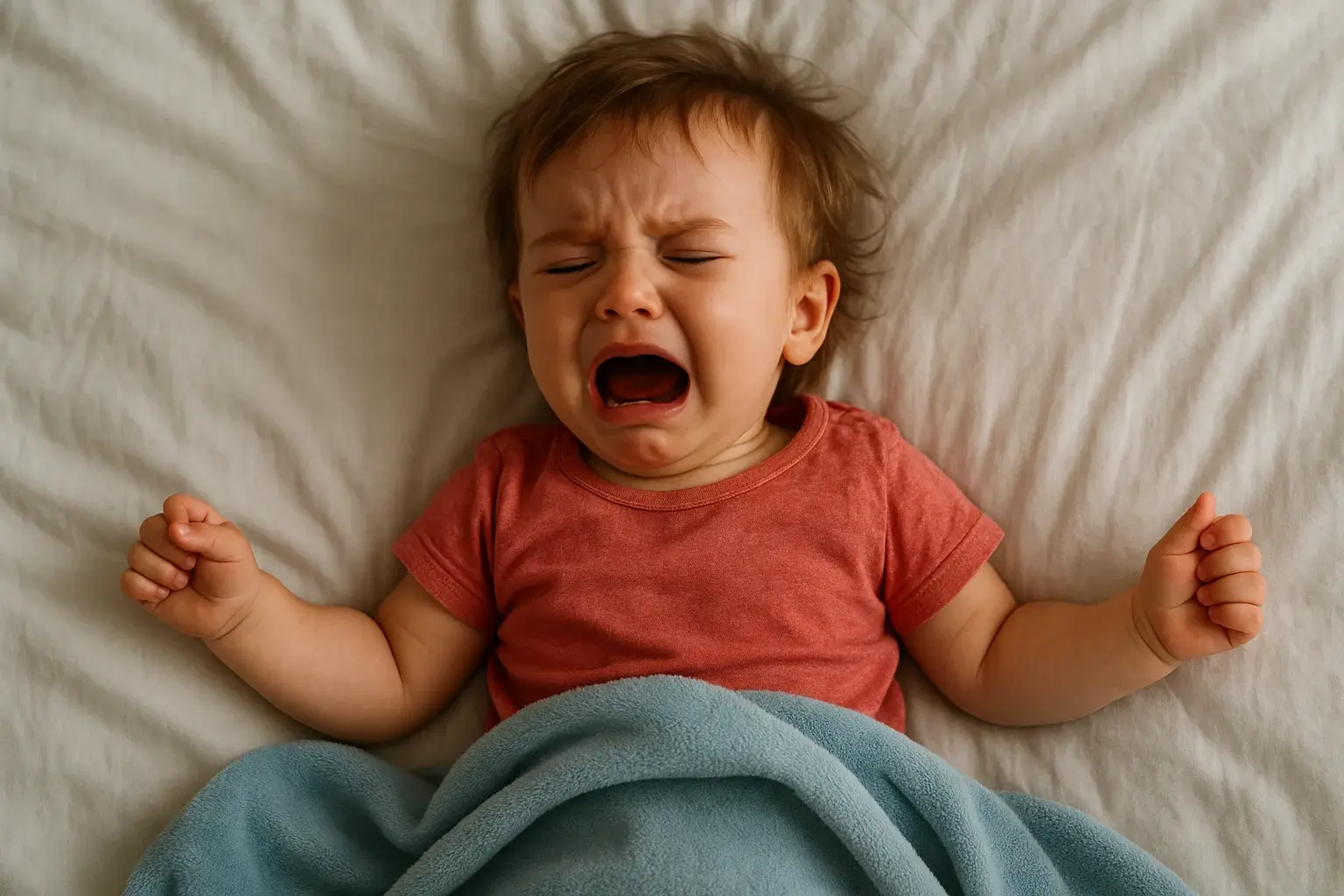
Normal sleep changes include shifting sleep patterns, dropping naps (such as moving from three naps to one), and temporary sleep regressions.
These shifts are usually linked to rapid brain development, growth spurts, and changing sleep needs rather than an underlying medical or behavioral problem. Teething and separation anxiety can also temporarily affect how a child sleeps.
During these phases, parents may notice changes such as:
- Night waking
- Bedtime behavior
- Nap patterns
- Need for comfort and reassurance
They usually follow a predictable pattern and improve with time and consistency. Sleep problems that persist, worsen, or come with other concerning symptoms deserve a closer look from a pediatrician.
If you are wondering whether your child’s sleep matches a typical developmental stage, see our complete Sleep Regression Symptoms by Age guide for an age-by-age overview of what to expect from infancy through the toddler years.
Normal Sleep Changes vs Sleep Problems That Need Attention
Not every difficult night means something is wrong. The difference often comes down to the overall pattern, symptoms that occur alongside the sleep change, and whether the problem improves with time and consistent routines.
| Common Normal Sleep Changes | Signs That Need Medical Attention |
|---|---|
| Temporary increases in night waking during growth or developmental phases | Pauses in breathing, gasping, or choking sounds during sleep |
| Short periods of bedtime resistance or needing extra comfort | Loud snoring that occurs regularly |
| Changes in naps as sleep needs change with age | Repeated unusual movements or jerking during sleep |
| Temporary sleep disruption during illness, teething, or routine changes | Excessive daytime sleepiness despite enough sleep opportunity |
| Sleep changes that improve with time and consistent routines | Sleep problems that persist, worsen, or occur with other concerning symptoms |
8 Baby and Toddler Sleep Warning Signs Parents Should Know
The signs below go beyond typical sleep regressions and may need closer attention.
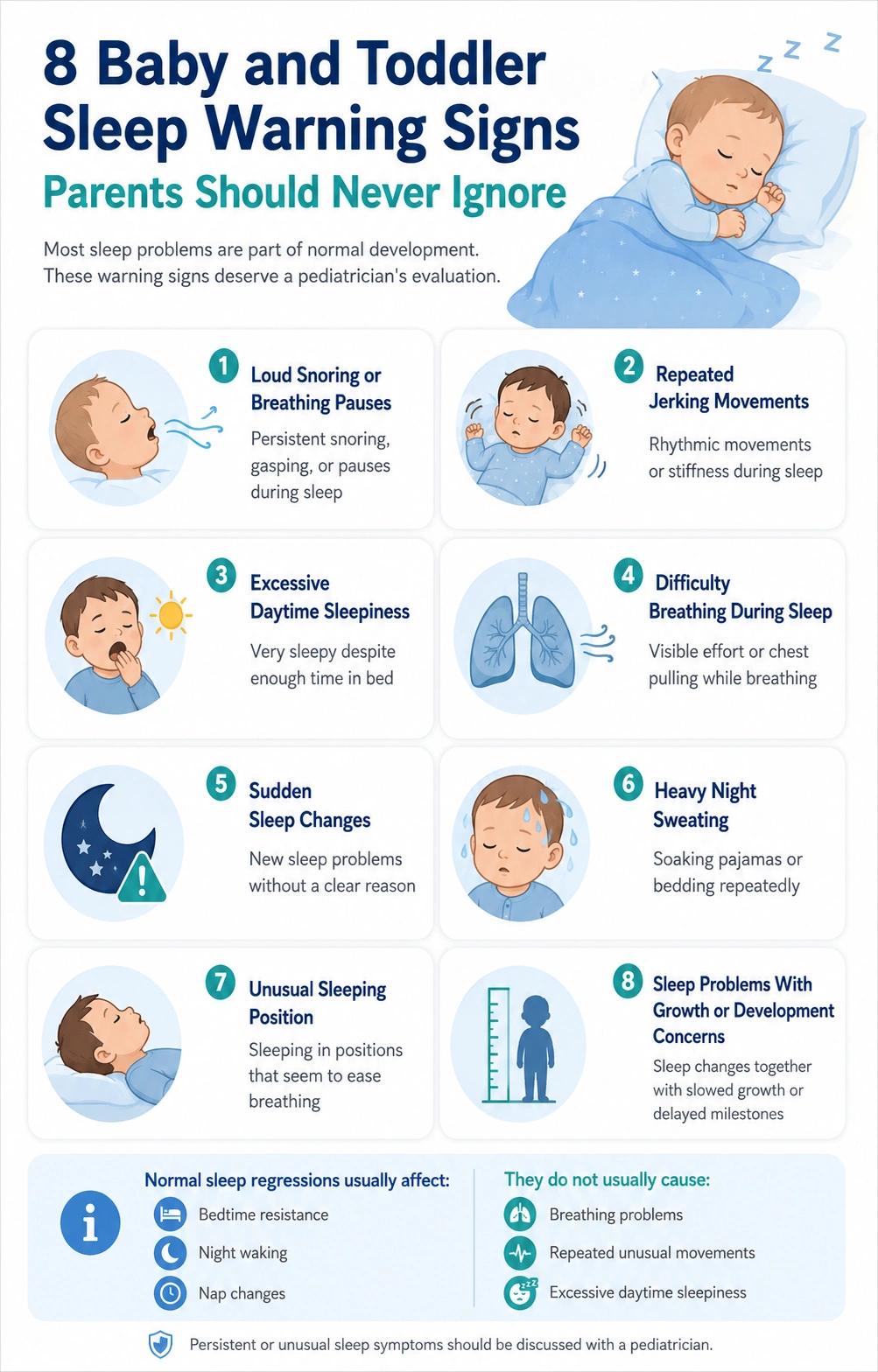
1. Loud Snoring or Breathing Pauses During Sleep
A stuffy nose during a cold can make breathing noisy for a few nights.
Frequent snoring, gasping, choking sounds, or pauses in breathing during sleep may suggest a breathing-related sleep problem, such as obstructive sleep apnea.
The American Academy of Pediatrics recommends that all children be screened for snoring during routine visits, with further assessment if snoring is frequent.1
A pediatrician can assess this with a physical exam and, if needed, recommend further testing such as a sleep study.
2. Repeated Jerking or Rhythmic Movements During Sleep
Small startles, twitches, and brief muscle jerks can happen during normal sleep. The concern is when movements repeat in a regular pattern, the body becomes stiff for several seconds, or the child does not respond when touched or spoken to.
According to Johns Hopkins Medicine, warning signs of a seizure in children can include unusual, repeated movements along with changes in breathing or skin color.2
Clinical research on infantile spasms also notes that visual observation alone may not reliably distinguish these episodes from normal infant movements.3 Repeated or unusual patterns deserve medical attention even when they appear brief.
If it is safe to do so, recording the episode on a phone can help a pediatrician understand what happened, since these events often do not occur during a clinic visit.
3. Sleepiness That Does Not Match the Night Before
Every parent has seen a tired or cranky child after a poor night of sleep. The concern is different: a child who cannot stay alert through breakfast, falls asleep during play, or has noticeably lower daytime energy without a clear reason.
Research indexed on NCBI shows that excessive daytime sleepiness in children can be linked to disrupted breathing during sleep, even when they appear to get enough sleep.4
A pediatrician can help identify whether disrupted breathing or another sleep-related cause is behind the drop in daytime alertness.
4. Difficulty Breathing or Working Harder to Breathe During Sleep
Watch the chest and belly, not just the sound. A child who breathes with visible effort during sleep, pulling in at the ribs or throat with each breath, is using more effort than normal breathing requires.
This can happen during a cold, but continued breathing effort after other symptoms improve, or breathing difficulty on nights when the child is not sick, should be reviewed with a pediatrician.
5. Sleep That Suddenly Changes After Being Consistent for Months
A shift that does not match a child’s usual pattern, has no clear explanation, or continues longer than expected may need closer attention. Sleep patterns do change during developmental milestones, new routines, or temporary sleep regressions, so context matters.
Tracking when the change started and what happened around that time can help a pediatrician understand possible triggers.
6. Sweating Heavily During Sleep
Some sweating during sleep is normal, especially in a warm room or under heavy blankets. Sweating enough to soak pajamas or bedding, night after night, in a comfortable sleeping environment is different.
Persistent night sweating may sometimes be associated with underlying health concerns. A pediatrician can review the overall pattern and look for other symptoms that may help explain it.
7. Sleeping in Unusual Positions to Breathe Easier
A child who consistently sleeps with the neck extended, struggles to sleep comfortably lying flat, or repeatedly changes position to breathe more easily may have an underlying breathing issue. Most position changes are simply about comfort, but a consistent pattern is worth watching.
Mention this pattern to a pediatrician if it happens regularly, especially if it occurs with snoring, breathing pauses, restless sleep, or daytime tiredness.
8. Sleep Problems Alongside Slowed Growth or Developmental Delay
Sleep difficulties by themselves are usually not a cause for urgent concern. When they occur alongside slowed weight gain, changes in growth patterns, or delays in skills such as sitting, walking, or talking, they should be reviewed with a pediatrician.
The CDC tracks developmental milestones because they help show whether a child is progressing as expected.5
When sleep changes happen alongside growth or developmental concerns, the whole picture matters more than sleep alone. A pediatrician can help determine whether the two issues are connected.
When Should Parents Call a Pediatrician About Sleep Problems?
Most baby and toddler sleep problems are temporary and often improve with consistent routines and support. A single rough week, a resisted bedtime, or a stretch of frequent waking is rarely a reason to worry.
A conversation with a pediatrician is helpful when sleep difficulties continue longer than expected for a child’s age, affect daytime functioning, or leave parents concerned about an unusual pattern.
Trust matters too. A sleep change that feels different from anything the family has seen before is a valid reason to ask for guidance, even without a specific warning sign from the list above. Parents do not need to wait until a problem becomes severe before seeking advice.
How Pediatricians Evaluate Sleep Problems in Babies and Toddlers
A pediatrician usually starts by reviewing the child’s overall sleep pattern, not just the difficult nights. They may ask about bedtime routines, night waking, naps, snoring, breathing changes, and daytime behavior.
They will also consider the child’s growth, development, and overall health. In some cases, a physical examination or additional testing, including overnight monitoring, may be recommended if symptoms suggest an underlying sleep or breathing problem.
Keeping a simple sleep record before the visit can be helpful. Note when the child sleeps, wakes, naps, snores, or has unusual movements overnight. These details can help the pediatrician understand whether the pattern is a normal sleep change or needs further attention.
After the Pediatrician Visit: When Sleep Problems Are Not Medical
Once a pediatrician has evaluated the child and found no underlying medical cause, the focus shifts to building better sleep habits through consistent routines and age-appropriate strategies.
A predictable wind-down routine of twenty to thirty minutes, with the same steps each night such as a bath, a book, and quiet time, signals that bedtime is approaching. Daytime sleep also plays an important role. Age-appropriate naps and awake time can make bedtime smoother and reduce common sleep struggles.
Over time, many children benefit from learning to settle back to sleep after normal night wakings rather than needing a parent to step in every time. This skill develops through small, consistent changes rather than one major adjustment.
For more strategies on building healthy sleep habits, explore the TRUST Method for Baby and Toddler Sleep.
Common Baby and Toddler Sleep Changes by Age
Most families dealing with sleep challenges are experiencing age-related changes rather than one of the warning signs discussed above. These changes look different at each stage as babies and toddlers develop new skills, become more independent, and adjust to changing sleep needs.
The guides below explain common sleep changes at different ages, what parents may notice, and what can help.
- 4-Month Sleep Regression: Tied to maturing sleep cycles and rapid sensory development
- 6-Month Sleep Regression: Often occurs alongside new motor skills, feeding changes, and increased interaction
- 8-Month Sleep Regression: Common during crawling, sitting up, and early separation anxiety
- 12-Month Sleep Regression: Frequently appears around first steps, language development, and growing independence
- 18-Month Sleep Regression: Connected to toddler independence, emotional development, and changing routines
- 24-Month Sleep Regression: Often involves testing limits, strong emotions, and resistance to familiar routines
Bottom Line
Most baby and toddler sleep changes are temporary parts of development. The key is recognizing when a sleep pattern looks different from the usual changes expected at that age.
Breathing problems, unusual movements, excessive daytime sleepiness, or concerns about growth and development deserve a conversation with a pediatrician. Other common challenges, such as night waking, bedtime resistance, and changing nap patterns, often improve with consistent routines and support.
Frequently Asked Questions About Baby and Toddler Sleep Problems
How do I know if my baby’s sleep problems are normal?
Many baby sleep changes are expected during infancy and toddlerhood. They become more concerning when they occur with breathing changes, unusual movements, or major daytime tiredness.
When should I worry about my baby’s sleep?
Consider speaking with a pediatrician if your child has signs such as regular snoring, pauses in breathing, repeated unusual movements during sleep, difficulty staying awake during the day, or other changes that do not fit their usual pattern.
How long do sleep regressions usually last?
Sleep regressions vary from child to child, but many improve within a few weeks. A steady routine and a calm response can help children adjust during these temporary changes.
Is sleep regression a sign of a problem?
Usually, no. Sleep regressions are common parts of infancy and toddlerhood and often happen when children are learning new skills or becoming more independent. Concerns arise when sleep changes happen with other symptoms or do not improve.
Why is my toddler suddenly not sleeping at night?
A sudden bedtime struggle can happen because of separation anxiety, new developmental milestones, changing nap needs, or a desire for independence. Ongoing or unusual changes may need a pediatrician’s advice.
How can I help my baby or toddler sleep better?
A predictable bedtime routine, suitable nap timing, and consistent responses can help support healthy sleep habits. If sleep challenges continue, a structured approach may help families find what works best for their child.
Scientific References
📚 Click to view references
- American Academy of Pediatrics. Diagnosis and Management of Childhood Obstructive Sleep Apnea Syndrome. Pediatrics. 2012;130(3):576–584. Available from: https://publications.aap.org/pediatrics/article/130/3/576/30284/
- Johns Hopkins Medicine. Seizures and Epilepsy in Children. Johns Hopkins Medicine Health Library. Available from: https://www.hopkinsmedicine.org/health/conditions-and-diseases/epilepsy/seizures-and-epilepsy-in-children
- National Center for Biotechnology Information. Update in Obstructive Sleep Apnea Syndrome in Children. PMC. Available from: https://pmc.ncbi.nlm.nih.gov/articles/PMC9443494/
- Centers for Disease Control and Prevention. Healthy Habits: Child Development. CDC Child Development. Available from: https://www.cdc.gov/child-development/about/
- National Center for Biotechnology Information. Infantile Epileptic Spasms Syndrome (West Syndrome). StatPearls. Available from: https://www.ncbi.nlm.nih.gov/books/NBK537251/
